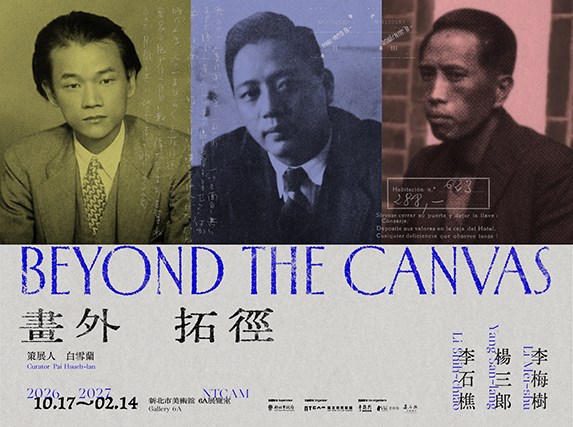
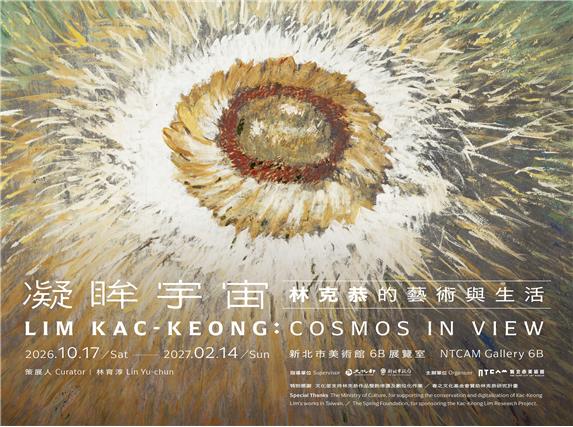
Last day today
Pluto in Scorpio
Chinese original:
冥王星在天蠍座
From 1983 to 1995, Pluto, the planet of destruction and rebirth, stood in Scorpio. The generation born in those years lived through capitalism at its most extreme and the 1990s stock market bubble, Taiwan Strait crisis, waves of emigration, and capital flight; caught between harsh reality and anxiety about survival, they turned to the pursuit of spiritual freedom. The New Taipei City Art Museum takes this as its theme to look at how artists of this generation find their place in a fast-changing society.
1 / 4 Image: New Taipei City Art Museum
- Dates
- Aug 29 – Nov 22, 2026
- Venue
- New Taipei City Art Museum (新北市美術館) · Yingge, New Taipei新北市鶯歌區館前路300號
Getting there
Sanying Line Yingge Station, Exit 3; or about 6 min walk from TRA Yingge Station
- Hours
- 10:00–17:30 · Closed: Mon
- Admission
- NT$100Original: 100 元
- Organized by
The calendar entry covers the whole run, so you won't need to look the dates up again. Please check opening hours and closing days before your visit.
Tickets and booking
Tickets can be bought online. A booking link is included.
KKday partner link. Anthology earns a referral commission on purchases made through it.
Entry notes
Open Tuesday to Friday 10:00–17:30 and on weekends 10:00–18:00. Closed on Mondays; if a Monday is a national holiday the museum opens and closes the next day instead. Last ticket sales are 30 minutes before closing. A full ticket is NT$100 and a concession ticket NT$50 (university students and above, ages 65 and over, and volunteers with an honor card). Visitors aged 16 and under, senior-high and vocational students, and people with disabilities plus one companion enter free. New Taipei City residents enter free on weekdays and pay the concession price on weekends and national holidays. Tickets can be bought online. A guided tour of the current exhibition runs at 14:30 on weekdays and 15:00 on holidays, about 60 minutes, limited to 25 people; sign up in person at the 2nd-floor ticket counter, as reservations are not accepted.
- Open Tuesday to Friday 10:00–17:30 and on weekends 10:00–18:00. Closed on Mondays; if a Monday is a national holiday the museum opens and closes the next day instead. Last ticket sales are 30 minutes before closing. A full ticket is NT$100 and a concession ticket NT$50 (university students and above, ages 65 and over, and volunteers with an honor card). Visitors aged 16 and under, senior-high and vocational students, and people with disabilities plus one companion enter free. New Taipei City residents enter free on weekdays and pay the concession price on weekends and national holidays. Tickets can be bought online. A guided tour of the current exhibition runs at 14:30 on weekdays and 15:00 on holidays, about 60 minutes, limited to 25 people; sign up in person at the 2nd-floor ticket counter, as reservations are not accepted. (Source: 新北市美術館:參觀資訊, 2026)
From the organizer's announcements and press reports. Arrangements can change; please check the official site before your visit.
Knowledge cards
Sound art聲音藝術Art that uses sound both as its medium and as its subject.Read moreClose
01About
Among its forerunners, the Futurist Luigi Russolo built noise machines from 1913 that imitated industrial machinery and the sounds of war, and John Cage's 4′33″ (1952) is a score of four minutes and thirty-three seconds of silence. From the 1950s and 1960s visual artists and composers used kinetic sculpture and electronic media to explore the space around them. Ryuichi Sakamoto, from the 2000s, studied how sound is heard and felt in space.
02In the gallery
Stand in a few different places inside the work and listen to how the sound changes; notice the moments when it stops, too.
Wall label terms in Chinese
- 聲音藝術
- Sound art
- 聲音裝置
- Sound installation
- 時基藝術
- Time-based art
- 樂譜
- Score
03Notes
In sound art, the size of a space is often measured by ear.
This time, at Pluto in Scorpio —
Close your eyes. How large does the space around you feel?
04Related
Installation art裝置藝術Large-scale, mixed-media constructions, often made for a specific place or a limited time, that the viewer often walks into.Read moreClose
01About
An installation is not a set of separate artworks but one whole experience, centred on how the viewer perceives it. The artist Ilya Kabakov said that the main actor in the total installation, the centre toward which everything is addressed, is the viewer. Forerunners include Kurt Schwitters' Merzbau and the “environments” Allan Kaprow made from about 1957; from the 1960s installation became a major strand of modern art. In Taipei, Chen Chao-hua uses altered compressors and condensing techniques so that frost forms and melts again and again in the gallery, and in When Tomorrow is Forgotten at MOCA Taipei, one artist, drawing on their own care work, brings the spaces, objects, and traces of labour from care settings into the exhibition. A label reading “dimensions variable” means the size of the work changes with the space it is shown in.
02In the gallery
Pause at the entrance to take in the whole space before you step in; once inside, notice what changes as you move.
Wall label terms in Chinese
- 裝置
- Installation
- 複合媒材
- Mixed media
- 特定場域
- Site-specific
- 尺寸依場地而定
- Dimensions variable
03Notes
The parts of an installation add up to one experience, and what matters is how you perceive it.
This time, at Pluto in Scorpio —
Having walked through it, where do you think the work begins, and where does it end?