The Season
Seoul Winter Exhibitions 2026–27From early winter to the Lunar New Year, in Seoul's museums
By the Anthology editors ·
Chosen by the Anthology editors and checked against each venue's official site. No paid listings. About this anthology
On now
Spanish painting from the Hispanic Society in New York, from El Greco to Sorolla.

In 1904 Archer M. Huntington, the son of an American railway magnate, founded the Hispanic Society in northern Manhattan to collect the art and books of Spain and Latin America. Today it is counted among the richest collections of Spanish art anywhere outside Spain.
The 95 works here are the first showing of the collection in Asia, arranged by period in six chapters from the fifteenth century to the early twentieth. In El Greco's Holy Family (c. 1585) the Virgin's face is drawn out long, and Joseph is not the usual white-haired old man but a sturdy guardian. In Velázquez's Portrait of Cardinal Camillo Astalli (1650–51) the cardinal sits at ease, his red biretta slightly askew.
Goya's Don Manuel Lapeña (1799) is a full-length portrait more than two metres tall, commissioned by the Duchess of Osuna; the sitter wears the uniform of the royal guard. In the later rooms the pictures slowly brighten: landscape and painting outdoors, scenes of everyday life, and finally Spain in the early twentieth century, between tradition and the modern. Sorolla and Zuloaga belong to this last part.
The exhibition is called A Chronicle of Light and Darkness. In 2017 the collection was shown at the Prado in Madrid, where some 480,000 people came to see it.
Knowledge cardsChiaroscuro
Do Ho Suh (서도호) sews the homes he has lived in out of fabric, and the hanok he grew up in.
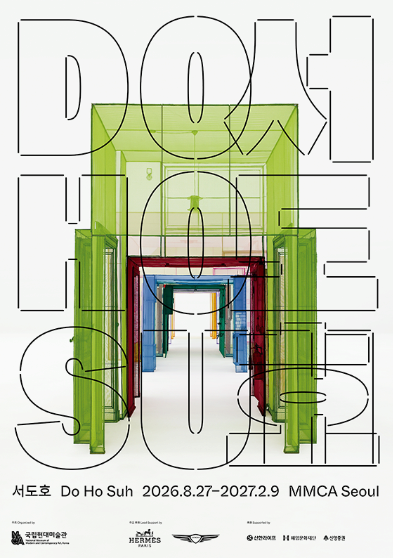
In the mid-1990s, while studying in the United States, Do Ho Suh cut the room he lived in out of thin muslin to its exact measurements and fitted it with zips, so that it could be folded up and carried. After 516 (1994–95) came many homes made of fabric: translucent and light, with the shape of every wall and door, yet unable to keep out the light.
He was born in Seoul in 1962 and grew up in a hanok in Seongbuk-dong, built in 1974 by his father, the ink painter Suh Se Ok (서세옥), after the men's quarters of Yeongyeongdang in Changdeokgung Palace. Seoul Home/L.A. Home (1999) sewed that house in jade-coloured hanbok silk and set it down in Los Angeles. Rubbing/Loving takes another approach: paper laid over the house's walls, doors, and window frames, rubbed one part at a time. The work has also been seen as a self-portrait of him and his father together.
Perfect Home (2024) is a full-scale replica of his present home in London, fitted with locks, taps, light switches, and sockets taken from six homes before it. Nest/s (2024), about 21 metres long, joins the doors, rooms, and corridors of his homes in Seoul, New York, London, and Berlin into one passage you can walk through.
The National Museum of Modern and Contemporary Art is showing about 500 works, including early pieces and drawings never shown before. A new work, Memory of Love (2026), is the lining of a coat sewn with dozens of pockets taken from his family's clothes; each pocket holds a small thing to do with that person.
Knowledge cardsInstallation Art
Wayne Thiebaud's cakes, pies, and ice cream, and people who sit side by side without looking at each other.
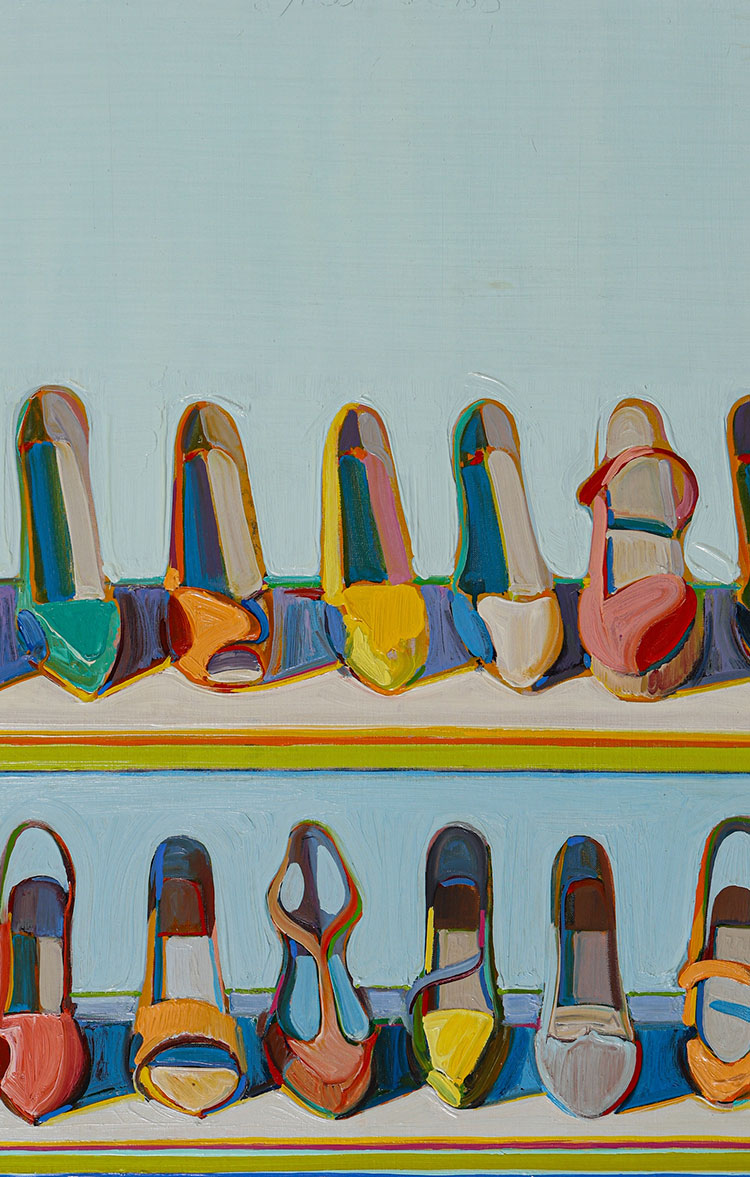
Wayne Thiebaud (1920–2021) once said that he had been painting triangles and they turned into pies. In the early 1960s he began to paint everyday things in earnest: cakes in a shop window, rows of pies, shoes, groceries. The shapes are circles, triangles, and symmetry; the paint is thick, in places as much as eight millimetres, and the shadows are sharp. He called this way of painting “actualism”, letting the paint itself become a real, physical thing.
Before that he had worked in commercial design, cartooning, and stage design, and taught art; his paintings of the 1940s and early '50s, under the influence of Abstract Expressionism, were close to the colours of earth. In the '60s his cakes were often filed under Pop Art, though he himself preferred to be seen as a painter of what was in front of him.
From the mid-'60s he painted people too. In Five Seated Figures (1965) people sit side by side without looking at one another; the exhibition calls this “lonely togetherness”. Later come the steep streets and crossroads of San Francisco, and California farmland seen from high above.
For this Hyundai Card Culture Project, 105 paintings and drawings have been chosen from some 75 years of work, lent by the Wayne Thiebaud Foundation, the Crocker Art Museum, SFMOMA, and others. The last is Hundred-Year-Old Clown (2020), a self-portrait made the year before he died: an old man in white clown make-up, walking out of the frame.
Knowledge cardsStill Life
The instructions Sol LeWitt left behind, and the wall drawings made anew from them.
After university Sol LeWitt (1928–2007) joined the army and served in the Korean War. Back in New York he worked as a night guard at the Museum of Modern Art, where he met Dan Flavin, Robert Ryman, and others who would become artists of his generation. In “Paragraphs on Conceptual Art” (1967) he wrote: “The idea becomes a machine that makes the art.” The planning and decisions are made beforehand; carrying them out is a formality.
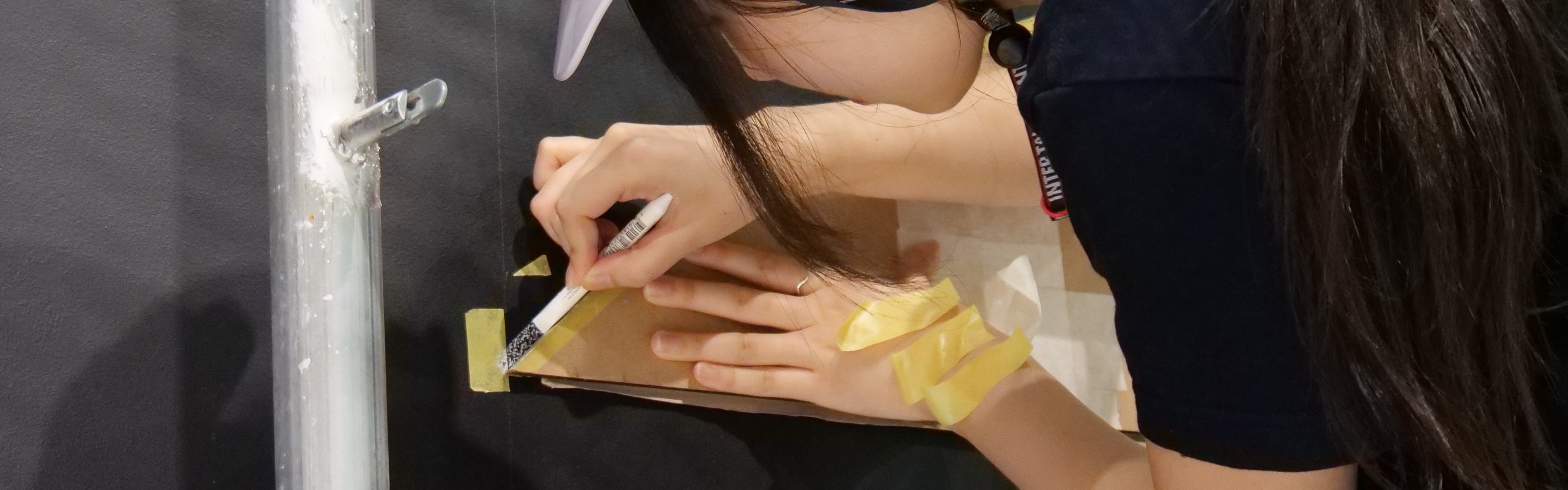
So what he left of his wall drawings is a set of instructions. Wall Drawing #786A says: in each square of a grid on a black wall, starting from the corners and sides, draw two of eight kinds of arc in white crayon. It was first drawn in June 1995; this time it was drawn again on the walls of the Amorepacific Museum of Art in August 2026, by 23 art students working with people from the Sol LeWitt Foundation. All thirteen wall drawings in the show were made this way.
Incomplete Open Cubes (1974) follows another rule: take some of the twelve edges away from a cube, and 122 forms still hold together. He worked them all out without a computer. From the 1990s the rules gradually loosened, giving colour wall drawings built up in layers of ink wash, and sculptures of irregular curves.
The 45 works, from black-and-white structures of the 1960s to colour works of the 2000s, form a touring exhibition that began at the Museum of Contemporary Art Tokyo and has been enlarged here into his first major solo show in Korea. In the archive room there is one work in which someone draws a line down from the top of the wall, the next person copies that line as closely as they can, and the line drifts, little by little.
Knowledge cardsConceptual Art
- Open on certain days only
Opening soon
Roberta, the woman Lynn Hershman Leeson invented, and sixty years of technology and the self.
In 1973 Lynn Hershman Leeson created a woman who did not exist, named Roberta Breitmore. Roberta had her own bank account and driving licence, placed newspaper ads for a roommate, and met the people who answered. Later the artist hired performers to play Roberta, and the invented woman gradually began to shape the artist's own life. The project ended only in 1978, when Roberta was dissolved into water, fire, air, and earth in an exorcism in Italy.
Before that, in 1968, she had already invented three art critics. Afterwards she carried the same questions into new media. CybeRoberta (1996) is a remote-controlled doll with cameras in its eyes; what it sees is posted to a website every twenty seconds, and people online can turn its head to decide where it looks. The Electronic Diaries, filmed from 1984 to 2019 in seven parts, show her speaking to the camera about the violence she suffered as a child, about pain in her body, and about how she came through.
This exhibition at the Seoul Museum of Art is her first museum solo show in Asia: more than two hundred drawings, paintings, photographs, sculptures, installations, videos, and films in six chapters, running from her feminist work of the 1960s and '70s to surveillance, algorithms, and biotechnology. The English title, First Person Plural, comes from the third part of The Electronic Diaries; the square brackets in the Korean title are borrowed from programming languages.
Knowledge cardsMedia Art
The Korean painters who went to Paris after the Korean War.

In 1925 Lee Jong-woo (이종우) arrived in Paris, the first Korean painter to go there. After the Korean War many more followed. Paris was then seen as the capital of modern art.
Lee Ungno (이응노) went to Paris in 1958 and later opened a school there teaching East Asian calligraphy and painting. Kim Tschang-Yeul (김창열) settled in Paris in 1969 and began painting water drops there. They mixed with artists from all over the world and, in an unfamiliar place, looked for their own way of painting.
Starting from Lee Jong-woo, MMCA Deoksugung looks at more than fifty Korean artists who went to France between the 1950s and the '70s, among them Kwon Ok-yeon (권옥연), Nam Kwan (남관), Moon Shin (문신), Bang Hai Ja (방혜자), Rhee Seund-ja (이성자), Lee Ufan (이우환), and Han Mook (한묵). 2026 marks 140 years of diplomatic relations between Korea and France. The “stranger” of the title is each of these artists in someone else's land, working out who they were and trying new materials and new subjects.
Knowledge cardsModern Korean Western-style Painting
Details to come (as announced by the venue on Jan 5, 2026)
About this anthology: the season's major exhibitions, chosen by the Anthology editors and updated through the season. Every exhibition is checked against the venue's official site or announcement (as of Oct 19, 2026), and no listing is paid for. If dates or prices change, please refer to the venue's own announcement.
The Korean original of each title and venue name is shown in gray below it.
A little more art in your life
Every month, we write a letter about exhibitions we love and why we recommend them. Subscribing is free, and you can cancel at any time.
We will use your email address only to send the newsletter. Privacy