Opens in 27 days#Painting
A Stranger in Paris
Korean original:
파리의 이방인
After the Korean War, many Korean artists went to France, seeing Paris as the capital of modern art. Beginning with Lee Jong-woo, the first Korean artist to go to Paris in 1925, the exhibition looks at artists who moved there from the 1950s to the 1970s: some sought national identity and modernity in a foreign place, others widened the scope of art through new subjects and media. Some 50 artists are included, among them Nam Kwan, Lee Ungno, Rhee Seundja, Kim Tschang-yeul, Lee Ufan, and Bang Hai Ja.
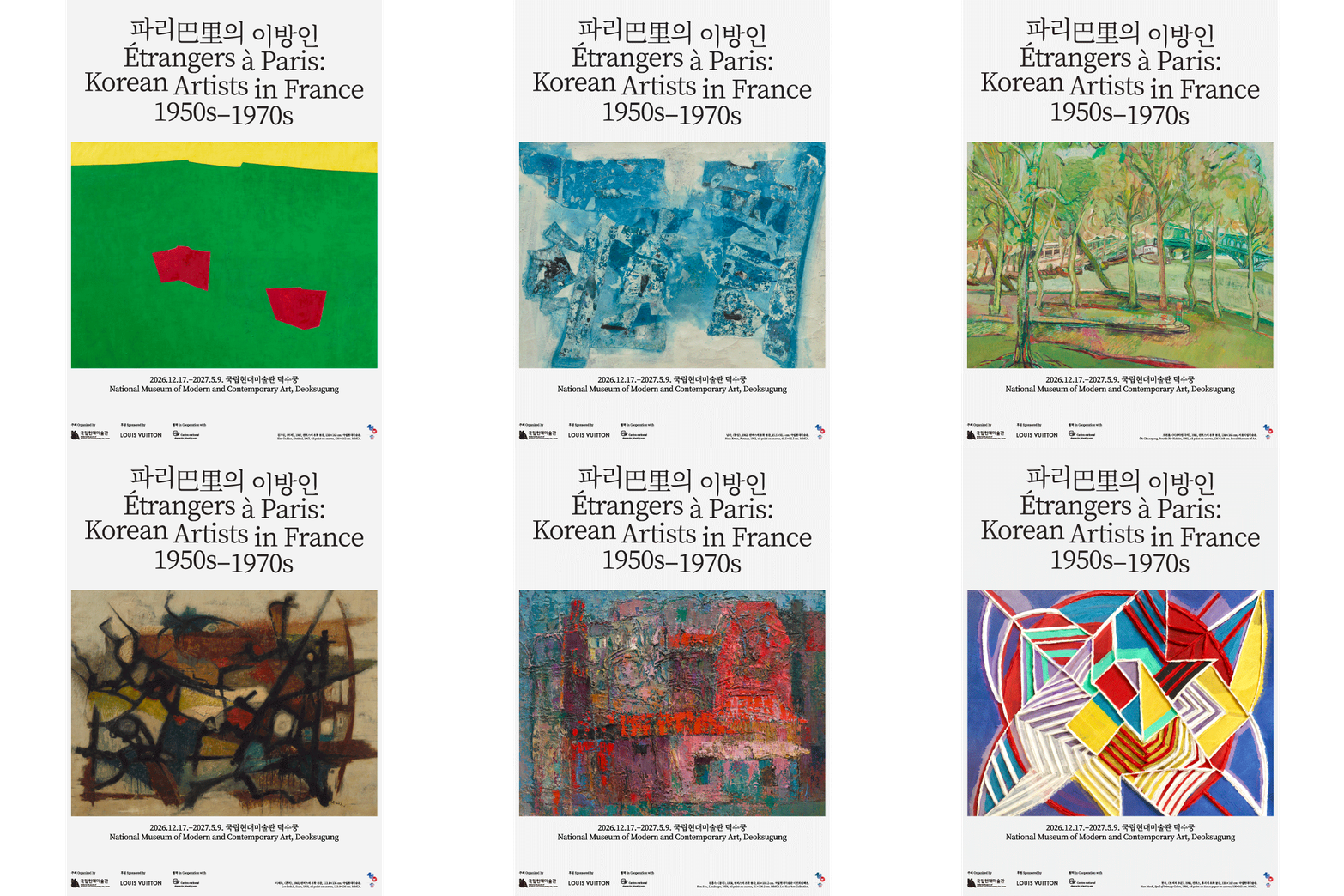
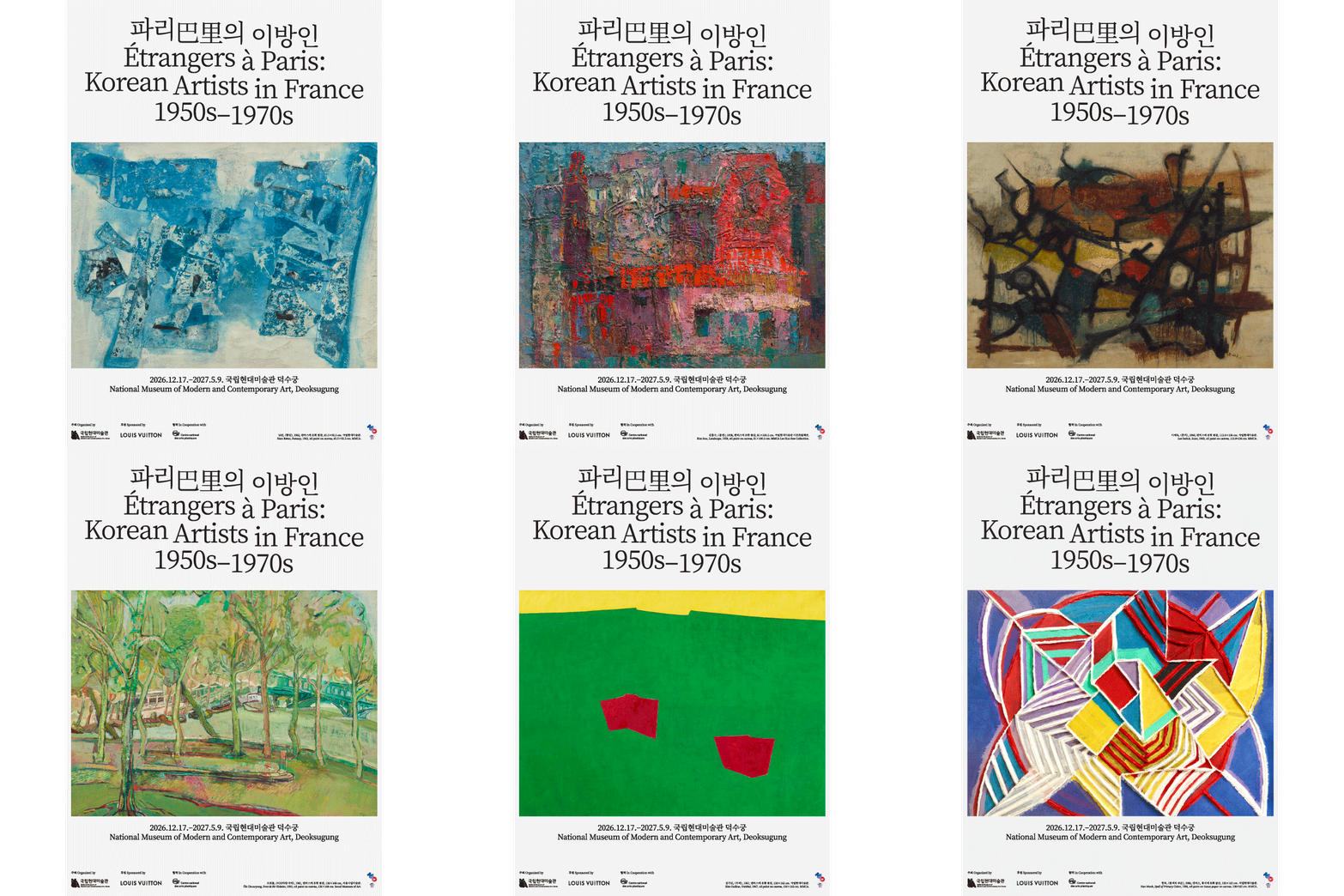
1 / 2 Image: MMCA Deoksugung (National Museum of Modern and Contemporary Art) 파리의 이방인 Étrangers à Paris: Korean Artists in France 1950s–1970s
- Dates
- Dec 17, 2026 – May 9, 2027
- Venue
- MMCA Deoksugung (National Museum of Modern and Contemporary Art) (국립현대미술관 덕수궁관) · City Hall & Deoksugung서울특별시 중구 세종대로 99 국립현대미술관 덕수궁관Open in Naver Map
Getting there
Exit 1, City Hall Station (Lines 1 and 2)
- Admission
- To be announcedOriginal: 미정
- Artists
- Kwon Ok-yeon
- Kim Ki-rin
- 김순기
- Kim Tschang-Yeul
- Kim Heung-soo
- Nam Kwan
All artists(15)Show less
- Kwon Ok-yeon
- Kim Ki-rin
- 김순기
- Kim Tschang-Yeul
- Kim Heung-soo
- Nam Kwan
- Moon Shin
- Bang Hai-ja
- Lee Seund-ja
- 이세득
- Lee Ungno
- Lee Ufan
- 이항성
- 임세택
- Han Mook
The calendar entry starts on opening day and covers the whole run, so you won't need to look the dates up again. Please check opening hours and closing days before your visit.
Entry notes
MMCA Deoksugung is closed until 16 December 2026 between exhibitions; Strangers in Paris opens on 17 December and runs to 9 May 2027. Opening hours are 10:00–18:00 on Tuesday, Thursday, Friday and Sunday, and 10:00–21:00 on Wednesday and Saturday (free after 18:00; the Deoksugung main gate stops admission at 20:00). Closed on 1 January and every Monday.
- MMCA Deoksugung is closed until 16 December 2026 between exhibitions; Strangers in Paris opens on 17 December and runs to 9 May 2027. Opening hours are 10:00–18:00 on Tuesday, Thursday, Friday and Sunday, and 10:00–21:00 on Wednesday and Saturday (free after 18:00; the Deoksugung main gate stops admission at 20:00). Closed on 1 January and every Monday. (Source: 국립현대미술관 덕수궁:관람정보, 2026)
- The museum says admission varies by exhibition; this exhibition's price has not been published, so check its own exhibition page. Wednesday and Saturday night opening (18:00–21:00) is free, as is the last Wednesday of each month (Culture Day). Free for visitors aged 24 and under or 65 and over, university undergraduates, and people with disabilities and a companion, among others; holders of the Dadungi (large-family) card get 20% off and Artist Pass holders 50% off. Deoksugung Palace admission is charged separately. (Source: 국립현대미술관 덕수궁:관람정보, 2026)
From the organizer's announcements and press reports. Arrangements can change; please check the official site before your visit.
Knowledge cards
Modern Korean Western-style Painting한국 근대 서양화The oil painting and other Western painting that Korean painters learned, largely by way of Japan, from the early twentieth century, and the work they made in it; in Korea it is called seoyanghwa, Western painting.Read moreClose
01About
In 1909 Ko Hui-dong entered the Tokyo School of Fine Arts to study Western painting, and returned home on graduating in 1915; he is regarded as Korea's first Western-style painter, though he later went back to ink painting. From 1922 to 1944 the Government-General held the Joseon Art Exhibition every year, with a section for Western painting, and many new painters made their debut there. Most painters of this generation trained in Tokyo: Yoo Youngkuk entered the oil painting course at Bunka Gakuin in 1935, met avant-garde art such as Cubism and Constructivism there, and later turned the mountain into the subject of his abstraction. Others drew on their own traditions: Lee Dai-won carried the methods of embroidery, mother-of-pearl lacquer, and ink brushwork into oil painting. After the Korean War, many painters saw Paris as “the capital of modern art” and moved to France.
02In the gallery
Check the year and where the painter trained on the label, then see whether the oil paint is laid flat, built up, or set down stroke by stroke like a brush in ink.
Wall label terms in Korean
- 서양화
- Western-style painting
- 유화
- Oil painting
- 조선미술전람회(선전)
- Joseon Art Exhibition
- 추상
- Abstraction
03Notes
Korea's early modern painters learned Western painting, and some carried ink-brush strokes into oil.
This time, at A Stranger in Paris —
Looking at the brushwork, what was learned from the West, and what comes from the painter's own tradition?
04Related
Nearby, after this one
Same neighborhood · City Hall & Deoksugung
Shows open on the same days as this one are listed first (regular closing days only).