The Season
Taipei Winter Exhibitions 2026–27From the year's end to the Lunar New Year, in Taipei's museums
By the Anthology editors ·
Chosen by the Anthology editors and checked against each venue's official site. No paid listings. About this anthology
On now
The National Palace Museum teaches how to look at a Chinese painting through symmetry, contrast, and repetition.
Autumn Colors over Streams and Mountains, on view here, bears the cipher signature of Emperor Huizong and a seal reading "imperial brush." Yet most of the scenery sits low on the left, unlike the Northern Song habit of placing a great mountain at the center, so it is generally considered a Southern Song work. The Qingming Yijian Scroll, attributed to Zhang Zeduan, is a late Ming imitation of Along the River During the Qingming Festival, and even its Yuan-dynasty colophons are forged; Cloudy Mountains and Misty Trees under Mi Fu's name and Ten Thousand Li along the Yangzi under Xia Gui's are also judged to be Ming copies.
These findings are all written in the museum's own notes on the works. The exhibition is about something else: "aesthetic principles," that is, symmetry, contrast, repetition, and how a painter arranges dots, lines, planes, color, shape, and space. The museum says these principles can help viewers get past the barriers of language, culture, and information and look for themselves. Who painted a picture may be rewritten again and again by scholarship; how the ink dots are built up layer on layer, and how blank paper lets the mist drift, stay on the surface of the painting.
Some notes stop at a question. Fish and Water Plants, attributed to Fan Anren, is painted entirely in the "boneless" manner, without outlines: fish slip through the weeds, and the water looks clear. At the end of the scroll, though, the fish crowd together and chase one another, and the mood suddenly quickens. Whether there is a new meaning in this, the museum writes, is left for viewers to consider.
Seventeen paintings from the Song dynasty to the Republican era are on view, including Ten Thousand Li along the Yangzi, more than eleven meters long, the Qing painter Ding Guanpeng's copy of Gu Kaizhi's Nymph of the Luo River, and, last, Zhang Daqian's Wide River, Distant Mountains.
Knowledge cardsHandscroll, hanging scroll, album
Before it closes for renovation, MOCA Taipei's last exhibition looks at the museum itself.
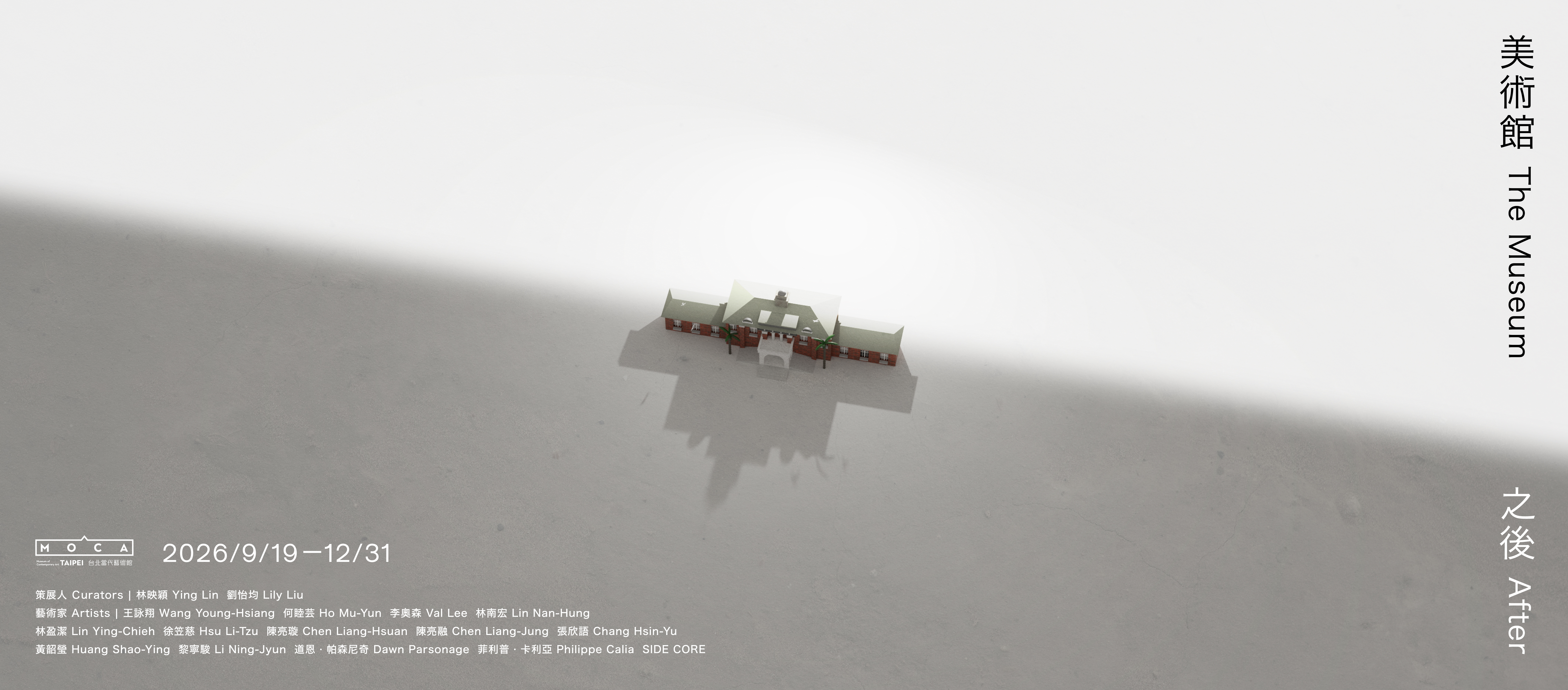
This red-brick building began as Kensei Elementary School under Japanese rule, became the offices of the Taipei City Government after the war, and since 2001 has been the Museum of Contemporary Art, Taipei. The museum turns twenty-five this year and will close for three years of renovation from 2027.
The curators, Ying Lin and Lily Liu, both work in the museum's exhibition department. They have turned attention away from the works on show to the museum itself: the labor of its staff, the corners of the building, the sound of its machinery. Chang Hsin-Yu recorded the museum's motors and electrical hum and sealed the sounds in six glass jars labeled heart, lungs, skin, bronchi, and nerves; open a jar and its sound comes out, close it and the sound is drawn back in. In a video by Wang Young-Hsiang, someone quietly fills a hole in a clean white wall, work that follows the end of every exhibition.
Lin Ying-Chieh's Mr. Pictor uses the running green figure from emergency exit signs, a design that came from Japan in the 1970s. Between the corridor and the elevators he moves slowly, sometimes like a member of staff, sometimes like a visitor. Val Lee made a four-channel video about the museum's guards, screened at set times in the guard room.
Among the fourteen participating artists and groups is the Japanese collective SIDE CORE. Their KAIROS uses time-lapse photography to record the three years Yokohama Museum of Art spent closed for renovation: the building, the city and its people, and graffiti, skateboarding, and planting.
Knowledge cardsInstitutional critique
Nearly thirty years of Sou Fujimoto's architecture, from the forests of Hokkaido to the great roof of the Osaka Expo.

Sou Fujimoto was born in Hokkaido in 1971 and grew up beside dense forest. In his book Kenchiku ga umareru toki (When Architecture Is Born), he asks whether people can make something as complex and varied as nature, rather than simply imitating it.
In his buildings it is often hard to tell inside from outside. His 2013 Serpentine Pavilion in London was a lattice of thin white steel poles that looked from a distance like a cloud; people could sit on it or walk through it. At L'Arbre Blanc, a housing block in Montpellier, France, every apartment's balcony reaches out like a branch. He set up his own office in 2000 without training under any established architect, and first drew attention with his competition entry for the Aomori Museum of Art.
At Expo 2025 Osaka, Kansai, he was the venue design producer and built a ring of wood, the Grand Ring, about two kilometers around and recognized as the world's largest wooden structure. During the Expo, the Mori Art Museum in Tokyo gave him his first large solo exhibition, which then began an international tour.
Taipei is the tour's first stop, and Fujimoto planned the exhibition's structure and design himself. JUT Art Museum shows architectural models from across the years, design drawings, and the handwritten notebooks he has kept for many years; a second venue, in the finished-goods warehouse of the nearby Jianguo Brewery, holds a large 1:5 model that people can walk into.
Knowledge cardsArchitectural model
- Booking required
Li Mei-shu, Yang San-lang, and Li Shih-chiao, and what they did for Taiwanese art beyond the canvas.
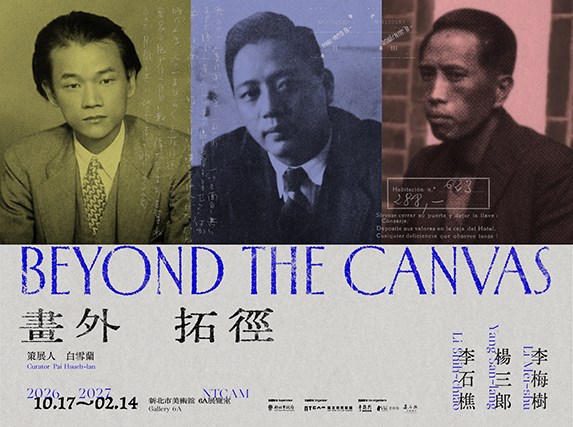
In 1934, Li Mei-shu, Yang San-lang, and Li Shih-chiao founded the Tai-Yang Art Society together with Chen Cheng-po, Liao Chi-chun, Yen Shui-long, and other painters. Its annual Tai-Yang Exhibition was a private show run by the painters themselves, held alongside the official Taiwan Art Exhibition. The society is now ninety-two years old and has never stopped.
After the change of regime in 1945, all three put much of their energy beyond the canvas. From 1947, Li Mei-shu led the rebuilding of the Zushi Temple in his hometown of Sanxia. He designed the walls, stone columns, and floors of its halls himself, asked painters from many places for designs to carve into the stone walls, had renowned calligraphers write its couplets, and replaced traditional painted murals with bronze reliefs. He stayed with the project for thirty-six years, until his death.
In 1946, Yang San-lang worked with members of the society to organize the Provincial Art Exhibition. In the grim climate after the February 28 Incident, the Tai-Yang Exhibition resumed in 1948, and he brought on younger artists through open calls, juries, and prizes, looking after the society for more than sixty years. That same year, Li Shih-chiao opened a studio that charged no fees, teaching many students through rigorous drawing; he himself gradually turned from seeking honors at the official salons toward the nature of art and Western modern thought.
The New Taipei City Art Museum shows the three painters' work alongside manuscripts, documents, historical photographs, and audiovisual records. Foundations and museums devoted to each of the three are co-organizers.
Knowledge cardsTaiten
Opening soon
Taiwanese fashion photography, from Deng Nan-guang's outdoor portraits to AI-generated images.
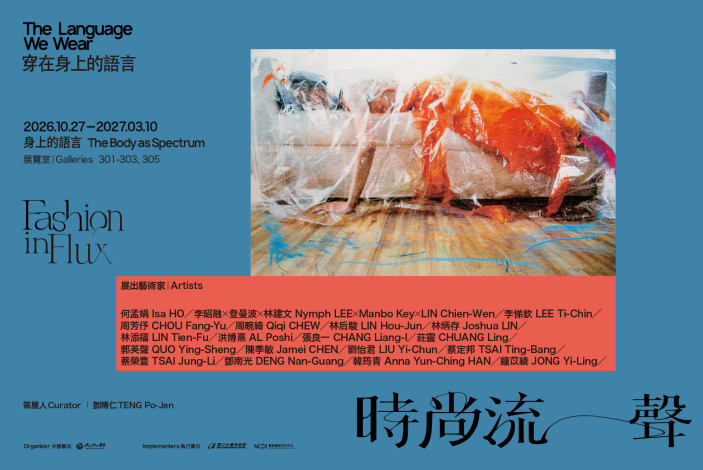
In her essay on changing clothes, Eileen Chang wrote: "Each of us lives in our own clothes." She published the piece in Shanghai in 1943, writing it first in English for foreign readers and later rewriting it in Chinese. The National Center of Photography and Images places the line at the start of the exhibition.
The exhibition spans two floors. The third floor, The Body as Language, starts from the body and the act of looking; the second floor extends to daily life, society and culture, and digital technology. Ten of the thirty-five artists are women, and the works run from early studio portraits, family photographs, and commercial photography to contemporary art and artificial intelligence.
Photography societies once went outdoors to take portraits, and photographers learned in natural light how to look at bodies and poses. Deng Nan-guang (1907–1971) placed women in staged outings, in pictures somewhere between documentary and posing. The center suggests these photographs also show how society at the time allowed women to be seen. Chuang Ling and others start from the family, where closeness between generations becomes the origin of a style.
Another gallery looks at how women's bodies answer the camera. Kuo Ying-sheng's graffiti and his series on the female body once inspired the designer Jamei Chen's clothes, and he also served as creative director of her label, JAMEI CHEN. Her scarves and made-to-measure pieces are on view too; the patterns in the photographs became clothes that can be worn.
Knowledge cardsPhotography
Ryuichi Sakamoto's late installations, where sound becomes something you can see in a space.
In 2012, Ryuichi Sakamoto came across a piano in Miyagi Prefecture. It belonged to Miyagi Agricultural High School and had been flooded by the tsunami of the Great East Japan Earthquake the year before. He thought of it as "a piano tuned by nature." A piano is an instrument with which people put sound in order; after the seawater, it had gone back to being a thing.
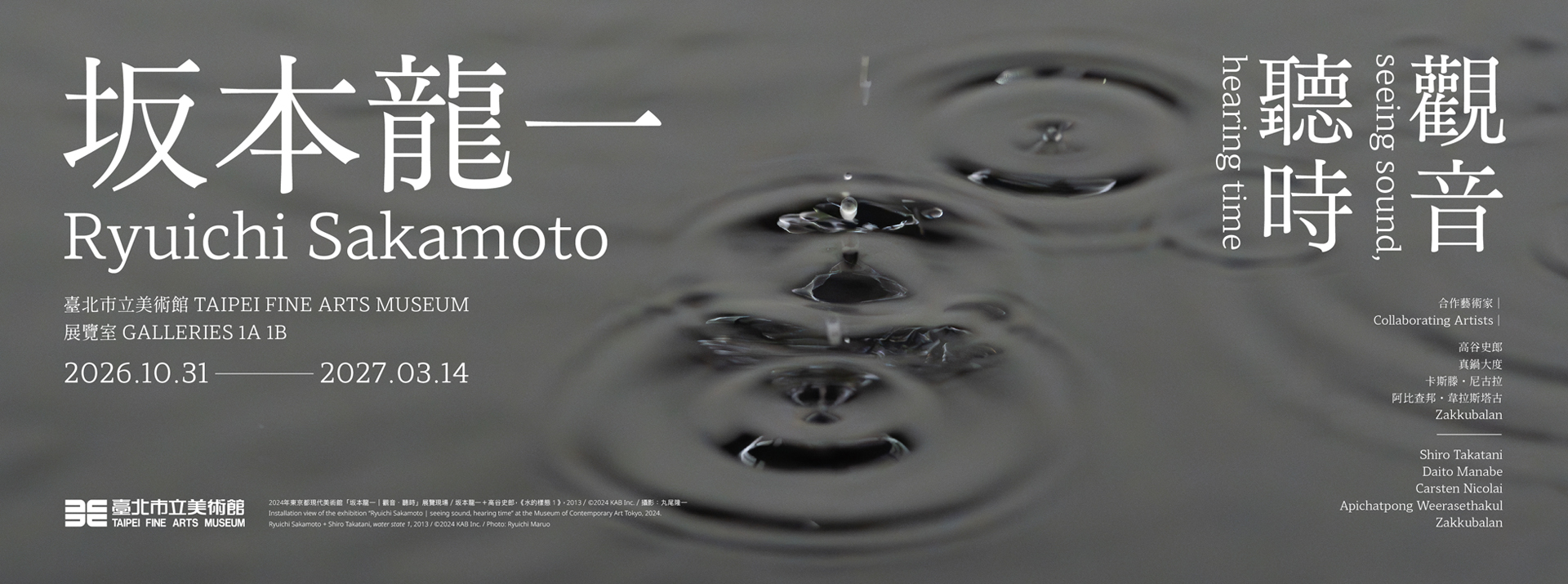
That idea runs through the installations he made from the 2000s on. Beginning with LIFE–fluid, invisible, inaudible... in 2007, he and Shiro Takatani returned again and again to water and mist. In water state 1 (2013), a black basin sits at the center of the room, its surface as clear as a mirror, with large stones around it; a device in the ceiling lets drops of rain fall into the basin according to precipitation data recorded by weather satellites, while sound and light change slowly over time.
His 2017 album async came after treatment for throat cancer; its title means "not synchronized." He and his collaborators later made several installations from the album, placing the music in space in three dimensions. Apichatpong Weerasethakul handed small cameras to people close to him, asked them to film their own daily lives, and set the footage to two of the album's pieces, making async–first light.
The Taipei Fine Arts Museum shows seven large installations and archival material from the 1999 opera LIFE, with collaborators including Daito Manabe, Carsten Nicolai, and Zakkubalan; the curator is Sachiko Namba. When the exhibition was shown at the Museum of Contemporary Art Tokyo in 2024, its Japanese title was Oto o miru, toki o kiku: seeing sound, hearing time.
Knowledge cardsVideo artSound artInstallation art
The Toledo Museum of Art's collection, from Impressionism to modern art.

The Toledo Museum of Art, in Ohio, was founded in 1901 by the glass manufacturer Edward Drummond Libbey and others. This is the second exhibition in the Fubon Art Museum's partnership with Toledo, following Old Masters from Rembrandt to Goya; the artists announced by the organizers include Monet, Van Gogh, Picasso, and Matisse.
Among the works planned is Van Gogh's Wheat Fields with Reaper, Auvers, painted in 1890. Van Gogh was then living in Auvers, north of Paris, in the last two months of his life. In the painting a man is cutting wheat, and the sheaves run in rows toward the village and the blue hills beyond. In 1935 the Toledo Museum of Art bought the painting with funds left by Libbey.
Matisse's Dancer Resting dates from 1940; the model is Lydia Delectorskaya, whom he painted more than anyone in those years. The Toledo Museum of Art's notes say that soon after this painting, Matisse set oil painting aside and turned to cutouts of colored paper.
Knowledge cardsImpressionism
Details to come (as announced by the venue on Jun 5, 2026)
About this anthology: the season's major exhibitions, chosen by the Anthology editors and updated through the season. Every exhibition is checked against the venue's official site or announcement (as of Oct 19, 2026), and no listing is paid for. If dates or prices change, please refer to the venue's own announcement.
The Chinese original of each title and venue name is shown in gray below it.
A little more art in your life
Every month, we write a letter about exhibitions we love and why we recommend them. Subscribing is free, and you can cancel at any time.
We will use your email address only to send the newsletter. Privacy