The Monthly
Seoul Anthology: NovemberLate autumn, in Seoul's museums and old houses
By the Anthology editors ·
Chosen by the Anthology editors and checked against each venue's official site. No paid listings. About this anthology
On now
Environments made by women artists between 1956 and 1976, and a room taken down days after it opened.
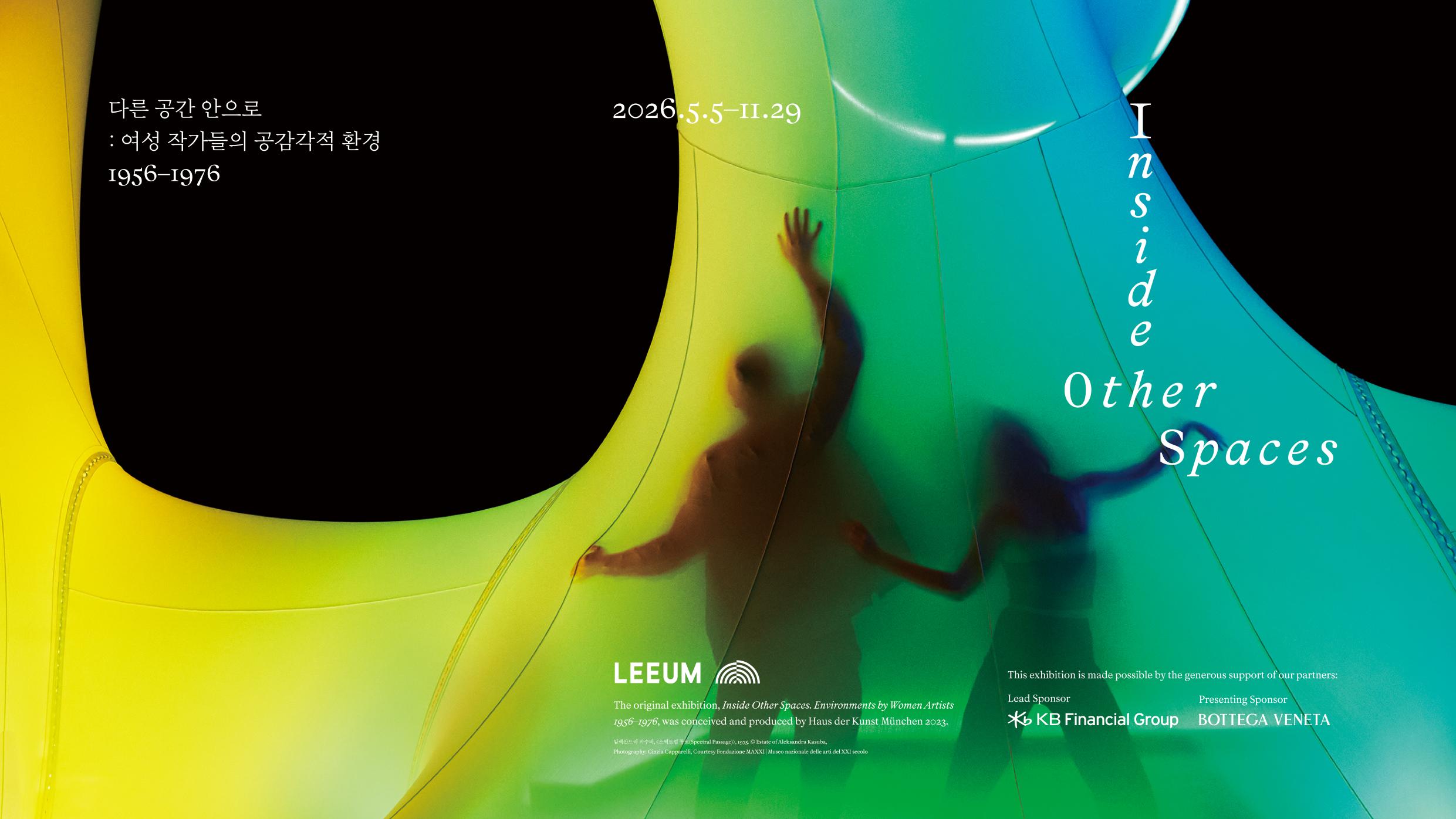
In 1956, Tsuruko Yamazaki showed Red at the Gutai Art Exhibition in Japan: a red structure you had to stoop to enter. Leeum's exhibition begins with this work. An "environment" is a work you walk into with your whole body; light, sound, colour, and air are its materials.
Works like these were mostly made of cheap materials, taken apart after the show, and never sold, and the names of the women who made them were gradually forgotten. In 1976 the Venice Biennale gathered such works under the heading "Environment/Art", and after that the word "installation" slowly took the place of "environment".
The Korean artist Jung Kang-ja is among them. In August 1970 she held her first solo exhibition, Muche-jeon, at the National Public Information Hall, making a room of black vinyl curtains, smoke, and light; soon after it opened, the authorities forcibly removed it. No exact plans survived, so Leeum rebuilt the room from newspaper reports, her notes, and her family's recollections. Her voice in the room was reconstructed with AI from recordings her family kept.
The exhibition was curated by Andrea Lissoni and Marina Pugliese. It set out from Milan in 2023 and has travelled to Munich, Rome, and Hong Kong. Among its eleven artists are Judy Chicago with Feather Room, Laura Grisi with Sirocco, where the wind never stops blowing, and Dream House, made by Marian Zazeela, La Monte Young, and Jung Hee Choi, shown in Asia for the first time.
Knowledge cardsInstallation Art
- Booking required
The wood Jo Sook-jin picked up, and the time it has passed through.

Jeo neomeo (Beyond), an oil painting on plywood, was shown in Tokyo in 1987 and then stayed in the collection of Toshiaki Minemura; this exhibition has brought it back to the artist. Jo Sook-jin, born in Gwangju in 1960, was already working in the early 1980s with plywood, floor paper, and board, materials seldom used for art. Her 1983 self-portrait Muwi jayeon (Non-action, Nature) was her first work on plywood.
After moving to New York in 1988, she began collecting wood and old things that other people had thrown away. Everything Comes from Being III (1998–99) uses a wine rack that was about to be discarded. Between Spaces stacks salvaged timber into a square structure almost three metres high; its subtitle, "We work with being, but non-being is what we use", comes from the Tao Te Ching.
The 150 wooden totems of Below (2012–15) are cedar left over from building a traditional Korean temple in Flushing, New York, and visitors look down on them from a platform. Nobody (2014), in the collection of the Seoul Museum of Art, hangs 218 picture frames gathered in New York and Seoul from the ceiling. The exhibition's title, Jinaganeun jari, means "the place passed through". For Jo, passing is not the same as vanishing; what has been thrown away still carries the time it has been through.
This is the second show in the SeMA Namseoul Museum of Art's series on leading Korean sculptors, with about a hundred works, including new pieces and drawings and archive material never shown before. The Colors of Life – Gather, Flowers! (2024/2026) is made from fishing gear washed up on the shore of Guleopdo island, off Incheon.
Knowledge cardsInstallation ArtModern Sculpture
Christine Sun Kim's animation for a curved screen, and American Sign Language.
Before the 2020 Super Bowl, Christine Sun Kim performed the American national anthem in American Sign Language (ASL). Born in 1980 and raised in Southern California, she has been deaf since birth, and ASL is her first language. She now lives in Berlin.
Her work often starts from sound and language, using musical notation, signing, and text. Her 2018 charcoal drawings Degrees of Deaf Rage use angles to mark the moments that make a deaf person angry in a hearing world. In 2025 the Whitney Museum of American Art in New York gave her the exhibition All Day All Night, which travelled to the Walker Art Center in Minneapolis in 2026.
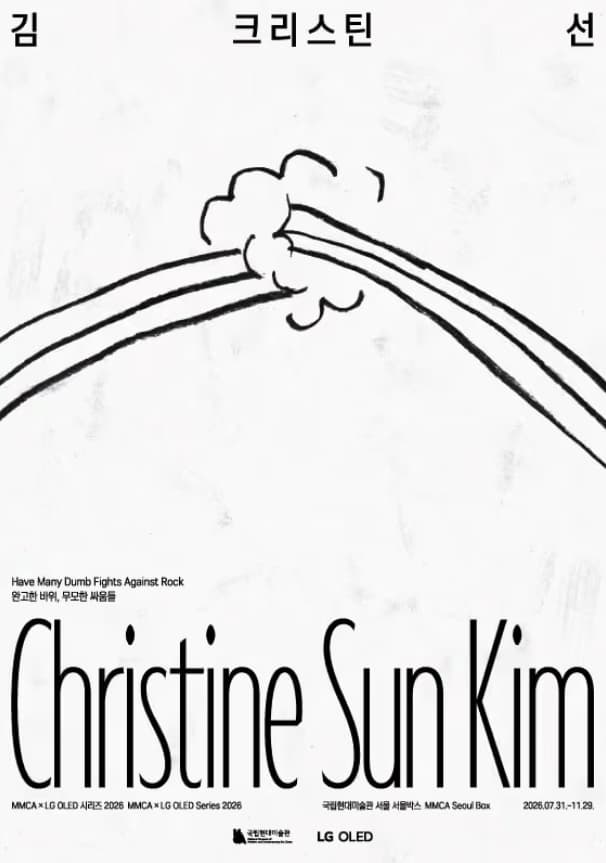
Her new work, Have Many Dumb Fights Against Rock, was made for the Seoul Box at the National Museum of Modern and Contemporary Art (MMCA) in Seoul, a space about seventeen metres high. Seventy-two 55-inch LG OLED panels form a curved screen on the wall, 8.1 metres high and 5.4 metres wide. Starting from her drawings, the animation sets the movements of ASL beside the motion lines of old comics, and the images spread onto the walls and floor.
The title describes arguing with a rock, a fight that never ends: people failing, again and again, to understand one another. Her work keeps asking who gets to speak, and what can be heard. This is the second year of the collaboration between MMCA and LG Electronics, which each year invites one artist to make a new work for the Seoul Box.
Knowledge cardsMedia ArtInstallation Art
The paintings and calligraphy of the Kansong collection, and the words written on their paulownia boxes.
Kim Jeong-hui, known as Chusa, wrote a pair of calligraphic couplets, Jikseong sugu, as a gift for an official of the Qing court. Years later it turned up in a market in Beijing, where Park Seok-yun, the brother-in-law of Choe Nam-seon, recognised it and brought it back to Korea; it was later bought by Jeon Hyeong-pil. This history, and the judgements made about it over the years, are written on the wooden box that holds it.
Writing like this is called sangseo, "box writing": it records the artist, the title, appraisals, and where the work has been. During the Japanese occupation, Jeon Hyeong-pil, who took the name Kansong, spent much of his family fortune collecting Korean heritage, and had craftsmen make a paulownia box to the size of each work. Paulownia keeps out damp and insects, which suits paintings and calligraphy, and a single box is said to have cost as much as several sacks of rice. Many of the appraisals on the boxes were written by Oh Se-chang and other leading connoisseurs of the day.
The box of Gosa hangeo by Yi Jing, a painter of the mid-Joseon period, says it is a landscape painted in gold; inside, a gold landscape spreads across black silk. Kim Hong-do (Danwon)'s Nangwon tudo shows Dongfang Shuo stealing the peaches of the Queen Mother of the West, and its box carries Oh Se-chang's note that it is a rare, fine example of Danwon's figure painting.
This is the last of the exhibitions marking the 120th anniversary of Kansong's birth, and the first time since the museum opened that works and their sangseo have been shown side by side. The second floor has Yi Jing, Kim Hong-do, Kim Su-cheol's album Buksan hwasa, and calligraphy by Kim Jeong-hui; the first floor has works by Oh Se-chang, An Jung-sik, and Jang Seung-eop.
Knowledge cardsBox inscriptions (sangseo)Ink painting
- Booking required
The house where Kim Tschang-yeul lived for more than thirty years, and the water drops he painted on hanji.
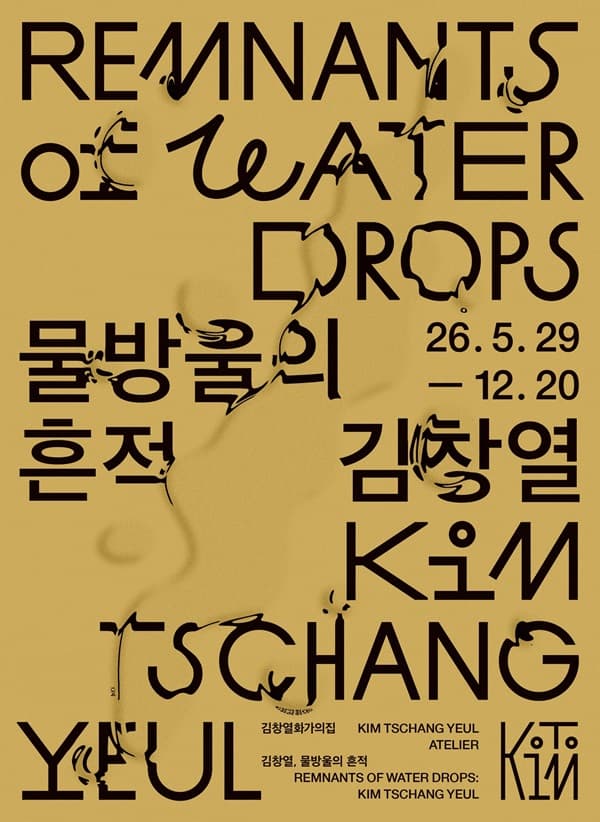
In 1969 Kim Tschang-yeul moved to France and turned an old stable of about a hundred square metres outside Paris into a studio. One dawn, after working through the night, he saw a single bead of water clinging to a canvas, shining in the early light. In 1972 he showed Événement de la nuit (Event of the Night) at the Salon de Mai in Paris: a painting of one suspended drop, long regarded as his first water-drop painting.
He was born in 1929 in Maengsan, South Pyongan Province. When the Korean War broke out he was in his second year at Seoul National University, and his studies stopped; of the 120 boys in his middle-school class, he said, sixty were killed in the war. He later described painting water drops as a way of letting dreams, sorrow, and anxiety dissolve.
In the 1980s he began painting drops over the Thousand Character Classic, in the series Recurrence; he had learned the text as a child from his grandfather. In 1988 he built this house in Pyeongchang-dong, Seoul, and from then on divided his life between Seoul and Paris. In damp France paper pulp was slow to dry, and most of his work on hanji, Korean mulberry paper, was made here.
Kim died in 2021. Jongno District bought and renovated the house, which opened in May 2026 as the Kim Tschang-yeul Artist's House. The basement studio has been restored as closely as possible to the way he last used it, lit only by a round skylight. The opening exhibition, Traces of Water Drops, centres on his works with paper: Water Drops (1998), painted on canvas and hanji; La Neige (1999), a print made only at the Pyeongchang-dong studio; and unfinished grounds for the water-drop and Recurrence series.
Knowledge cardsHanji
Opening soon
Deborah Turbeville's fashion photographs, and the word she used most: atmosphere.
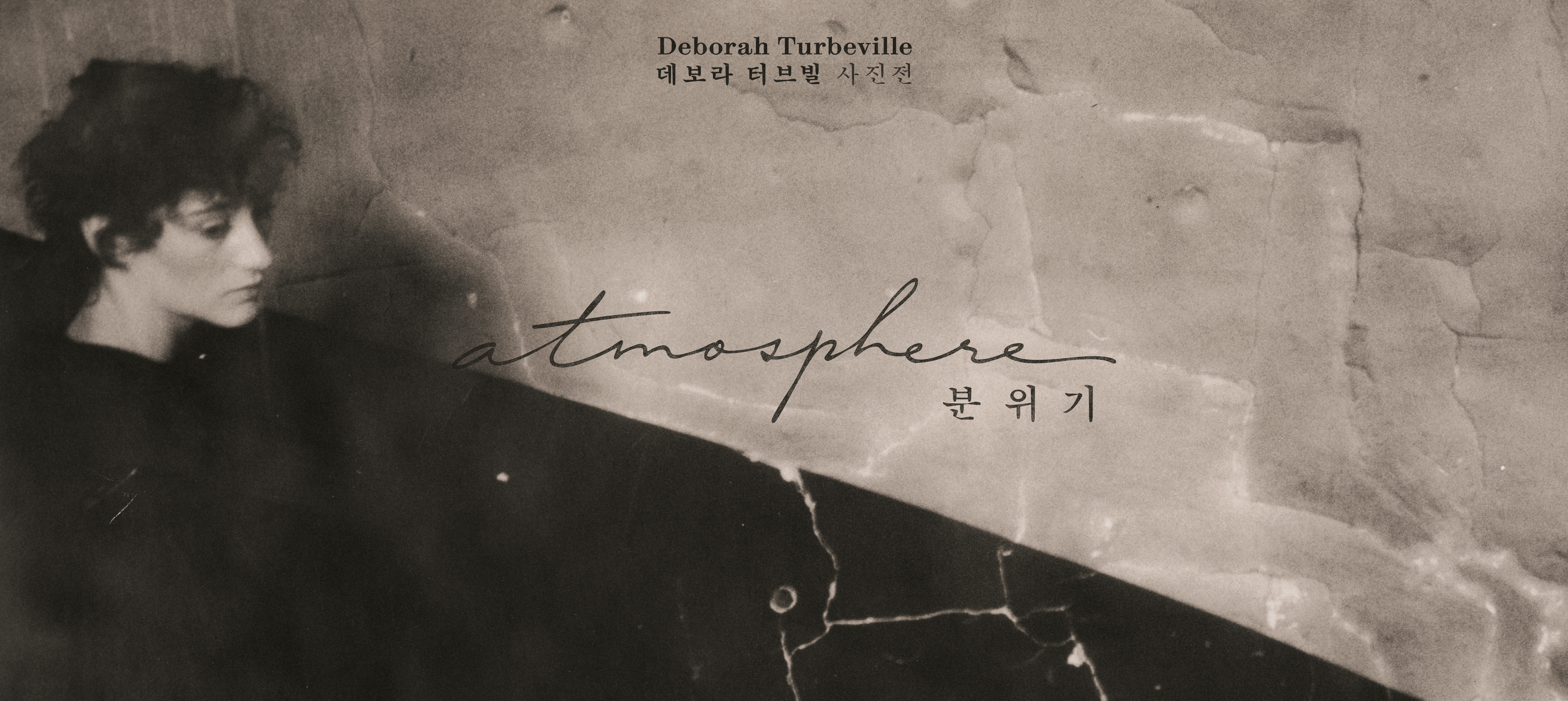
In 1975 Vogue ran a set of swimwear photographs: five women in a public bathhouse in New York that was about to be demolished. The pictures caused an uproar. The same year one of them hung in a photography exhibition at Hofstra University, and a New York Times critic called it one of the most beautifully composed pictures in the show.
Turbeville was born in Massachusetts in 1932. As a young woman she worked as a sample model and assistant in the studio of the designer Claire McCardell, then became a fashion editor at Harper's Bazaar, and only took up the camera in the 1970s. Rather than glossy pictures built around the product, she photographed the inner lives of her subjects and the faint atmosphere around them. She often let her prints fade into sepia and cut her own photographs into collages. With Helmut Newton and Guy Bourdin, she is seen as one of those who changed the direction of fashion photography in the 1970s.
In 1981 Jacqueline Kennedy Onassis, then an editor at the publisher Doubleday, asked her to photograph the rooms of Versailles that visitors never see; the result was the book Unseen Versailles. She later divided her life between New York, San Miguel de Allende in Mexico, and St. Petersburg in Russia, and died in New York in 2013.
piknic has named the exhibition Bunwigi, "atmosphere", the word she used most when talking about her photographs. It runs from early studies to photo collages, in settings that include the countryside of the American East Coast tied to her family's memories, St. Petersburg, Versailles, and her home in Mexico.
Knowledge cardsFashion photography
About this anthology: chosen each month by the Anthology editors. Every exhibition is checked against the venue's official site (as of Oct 19, 2026), and no listing is paid for. If dates or prices change, please refer to the venue's own announcement.
The Korean original of each title and venue name is shown in gray below it.
A little more art in your life
Every month, we write a letter about exhibitions we love and why we recommend them. Subscribing is free, and you can cancel at any time.
We will use your email address only to send the newsletter. Privacy
Taipei · Tokyo
Anthology in other cities. Each is its own local edition, opening with this month's anthology.