This month's guide
Seoul Anthology: OctoberA mountain, a crowd of tourists, and a house made of cloth
By the Anthology editors ·
AI translation of the original written in 繁體中文.
This October, two retrospectives spanning half a century close one after the other: one painter's sixty years of mountains, one photographer's fifty years of tourists. Meanwhile, Do Ho Suh's sewn houses, Lee Dai-won's orchards in primary colour, and five centuries of Spanish painting are waiting to be seen in Seoul's museums. Here are the 11 exhibitions we picked for the month.
Details are from each venue's official site as of October 6, 2026. If dates or prices change, the venue's own announcement takes precedence.
Closing
Tourists, beaches, and fast food, photographed until they look like us.
The first large retrospective in Asia since the British photographer Martin Parr (마틴 파, 1952–2025) died: 14 series, some 500 works, and all 90 of the photobooks he published. With saturated colour and a lens pushed uncomfortably close, he recorded holiday crowds, supermarkets, and tourist sights, funny and a little unsettling at once. The show also includes the pictures he took on visits to South and North Korea in the late 1990s and early 2000s.
One mountain, painted for sixty years.
The largest retrospective yet of Yoo Youngkuk (유영국, 1916–2002), pioneer of Korean abstract painting, marking 110 years since his birth: more than 170 paintings, reliefs, photographs, and drawings, some never shown before. Rather than running in order, the show starts in 1964, when he finally held his first solo show at 48, then travels back to his first encounters with the avant-garde in 1930s Tokyo and forward to his last years. The mountains he painted again and again came from his hometown of Uljin and were broken down into dots, lines, planes, and colour. Standing before his two largest works, Mountain-Red and Mountain-Blue (1994), the title, The Mountain Is Within Me, makes sense.
In the age of AI, human error as a starting point for art.
Buk-Seoul Museum of Art's annual Title Match, which puts two artists side by side, is in its 13th edition. Its theme, Human Error, is a term used to assign blame for industrial accidents; here it becomes an error artists commit on purpose. Oh In-hwan (오인환) uses participatory pieces, installation, and photography to question the collectivism of 'we are one'. Jang Seo-yeong (장서영), under the title Silicon Vanitas, sets ever-advancing technology against a body that ages, falls ill, and dies. Together they point to one answer: what makes us human may be exactly the errors we cannot remove.
Running
Every home he lived in, sewn in fabric at full scale.
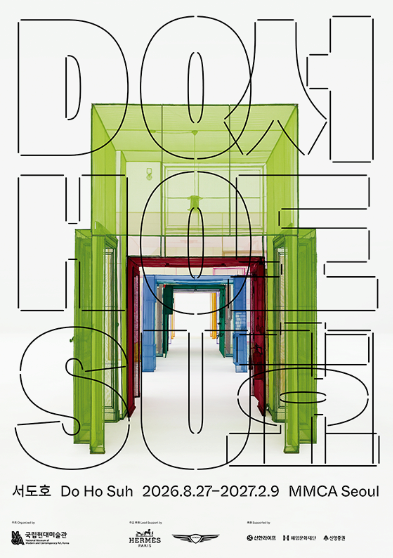
A major solo show by Do Ho Suh (서도호), Korea's best-known installation artist, running from early pieces and signature works to projects still in progress. Long concerned with migration and dwelling, the individual and the community, he recreates the spaces he has lived in from translucent fabric, turning 'home' into something you can carry and walk into. Nest/s (2024), about 21 metres long, joins the passageways of different homes into a single path; walking it end to end is like following one person from city to city.
Four artists, four ways of looking at what hasn't been explained yet.
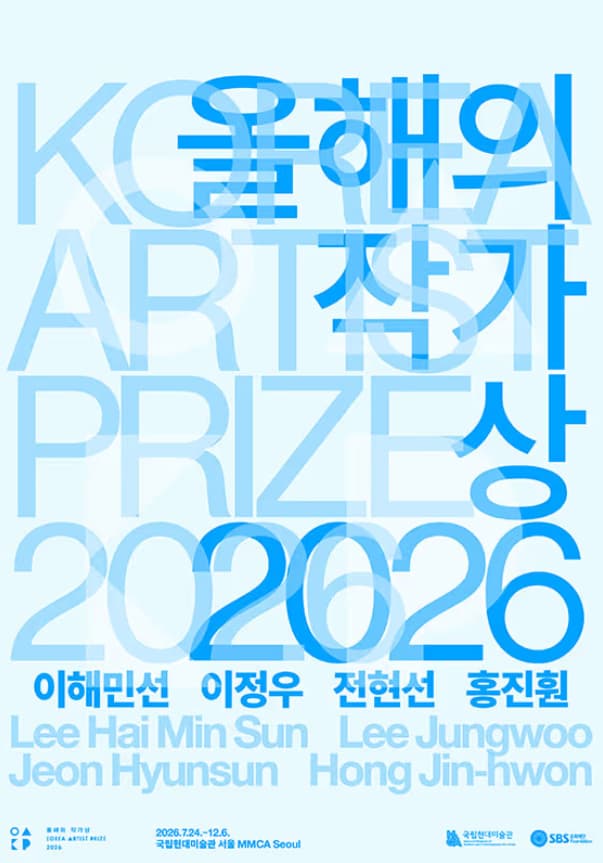
Korea Artist Prize (올해의 작가상), run by MMCA and the SBS Foundation since 2012, picks four artists or teams each year and supports new work for the show. This year: Lee Haeminseon (이해민선), Lee Jeong-u (이정우), Jeon Hyeonseon (전현선), and Hong Jinhwon (홍진훤). They paint things that seem about to vanish yet linger, trace the errors and biases that technical systems leave behind, stretch painting into layered forms, and ask how sites of protest turn into images. Lee Jeong-u's piece takes the 1946 film Viva Freedom! (자유만세), of which only about 50 minutes survive, to ask whether AI-generated images can restore history. About 100 works in all.
'The happiest painter in the world' was, above all, a disciplined one.
The orchards, mountains, and ponds of Lee Dai-won (이대원, 1921–2005), drenched in bright primary colours, earned him the name 'the happiest painter in the world'. This retrospective, with about 120 works and 100 archival items, sets out to overturn that image: the brightness was not a sunny temperament but the result of long observation and restraint. The coloured threads of embroidery, the glow of mother-of-pearl lacquerware, and the brushwork of East Asian painting all became stacked lines and dots of colour. The largest work is 7 metres wide; seeing the farm he painted for decades inside the stone museum in Deoksugung Palace makes for a rare contrast.

Cakes, pies, and ice cream, lined up into an order.
The first large retrospective in Korea of the American painter Wayne Thiebaud (웨인 티보, 1920–2021), part of Hyundai Card's culture project. He is best known for rows of desserts and everyday objects in thick paint, neatly arranged and casting sharp shadows. Often filed under Pop Art, he preferred to be seen as a realist painter. The title, The Order of Things, captures the shop-window arrangement of his pictures.
Velázquez, Goya, Sorolla: five centuries of Spanish painting.
The Hangaram Design Museum at the Seoul Arts Center teams up with New York's Hispanic Society Museum & Library to trace five hundred years of Spanish painting as 'a chronicle of light and darkness'. From the court painter Velázquez and Goya, witness to war, to Sorolla and his Mediterranean sunlight, a collection you would normally have to fly to New York to see has come to Seoul.

A mole, secretly tunnelling between two games.
Seo-Seoul Museum of Art's first Media Artist exhibition features Kim Heecheon (김희천), who has long argued that 'the world has become a screen'. It focuses on work since 2023: self-playing games built in the Unity engine and rendered in real time, and the new Lemon, in which Butter, a mole that appeared as an Easter egg in earlier pieces, turns out to have been tunnelling between the two game worlds all along. There is also 말린, a multichannel video made with generative AI, and .dng, about 100 photographs chosen from 5,841 taken on his phone.
From a single lacquer tree to a finished piece of lacquerware.
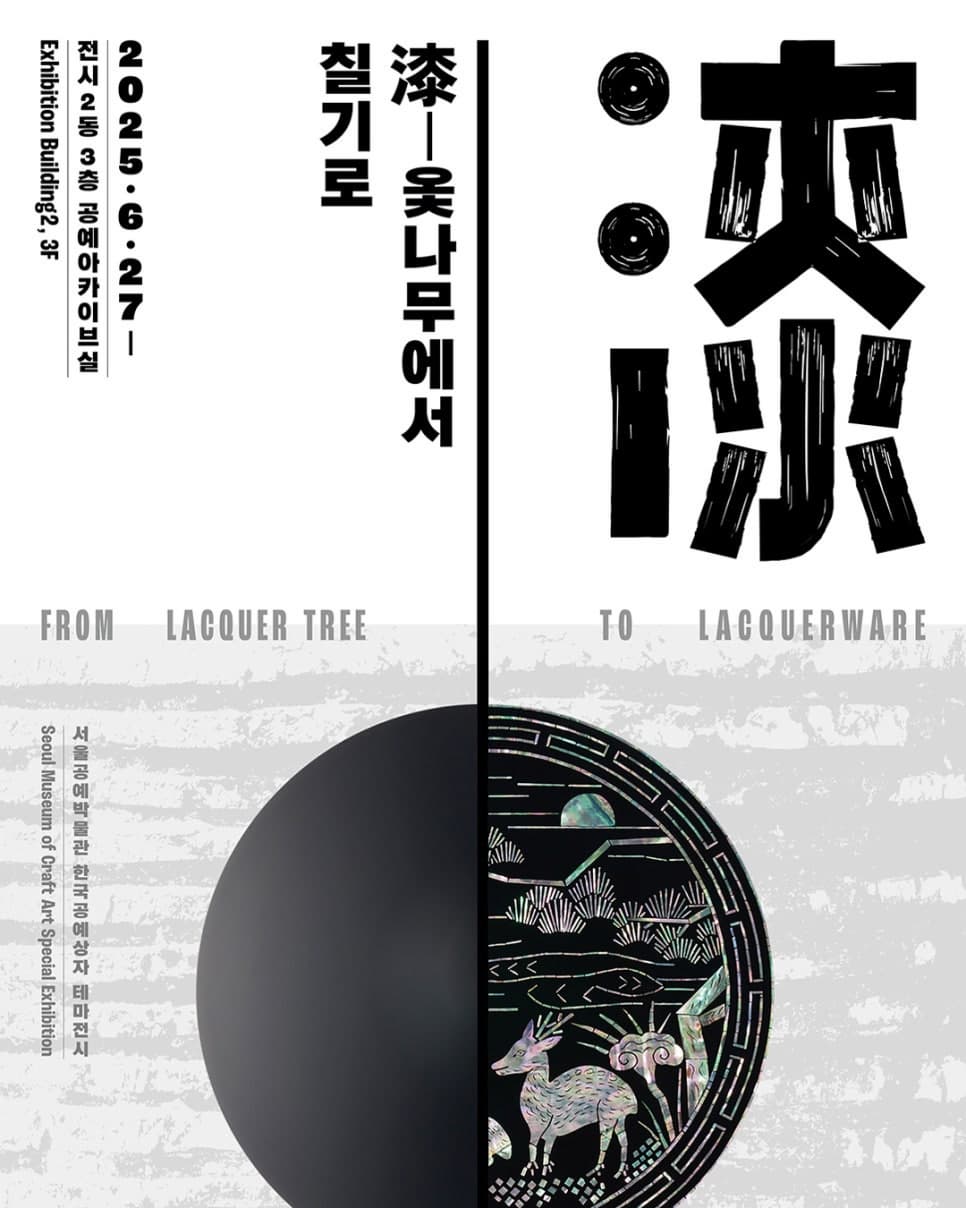
Lacquer has been used as a craft material for more than five thousand years; Korea's oldest trace of it is on a Bronze Age mandolin-shaped bronze dagger. Since 2020 the Seoul Museum of Craft Art has visited lacquer-producing regions across the country and turned its research into portable 'lacquer craft boxes' that take apart every step from tapping the tree to the finished piece. The show is small and sits in the Craft Archive, an open storage room open only Tuesday to Friday.
Opening
From Olympic monument to everyday park landscape.
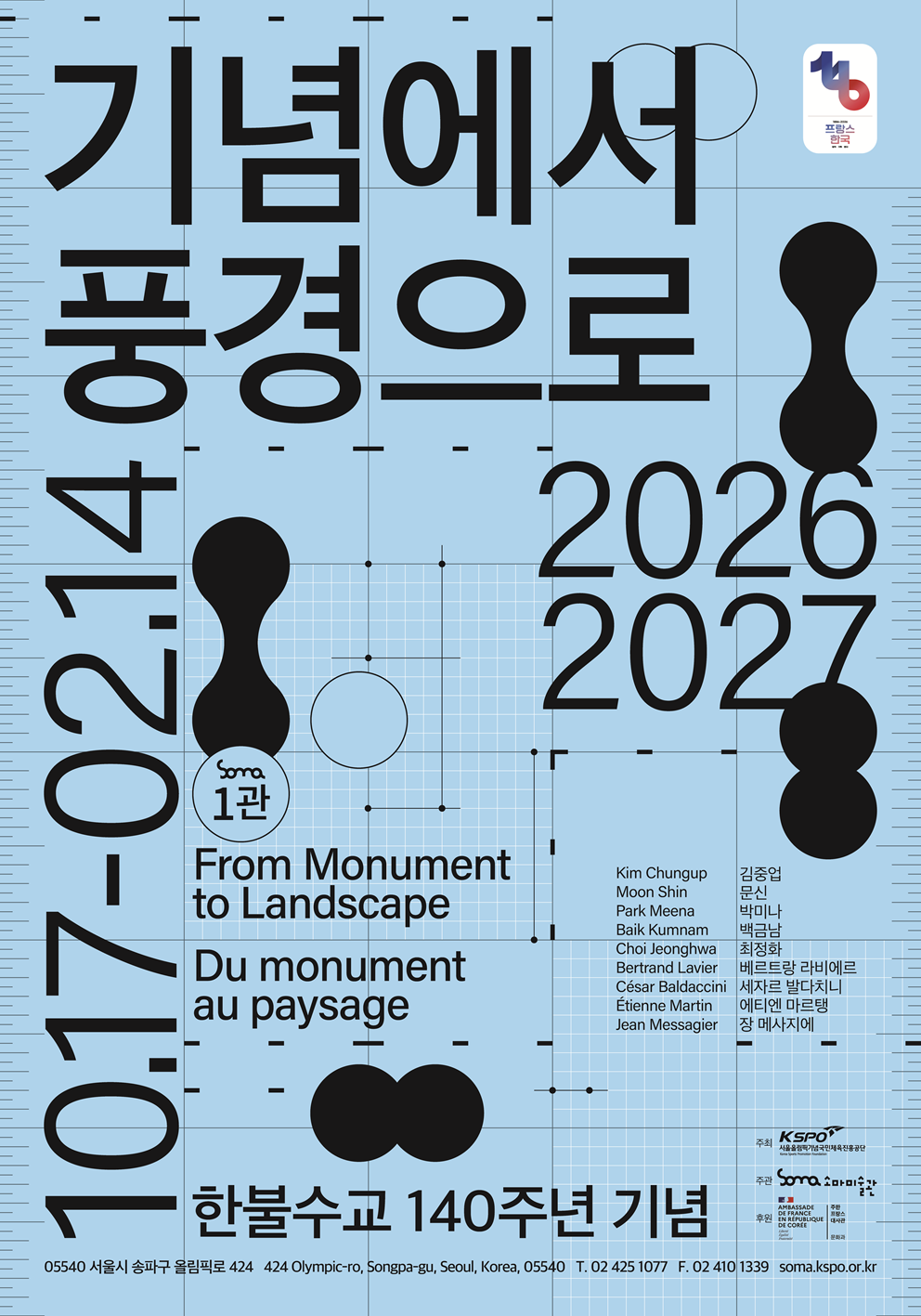
SOMA sits inside Olympic Park, whose sculpture park grew out of the 1988 Seoul Olympics, so the title, From Commemoration to Landscape, brings the park's own history to mind. The artists include Kim Chung-up (김중업), architect of the park's World Peace Gate, the sculptors Moon Shin (문신) and Choi Jeong-hwa (최정화), and French artists such as César and Bertrand Lavier, in about 100 drawings, paintings, sculptures, videos, photographs, and archival items. Admission is free on opening day, October 17, which is Culture Day.
Titles and venue names are AI-translated by DeepL. The Korean original is shown in gray below each one.