39 days left#Craft#Media art
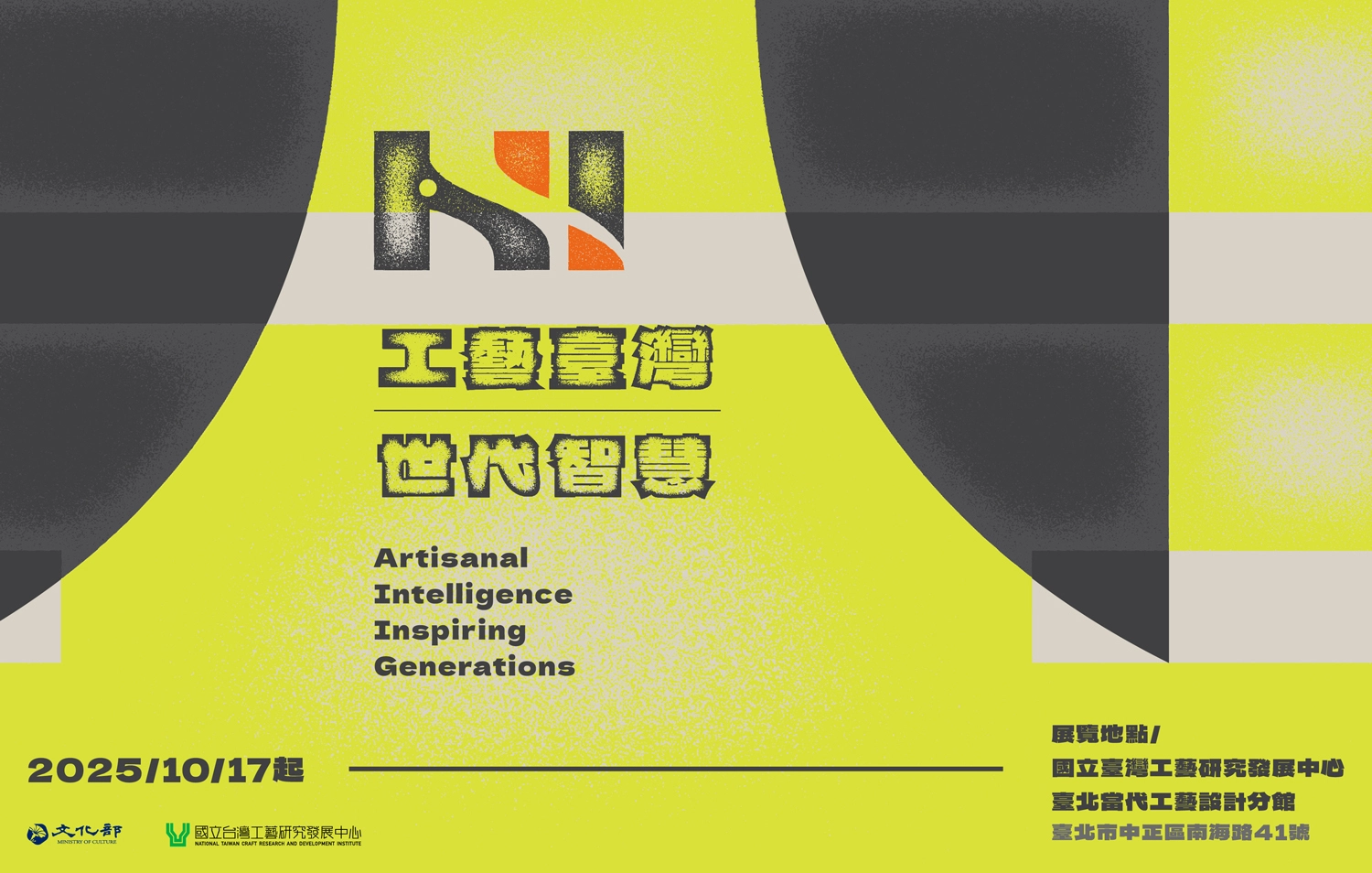
AI Craftsmanship in Taiwan: Wisdom Across Generations
Chinese original:
AI工藝臺灣‧世代智慧
Besides artificial intelligence, AI can also be read as artisanal intelligence: in handcraft, the relationship between person, tool, and real material is irreplaceable. This permanent exhibition at the Taipei branch of the National Taiwan Craft Research and Development Institute sets Taiwanese craft from different eras side by side: local lacquer art of the 1920s, the design that grew from Yen Shui-long's work for Taiwanese craft in the 1930s to 1950s, the revival of Indigenous culture in the 1980s, and community crafts since the 1990s, ending with a Manifesto for Future Craft.
- Dates
- Jan 1 – Dec 31, 2026
- Venue
- Taipei Contemporary Crafts and Design Branch (臺北當代工藝設計分館) · Nanhai Academy & Botanical Garden臺北市中正區南海路41號
Getting there
MRT Chiang Kai-Shek Memorial Hall Station, Exits 1 or 2, about 8–15 min walk along Nanhai Road; or MRT Xiaonanmen Station, Exit 3, about 6 min on foot through the Botanical Garden
- Hours
- 09:30–17:30 · Closed: Mon
- Organized by
The calendar entry covers the whole run, so you won't need to look the dates up again. Please check opening hours and closing days before your visit.
Entry notes
The permanent exhibition AI! Taiwan Craft: Generational Wisdom is on the 2nd floor of the Taipei Contemporary Craft and Design Branch, from 17 October 2025 to 31 December 2026. Open Tuesday to Sunday 9:30–17:30; closed on Mondays.
- The permanent exhibition AI! Taiwan Craft: Generational Wisdom is on the 2nd floor of the Taipei Contemporary Craft and Design Branch, from 17 October 2025 to 31 December 2026. Open Tuesday to Sunday 9:30–17:30; closed on Mondays. (Source: 國立臺灣工藝研究發展中心:展覽資訊, 2026)
From the organizer's announcements and press reports. Arrangements can change; please check the official site before your visit.
Knowledge cards
Lacquer漆藝The craft of coating objects, layer by layer, with the sap of the lacquer tree, making them waterproof, durable, and lustrous.Read moreClose
01About
East Asian lacquer is the sap of the lacquer tree, and its main component is urushiol. Raw lacquer gives most people an allergic rash on contact. It does not dry by evaporation: at the right temperature and humidity it oxidizes and polymerizes into a hard film. The earliest known Chinese lacquerware is a red wooden bowl from a Hemudu culture site in Zhejiang, made around 5000 to 4000 BC. In Taiwan, lacquer took root under Japanese rule. Yamanaka Tadasu, a Japanese lacquer artist who came to Taiwan in 1916, set up a lacquerware workshop in Taichung and developed a style called Hōrai-nuri, taking Taiwan's fruit and scenery as its subjects; he also ran the craft training school founded in Taichung in 1928, where Taiwanese lacquer artists such as Wang Ching-shuang studied. The permanent exhibition at the Taipei Contemporary Craft and Design branch begins with this local lacquer of the 1920s and goes on to Yen Shui-long's craft design, the revival of Indigenous cultures, and community crafts.
02In the gallery
Look at the light reflected across a surface at an angle, then find an edge or a worn spot: can you see layers of a different colour underneath?
Wall label terms in Chinese
- 生漆
- Raw lacquer
- 漆酚
- Urushiol
- 漆器
- Lacquerware
- 蓬萊塗
- Hōrai-nuri (Penglai lacquer)
03Notes
Lacquer hardens slowly in the right warmth and humidity, coat upon coat, into a tough film.
This time, at AI Craftsmanship in Taiwan: Wisdom Across Generations —
Look at the sheen from an angle, then at the worn edges. How many layers of lacquer do you think are hidden?
04Related
Nearby, after this one
Same venue · Taipei Contemporary Crafts and Design Branch
Same neighborhood · Nanhai Academy & Botanical Garden
Shows open on the same days as this one are listed first (regular closing days only).