114 days left#Media art
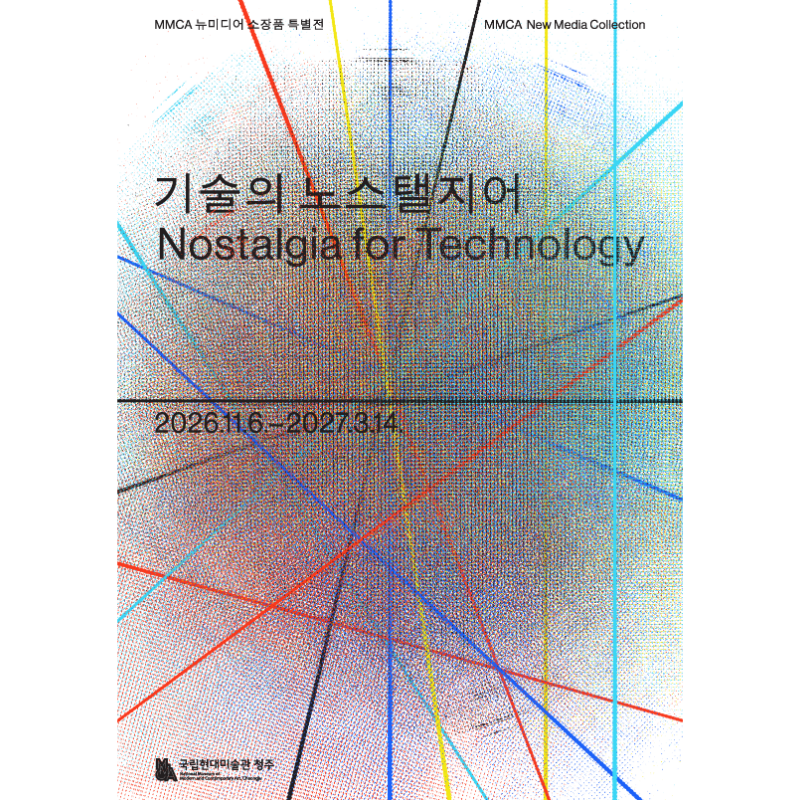
MMCA New Media Collection Special Exhibition: Nostalgia for Technology
Korean original:
MMCA 뉴미디어 소장품 특별전 《기술의 노스탤지어》
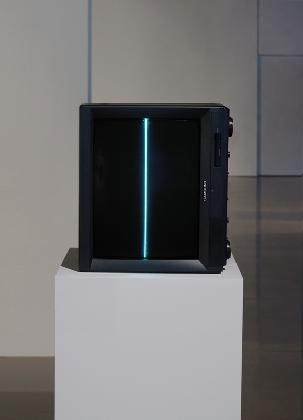
A special exhibition drawn from the museum's new media holdings, running from early video art made with cathode-ray-tube TVs to contemporary media works that interact with artificial intelligence. It brings together 26 works by 23 artists, including Nam June Paik's Zen for TV (1963, remade 1995). It is held in the fifth-floor exhibition hall of the Cheongju branch.
- Dates
- Nov 6, 2026 – Mar 14, 2027
- Venue
- National Museum of Modern and Contemporary Art, Cheongju (국립현대미술관 청주) · North Chungcheong충청북도 청주시 청원구 상당로 314Open in Naver Map
Getting there
City buses run from Cheongju Express Bus Terminal, the intercity bus terminal, Cheongju International Airport and KTX Osong Station (from Osong: 511, 517, 511-1, 747; from the airport: 747). From the Cheongju Yeogaek northern stop it is about a 12-minute walk (784 m)
- Admission
- ₩2,000Original: 2,000원
- Artists
- Koo Jeong A
- Hayoun Kwon
- Kim Kulim
- Kim Doojin
- Kim Beom
- Kim Sejin
All artists(23)Show less
- Koo Jeong A
- Hayoun Kwon
- Kim Kulim
- Kim Doojin
- Kim Beom
- Kim Sejin
- Kimsooja
- Ayoung Kim
- Heecheon Kim
- Ryu Seongsil
- Park Hyunki
- Nam June Paik
- Apichatpong Weerasethakul
- Yeom Jihye
- Ian Cheng
- Lee Yongbaek
- Lee Wongon
- Zhang Xuzhan
- Zachary Formwalt
- Jenny Holzer
- Ha Junsoo
- Han Kyungwoo
- Ho Tzu Nyen
The calendar entry covers the whole run, so you won't need to look the dates up again. Please check opening hours and closing days before your visit.
Entry notes
The fifth-floor exhibition hall costs ₩2,000, and the ticket also covers floors 1–4; the storage floors 1–4 are free. Open Tue–Sun 10:00–18:00, last entry 17:00; closed Mondays. Free on the last Wednesday of each month, and for visitors aged 24 and under, 65 and over, and undergraduate students.
- The fifth-floor exhibition hall costs ₩2,000, and the ticket also covers floors 1–4; the storage floors 1–4 are free. Open Tue–Sun 10:00–18:00, last entry 17:00; closed Mondays. Free on the last Wednesday of each month, and for visitors aged 24 and under, 65 and over, and undergraduate students. (Source: 국립현대미술관 청주:관람정보, 2026)
From the organizer's announcements and press reports. Arrangements can change; please check the official site before your visit.
Guided tours
Audio guide: the exhibition page lists 27 tracks (an overview and one per work), with captions available. How to use it, the fee and language are not stated. Group tickets for 20 or more are KRW 1,600 per person (regular KRW 2,000); the booking procedure is not stated.
- Audio guideAudio guide: the exhibition page lists 27 tracks (an overview and one per work), with captions available. How to use it, the fee and language are not stated. Group tickets for 20 or more are KRW 1,600 per person (regular KRW 2,000); the booking procedure is not stated.
Source: 국립현대미술관 《기술의 노스탤지어》. From the venue's and organizer's announcements. Schedules, languages and fees can change; please check the official site before your visit.
Knowledge cards
Media Art미디어 아트Art made with electronic media such as video, screens, projection, and computing.Read moreClose
01About
Video art emerged in the 1960s. In 1963 Nam June Paik, born in Keijō (today's Seoul), held Exposition of Music – Electronic Television at Galerie Parnass in Wuppertal, Germany, scattering television sets through the space and distorting their images with magnets. Since then the screen has grown from the television set to projection, multi-channel installation, and LED, and the image is no longer only recorded footage: works by Kim Heecheon such as Cutter 3 are built in the game engine Unity and play on their own, computed in real time from input values. Such works often have no actors, dialogue, or plot, and need not have a beginning or an end; the label usually gives the running time and the number of channels.
02In the gallery
Find the running time and number of channels on the label first, then decide where to stand and how long to stay.
Wall label terms in Korean
- 영상
- Video
- 단채널
- Single-channel
- 다채널
- Multi-channel
- 게임 엔진
- Game engine
- 상영 시간
- Running time
03Notes
In media art the image isn't always recorded; it may be computed as you watch.
This time, at Nostalgia for Technology —
How long did you stay in front of the screen? What kept you there, or moved you on?