Essay
The Purple MountainA Century of Modern Art - Monet to Matisse: Treasures from the Toledo Museum of Art II, Fubon Art Museum
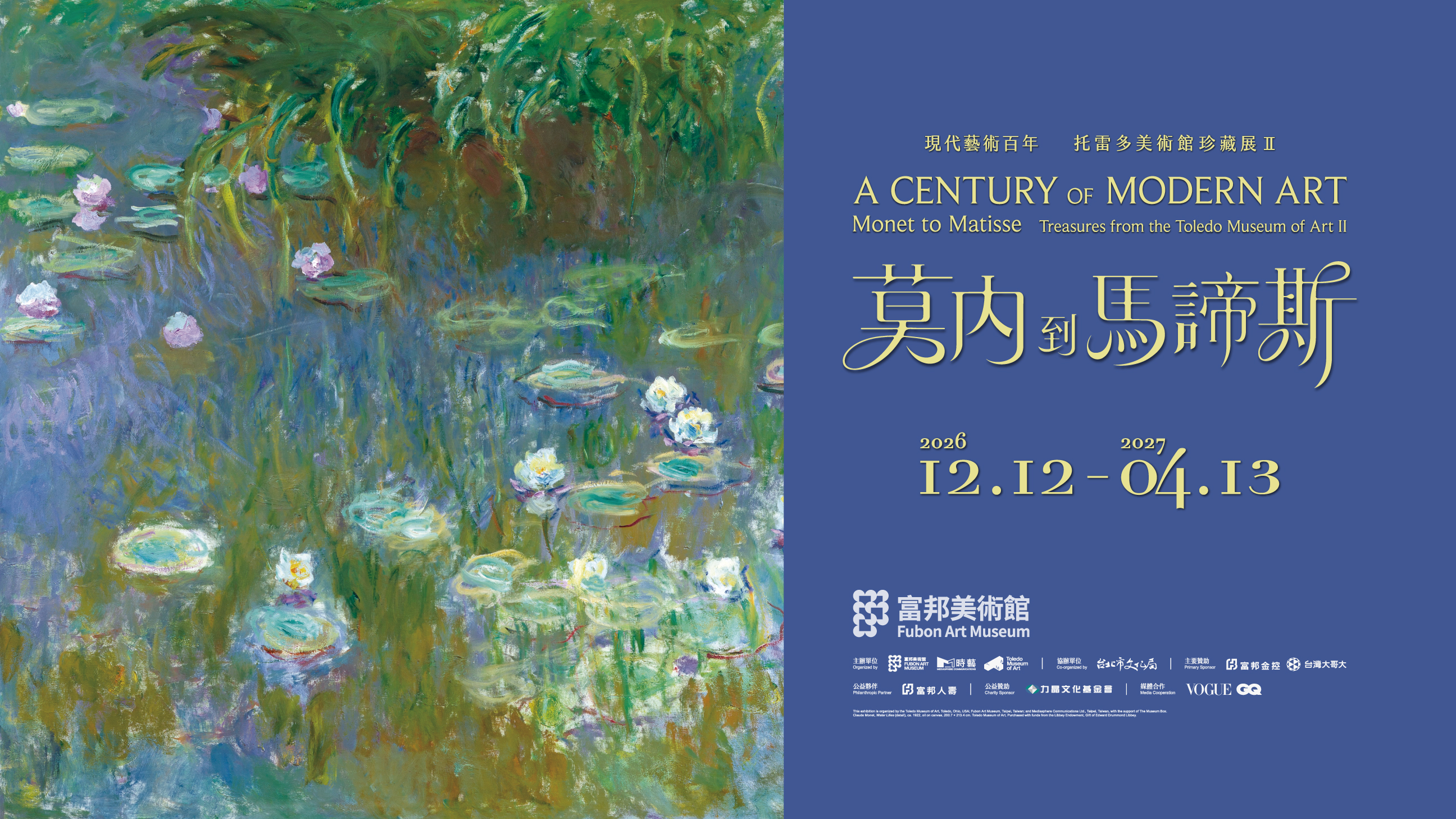
Taipei lies in a basin with mountains on every side, so wherever you stand, you can look up and see one. The mountains are there every day, yet they are seldom the same colour. On close, heavy days they are grey, their edges blurred into one another; after rain they turn a deep green, and you can make out the grain of the trees; and when the sky clears towards evening, the farther ones lean towards blue and violet, layered one behind another, paler the farther away they are. That is the air; the mountains themselves have not changed colour. Sometimes I notice, too, that on days when I am in good spirits the same mountain looks brighter, as if full of hope, and when I feel low it is simply a dull grey mountain with no life in it at all. How much of the colour I see is really there, and how much comes from my own imagination, is not easy to tell.
There was a time when painters, looking at a mountain or a field of wheat, also had a prescribed way of seeing it. In nineteenth-century France, the official exhibitions favoured history and mythology, and things had to be painted so that they looked like what they were. Painters learned by this standard and were judged good or bad by it. The Impressionists left it first. They went outdoors to paint the light in front of them and the life of their day. Over the hundred years after them, one generation of painters after another went further, and what they painted was no longer only what the eye sees but how they saw and felt. With no answer to check against, each of them had to work out again what a painting should be. What they found changed the way everyone looks at paintings.

“A Century of Modern Art: Monet to Matisse” is the second exhibition the Fubon Art Museum has made with the Toledo Museum of Art in Ohio. This summer the two museums first showed “Old Masters from Rembrandt to Goya”, European paintings from the sixteenth to the nineteenth century. This show comes after it. It takes fifty-seven works by fifty-three artists from the Toledo collection and follows the hundred years from Impressionism to abstract art. Among them is Monet’s late “Water Lilies”, over two metres in both height and width.
*
Van Gogh did not begin to paint until he was twenty-seven and taught himself, for the most part. In the ten years that followed he painted nearly nine hundred oil paintings. At first they were a greyish brown. In 1886 he moved to Paris, and only after he saw Impressionist and pointillist paintings did his colours brighten.
In May 1890 he moved to Auvers, a small town near Paris, where he often finished more than one painting in a day. “Wheat Fields with Reaper, Auvers” was painted then. Golden wheat fills most of the picture. A figure in the field is cutting wheat, and the bound sheaves run in rows towards a village in the distance. The sky is a blue with some green in it. The paint is laid on thickly, and the direction of each stroke can still be made out. The yellow of the wheat is deeper and heavier than the yellow of an ordinary wheat field. It is the colour he saw standing at the edge of the field, together with what he felt at the time. I see the sky that way too. When I am in a bad mood, there seem to be more clouds than usual, and when I am in a good mood, even on a cloudy day, the soft natural light seems to make the details clearer.

*
Gauguin also started as an Impressionist. Later, at Pont-Aven in Brittany, he and a few younger painters argued for another way of painting. Colour is there to express something and need not follow nature. Shapes can be simplified, and colour is laid on flat, one area at a time. In 1888 he went to Arles in the south of France and lived for a while with Van Gogh. The two of them painted in the same house, yet each went his own way: Van Gogh’s paint was thick, with every stroke visible, and Gauguin’s colour was flat.
In 1891 Gauguin left France for Tahiti, in the South Pacific. “Street in Tahiti” was painted that year. A reddish-brown path leads to the foot of a mountain. Beside it stand houses with thatched roofs, a tall yellow tree rises from the grass, and the far mountains are purple and pink. At dusk the distant mountains around Taipei tend towards blue-violet. What Gauguin’s purple mountains look like makes you very much want to see them for yourself. Gauguin was painting more than the scenery of a distant place. He was also showing how colours can be put together into a world unlike the usual one. This way of using colour later cleared the way for the Fauves, and Matisse was one of them.

*
Matisse was trained at the academy in Paris, which meant training in painting things so that they look real. Around 1905 he and several other painters began to work in very bright colours and broad strokes, and colour no longer had to match the thing it described. These painters were later called the Fauves.
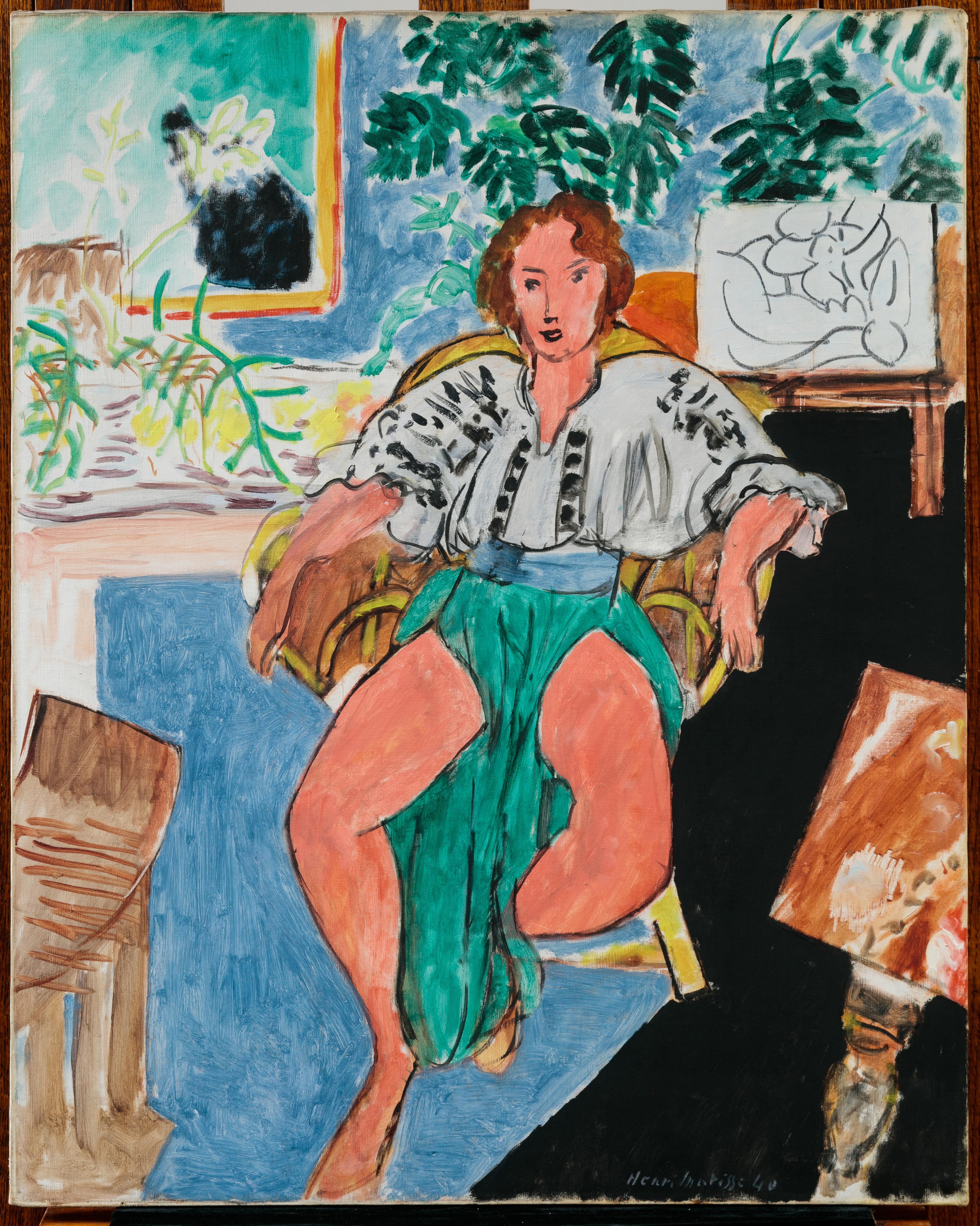
“Dancer Resting” was painted thirty-five years later. A woman in a white blouse and a green skirt sits leaning back on a yellow chair, looking at whoever stands outside it. The floor is one large field of blue, and the right side is a large field of black. Behind her are a few big green leaves, and on the easel at the upper right stands another painting by Matisse himself. In this picture the figure, the colour, the line and the pattern get the same amount of attention, and nothing is only background. The model was named Lydia. She later managed his studio and worked beside him.
He worked for nearly sixty-five years. Soon after finishing this picture, Matisse put down oil painting, and for the last dozen or so years of his life he used scissors instead, cutting shapes straight out of painted paper. Is there a clue to the change in his technique in this picture? It is the one I most want to see in person this time.
*
What Picasso changed was the position from which a picture is looked at. Before him, a painting showed what the painter saw from one spot, with distant things small and near things large. Cubism, which he developed with Braque, put onto one picture the sides of a single thing seen from several angles at once.
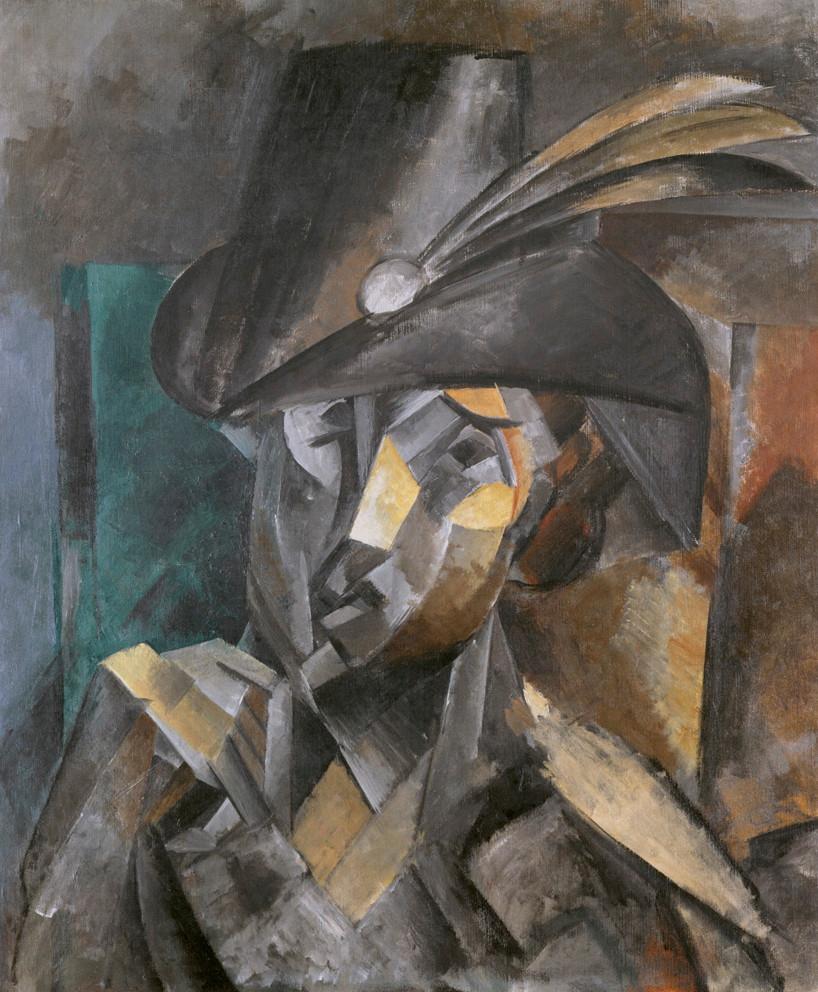
“Woman in a Black Hat” was painted in 1909. It shows Fernande, who was living with him then. She sits with one hand under her chin, her face and shoulders broken into angular planes, and on her head is a large black hat with a feather. He used very little colour, only grey, purple and brownish yellow, so that the woman and the space behind her are joined and are equally important.
*
Mondrian began by painting Dutch farms and trees, and they are recognisable as farms and trees. In 1912 he went to Paris and learned from Cubism. The apple tree he painted that year can be recognised only by looking closely. After he returned to the Netherlands he simplified his pictures step by step, until all that was left was horizontal and vertical lines, squares and rectangles, the three colours red, yellow and blue, and black, white and grey.
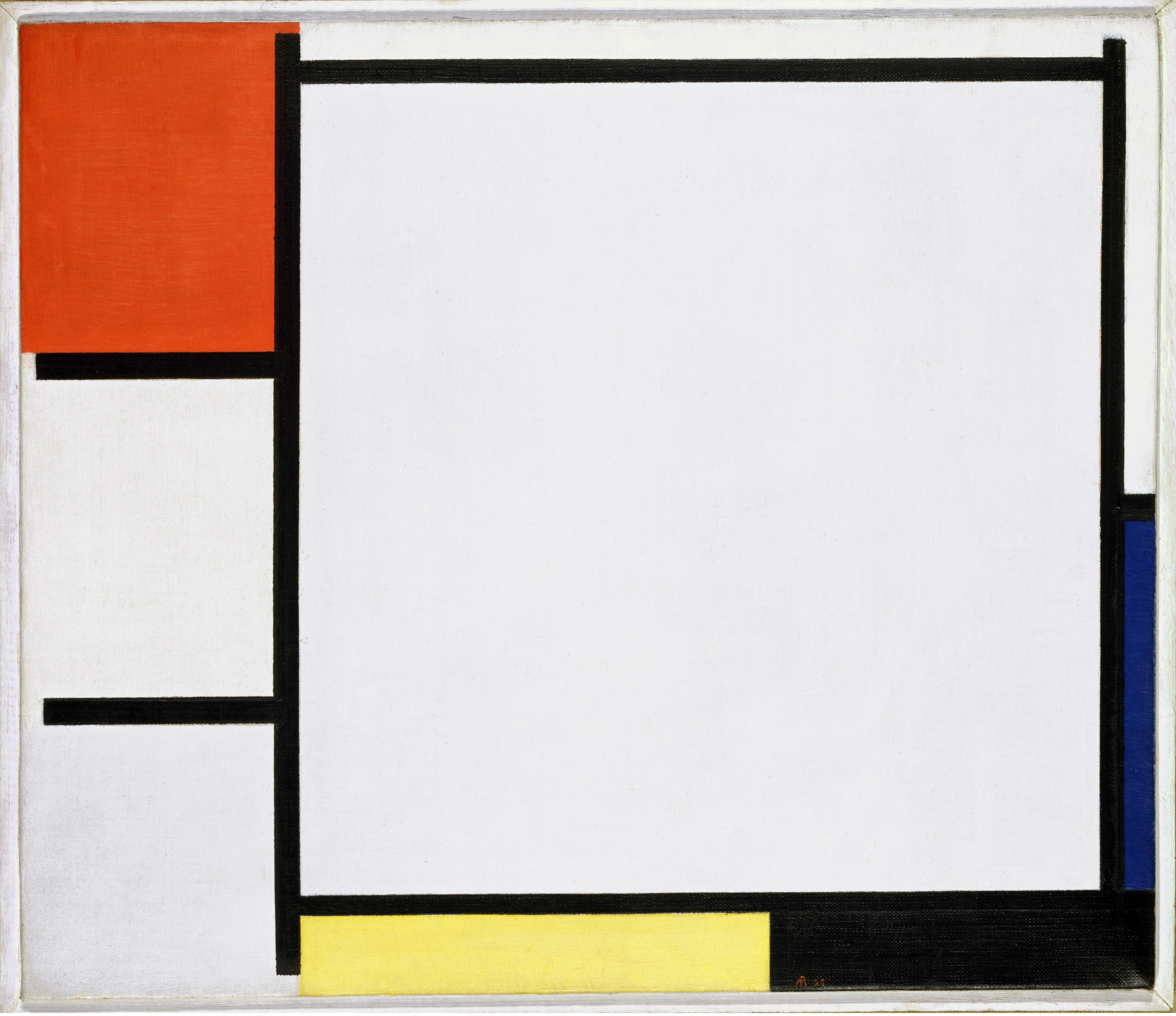
“Composition with Red, Blue, Yellow, Black, and Gray” was painted in 1922, seventeen years after he painted the farms. It is a small picture, less than fifty centimetres wide. In the middle is a large white square. There is a patch of red at the upper left, and at the lower right narrow bands of yellow, blue and black. The black lines stop before they reach the edge of the canvas. Nothing in it can be recognised any more, and he believed that when opposing forces are in balance, what is painted is the order that already exists in nature.
*
What a person feels is laid over what they see. When the heart feels romantic, the colours we see are brighter than usual. So I think that for Gauguin the mountains of Tahiti really were purple and pink, and that for Van Gogh the wheat fields at Auvers really were that yellow.
The mountains of Taipei are there today as well. None of their colours is the right one: they are green on a rainy day and blue-violet in the evening, and in each person’s eyes they are different again. I like art because art has no right answer.
I hope you will go and see it for yourself: A Century of Modern Art: Monet to Matisse.
— Yu
Knowledge cards: Impressionism · Modernism · Piet Mondrian · Berthe Morisot · Pablo Picasso · Paul Cézanne · Amedeo Modigliani · Édouard Manet · Claude Monet · Henri Matisse · Vincent van Gogh · Pierre-Auguste Renoir
The Chinese original of each title and venue name is shown in gray below it.