Opens in 7 days#Design & architecture
FineCharacter 2026
Korean original:
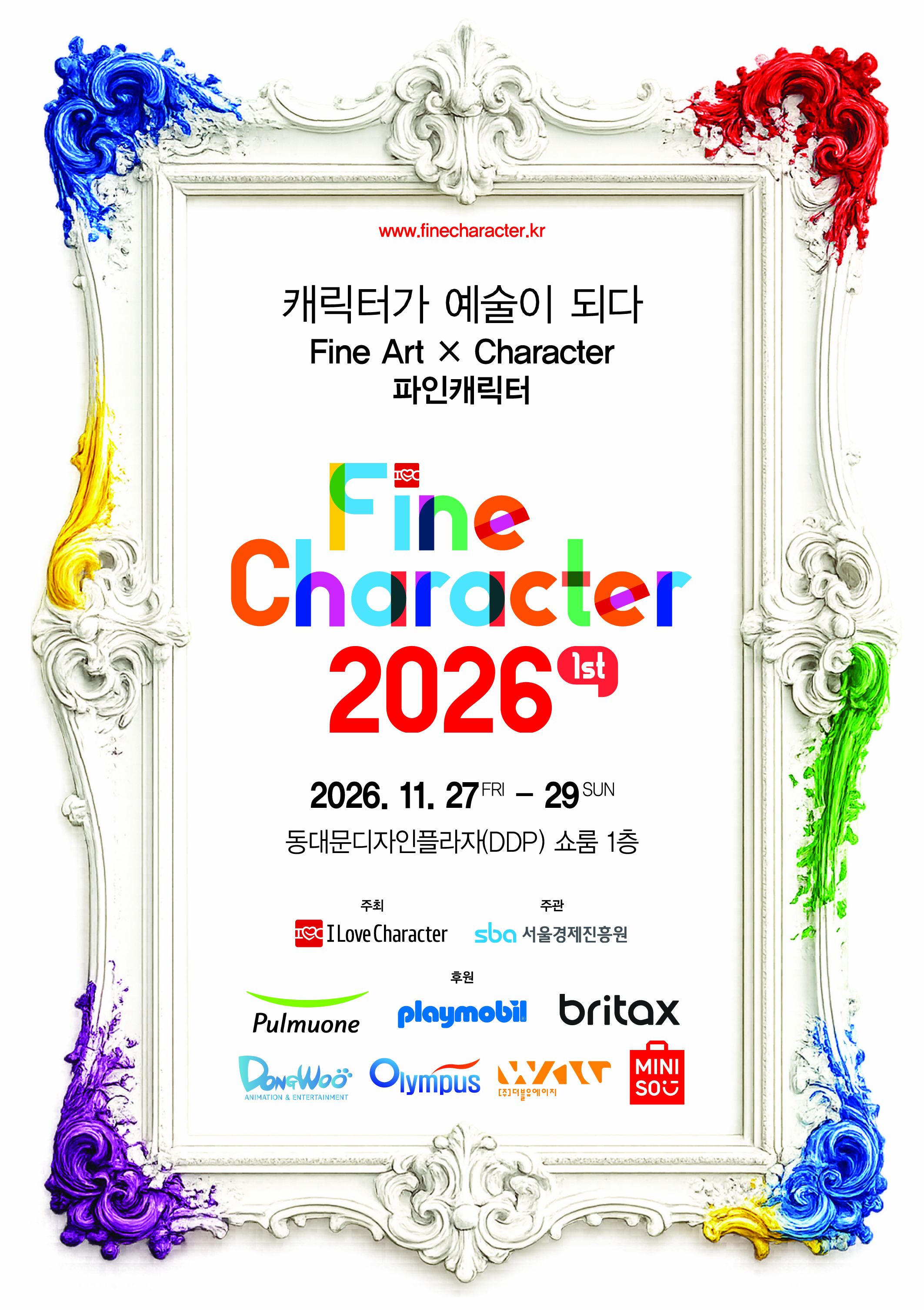
파인캐릭터 2026 (FineCharacter 2026)
An exhibition that presents characters not merely as merchandise but as art and lifestyle content, bringing fine art and character design together. Artists, brands, companies, and content IP holders take part, with display, sales, hands-on activities, and collaborations side by side. On the ground floor of the DDP Showroom, for three days only.
- Dates
- Nov 27 – Nov 29, 2026
- Venue
- Dongdaemun Design Plaza (DDP) Showroom, 1st Floor (281 Eulji-ro, Jung-gu, Seoul) (동대문디자인플라자(DDP) 쇼룸 1층 (서울 중구 을지로 281)) · Dongdaemun (DDP)서울특별시 중구 을지로 281 동대문디자인플라자(DDP)Open in Naver Map
Getting there
Exits 1 and 2, Dongdaemun History & Culture Park Station (Lines 2, 4, 5)
- Hours
- 10:00 ~ 19:00
- Admission
- FreeOriginal: 무료
- Organized by
- I Love Character
The calendar entry starts on opening day and covers the whole run, so you won't need to look the dates up again. Please check opening hours and closing days before your visit.
Entry notes
Entry is free. Pre-registration gives priority entry (FAST TRACK) and QR-code entry; children aged 14 and under can enter with a guardian using the guardian's pre-registration QR code. Last entry is 18:30.
- Entry is free. Pre-registration gives priority entry (FAST TRACK) and QR-code entry; children aged 14 and under can enter with a guardian using the guardian's pre-registration QR code. Last entry is 18:30. (Source: FineCharacter, 2026)
From the organizer's announcements and press reports. Arrangements can change; please check the official site before your visit.
Knowledge cards
Pop art팝아트An art movement that brought imagery from popular and mass culture, such as advertising, comics, product packaging and celebrities, into painting, sculpture and printmaking.Read moreClose
01About
Pop art emerged in Britain and the United States in the mid-to-late 1950s. In Britain Eduardo Paolozzi and Richard Hamilton explored American consumer imagery in collage and painting; in the United States Robert Rauschenberg and Jasper Johns brought everyday objects and commercial symbols into their work; by the early 1960s Andy Warhol, Roy Lichtenstein and others had made it internationally known. Pop art raised the banal, the kitsch and the mass-produced to the status of high art, blurring the line between high and low culture, and often used mechanical means of reproduction; images are sometimes removed from their known context, isolated, or combined with unrelated material. It is marked by irony and ambiguity: some works seem to celebrate the glossy abundance of postwar capitalism, while others question the sameness brought by mass production and media saturation.
02In the gallery
Find the borrowed images: an advert, a cartoon character, a logo, a celebrity. Are they enlarged, repeated, or set beside something unrelated?
Wall label terms in Korean
- 대중문화
- Popular culture
- 키치
- Kitsch
- 콜라주
- Collage
03Notes
Pop art brought images from advertising, comics, and products into art.
This time, at FineCharacter 2026 —
Where did the borrowed image first appear? Now it's in a gallery, has its meaning changed?
04Related
Nearby, after this one
Same venue · Dongdaemun Design Plaza (DDP)

Same neighborhood · Dongdaemun (DDP)
Shows open on the same days as this one are listed first (regular closing days only).