Essay
The LookMarie Antoinette Style, National Museum of Korea
On days when work is packed full, I paint, I write, and I get the website right one part at a time, finishing one thing before starting the next. Each of them has to look good, so all day I am thinking about how to make it better, and by evening the day feels solid. There are also days with nothing scheduled, nothing to finish and no one to show it to, and on those days I cook, eat and clean the house, and when that is done the day is over.
Marie Antoinette, queen of France in the eighteenth century, had these two kinds of days as well, only she lived them in two places: one was the Palace of Versailles, the other was the hamlet she built in the palace gardens.
Marie Antoinette Style, which the National Museum of Korea in Seoul is holding together with the Victoria and Albert Museum (V&A) in London, shows the clothes, jewellery and tableware of her lifetime, and the fashion and works made over the two centuries and more since by people she influenced. The queen did not make clothes herself. Even so, what she liked became a fashion, and it has stayed in fashion for more than two hundred years. Fashion houses are especially fond of her style. Dior and Chanel have both made clothes in that manner, and Vivienne Westwood has a wedding dress that is simply called "Marie Antoinette".
*
There is a portrait of her at seventeen. Her hair is dressed high, her cheeks are rosy, she wears a diamond choker at her throat, and the neckline of her gown is covered in embroidered pink flowers. It was painted in 1773, three years after she came from Austria to marry the heir to the French throne. The following year her husband became king as Louis XVI, and she became queen.
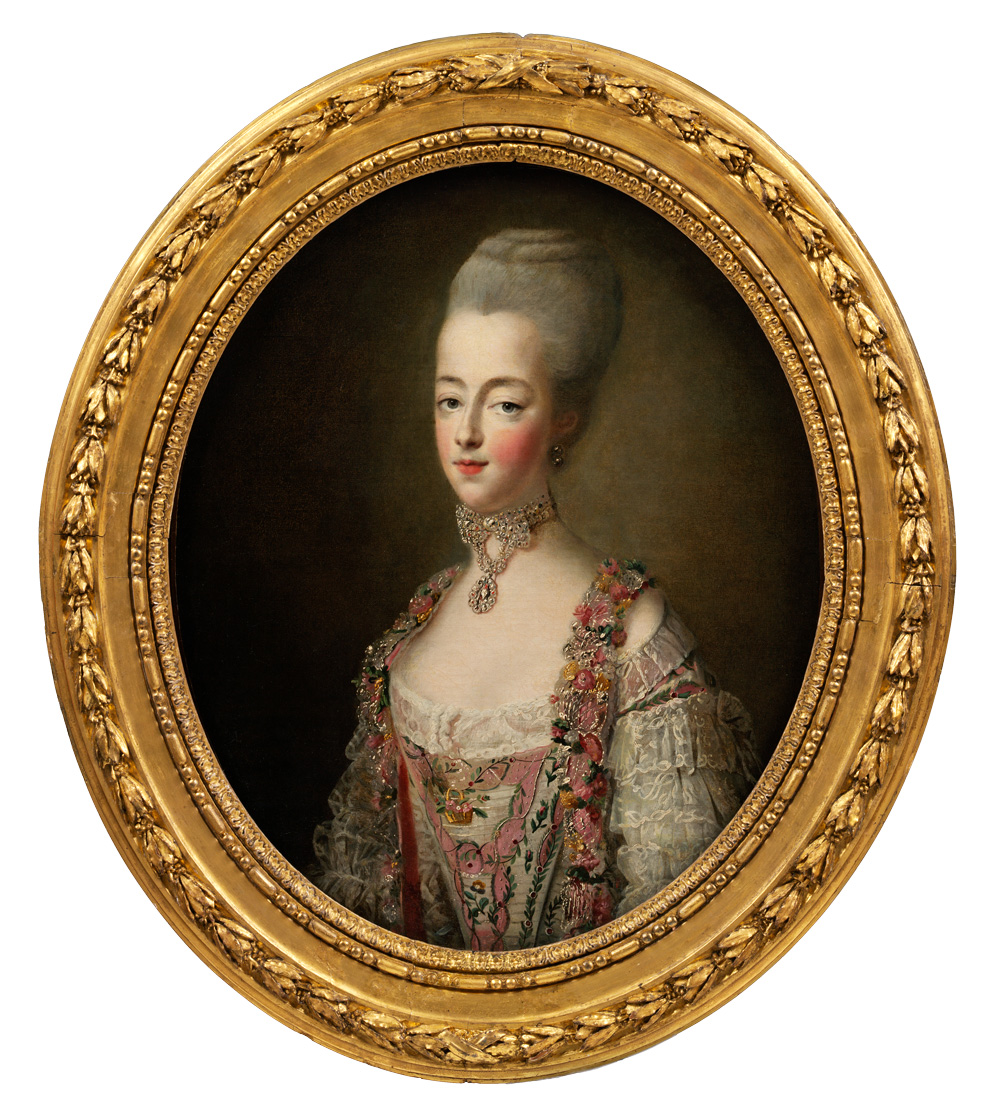
A queen of France in those days had no political power. What was expected of her was to be seen. At Versailles, where the king lived, the queen's rising, her toilette and her meals were public ceremonies, with people always watching, so what she wore was already something many people noticed. But by custom it was the lady in charge of her wardrobe who arranged what the queen wore each day. Marie Antoinette liked to decide for herself. She had Rose Bertin, a fashion merchant who made hats and trimmings, come straight to the palace to talk things over, and because of this people gave Bertin a nickname, the "Minister of Fashion". The queen's wardrobe accounts still hold her instructions: one gown was to be made the colour of her husband's eyes, another embroidered with her favourite flowers from the garden. I think people dressed like her because she chose those clothes herself.
In the years she was queen, fashion plates happened to begin appearing in Paris. A figure dressed in the latest style was printed on a sheet of paper and then coloured by hand, so people who could never enter the court could also see what the new hairstyles and hats looked like. The styles she chose caught on quickly, and not only in France; people abroad copied them too.
*
Not everything she chose was as grand as the portrait. Formal court dress had a bodice stiffened with whalebone, a skirt held out wide to left and right by a pannier, and a heavy train behind. She disliked wearing it and hurried to change as soon as she was back in her own rooms. In the gardens of Versailles there is a small palace called the Petit Trianon, which Louis XVI gave her the year he came to the throne. There she could get away from court etiquette for a while and be with just the few friends she had chosen.
Later, on the north side of the Petit Trianon gardens, she had an architect build her a hamlet. First an artificial lake was made, then houses were built along it. It took three years, and every house was made to look like a country cottage. A stone bridge crosses the stream in the middle of the hamlet. One side of the bridge was where she received guests. The mill there has a waterwheel, but the wheel is only decoration, and the cottages look rustic from outside while the furniture inside was very fine. The other side of the bridge was a real farm, with a barn, a dairy, a sheepfold and a henhouse, and people always looking after it. She insisted on having this farm built, and it was here that her children learned about fields and animals. Many people think she dressed up as a peasant woman in the hamlet. In fact she came to walk, and to spend time with a few guests.
A queen was supposed to be seen, and yet the hamlet was a place people outside could not see into; only the guests she invited could come in. Here she did not have to be the queen. But this simple place could only be built by first making a lake and spending three years on it, and as she spent more time in the hamlet, people outside could no longer see her, and the criticism of her grew.
*
For more than two hundred years, each generation has told her story again. More than thirty films and television dramas have been made about her. Sofia Coppola's Marie Antoinette, from 2006, put modern pop music into the eighteenth-century court and piled the tables with plate after plate of macarons and cakes in every colour. The shoes the queen wears in the film were designed for it by the shoe designer Manolo Blahnik. The film went on to win the Academy Award for costume design.
In South Korea, many people met her in the theatre. The musical Marie Antoinette was originally a Japanese production, and it was first staged in Seoul in 2014. What the Korean version changed is interesting. The lead in the original is Margrid Arnaud, an invented woman of the common people, but Korean audiences wanted to know more about Marie Antoinette, so the producers rewrote the story around the queen. By 2024 it had been staged in Seoul four times.
Readers in Japan mostly came to know her through manga. The artist Riyoko Ikeda read a biography of her in high school and decided then that one day she would draw her life; she even settled on the title in advance. That manga is The Rose of Versailles (Udon Entertainment, 2020). It began running in a Japanese girls' manga magazine in 1972 and was later put on stage by the Takarazuka Revue, where more than five million people have seen it. In 2024 it became a musical in Seoul as well.
*
The designers of the fashion houses, too, are very fond of making new clothes in the queen's style. In the 1920s the Paris designer Jeanne Lanvin made a white evening dress in a very thin, sheer fabric, with bunches of coloured silk flowers at the shoulder and on the skirt, and a skirt that spreads out to either side like the skirts of Marie Antoinette's day. In 2006 John Galliano, the designer at Dior, made an evening coat printed with her portrait.
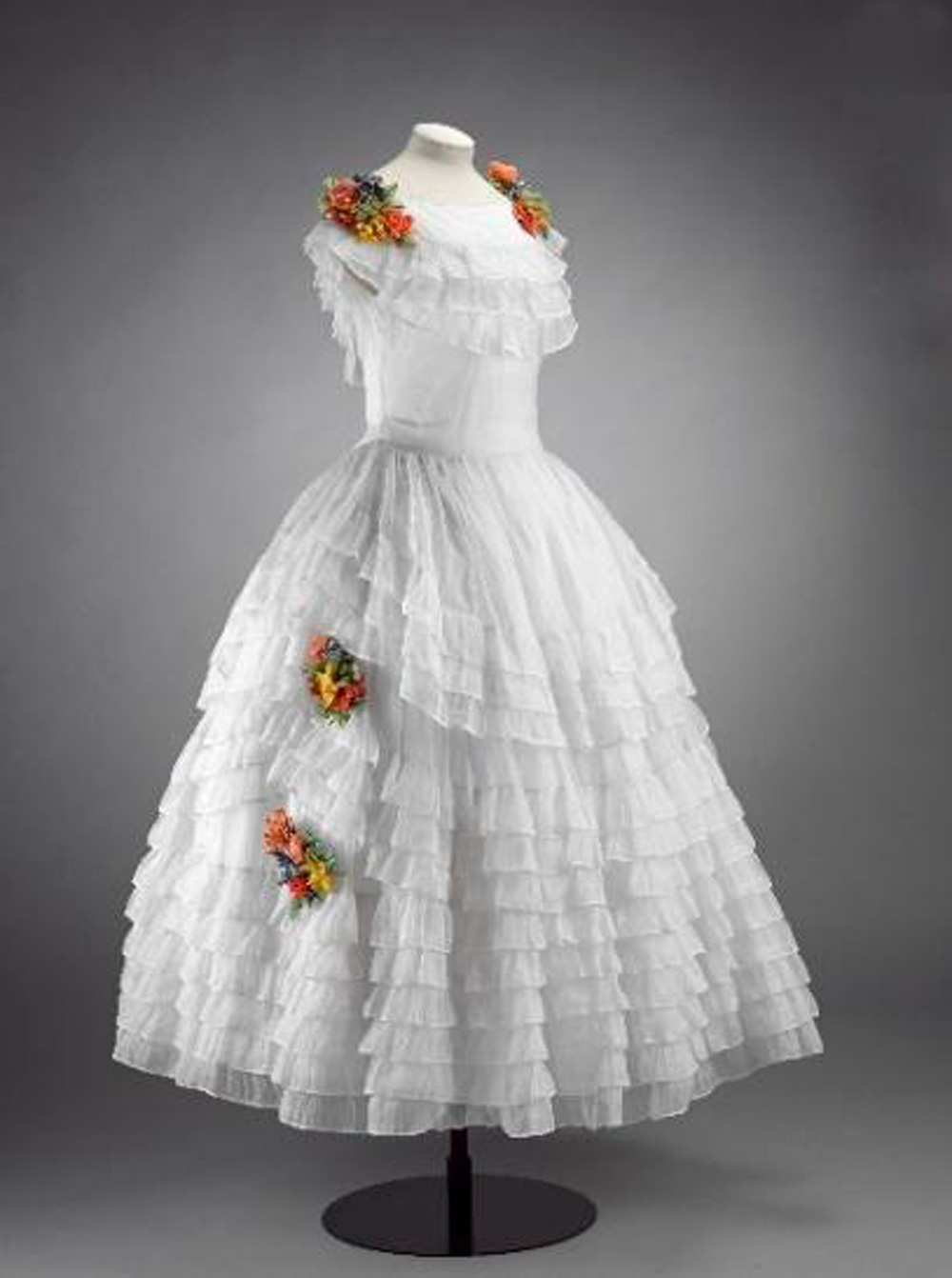
People at the time copied the way she dressed and called her extravagant. It was because of this splendour that the famous line appeared later, "Let them eat cake", said to be the queen's answer on hearing that the people had no bread.
In fact she never said it. It first appears in a book by the French writer Rousseau, where it is the remark of "a great princess", and when that book was written she was still a child living in Austria. Whether she was extravagant, or simply particular about the things she liked, has been argued over for more than two hundred years, and that has made the queen's hamlet the part I am most curious about. At home, when you do not have to be anyone, you feel at ease, and a queen probably needed a place like that too; only hers was a whole hamlet, built beside the grandest of palaces. Perhaps the woman in the hamlet was the real her, or perhaps building it was a kind of rebellion.
The queen's hamlet took three years to build, and first a lake had to be made, then houses built along it. I think that for a day to pass without embellishment, she first had to design it. My own plain days need no lake. I can cook, eat and clean any time; it is only in the weeks when my schedule is full that a day has to be cleared for it before its turn comes.
I hope you will go and see it for yourself: Marie Antoinette Style.
— Yu
Knowledge cards: Rococo
The Korean original of each title and venue name is shown in gray below it.