The Monthly
Taipei Anthology: DecemberDecember, when the rain keeps falling, in Taipei's museums
Chosen by our editor and checked against each venue's official site. No paid listings. About this anthology
In December in Taipei, the rain is still falling, washing hung out on the balcony never dries, and the dehumidifier hums in the living room. When a cold wave arrives, people under the arcades pull their jackets up to their chins, and people on scooters put on thick gloves. On the 22nd, the winter solstice, there are queues at the shops for tangyuan, because whoever eats the solstice tangyuan is counted a year older.
Here is our Taipei anthology for December. On rainy days the tangyuan are steaming; may it keep you company through the rest of this winter.
— Yu


1 / 5 Image: Taipei Fine Arts Museum
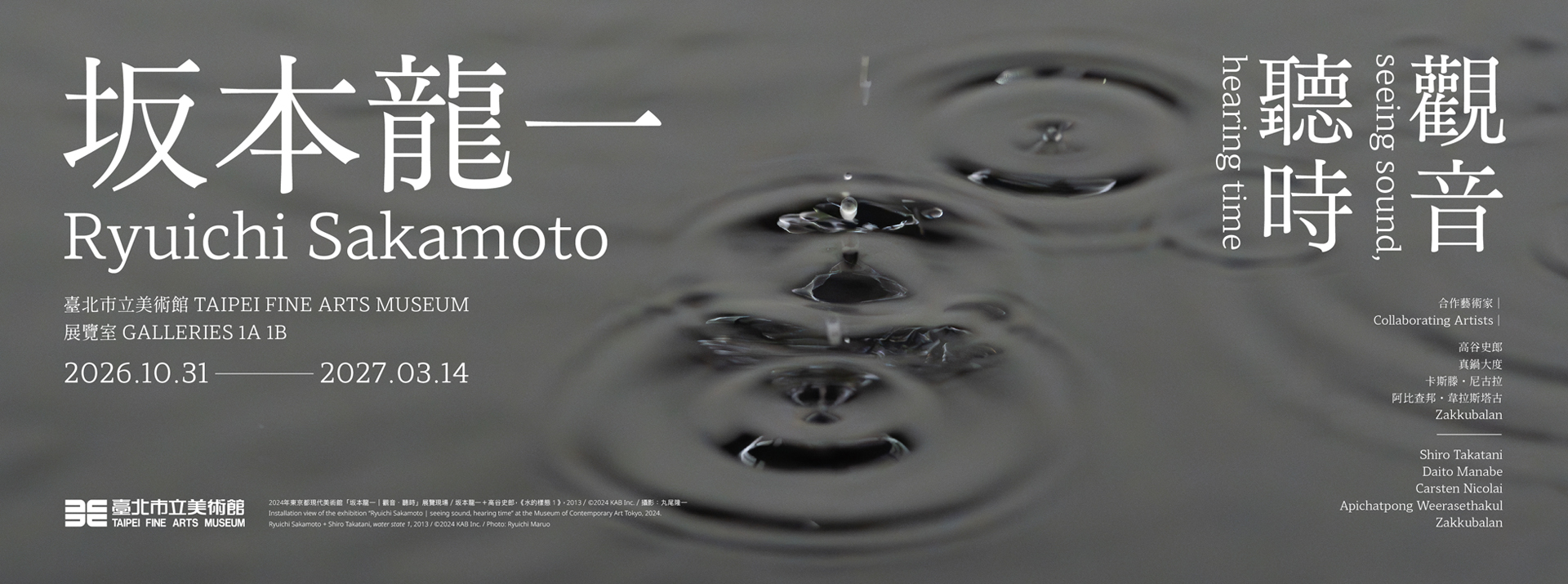
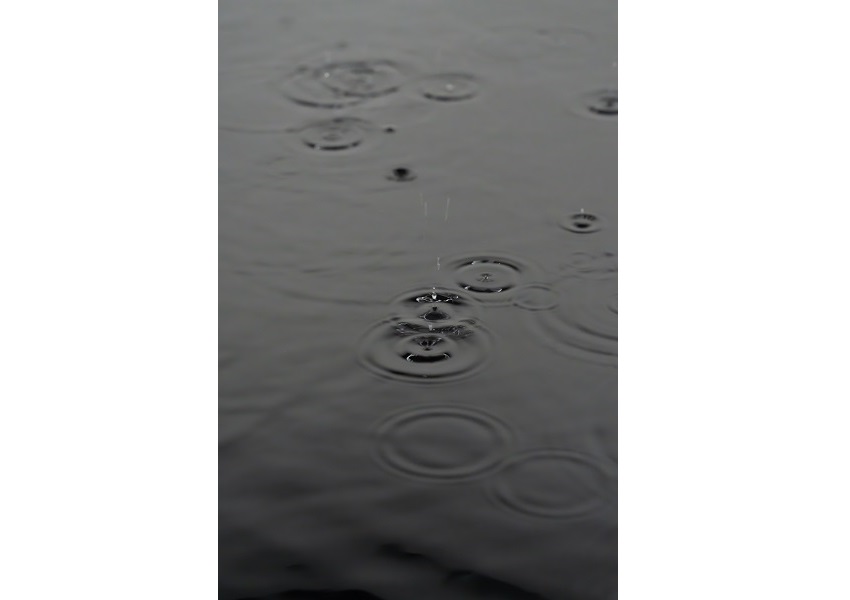
After recovering from throat cancer, Ryuichi Sakamoto walked the streets of New York, Tokyo and Paris recording the rain on his phone.
In 2014 Ryuichi Sakamoto was diagnosed with throat cancer and stopped working. After he recovered, he started a new album from scratch, recording on the streets of New York, Tokyo, Kyoto and Paris with his phone: noise, animals, leaves, water, and rain. It came out in 2017 as async. Most people find pleasure in being in sync, he said; what he wanted was music whose parts do not line up.
From the 2000s he studied how sound is heard and felt in space, and his work moved, little by little, from records into galleries. This retrospective at the Taipei Fine Arts Museum has seven large installations, most of them made with others: async – first light, with the Thai director Apichatpong Weerasethakul, hands small cameras to people close to him to film their days, set to music from async; sensing streams, with Daito Manabe, turns electromagnetic signals no one can see into light and sound.
The exhibition's title, seeing sound, hearing time, is a plain rendering of its Chinese title, 觀音.聽時. In LIFE – fluid, invisible, inaudible ..., made with Shiro Takatani of the Japanese collective Dumb Type, rows of clear water tanks hang in the air. Mist rises inside them, and light from above passes through the mist and the water and falls on the floor as patches of shadow, their edges rippling.
- Booking required


1 / 3 Image: JUT Art Museum
After graduating in architecture from the University of Tokyo, Sou Fujimoto did not join any office.
Sou Fujimoto graduated in architecture from the University of Tokyo in 1994 and did not train under any architect; he found his own way for six years and only opened his office in 2000. What first drew attention to him was his competition proposal for the Aomori Museum of Art. The museum's page says his designs try to break down the line between inside and outside, connecting people with their surroundings.
Then came a children's psychiatric rehabilitation centre in Hokkaido (2006), House N in Oita (2008) and the Musashino Art University Museum & Library in Tokyo (2010), and on to the Serpentine Pavilion in London and the House of Music, Hungary in Budapest. At Expo 2025 Osaka, Kansai, he was the site design producer.
This exhibition at the JUT Art Museum builds on the exhibition of the same name at the Mori Art Museum in Tokyo in 2025, and Fujimoto himself designed its structure and display. Besides models of more than a hundred projects, there are drawings and the hand-drawn notes he has kept over many years. This is not simply a retrospective, he says, but a summation of his work so far, and an exhibition that looks for where it goes next.
One whole wall is covered with hand-drawn sketches for the Expo's Grand Ring, marked in red, blue and purple.

1 / 4 Image: Taipei Fine Arts Museum
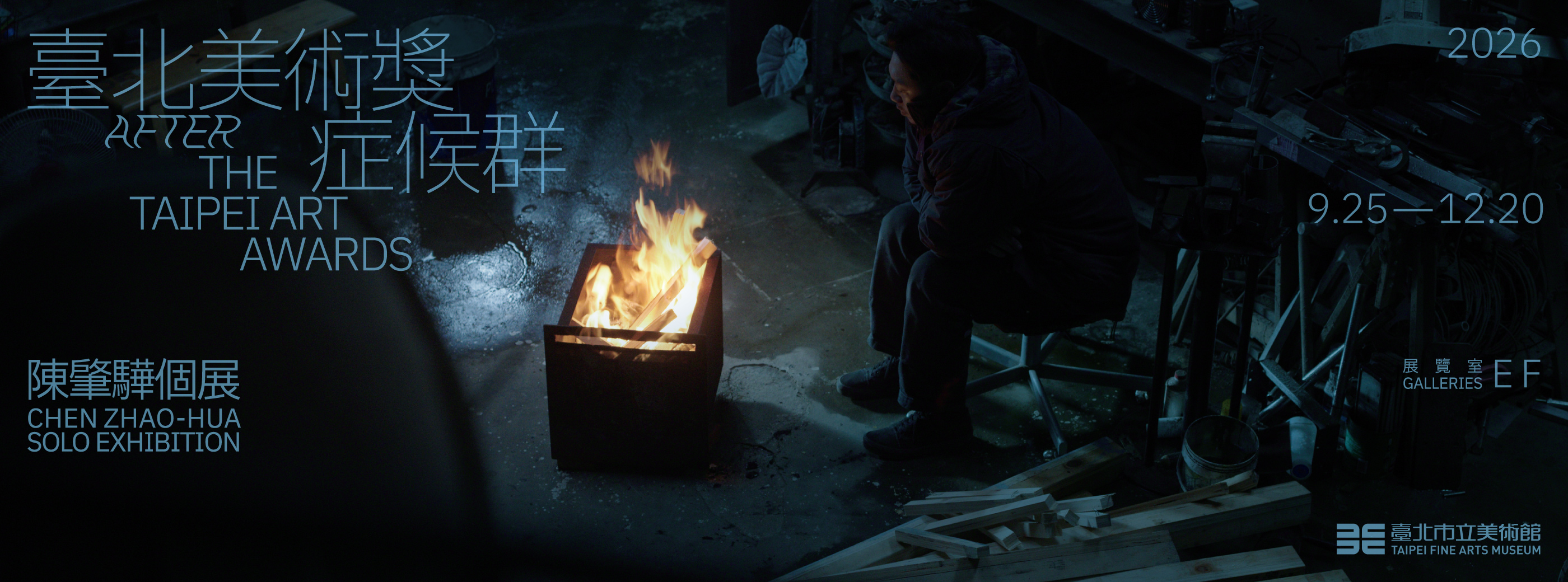
The work that won Chen Zhao-Hua the Taipei Art Awards' Grand Prize later went, piece by piece, into a fire to keep him warm.
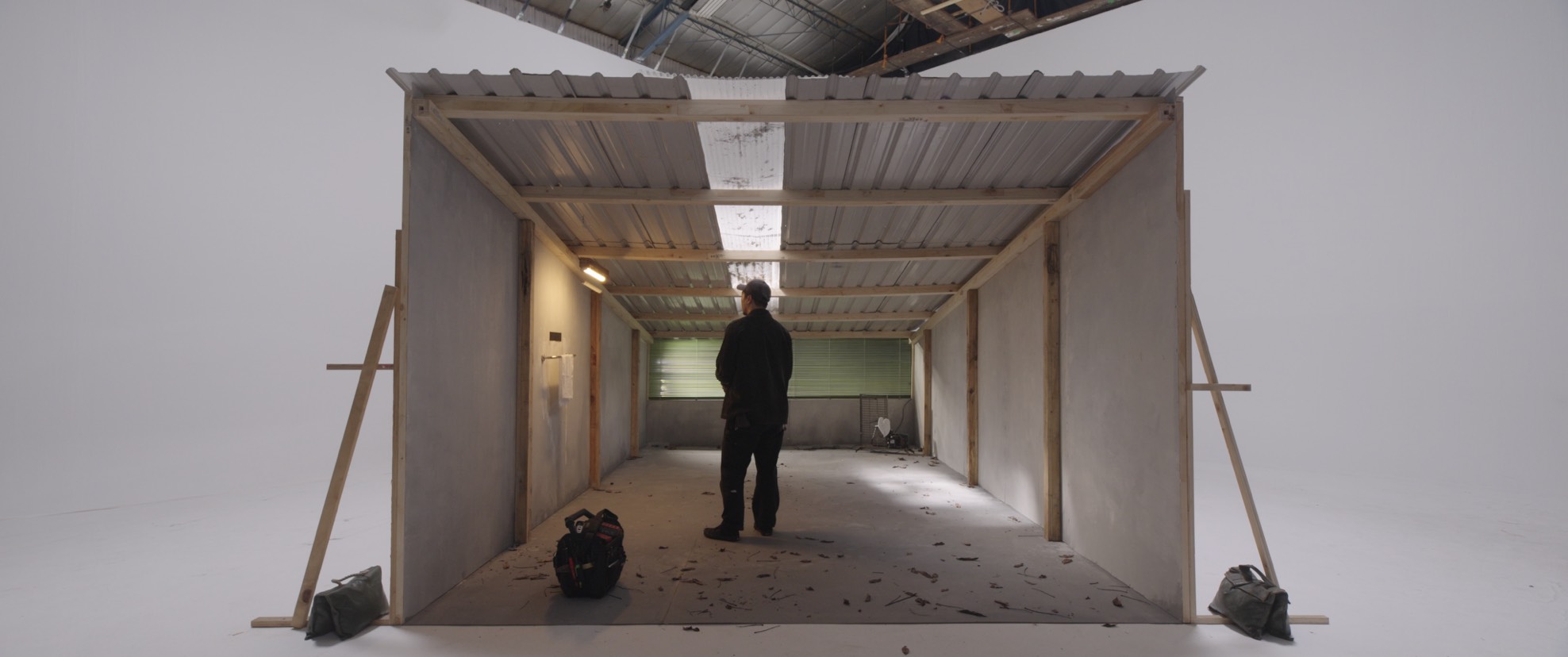
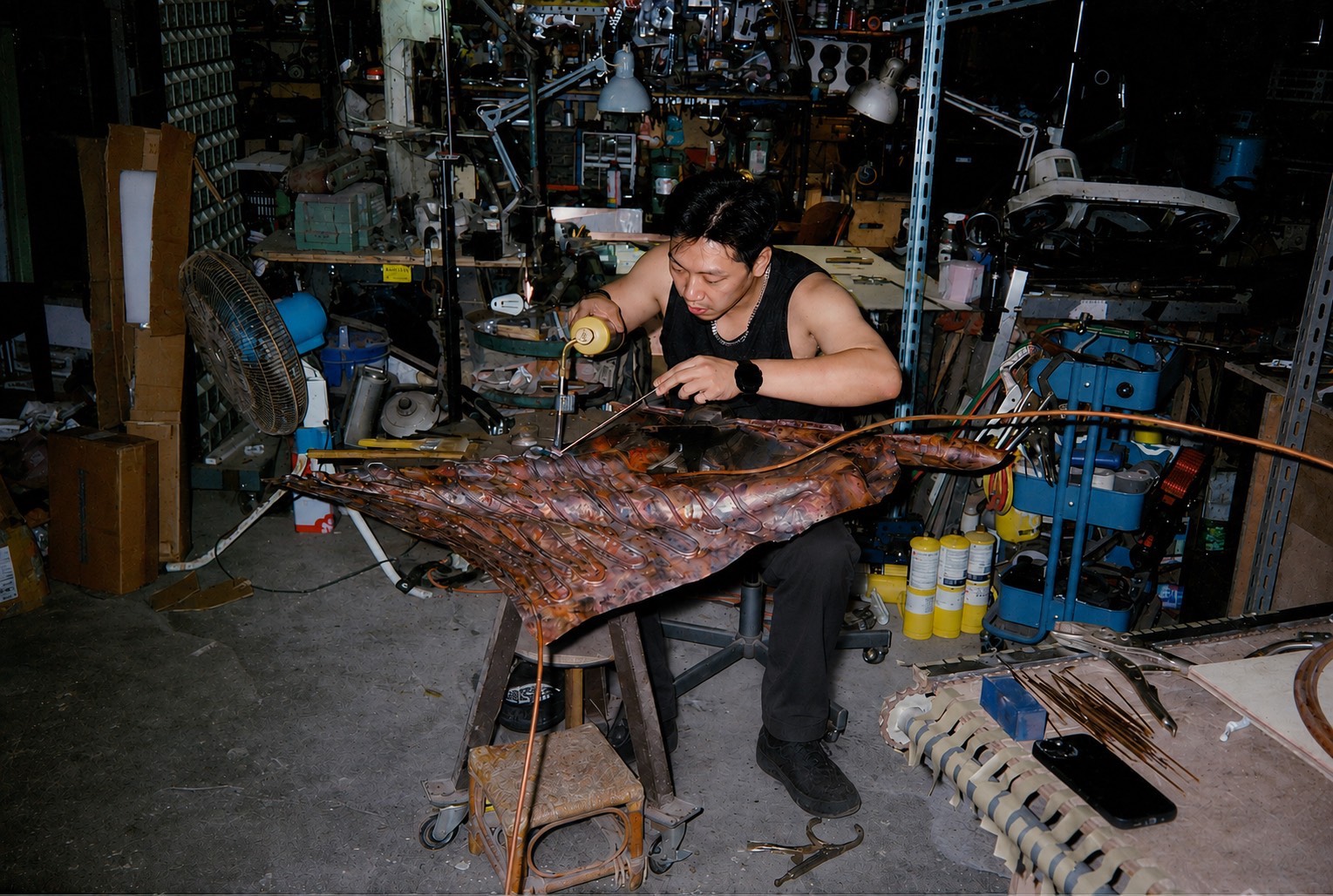
Chen Zhao-Hua's studio is built of sheet metal, damp and cold in winter. In 2023 he won the Grand Prize of the Taipei Art Awards with At the Xiaguirou Mt.; one hard winter after that, he took apart the timber the work was built from and fed it, piece by piece, into a fire. He filmed it, and the video, Keep Warm, is shown for the first time in this solo exhibition.
For years he has fabricated installations for other artists, and he says he feels like a machine. The exhibition brings in the studio where he takes on that work; in another room a small boat sits in faint light beside the sound of dripping water. The work is called 跟鹹魚有什麼區別 ("What's the Difference from a Salted Fish"), and it is hard not to think of Stephen Chow's line in Shaolin Soccer: a person without dreams is no different from a salted fish.
He has made work from that saying too, modifying a compressor so that condensation grows frost on the machine. The museum says the exhibition looks squarely at the struggle to get by that stays with an artist even after the institutions have given their recognition.
At the end of the exhibition lies a wasteland: the modified compressor keeps running, frost builds up on it layer by layer, and after a while it melts away.


1 / 5 Image: National Palace Museum
The Qianlong Emperor believed he was a reincarnation of the bodhisattva Manjushri.
The Qianlong Emperor was a devout follower of Tibetan Buddhism and presented himself as a reincarnation of Manjushri. Through the image of a deity, he made his rule seem exalted and better grounded.
At the centre of the exhibition hangs a huge scroll, Manjushri (文殊), with scrolls of pine and bamboo on either side and a pair of hanging couplets, 武將文臣對語聯. Landscape handscrolls in the literati style are on view as well, and they bring to mind the emperor at leisure once affairs of state were done, enjoying calligraphy and painting and nourishing his mind.
On either side of Manjushri hang a pine and a bamboo.


1 / 3 Image: Fubon Art Museum
When Matisse painted Dancer Resting, his model was his favourite at the time, Lydia Delectorskaya.
Matisse painted Dancer Resting in 1940. The woman in it is Lydia Delectorskaya, from Russia, at the time his favourite model. She leans back in the chair, legs loosely apart, and looks out of the picture at ease.
The Toledo Museum of Art notes that soon after finishing this painting, Matisse put oil paint aside and turned to composing with cut paper. Lydia stayed with him, from model to studio manager and secretary, and finally looked after him until his death in 1954. As his health failed quickly in his last years, visitors to the studio knew her only as Madame Lydia; the late works could not have been made without her help.
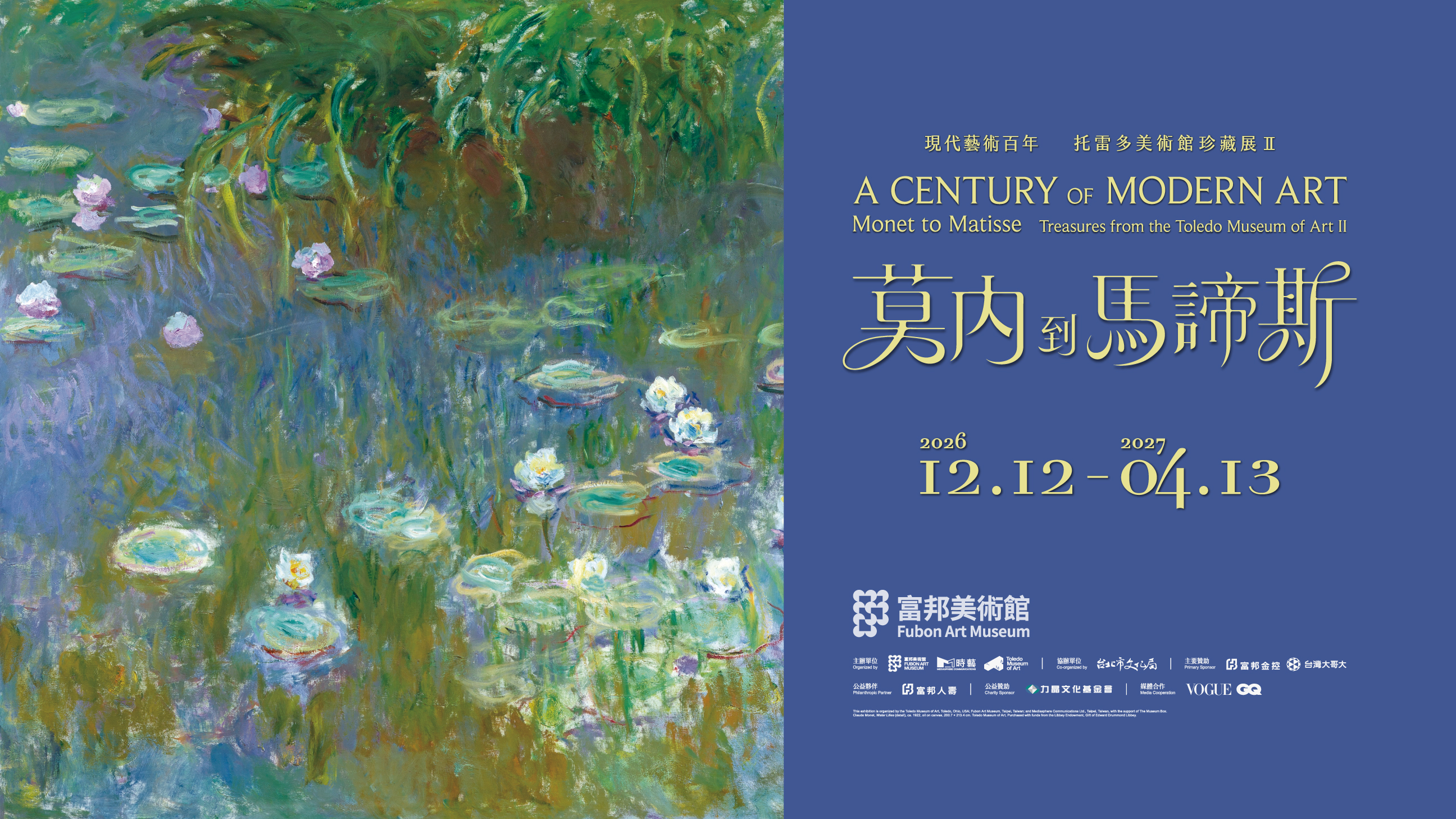
The painting is one of the works in A Century of Modern Art – Monet to Matisse, opening on 12 December at the Fubon Art Museum. It is Fubon's second exhibition with the Toledo Museum of Art in Ohio: fifty-seven works from the collection, running from Impressionism to abstraction, by Monet, Renoir, Morisot, Manet, Cézanne, Van Gogh, Picasso, Modigliani, Mondrian, and the pioneers of abstraction who rose in America.
In the upper right corner, a nude Matisse painted himself sits on an easel; there are potted plants in the room, and the floor is laid out in large blocks of colour.
1 / 5 Image: New Taipei City Yingge Ceramics Museum
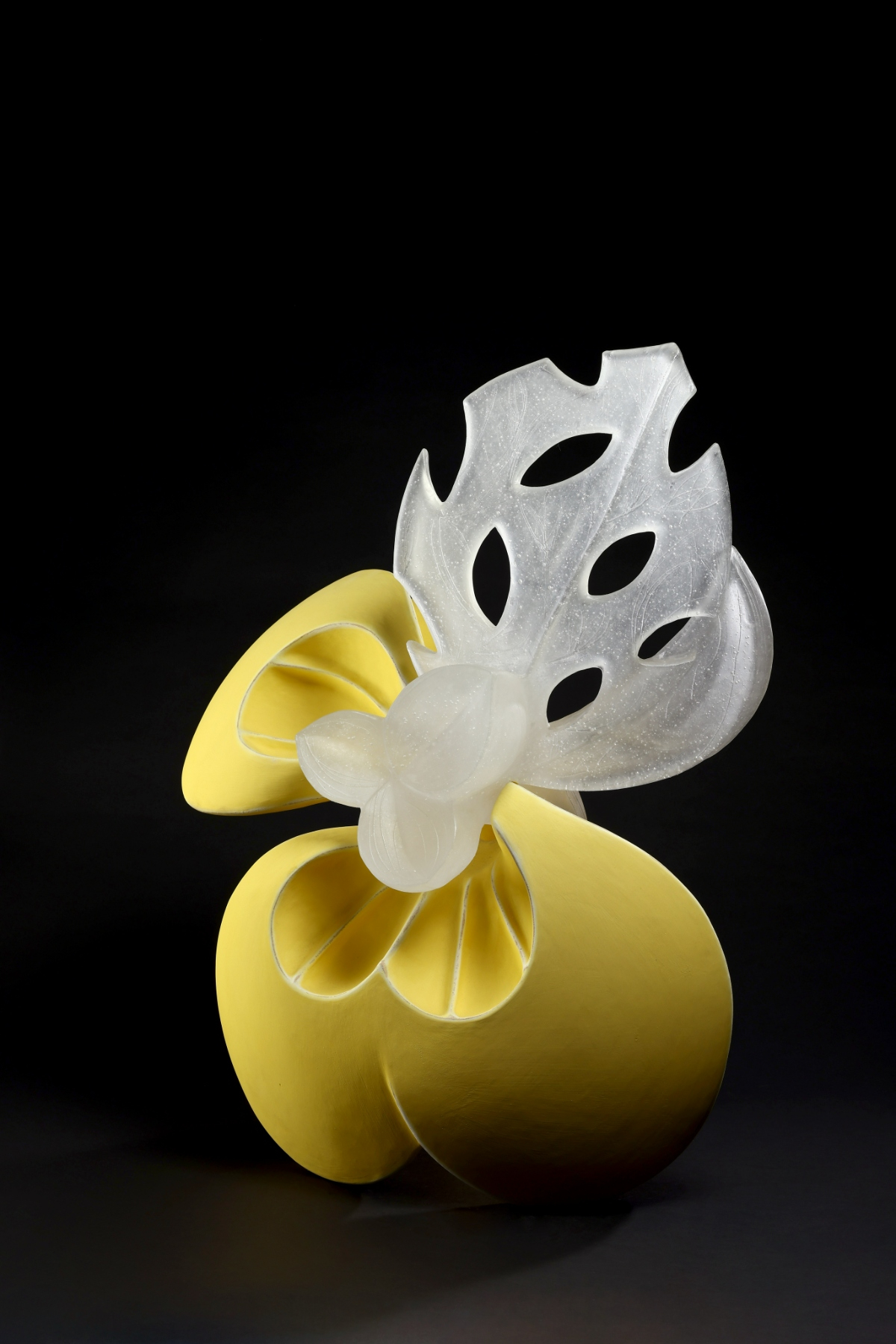
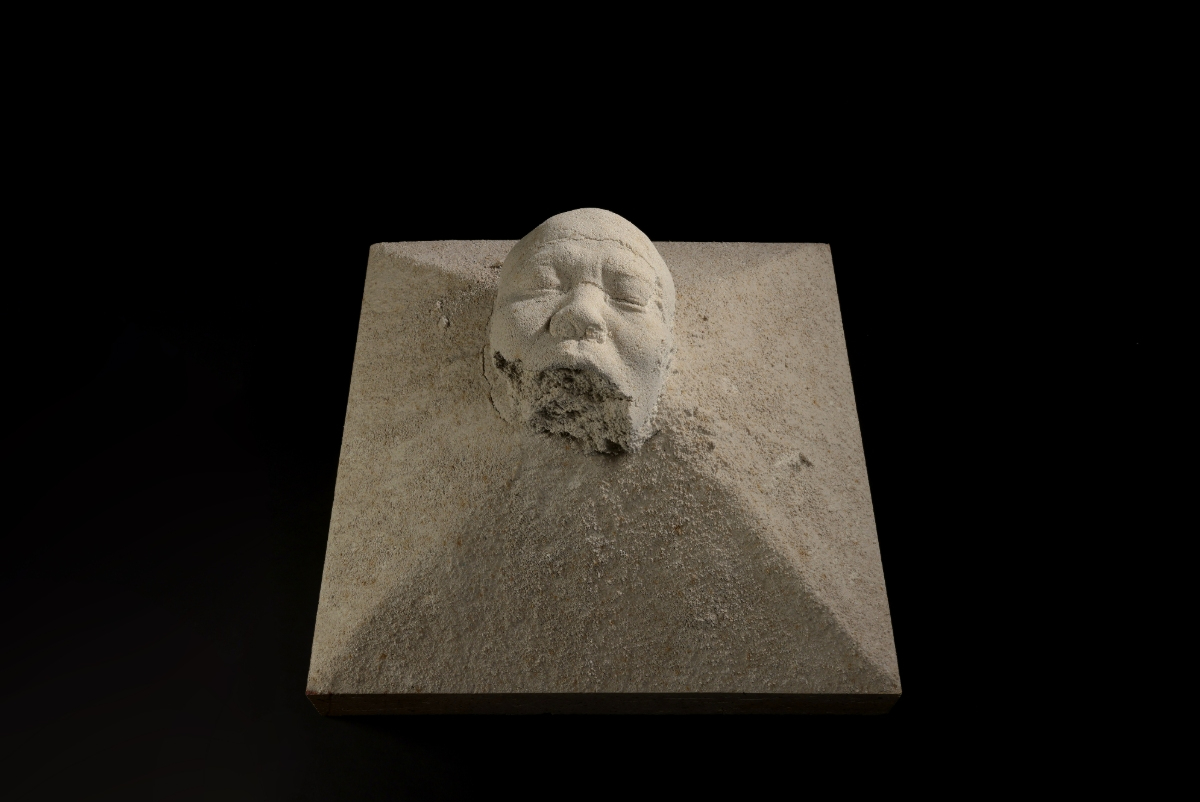
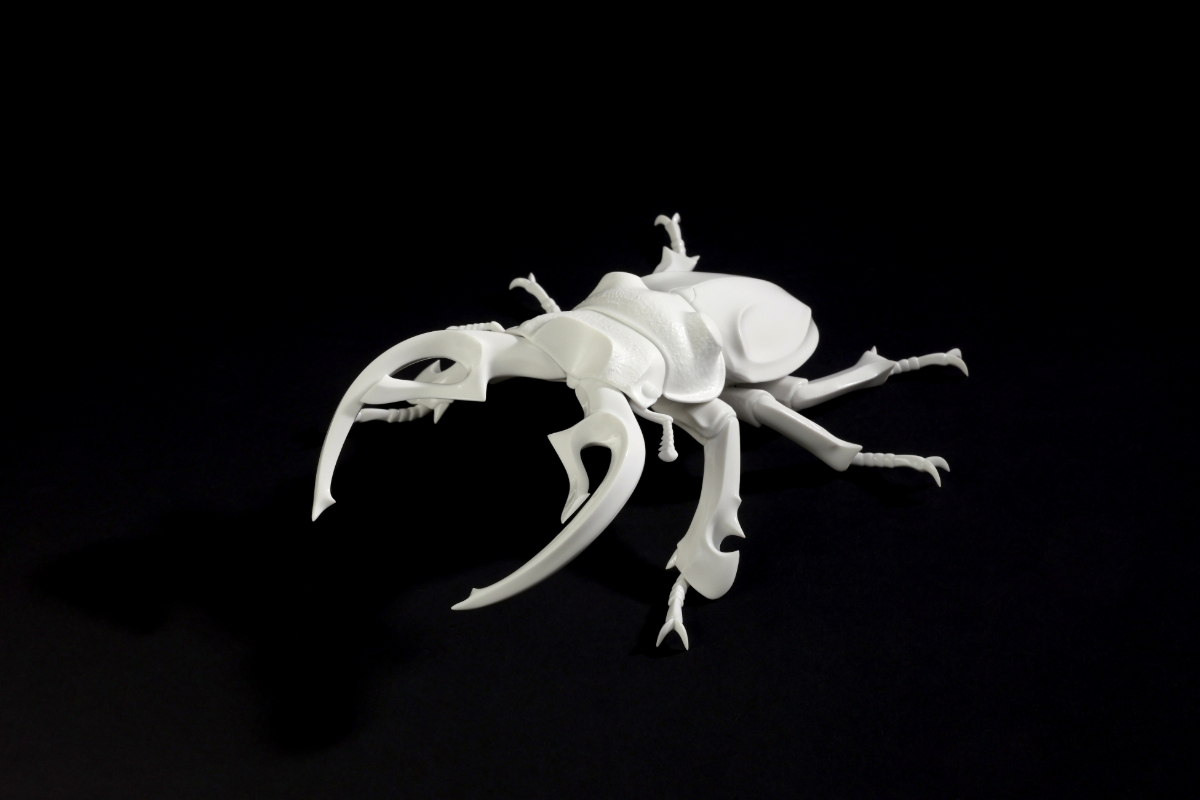
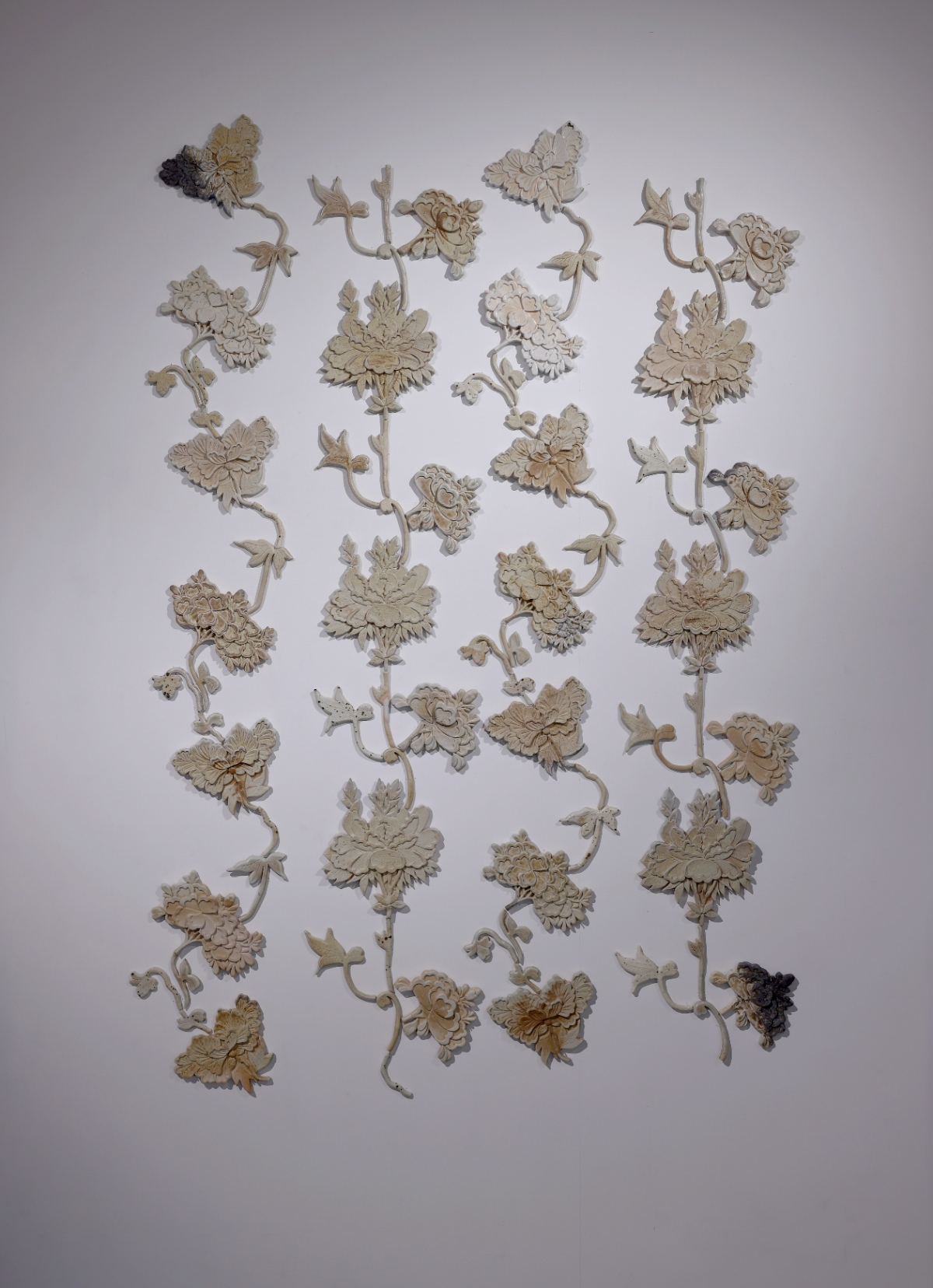
The works list of this year's Yingge ceramics biennale includes Electric-Driven Mantis (電驅螳螂), Faucet Baby (水龍頭寶寶) and A Thousand Miles of Rivers and Mountains 2015-03 (千里江山圖2015-03).
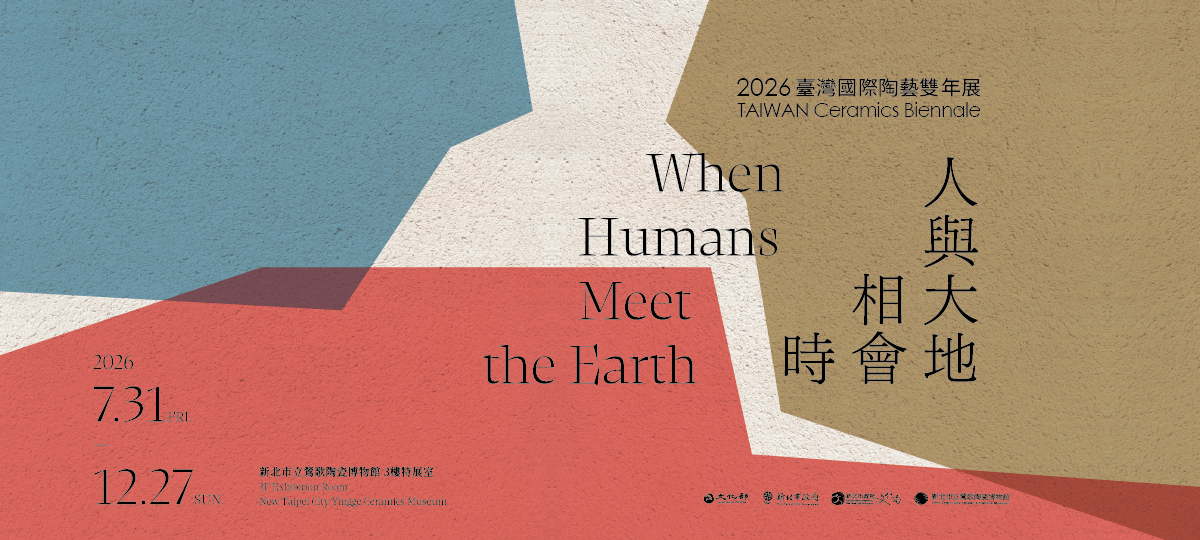
The Taiwan International Ceramics Biennale has been held by the Yingge Ceramics Museum since 2004 and is the largest ceramics exhibition programme in Taiwan. Since 2010, a juried “competition” edition and a themed “curated” edition have alternated, with a curated year every four years; this is one.
This year's curator is Tomohiro Onaga (大長智廣), chief curator at the museum of modern art in Kyoto, a specialist in the history of modern ceramics, who curated the 2023 Sodeisha exhibition (走泥社). With the museum he divided the show into four themes: “Earth: Landscape”, “Cycles: Life, Abundance, End”, “Spiritual Realms: Myth and Story” and “Artificial: City and Civilisation”.
The titles on the list each go their own way: Takaharu Hori's (堀貴春) Electric-Driven Mantis, Katrina McLeod's (卡翠娜.麥克勞德) Faucet Baby and Wan Li-ya's (萬里雅) A Thousand Miles of Rivers and Mountains 2015-03.
In the third-floor special exhibition room of the Yingge Ceramics Museum, one work is called The Lion Waiting (守候的獅子).

Eighty years ago the Shunyi group started out as a trading house called Shunyi Hang; the house where it began is now a museum.
From the museum's own collection, the exhibition picks its core works and sets them in three parts: the prelude “Classics Reappear”, the variation “Colours in Motion” and the coda “Echoes of Sea and Sky”. On view are Hsu Shen-chou's (許深州) The Bride's Tea (新娘茶), which was selected for the 3rd Provincial Exhibition, a tiger by Lin Yu-shan (林玉山), and a draft of Chen Chin's (陳進) modern beauty painting, which was selected for the 11th Nitten.
The middle part is strung together by colour, beginning with the Western-style painting education Ishikawa Kinichiro brought in: the “midsummer green” of Chang I-hsiung (張義雄) and Li Shih-chiao (李石樵), the “riotous colour” of Liao Chi-chun (廖繼春) and Lai Chuan-chien (賴傳鑑), and the “deep red” of Chen Cheng-po (陳澄波) and Yen Shui-long (顏水龍).
The last works are Li Mei-shu's (李梅樹) Sunrise over the Sea (海上晨曦) and Lin Hsing-yueh's (林惺嶽) Looking Out at Green Island (遠眺火燒島): two seascapes, both in violet and blue.
Xu Guangqi and Matteo Ricci's translation of Euclid's Elements (《幾何原本》) is in a Ming-dynasty compendium in the National Palace Museum's collection.
That compendium is the Tianxue chuhan (天學初函), edited by Li Zhizao in the Ming, and it is shown too. The exhibition lays out the museum's mathematical books in order of time: the legendary Hetu and Luoshu diagrams of the pre-Qin period, the Ten Mathematical Classics that laid the foundation of mathematical theory, then the tianyuan method of the Song and Yuan, and the Western mathematics that arrived at the end of the Ming.
Yang Hui's Suanfa (楊輝算法) of the Song and Zhu Shijie's Siyuan yujian (新編四元玉鑑) of the Yuan are among them. The Yuzhi shuli jingyun (御製數理精蘊), compiled in the Kangxi reign of the Qing, shows how diligent the Kangxi Emperor was and how he promoted Western science himself; beside it are scientific encyclopedias made for the Qing court and the Western surveying instruments the emperor played with at his desk. The second part, Measuring Heaven and Earth, continues from 5 March 2027.
On the poster, a small figure in a red-topped official's hat rests his chin on his hand, with a few old books open in front of him.
Major shows beyond Taipei
Major exhibitions at museums around Taiwan, outside Taipei.


1 / 4 Image: Chimei Museum
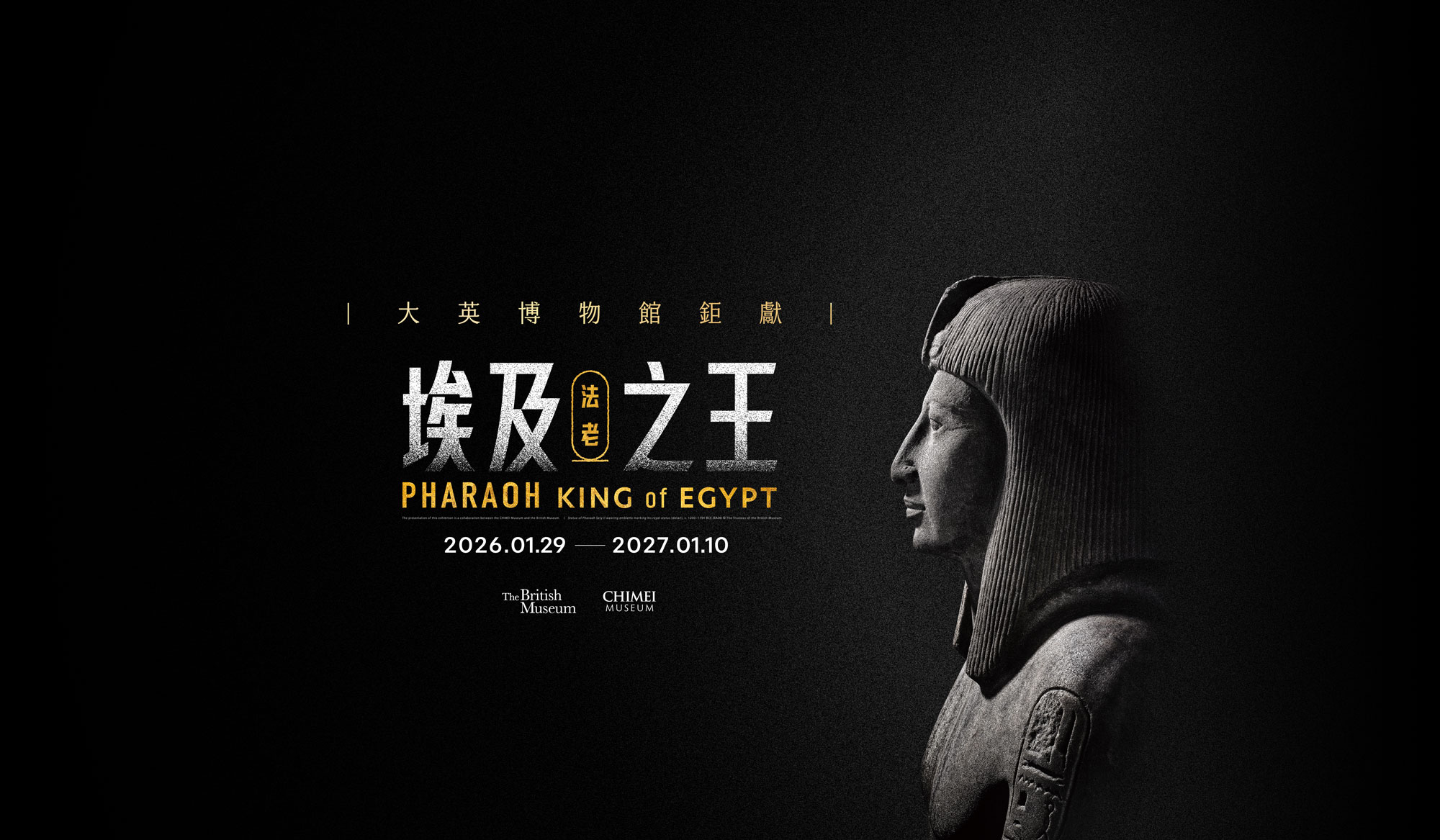
The British Museum's ancient Egyptian collection, on what it meant to be pharaoh.
The colossal head numbered EA1063 is dated by the British Museum to about 1854–1808 BC and may be Amenemhat III. "May," because Egyptian royal statues were often re-inscribed and reused by later kings, and their faces were idealized on purpose, so a face alone rarely settles who it is.
A pharaoh was a ruler, and also a bridge between gods and people. The Egyptians believed the king kept the world in order and made offerings to the gods in their temples. On another plaque in the exhibition, Amenemhat IV presents offerings to Atum, the creator god; it dates to about 1808–1799 BC, just after the reign of the king before him.
Royal power also had to be seen. A relief of King Sanakht striking an enemy belongs to the Third Dynasty, about 2686–2613 BC, among the oldest pieces here. The pose, the king raising his mace and gripping the enemy by the hair, recurs in Egyptian art for more than two thousand years after. Of a colossal statue of Ramesses II, a single fist survives.
The Chimei Museum shows 280 objects in partnership with the British Museum, in seven themes on how a pharaoh became king and how he ruled, with gold jewelry, papyri, and clay-tablet diplomatic letters. The museum says it is the largest exhibition of pharaonic objects ever brought to Taiwan.
1 / 2 Image: Taichung Art Museum
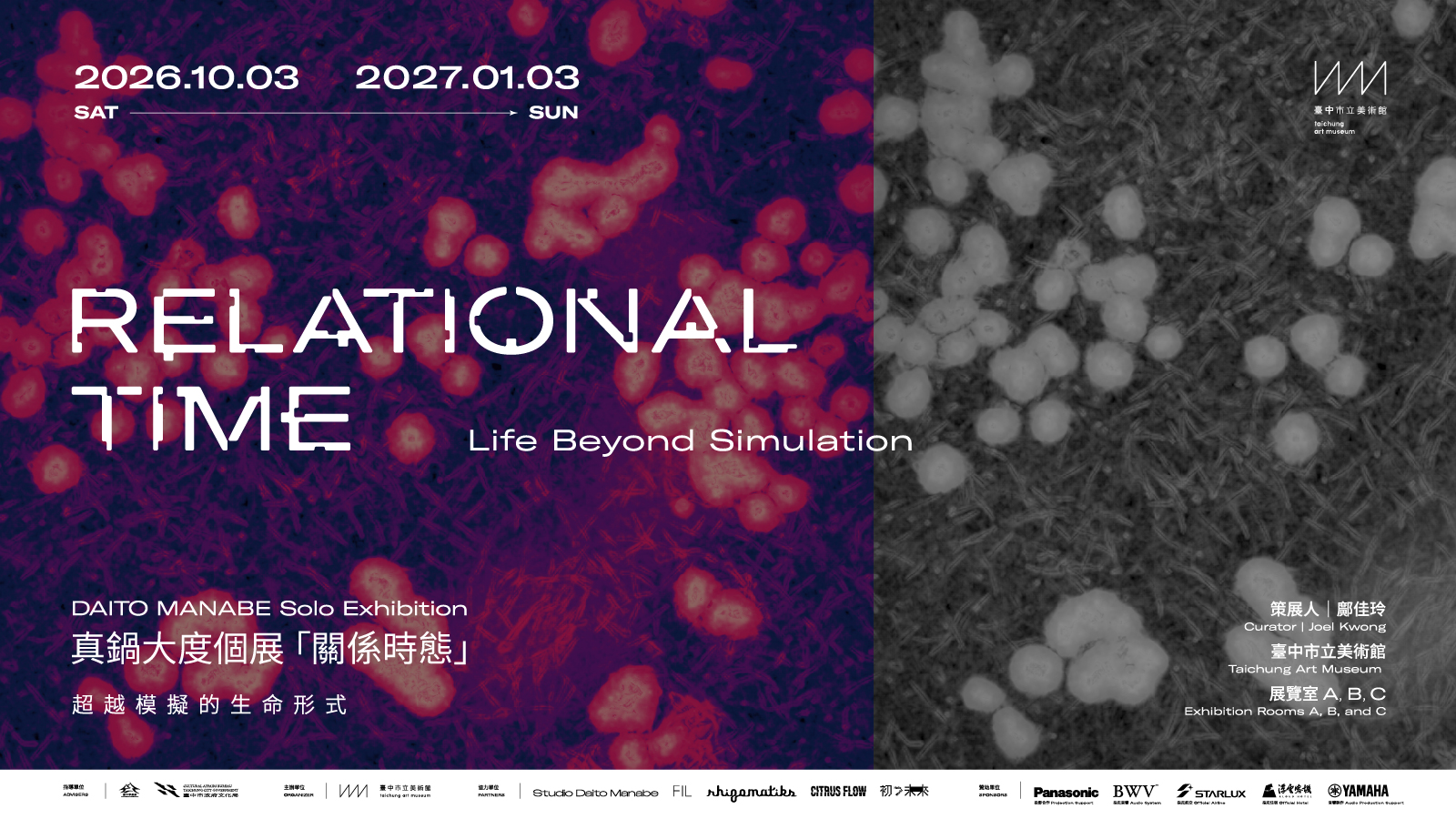
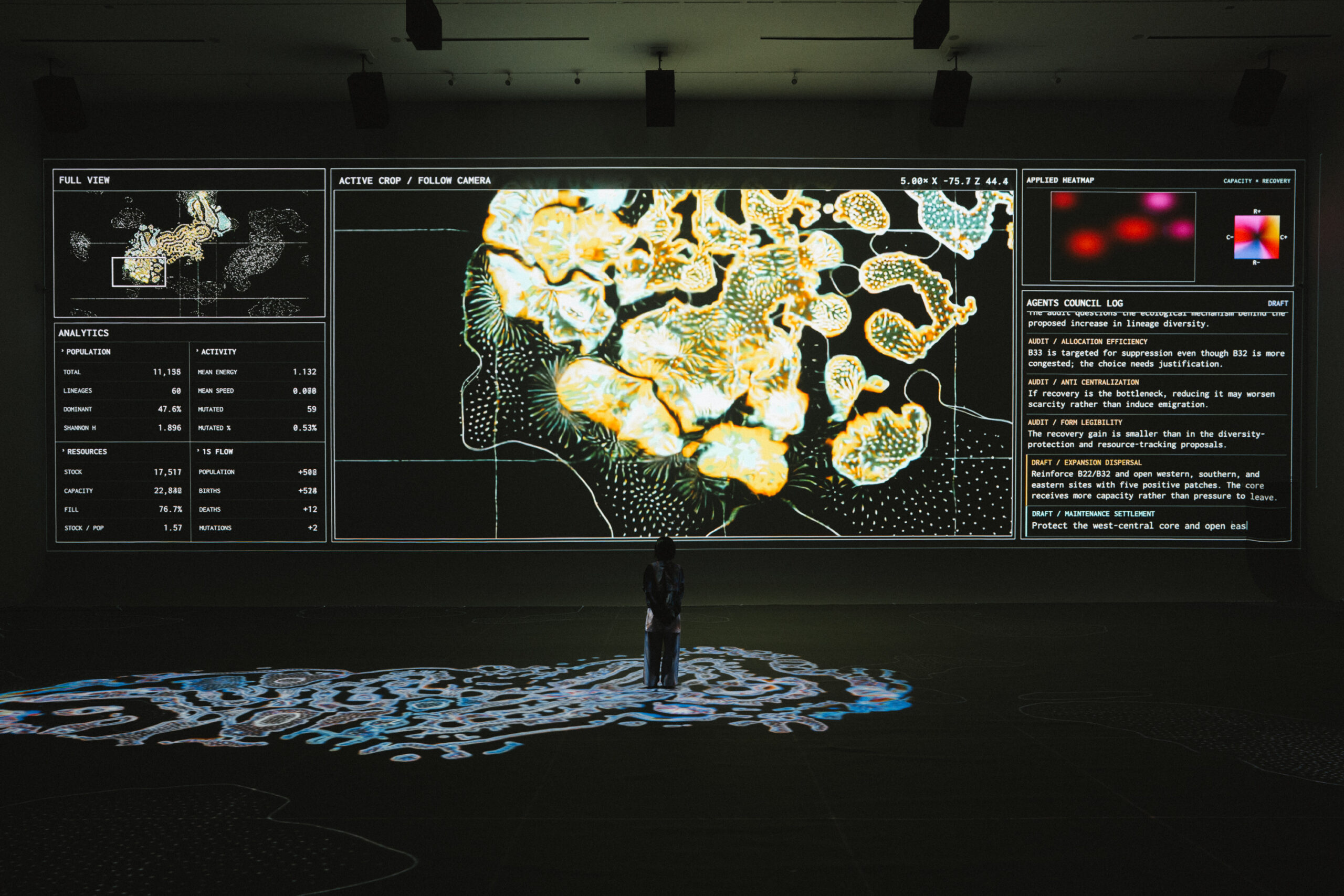
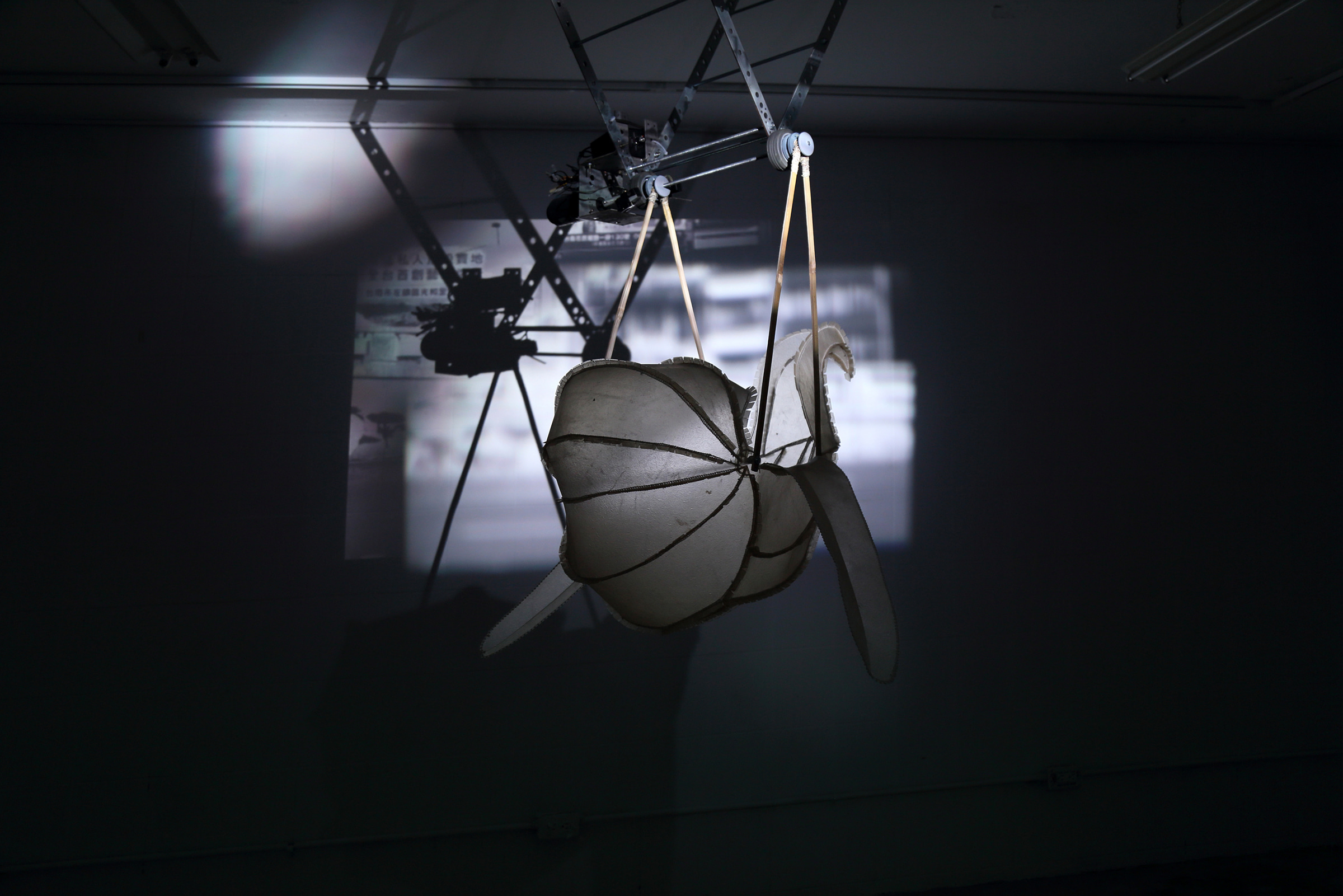
Daito Manabe sets artificial life and AI agents running in the museum, and visitors' movements change them.
At the closing ceremony of the 2016 Rio Olympics, in the segment handing over to Tokyo, Daito Manabe worked on the technical development and designed its visual and lighting systems. He is a programmer and a composer; he founded Rhizomatiks in 2006 and has worked with Perfume, Ryuichi Sakamoto, and Björk.
His early work dealt with feedback between the body and machines, turning movement, muscle activity, and physiological signals into sound and image. His research later extended to neural networks and brain organoids (small brain tissues grown in the lab), treating biological activity as material for generating work. In recent years he has turned to societies made of people, artificial life, and AI agents, watching how they adapt and cooperate, and how they produce an order no one designed, and making those processes into music and moving images.
This solo exhibition is not a retrospective. The museum says it gathers several threads of his long research into one new presentation, made of three linked environments: a society of AI agents generated in real time and running on its own, a shifting ecology formed through interaction between people and machines, and a network of sound flowing through the building. The system keeps remembering, adjusting, and responding; where visitors pause and how they move change what the work becomes.
The curator is Joel Kwong of Hong Kong, who has organized art and technology exhibitions for many years and is now program director of the Microwave International New Media Arts Festival. The exhibition is in Rooms A, B, and C of the Taichung Art Museum.

1 / 5 Image: Tainan Art Museum
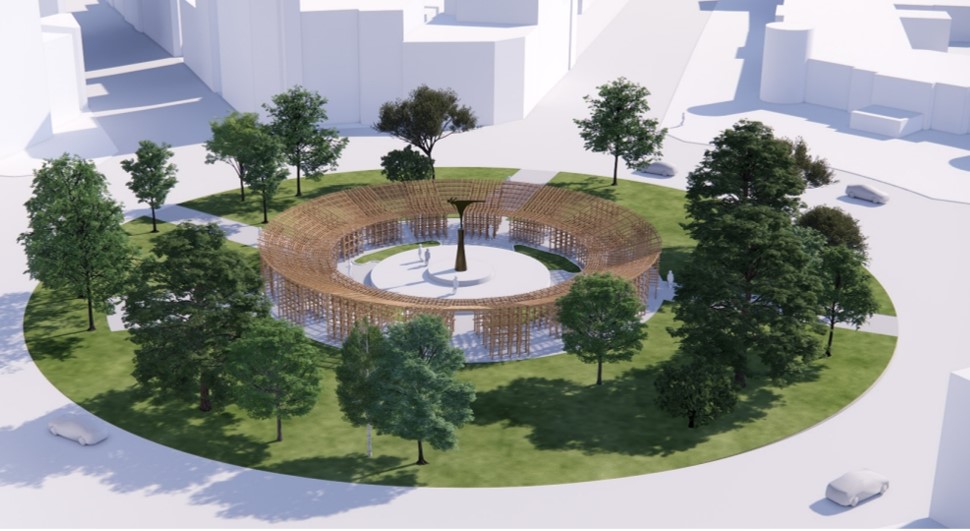
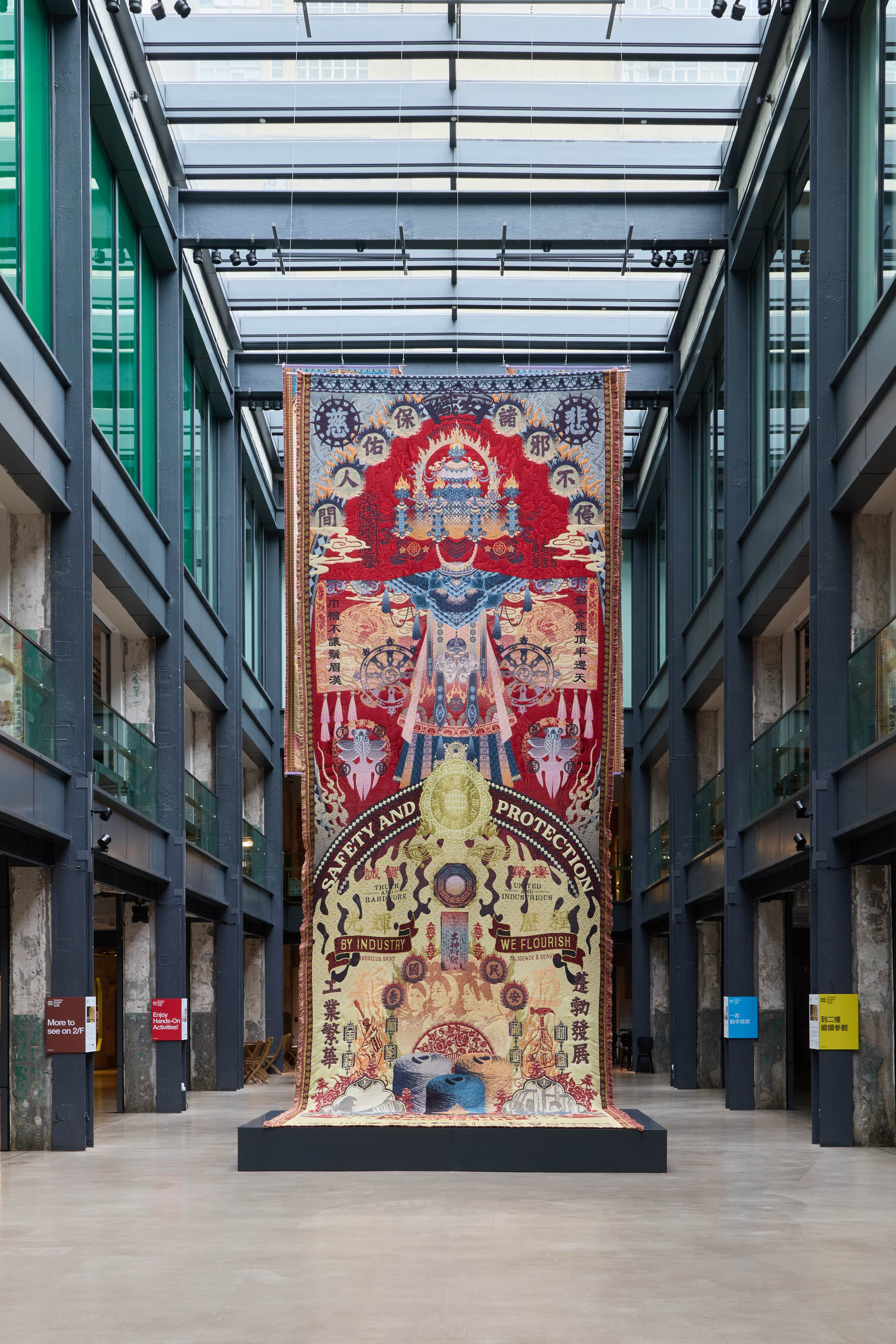
At the centre of Tainan, Tang Te-chang Memorial Park is a roundabout with seven roads running out from it.
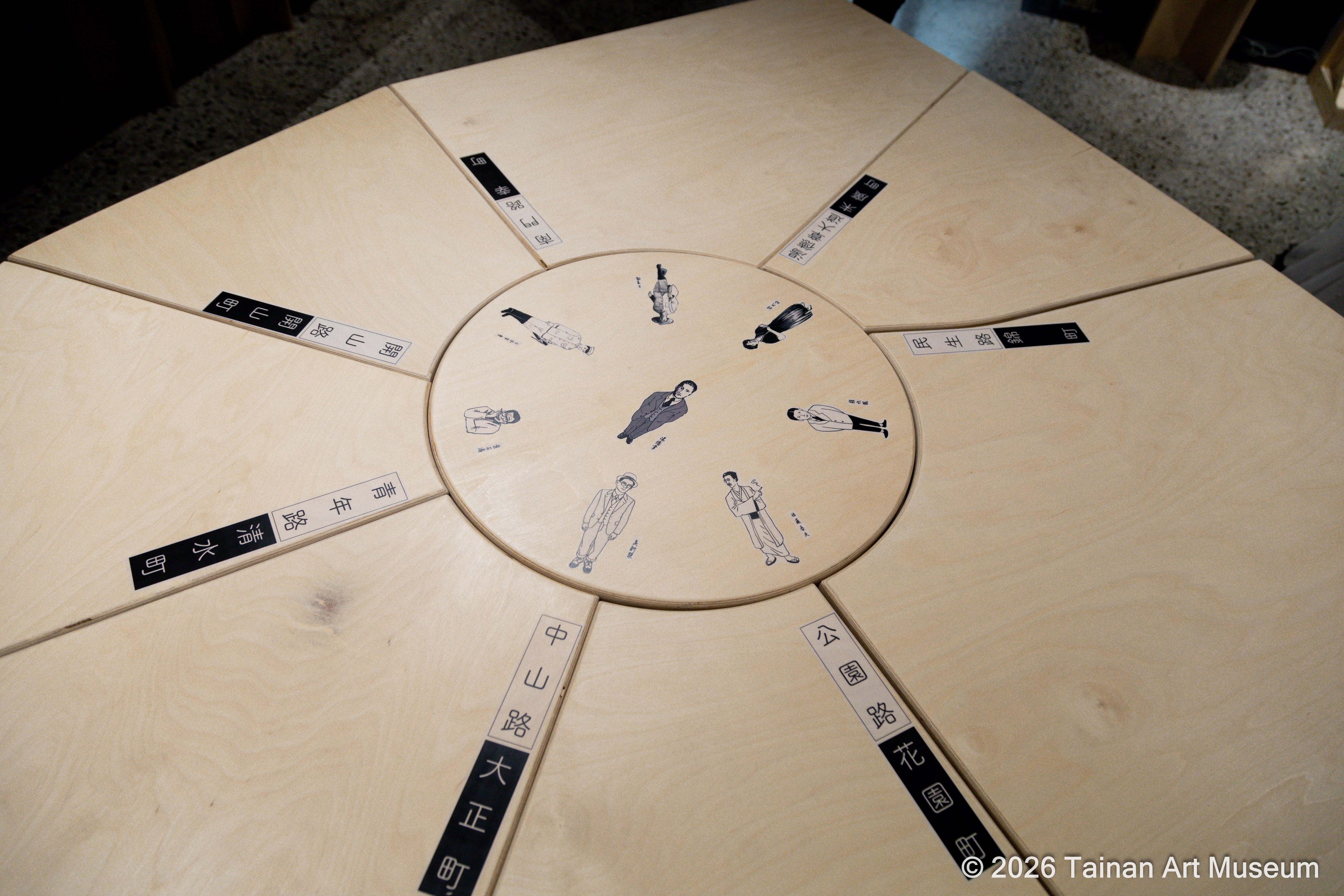
The first Tainan Art Biennale, Unfolding Circuits, takes its title from Tang Te-chang Memorial Park in the centre of Tainan: seven roads run out from this roundabout, and the exhibition, too, has seven routes, seven curators and seven themes. Tang Te-chang was a lawyer who was executed in this park during the 228 Incident; the park was later named after him.
The museum says a circuit is not only a road, but also the way space is reborn after one regime gives way to another, and the forms in which folk belief and resistance keep returning. One route, curated by Apex Lin Pang-soong, sets out a long-neglected history of art and design in Taiwan from 1895 to the 1960s; another, curated by Kao Jun-honn, centres on the Tapani Incident of 1915 and works through it with reenactment, theatre, sound and workshops.
The biennale spreads across 16 core venues and 16 satellite venues. Besides the Tainan Art Museum, they include the Tainan Confucius Temple, the Taiwan Prefecture City God Temple, Chuan Mei Theater, the Museum of Justice and the National Museum of Taiwan Literature.
From the museum to the Confucius Temple and on to Chuan Mei Theater, the exhibition lies scattered through the lanes of the old city.
If you have seen a good exhibition that isn't written up here yet, I would be glad to hear about it: hello@anthology-art.org
About this anthology: chosen each month by our editor, Yu. Every exhibition is checked against the venue's official site (as of Oct 29, 2026), and no listing is paid for. If dates or prices change, please refer to the venue's own announcement.
The Chinese original of each title and venue name is shown in gray below it.
A little more art in your life
Every month, we write a letter about exhibitions we love and why we recommend them. Subscribing is free, and you can cancel at any time.
We will use your email address only to send the newsletter. Privacy
Seoul · Tokyo
Anthology in other cities. Each is its own local edition, opening with this month's anthology.