The Monthly
Seoul Anthology: DecemberThe longest nights of the year, in Seoul's museums and galleries
Chosen by our editor and checked against each venue's official site. No paid listings. About this anthology
December in Seoul is deep winter. The bungeoppang carts are back on the street corners, and on the way home from work, year-end dinner plans (songnyeonhoe) pile up one on top of another. When it gets colder than minus ten, the city asks people to leave the tap running in a thin stream so the pipes do not freeze, enough to fill a paper cup in two minutes. On the twenty-second, Dongji, there will be a bowl of red bean porridge (patjuk) on the table.
Here is our Seoul anthology for December. On the winter street, until the steam of the bungeoppang fades, may it keep you company for a stretch of the walk.
— Yu


1 / 4 Image: Leeum Museum of Art
Koo Jeong A hid fifty quartz crystals, one by one, in the gaps of the gabion wall outside the windows of Leeum Museum of Art.
Most of the time, the crystals can hardly be told from the stones. Only when where you stand, the angle of the sun and the weather all line up does one flash. Reality Upgrade & End Alone (2003/2026) began in 2010 in the grass at Dia Beacon. That you may find them, or may never find them, is part of the work.
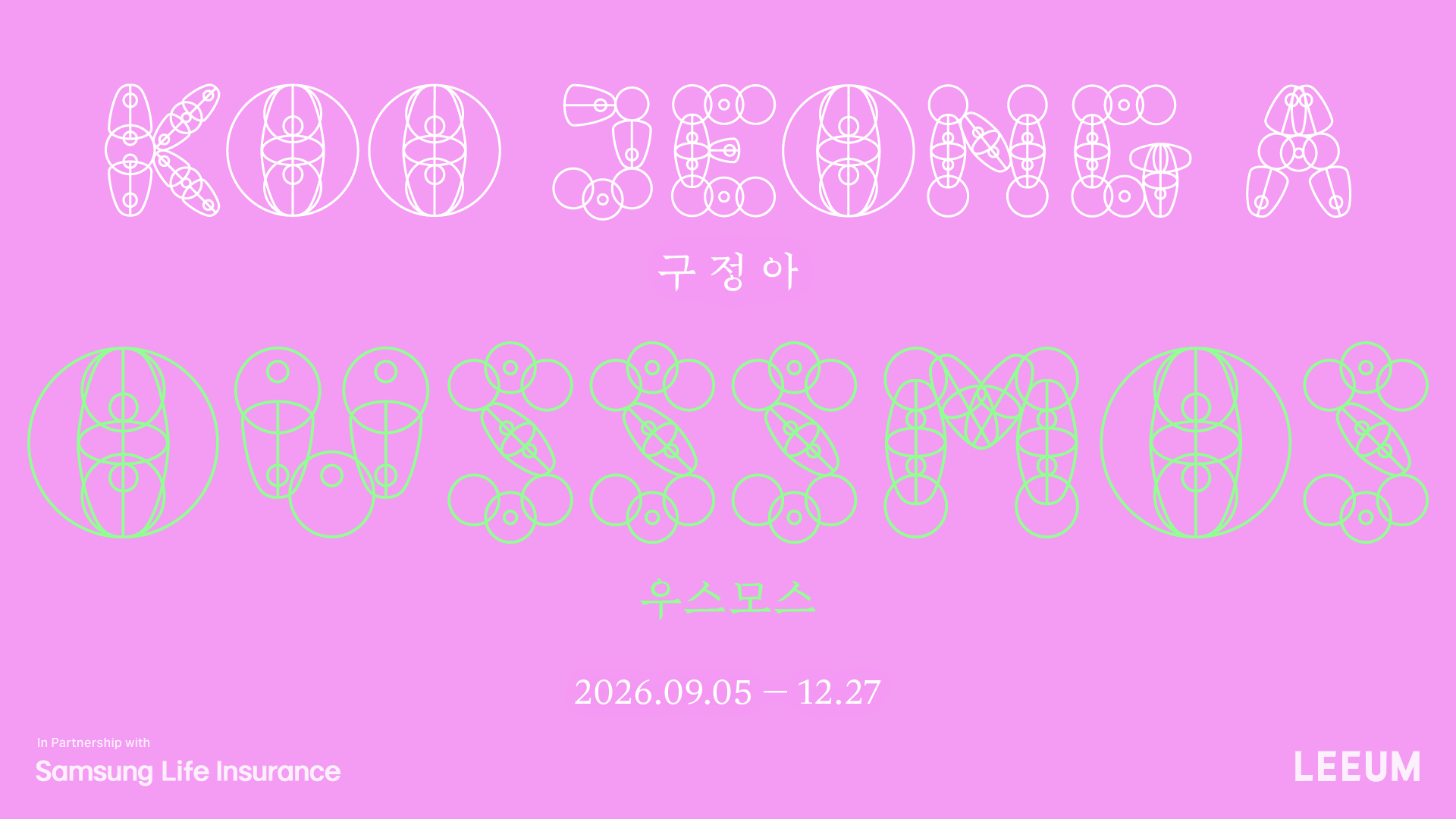
Koo Jeong A: 우스모스 has no fixed centre and no single route. Thirty-five works, from the early 1990s to large new ones made for this exhibition, are scattered through the lobby, M2, the permanent galleries of traditional art and outdoors. R (2005), 1,001 drawings and 77 wooden boxes, is shown at full scale for the first time, but it cannot all be seen at once: only some drawings hang on the wall, the rest stay in the boxes, and the drawings on the wall change during the exhibition.
The 우스 in the title is a word the artist coined in the mid-1990s. Leeum explains that it is a sound, a prefix and a suffix, sometimes another name for energy, matter or the universe, but that it "never settles into a single meaning". Kim Sung Won, the deputy director, has said that what you miss is worth as much as what you see.
In a small recess in the wall is Untitled (1998): fifty-seven leads for a mechanical pencil, standing upright without glue. Touch them, and they fall.
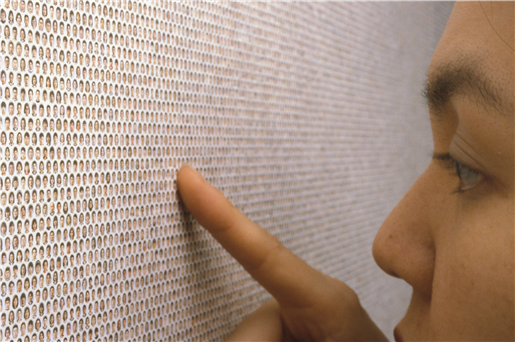
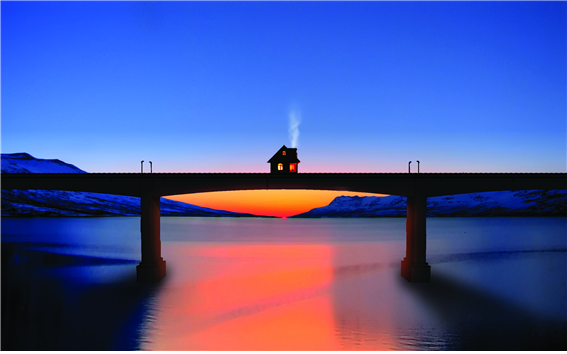
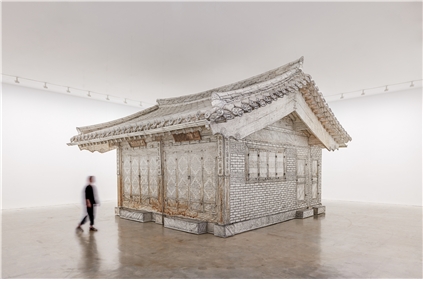

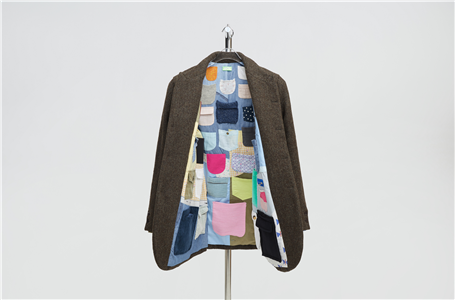
Since 1999, Do Ho Suh has been seriously working out how to build a bridge across the Pacific between Seoul and New York.
Do Ho Suh's Bridge Project began from imagining away a real distance. The idea grew to joining the cities he had lived in with a single bridge and building a house in the middle of it. With architects, structural engineers and meteorologists, he studied the depth, wave height and wind speed of the ocean between the two cities.
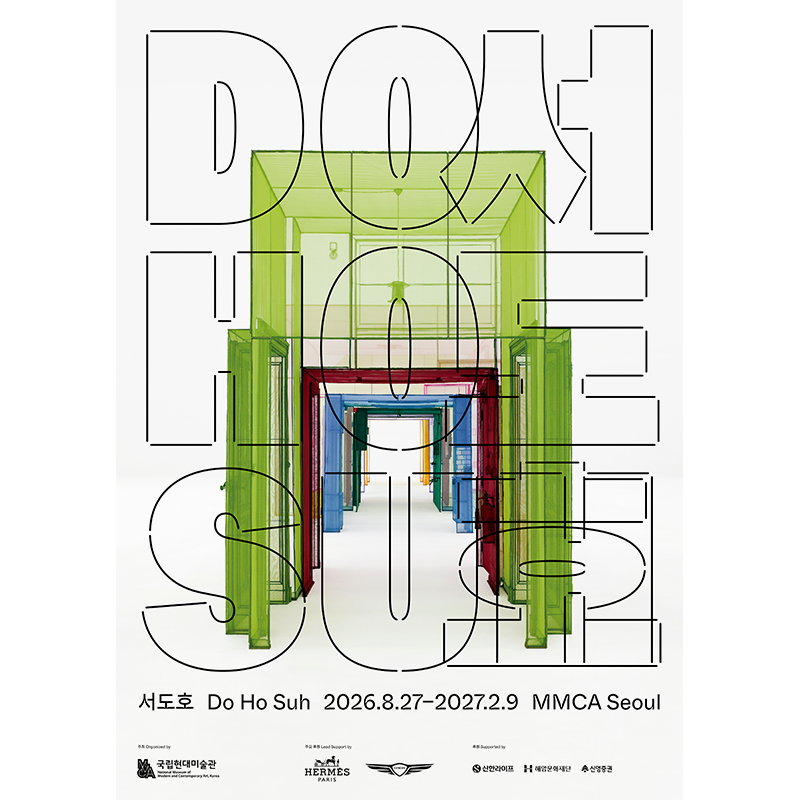
MMCA Seoul shows its models, drawings and videos. The museum's audio guide says this is not a final result, and that the project does not aim at completion.
The exhibition begins in the corridor outside the galleries with Seed Bank: sea creatures carved in his childhood from the wood of a tree in the courtyard of a hanok, and works from his university years. In Untitled (Balloon), the student Do Ho Suh carried balloons holding his own breath from an abandoned factory to somewhere else.
In the thread drawing 쫓아오는 집 ("The House That Follows", 2019), a small figure runs forward, and behind him a hanok, pulled along by countless coloured threads, follows, fluttering like cloth.
1 / 5 Image: FUTURA SEOUL
The closing ceremony of the London 2012 Olympics and the 2022 Super Bowl halftime show were both staged by the British artist Es Devlin.
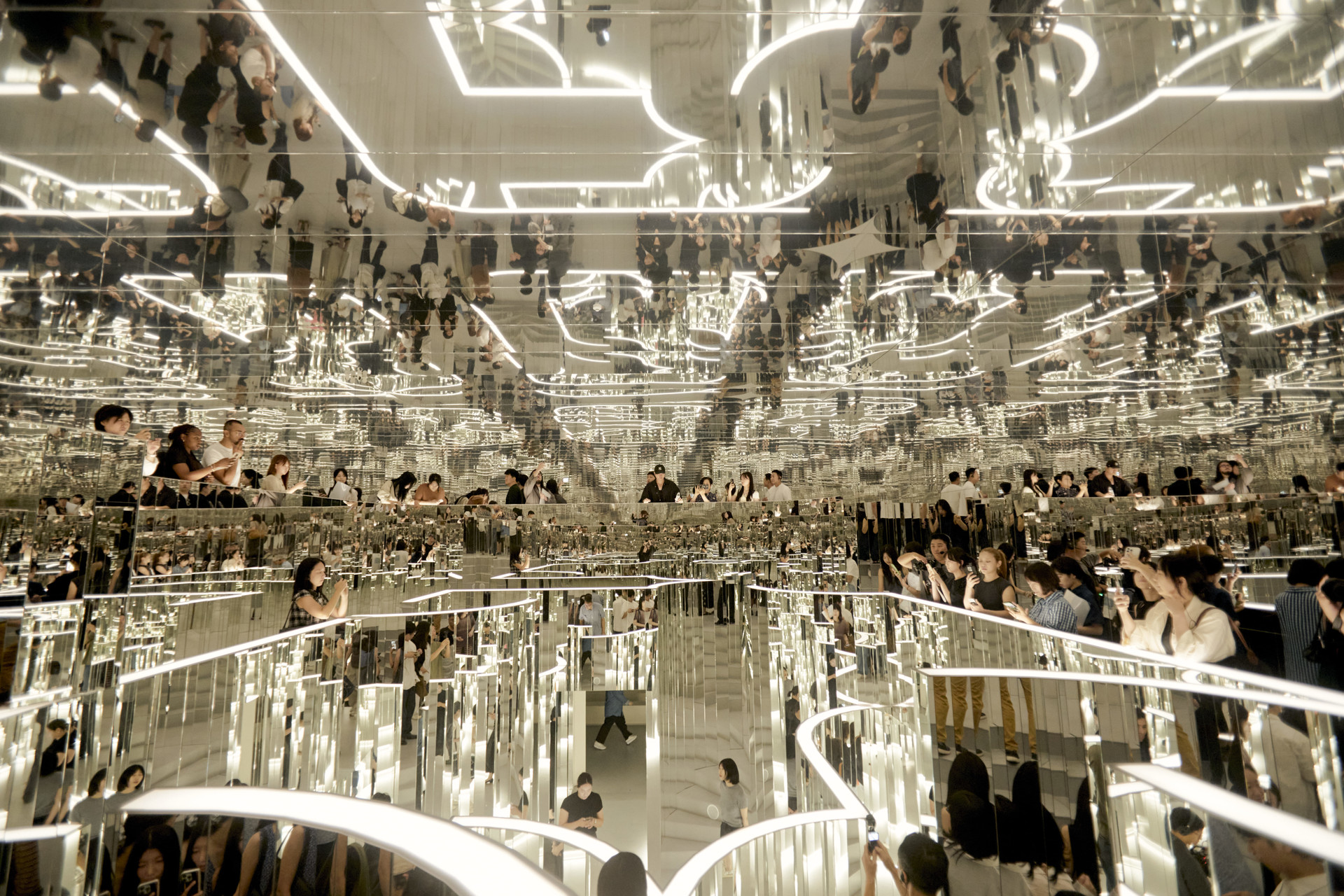
Es Devlin was born in London in 1971. She began in opera and theatre and went on to design stages for U2, Beyoncé and Adele. Since 2016 she has carried that language of space into museums and public places. To her, an audience is not just people looking at a work, but a "temporary society" formed by sharing one space and one stretch of time.
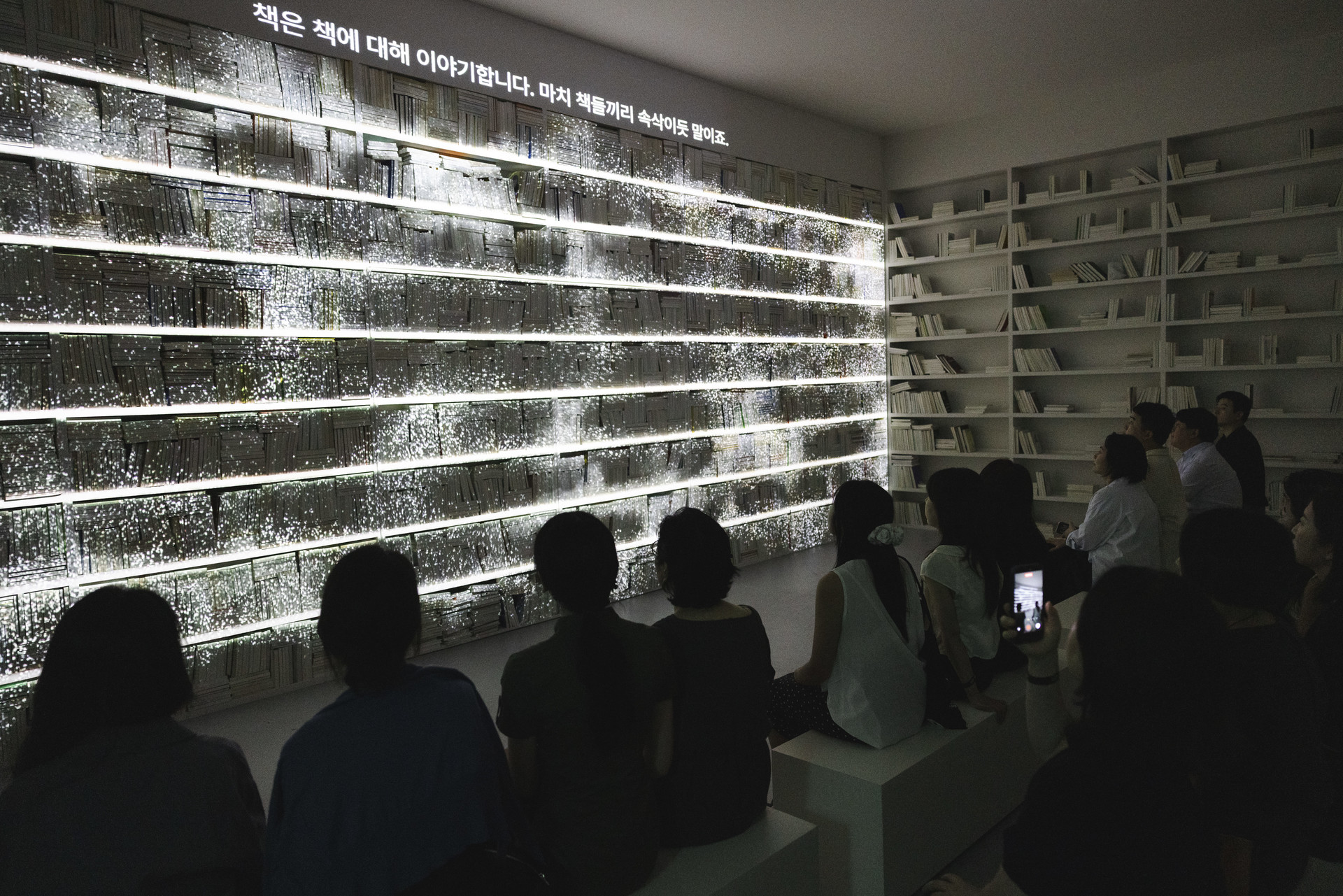
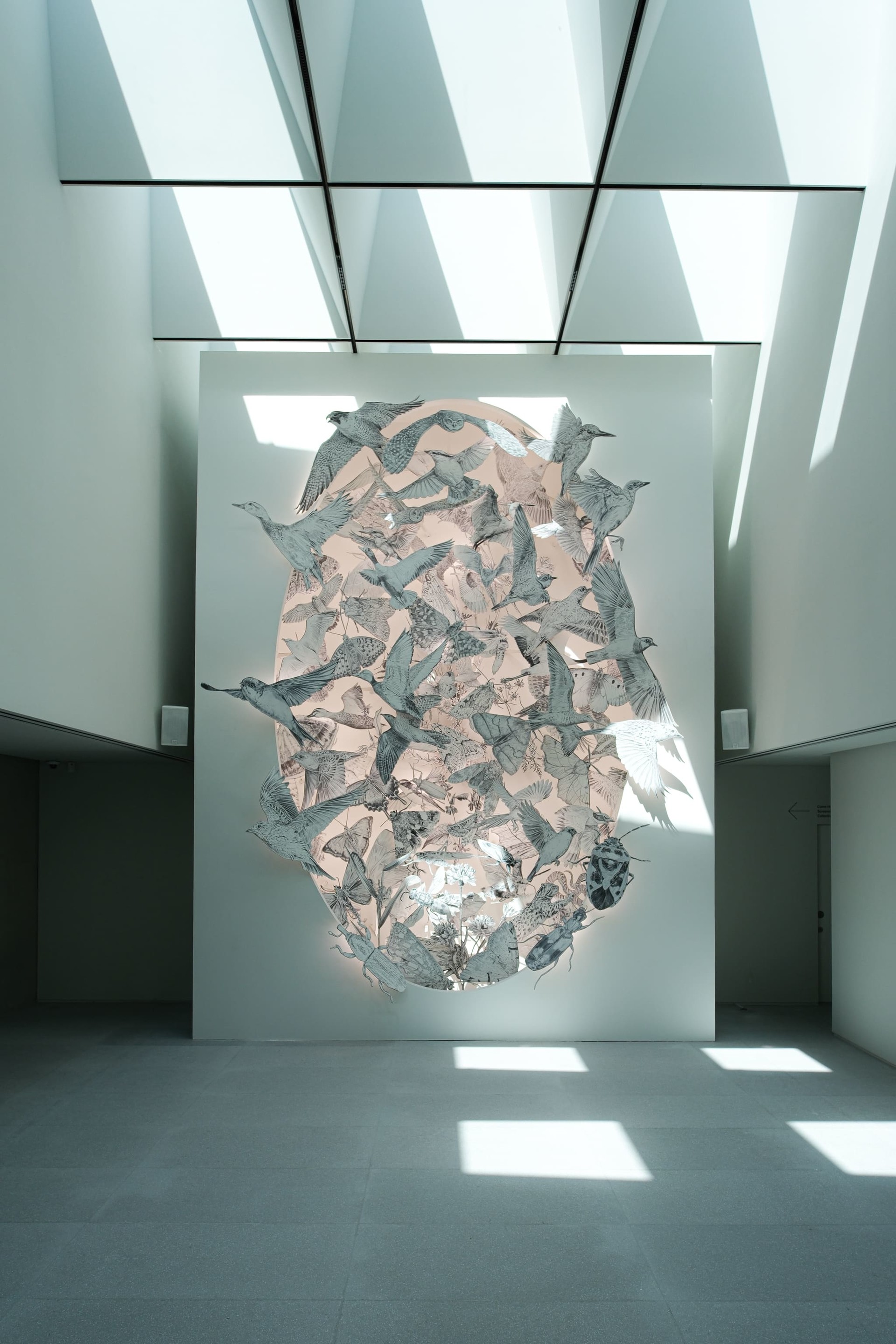
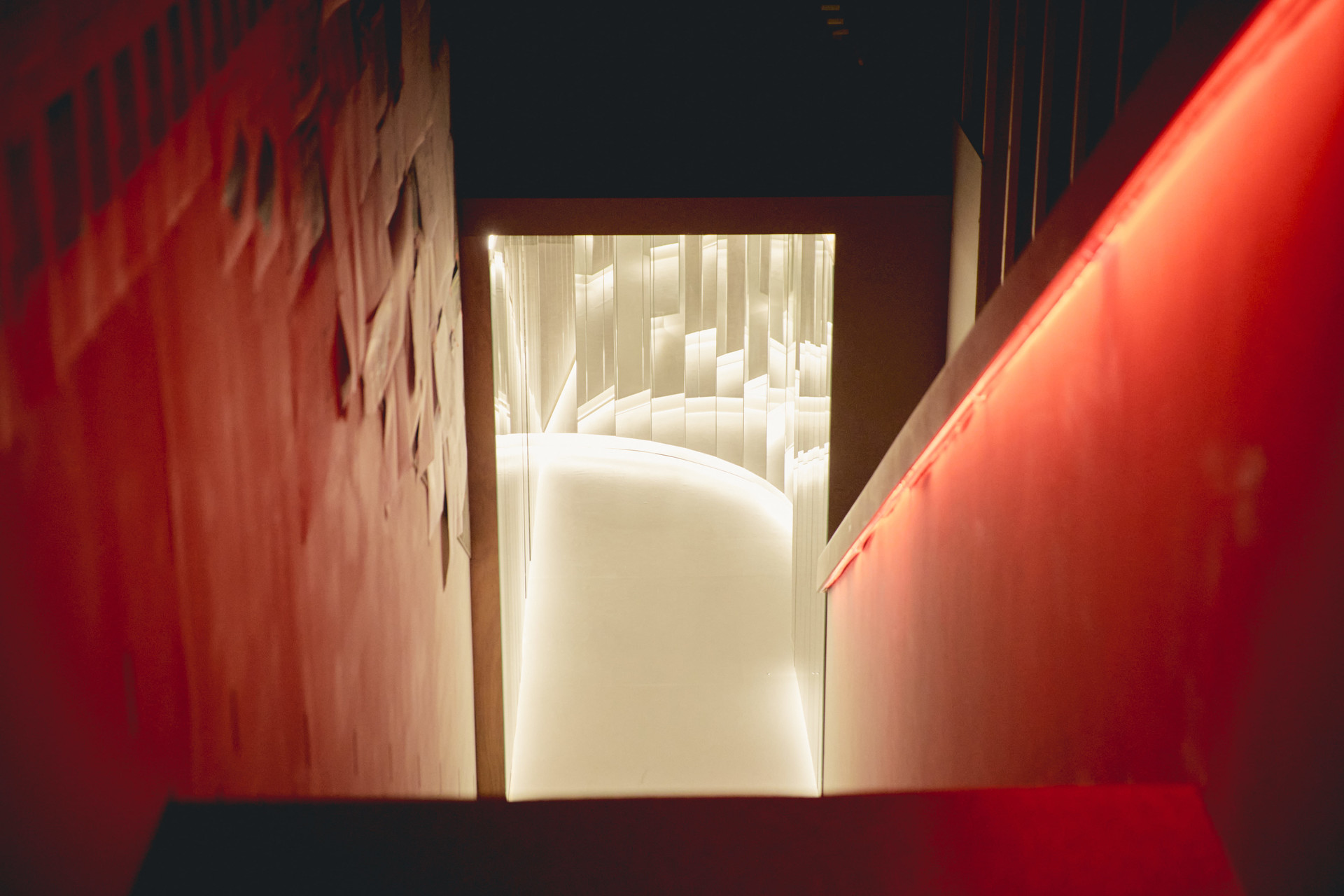
FUTURA SEOUL, on Bukchon-ro, has a series called One Hundred Poems. The first two poems sank the galleries in darkness; this third one lets natural light in for the first time, and the building's curved walls and the hours of the day become part of the work. She calls it "a poem written in the language of light".
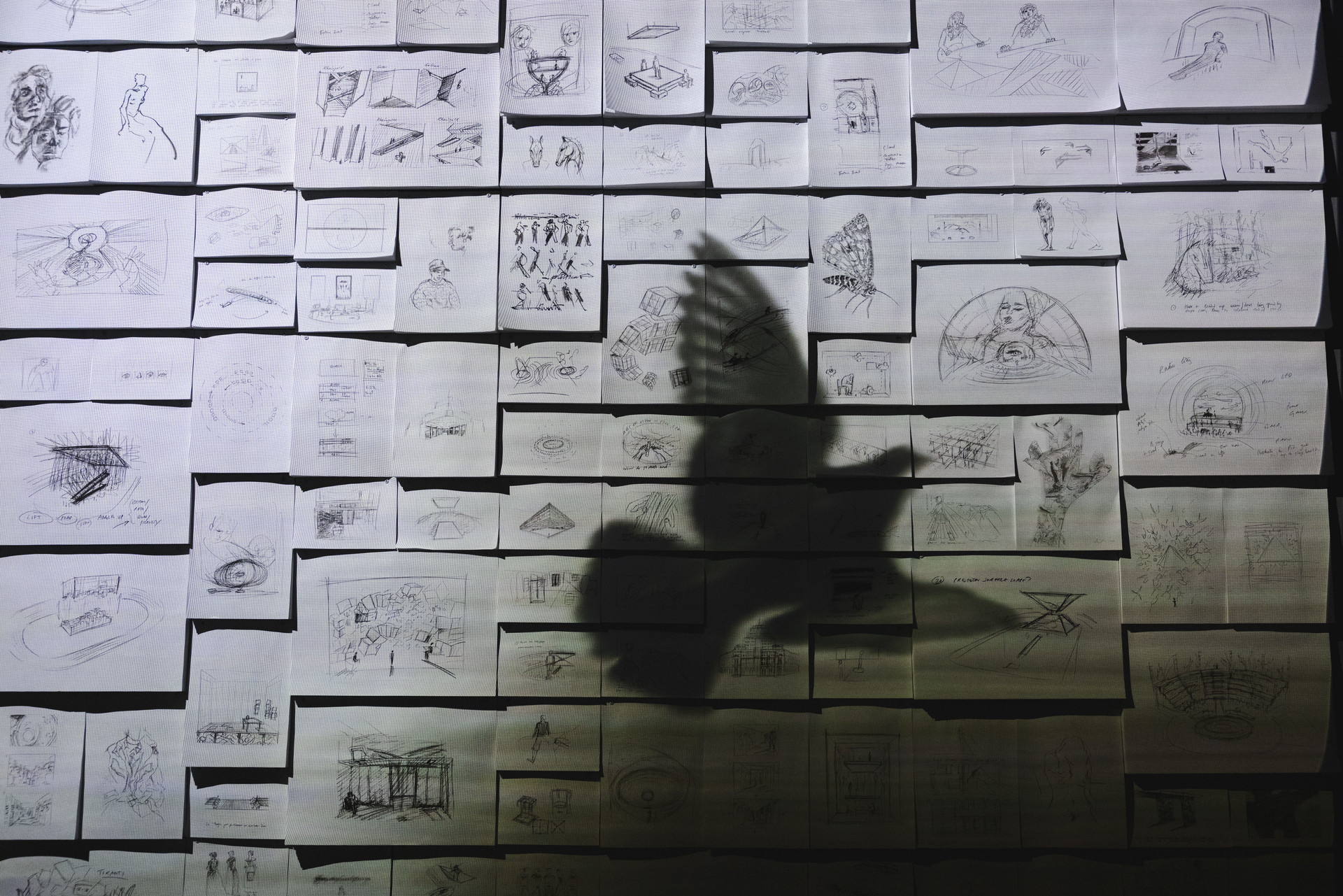
In one work, Screenshare, the cinema screen is made of hundreds of sketchbooks: thirty-five years of her drawings, of London's plants and animals, of her children, and above all rough sketches made while working out ideas or sharing them with collaborators. When the film ends, visitors may take one sheet of the screen away.
The title, Come Home Again, comes from the 92-year-old climate activist Joanna Macy: as we let go of our isolation, we come home again. At the end, the space opens onto a garden, and the garden is reflected in water.

1 / 4 Image: National Museum of Korea
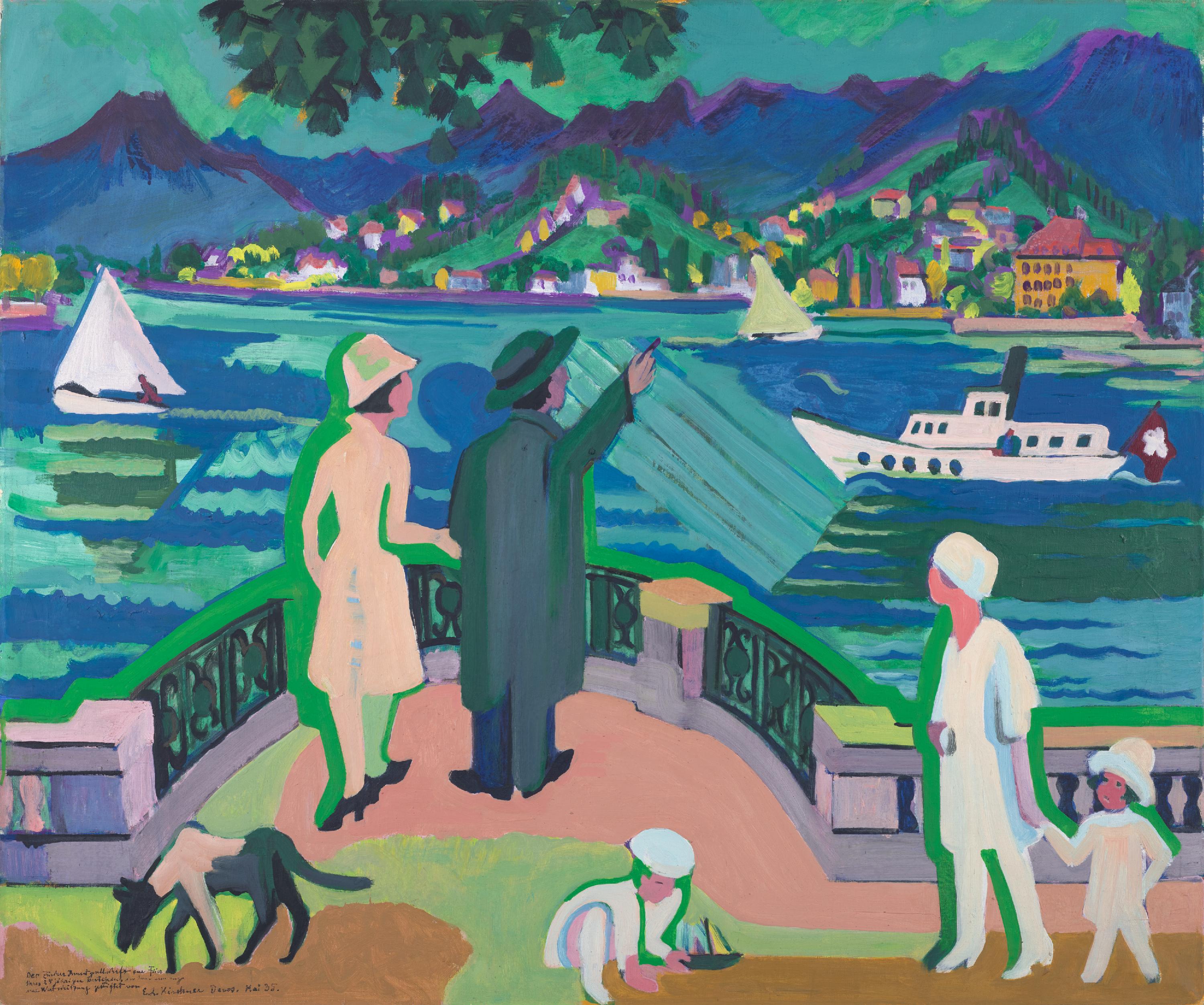
In 1935, Ernst Ludwig Kirchner gave his own painting of a Sunday on Lake Zurich to the Kunsthaus Zürich.
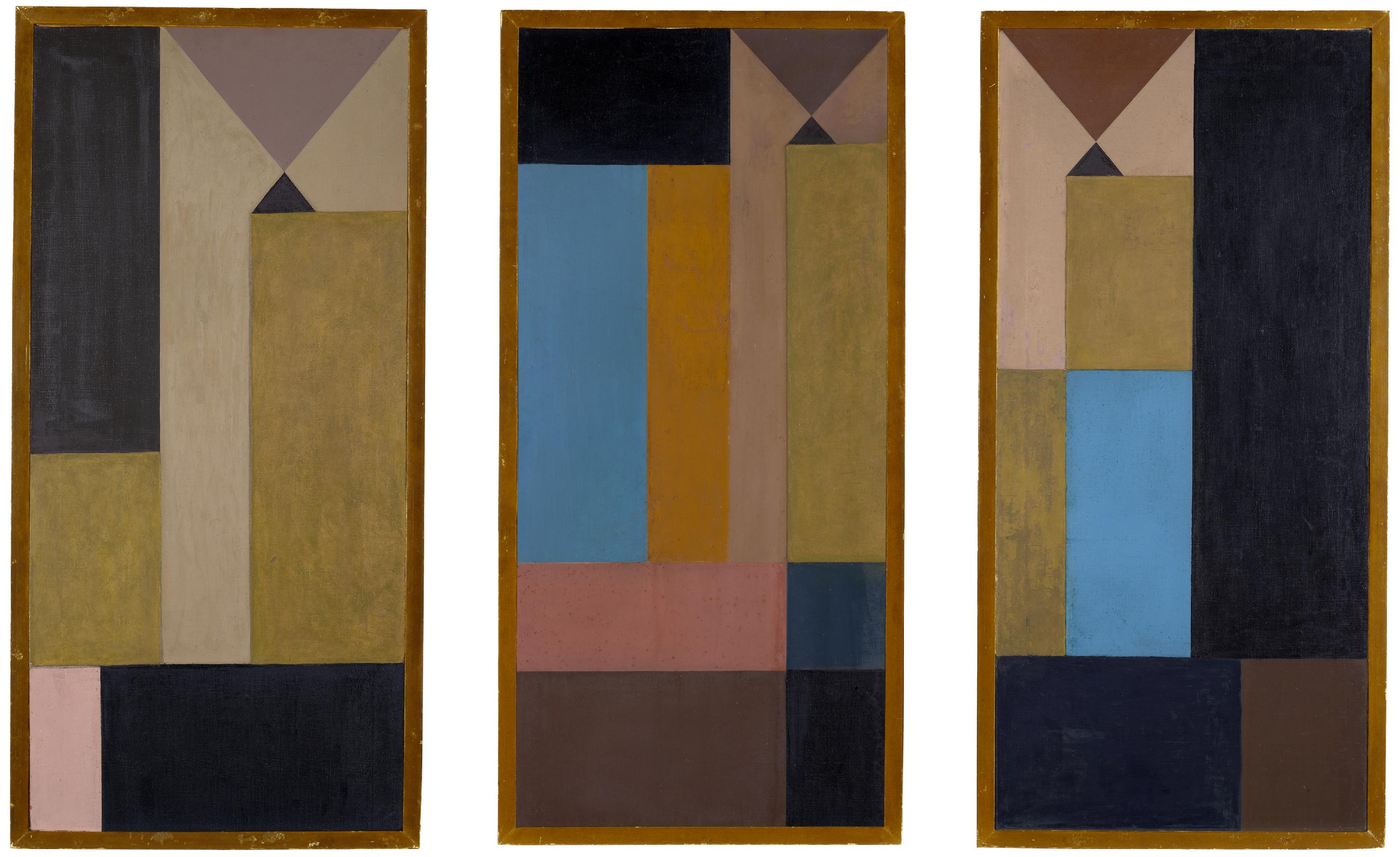
Many of the work descriptions in the National Museum of Korea's press release for The Birth of Modern Art say who gave the work, and when. Kirchner's painting was given by the painter himself. Paul Klee's Hunter Tree (1939) was given by his family in 1948, after his death, and Sophie Taeuber-Arp's triptych of 1918 by Hans Arp in 1958.
It is the first time the Kunsthaus Zürich collection has come to Korea. Eighty-five paintings and sculptures span some two hundred years, from the 1760s to the 1950s: from paintings made before modern art truly began, to Impressionism and Surrealism. The museum singles out Switzerland's "national painter" Ferdinand Hodler and Zurich Dada, which began in Zurich during the First World War, as works that have been hard to see in Korea until now.
Taeuber-Arp's Triptych, Vertical-Horizontal Composition with Reciprocal Triangles was painted in 1918, at the height of Zurich Dada, in oil and metallic paint on three tall panels.
In Klee's Hunter Tree, a large tree that looks pieced together from grey-green fragments stands on an orange ground. In one corner is a very small red figure.
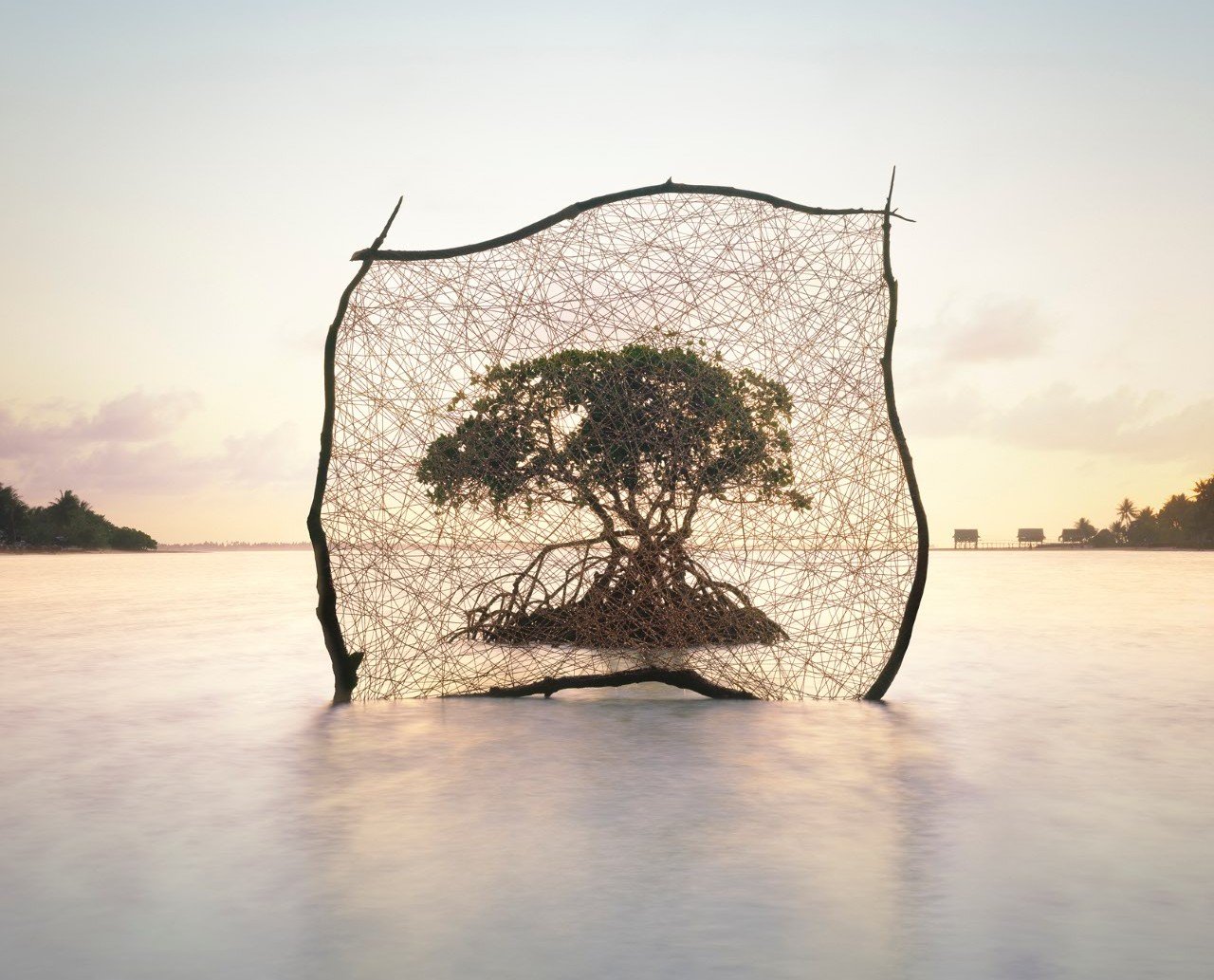
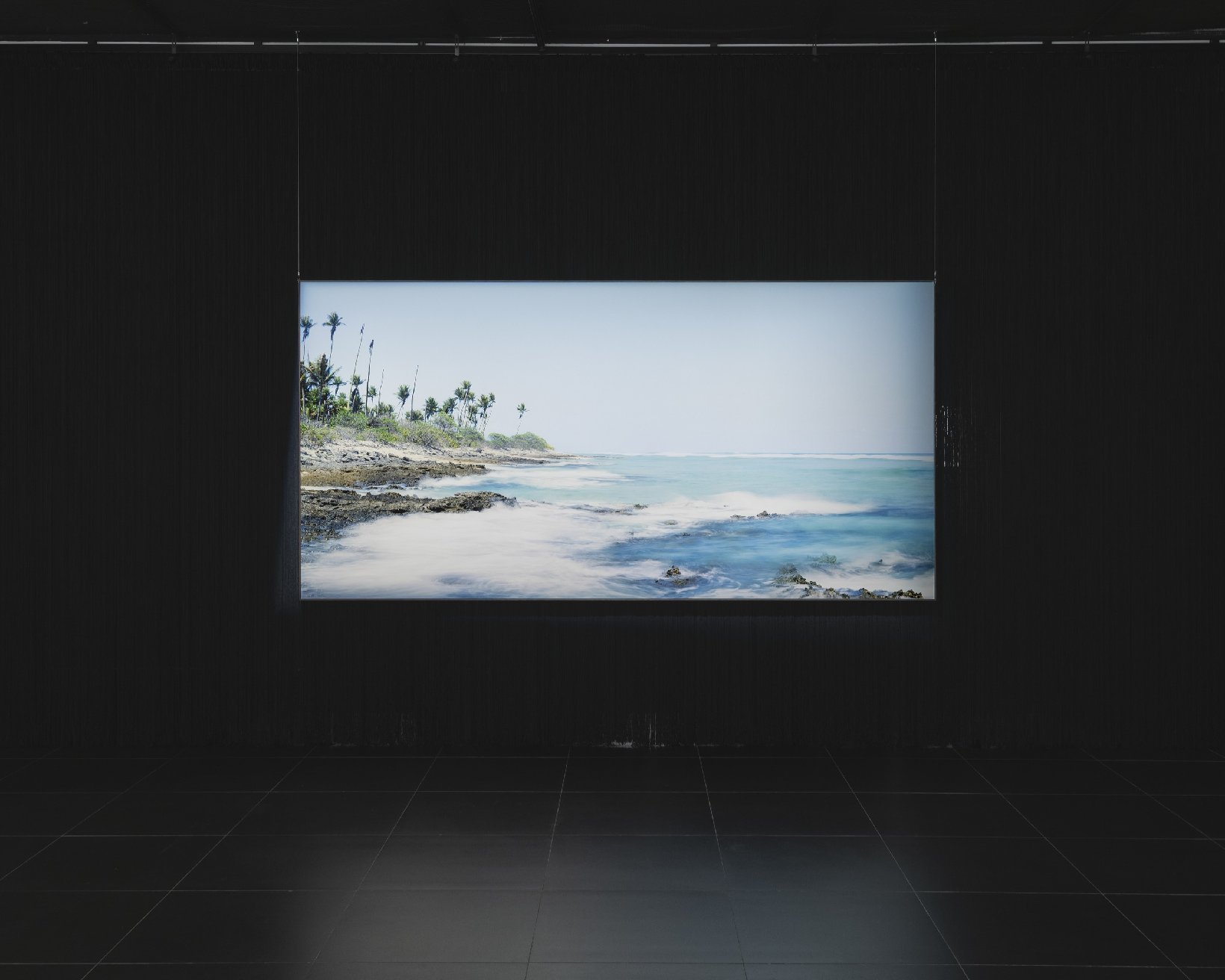
1 / 4 Image: Gallery Hyundai Kiribati #1_1_1, 2026, ink on paper, 153.5 × 153.5 cm
Since 2024, Myoung Ho Lee has been photographing a pagoda tree (hoehwa-namu) that has stood for hundreds of years on the site of Seonwonjeon in Deoksugung.
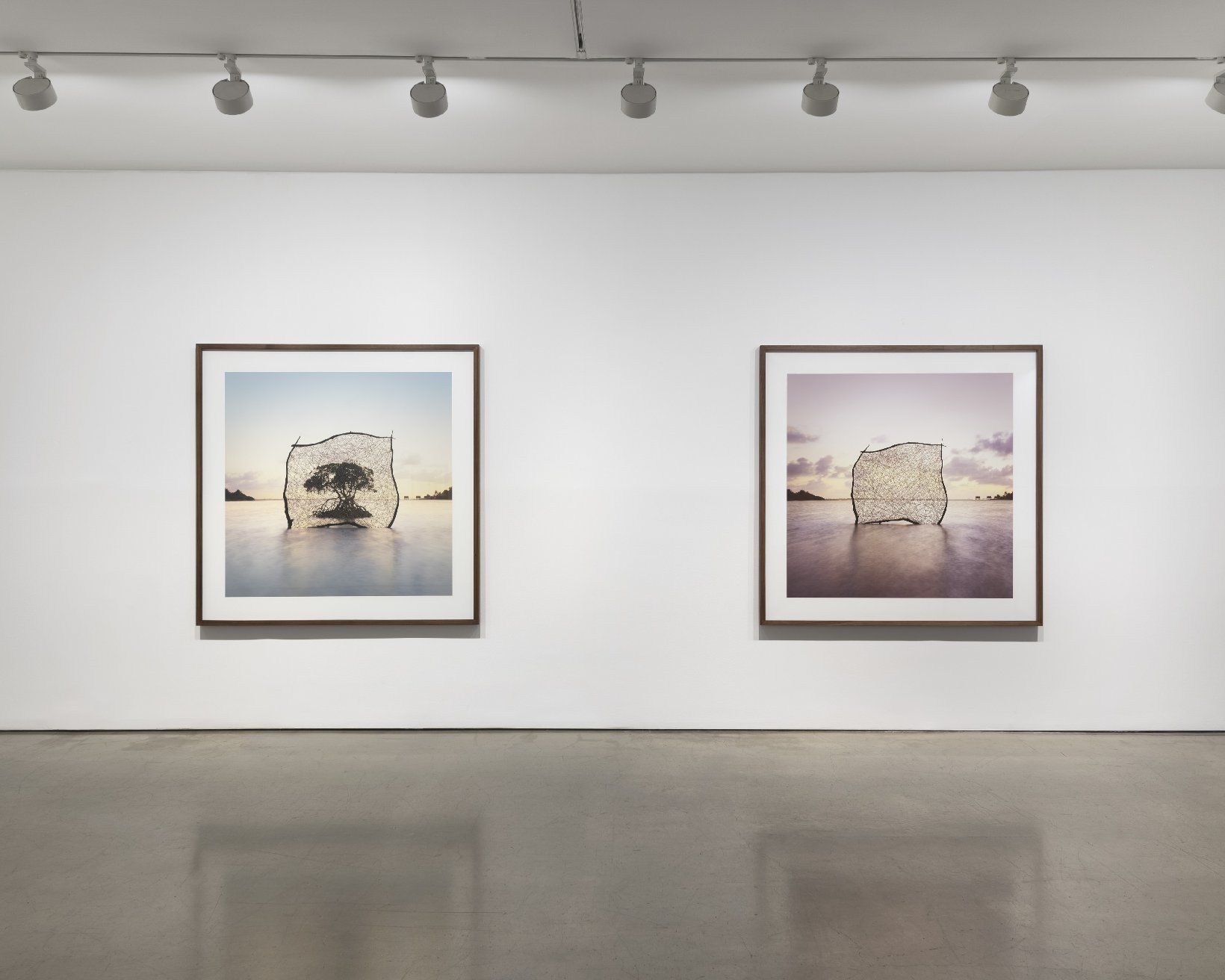
(no)thing is Myoung Ho Lee's first solo exhibition at Gallery Hyundai since 2018, with some thirty new works. Two series are at its centre.
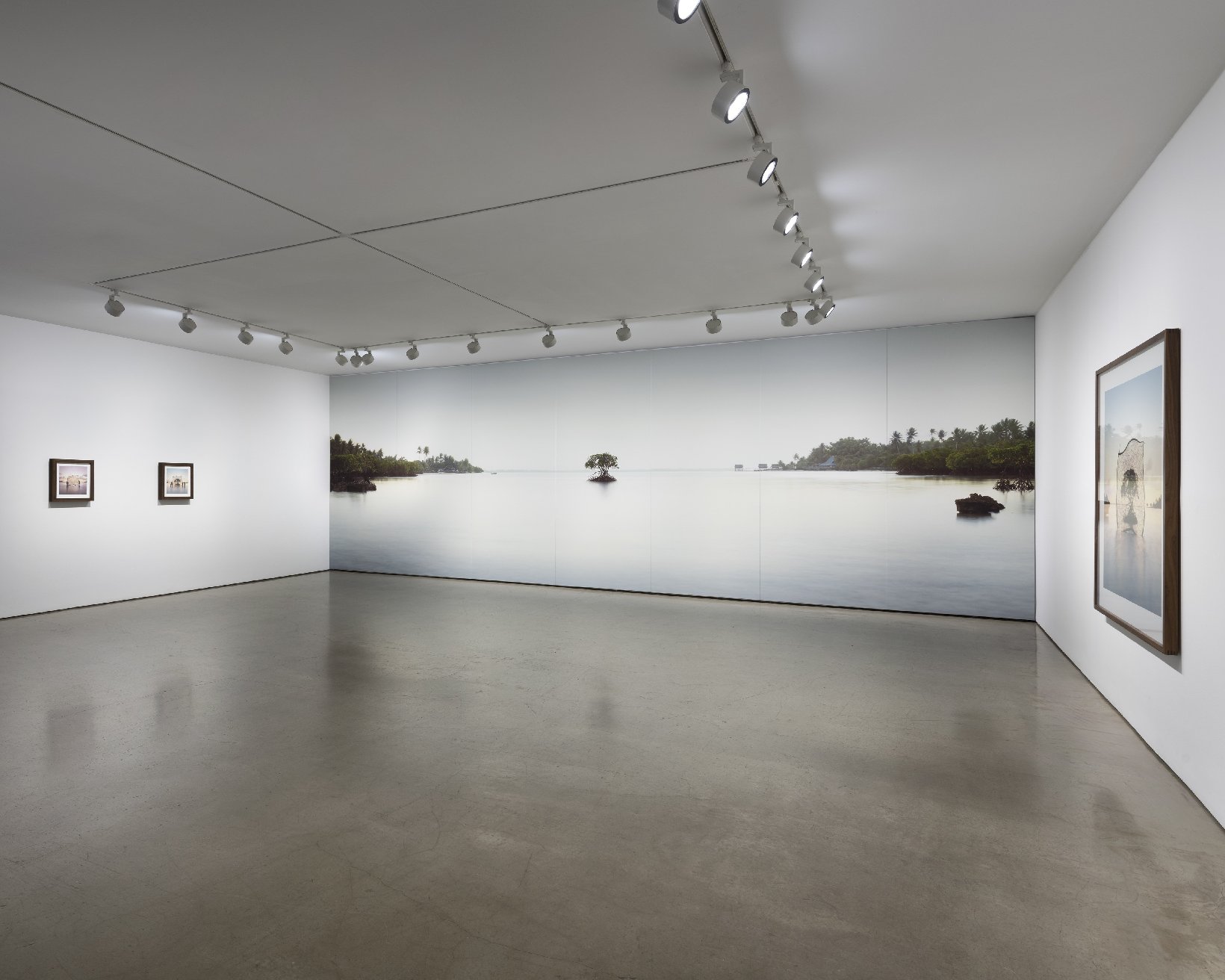
One is Kiribati (2026), which records a Pacific island nation facing the loss of its homeland as sea levels rise with climate change. Through a place that is real yet may cease to be, the gallery says, the work shows the paradox of presence and absence.
The other is Heritage, photographed from 2024 to 2026. It shows a pagoda tree that has stood for hundreds of years on the site of Seonwonjeon in Deoksugung, and the gallery says this tree, rooted in one place, calls up the flow of historical time from the Joseon period to today.
In 1925, by chance, Lee Chong-woo went to Paris and became the first Korean painter to go there.
Lee Chong-woo stayed in Paris for about three years and learned classical realist painting from a painter in exile from Russia. In 1927 two of his paintings were accepted at the Salon d'Automne, one of them Still Life with Doll. After returning to Gyeongseong in 1928, he held a solo exhibition of fifty-three works from his Paris years, organised by the Dong-A Ilbo.
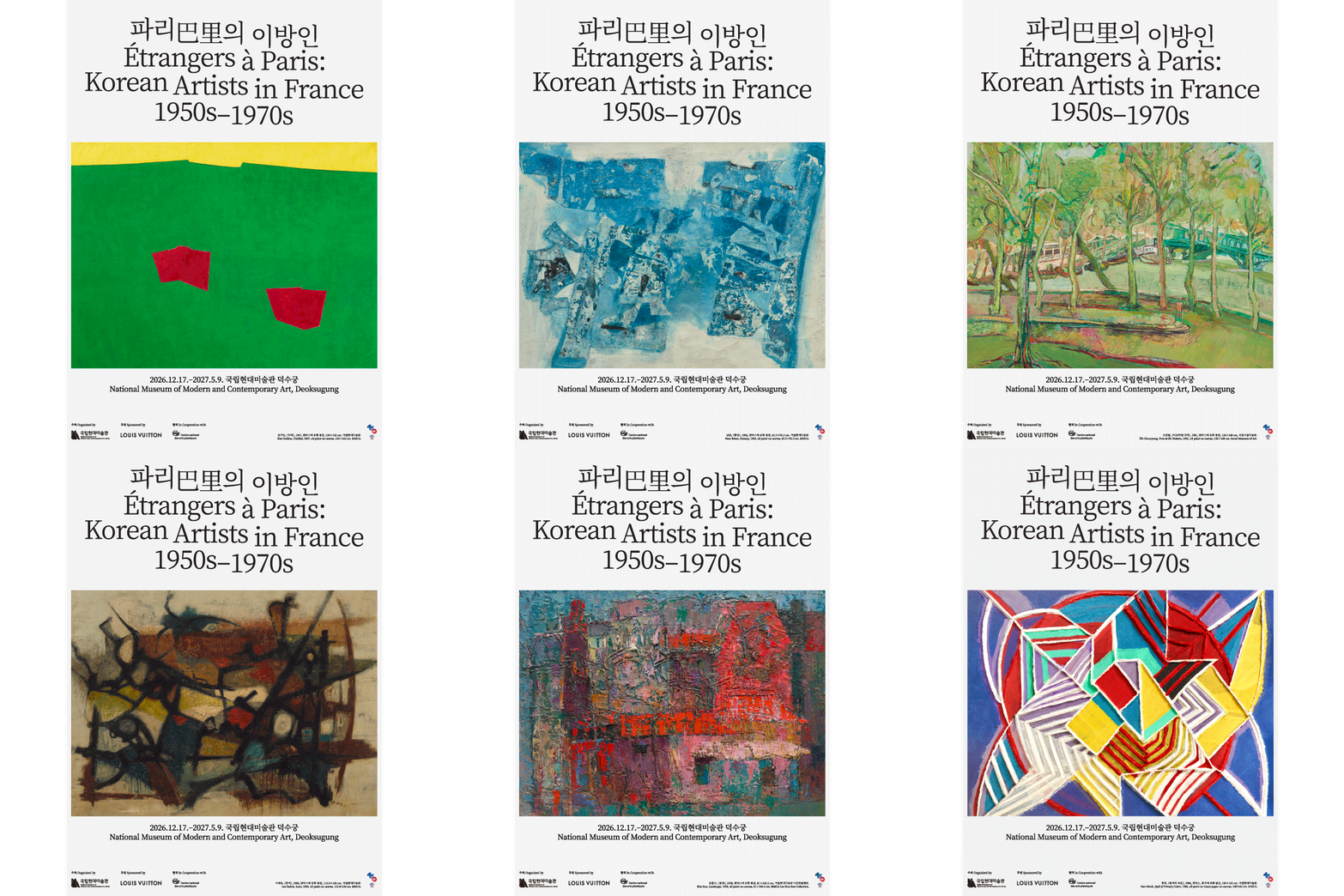
After the Korean War ended, more people went to Paris. Paris was then thought of as the capital of modern art, vying with New York for the centre of the art world. Rhee Seundja went to Paris in 1951, in the middle of the war, and the studio she later made in the south of France became French heritage in 2024. Lee Ungno went to Paris in 1958 and later opened a school there teaching East Asian painting and calligraphy.
MMCA Deoksugung is using the whole building this time to present some fifty Korean artists who went to France between the 1950s and 70s. The exhibition is called A Stranger in Paris. The museum is a stone building inside Deoksugung Palace, built as an art museum in 1938. 2026 is the 140th anniversary of diplomatic relations between Korea and France.
Nearly a hundred years ago, a still life with a doll hung on a wall of the Salon d'Automne. The painter had come from Joseon.
1 / 4 Image: Sehwa Museum of Art
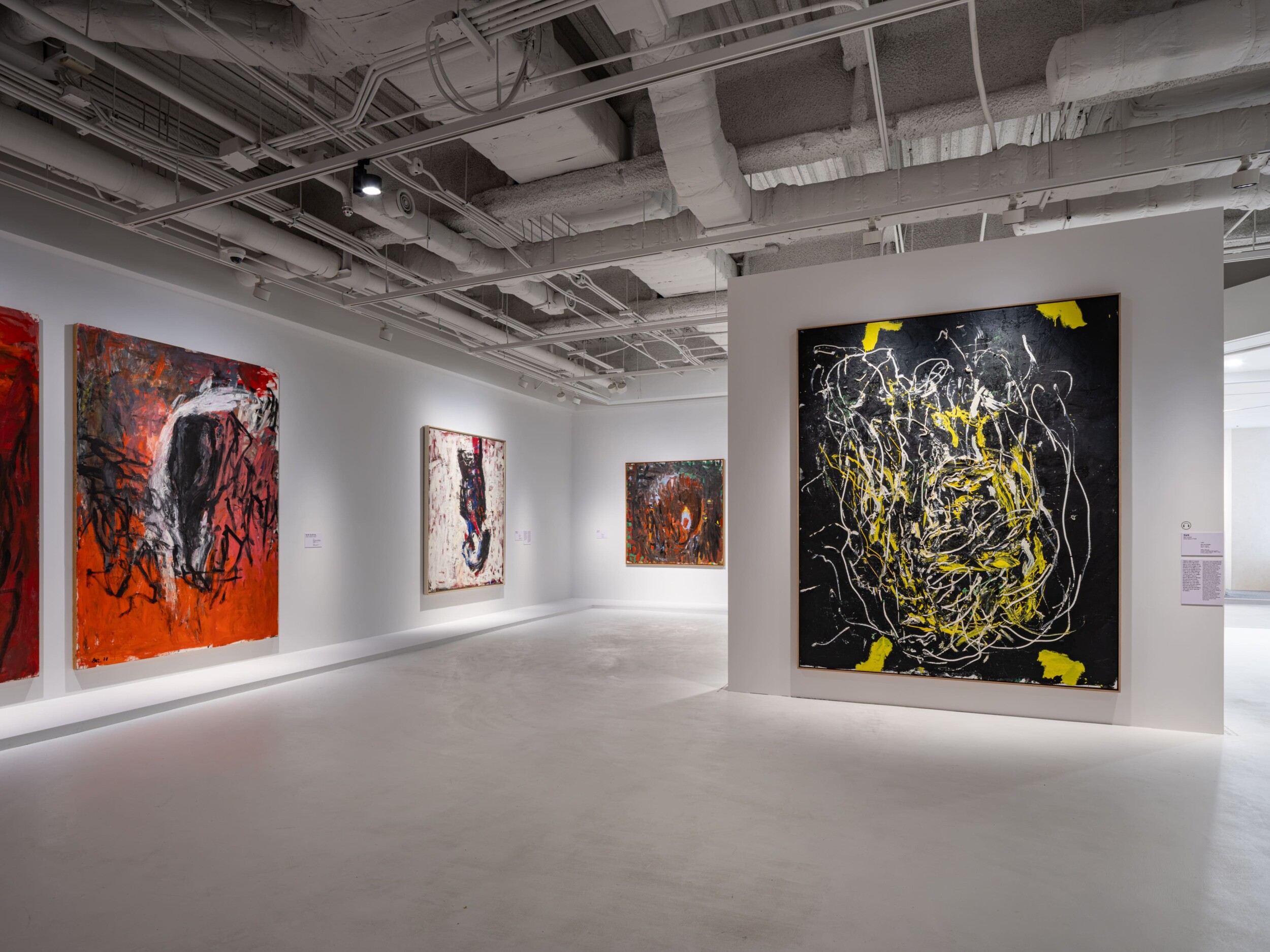
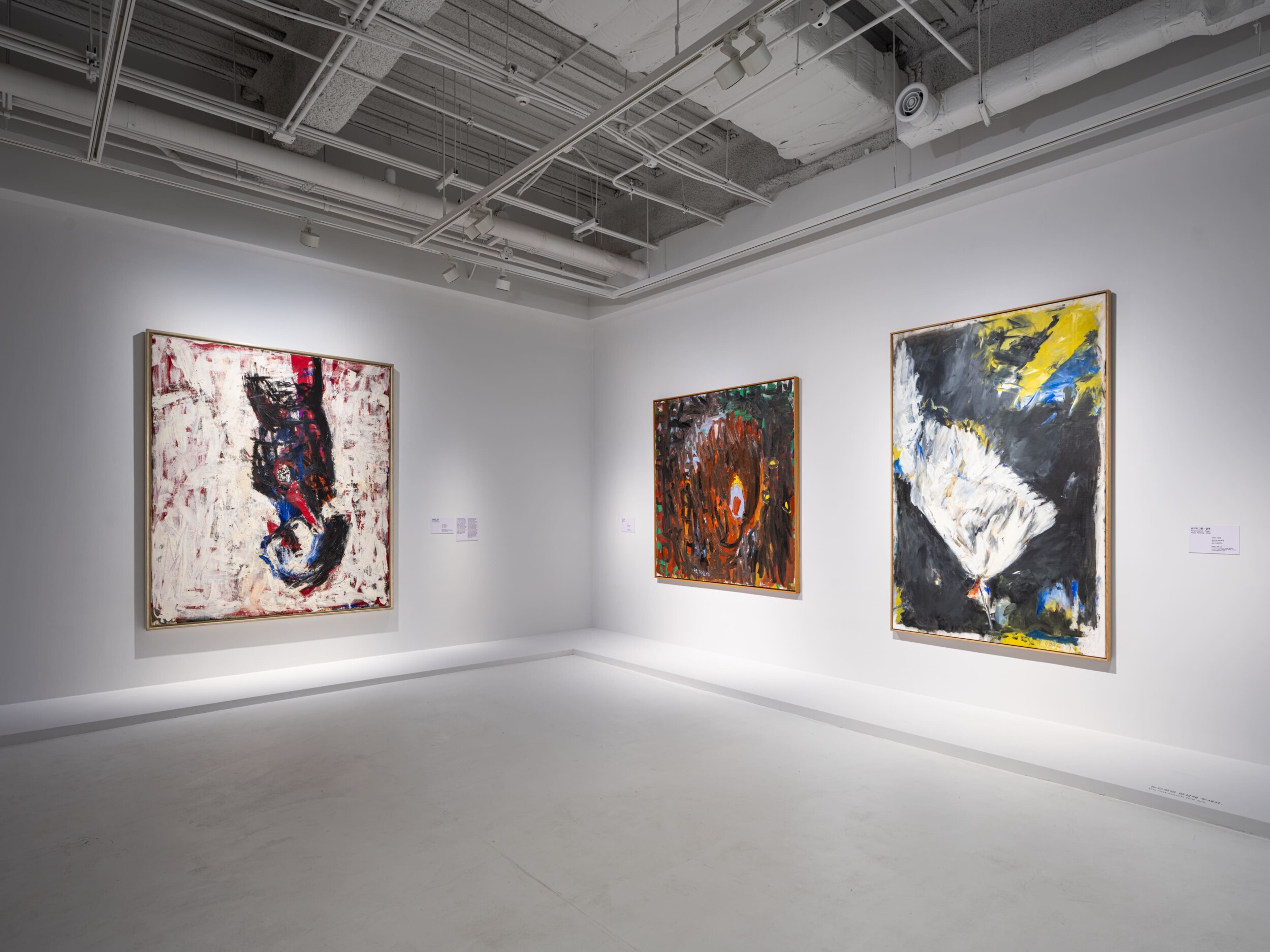
From 1969 on, Georg Baselitz painted his trees and people upside down.
Baselitz was born Hans-Georg Kern in 1938, in a village in Saxony called Deutschbaselitz. He studied painting in East Berlin, moved to West Berlin, and in his early twenties took the name of his home village as his own.
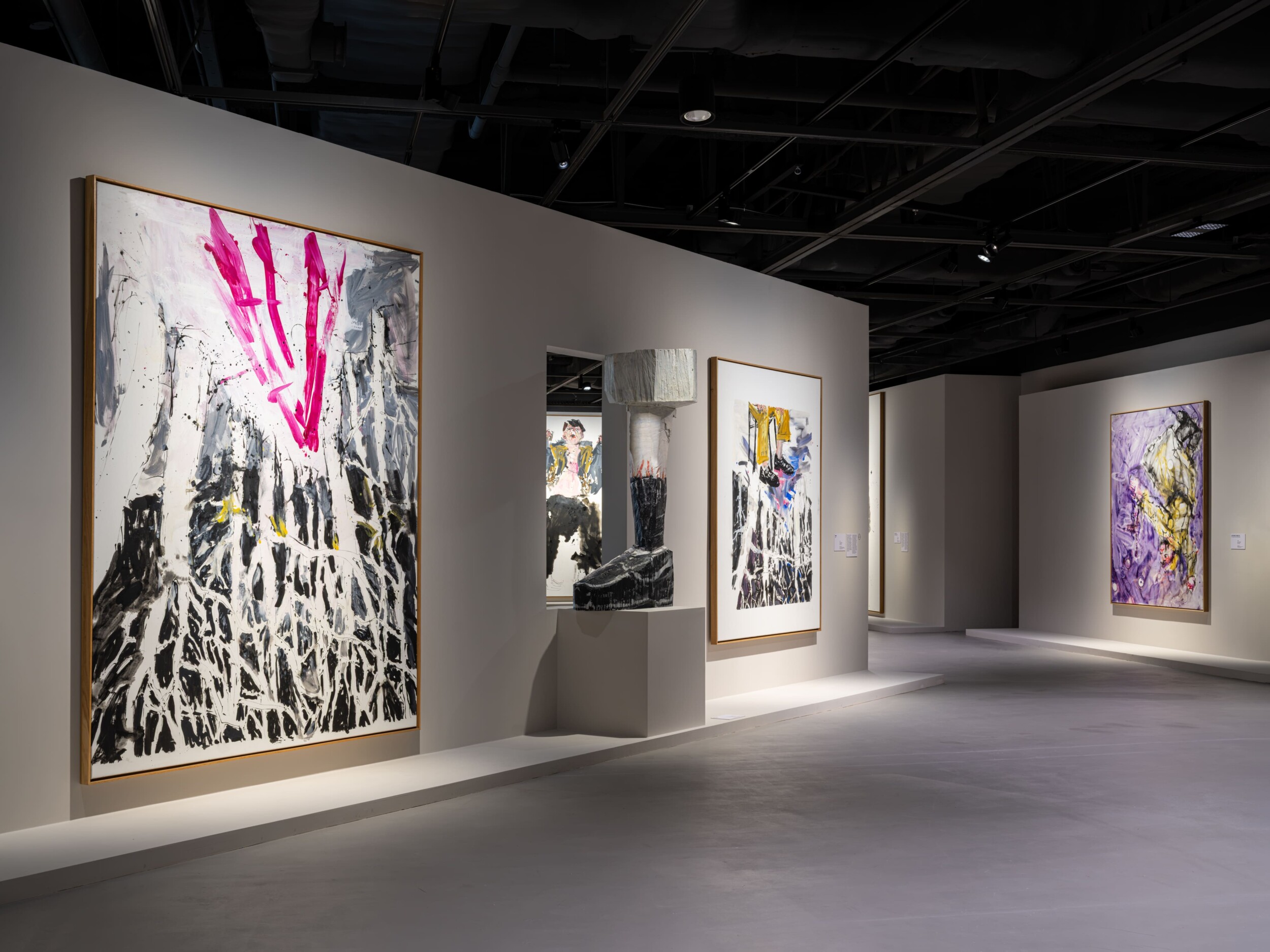
In 1969 he painted a forest upside down. From then on, people, birds and trees hung head down on his canvases. He did it, he said, so that people would see the painting itself, not only what it showed.
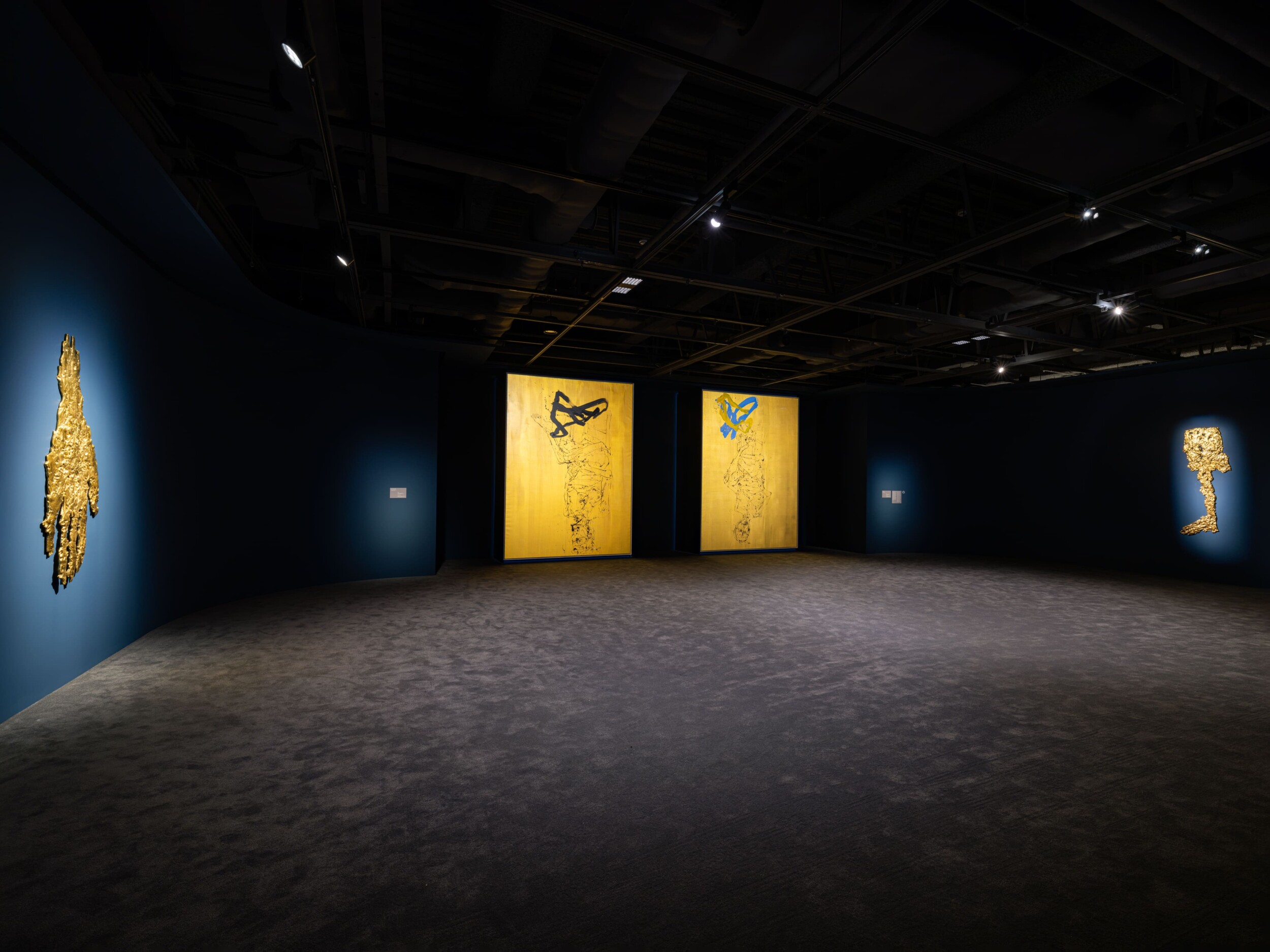
He died in 2026. This retrospective at the Sehwa Museum of Art, near Gwanghwamun, is the first exhibition in Korea since his death. Forty-six paintings, sculptures and drawings follow more than sixty years of work: early pieces from the 1960s to the 1980s, then portraits of Elke, his companion for life, and the Remix series in which, from the 2000s, he painted his own earlier subjects again. Broken bodies and eagles come back again and again.
The last room holds the Gold Paintings, the series he gave himself to in his final years.
The last chapter of this exhibition begins with a travel diary Oh Yoon wrote at the age of fifteen.
Oh Yoon was born in Busan in 1946 and graduated from the sculpture department of Seoul National University. In 1969, while still a student, he formed the group Reality (Hyeonsil Dongin); in the 1970s he built a visual language of his own on woodblock printing and also drew book covers and illustrations. In 1979 he took part in founding Reality and Utterance.
He held his first solo exhibition at Gurimadang Min in 1986, and died that year at the age of forty. This year is the fortieth anniversary of his death.
Drawn from the Oh Yoon collection held by the Seoul Municipal Art Archive, the exhibition runs in chronological order through six chapters, and every chapter title is taken from his notes and memos. Printing blocks, studies, drawings, notes and tools, newly organised, are shown.
Beside the printing blocks lie the tools he used.
1 / 2 Image: piknic
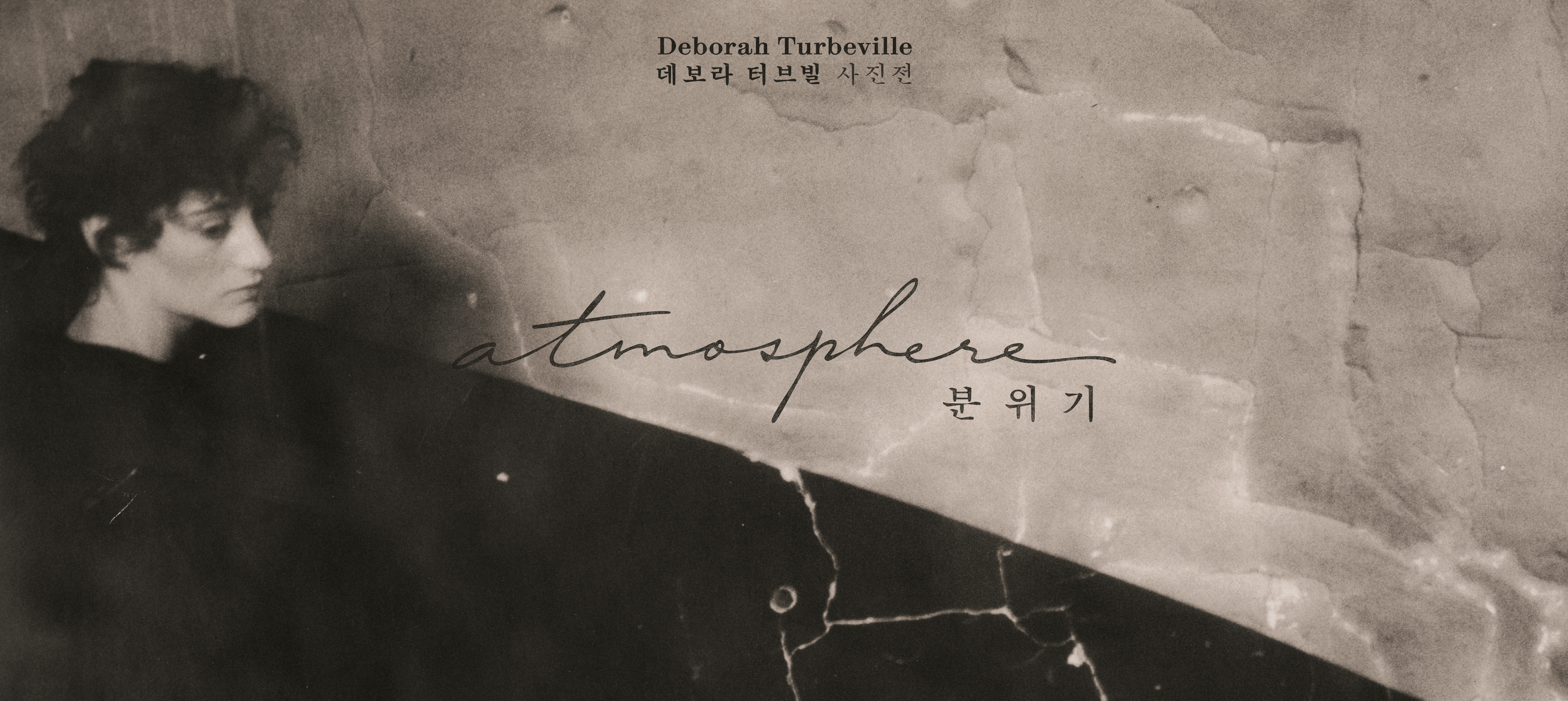
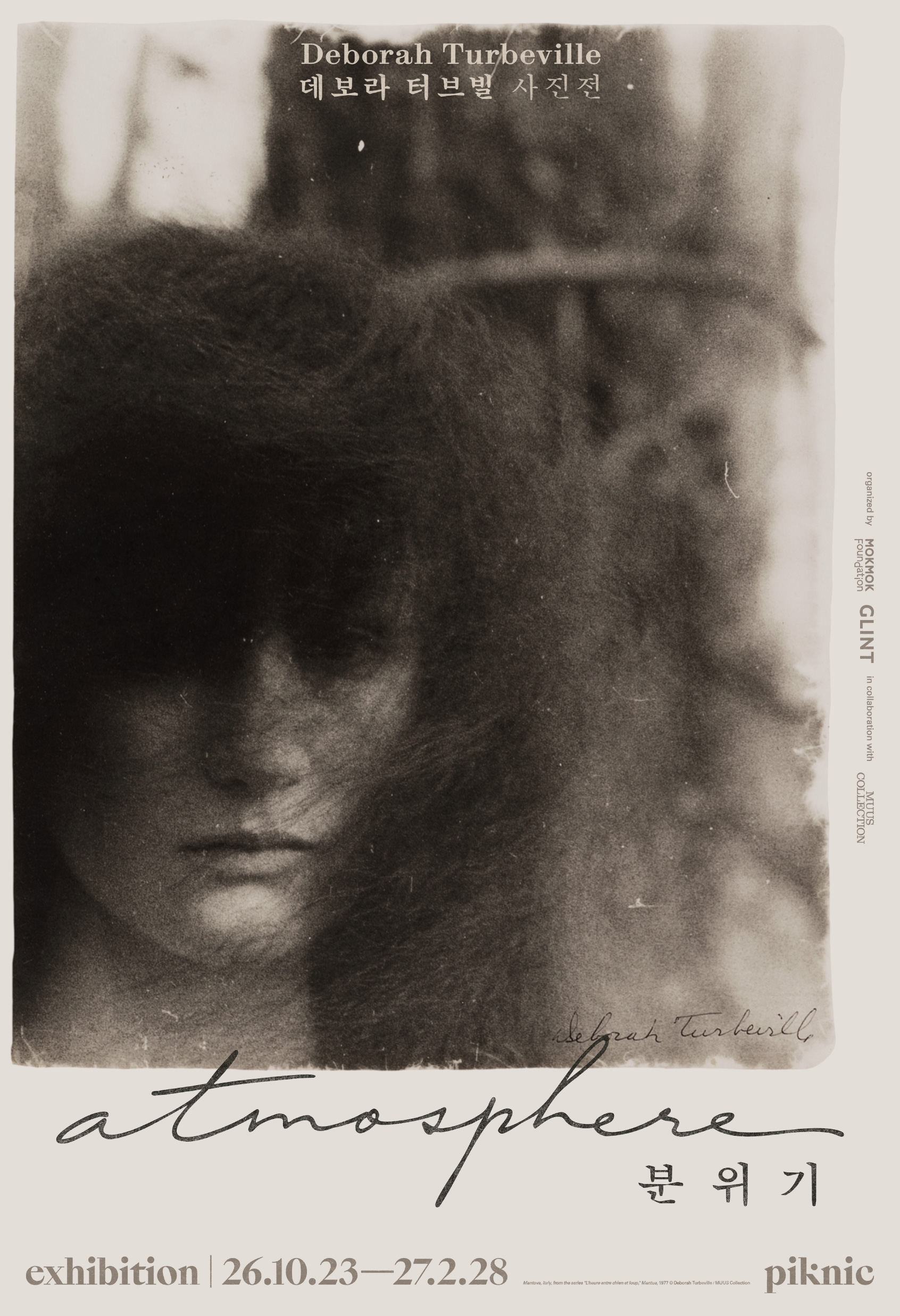
The word Deborah Turbeville used most often when she talked about her photographs was "atmosphere".
piknic, made from a 1970s pharmaceutical company building in Hoehyeon-dong at the foot of Namsan, has taken that word as its exhibition title. Turbeville was born in Massachusetts in 1932. As a young woman she worked as a fit model and assistant in the studio of the designer Claire McCardell, and later became a fashion editor at Harper's Bazaar. She took up the camera late. In the 1970s, working for Vogue, she led a new current in fashion photography alongside Helmut Newton and Guy Bourdin.
She did not photograph smiling faces or seductive poses. What she photographed were people's inner states, and the subtle air hanging around them. A 1975 Vogue photograph of five women in swimsuits in a New York bathhouse about to be demolished caused a great stir. When one picture from the series hung in a photography exhibition the same year, The New York Times singled it out as one of the most beautifully composed in the show.
In 1981, commissioned by Jacqueline Kennedy Onassis, then working as a publishing editor, she photographed the closed rooms of the Palace of Versailles and published Unseen Versailles. In her last years she lived between New York, Mexico and St Petersburg, and she died in 2013. piknic describes the places and times in her photographs as seeming already gone, yet like a past no one has lived, with the colours and textures of the faded memory of an old film.
In the black-and-white photograph on the poster, a woman has her eyes closed, and tangled hair covers half her face.
1 / 6 Image: Seoul Museum of Art, Seosomun Main Building
In 1979, Lynn Hershman Leeson let viewers choose the life of a woman on screen with a remote control.
Lorna, the woman at the centre of Lorna (1979–1984), cannot leave her apartment because of agoraphobia, and reaches the world only through the telephone and the television. Lorna was the artist's first work to interact with viewers through a laserdisc. Depending on the viewer's choices, it passes through 36 scenes to one of three endings: moving to LA, shooting the TV, or suicide. The storyboards and flowcharts that laid out the scenes are shown too.
Deep Contact, from 1984, is a touchscreen. Marion, on the screen, coaxes viewers to touch it, and the story branches according to which part of her body they touch. Agent Ruby, made from 1998 to 2002, is an AI chatbot that talks on the web, frowning or pouting depending on the conversation. The museum wrote that it may not be smooth next to today's AI, but it lets us face "AI's childhood".
In this solo exhibition at the Seoul Museum of Art's Seosomun Main Building, Lorna and Deep Contact have Korean subtitles. It is the first time the artist's interactive works have been shown in a language other than English. For the subtitles of Deep Contact, the artist's technical team and the museum chose a Korean typeface to suit a computer screen of the early 1980s.
Lorna's room has green walls, a table, a chair and a lamp, and a television by the window.
1 / 5 Image: National Museum of Korea Marie Antoinette in court dress, François-Hubert Drouais, 1773. © Victoria and Albert Museum, London
The National Museum of Korea sees Marie Antoinette as a queen who staged herself through her clothes, her rooms and her taste.
Marie Antoinette Style follows the influence the life and taste of the eighteenth-century French queen left on fashion, art and culture as a whole, and is held with the Victoria and Albert Museum (V&A) in London. The poster says it is an exhibition made by the V&A and reworked with the National Museum of Korea. There are more than 190 items: the queen's belongings, and later fashion, decorative arts, crafts and installations influenced by her.
The museum says it shows together the conflicting images of the queen that have been consumed over time, as a symbol of luxury and indulgence, an object of longing, a victim of the Revolution and a fashion icon, and looks at how those images have been repeated and varied in art, fashion and popular culture down to today. The exhibition first opened at the V&A South Kensington in London in September 2025. It opens on 18 December.
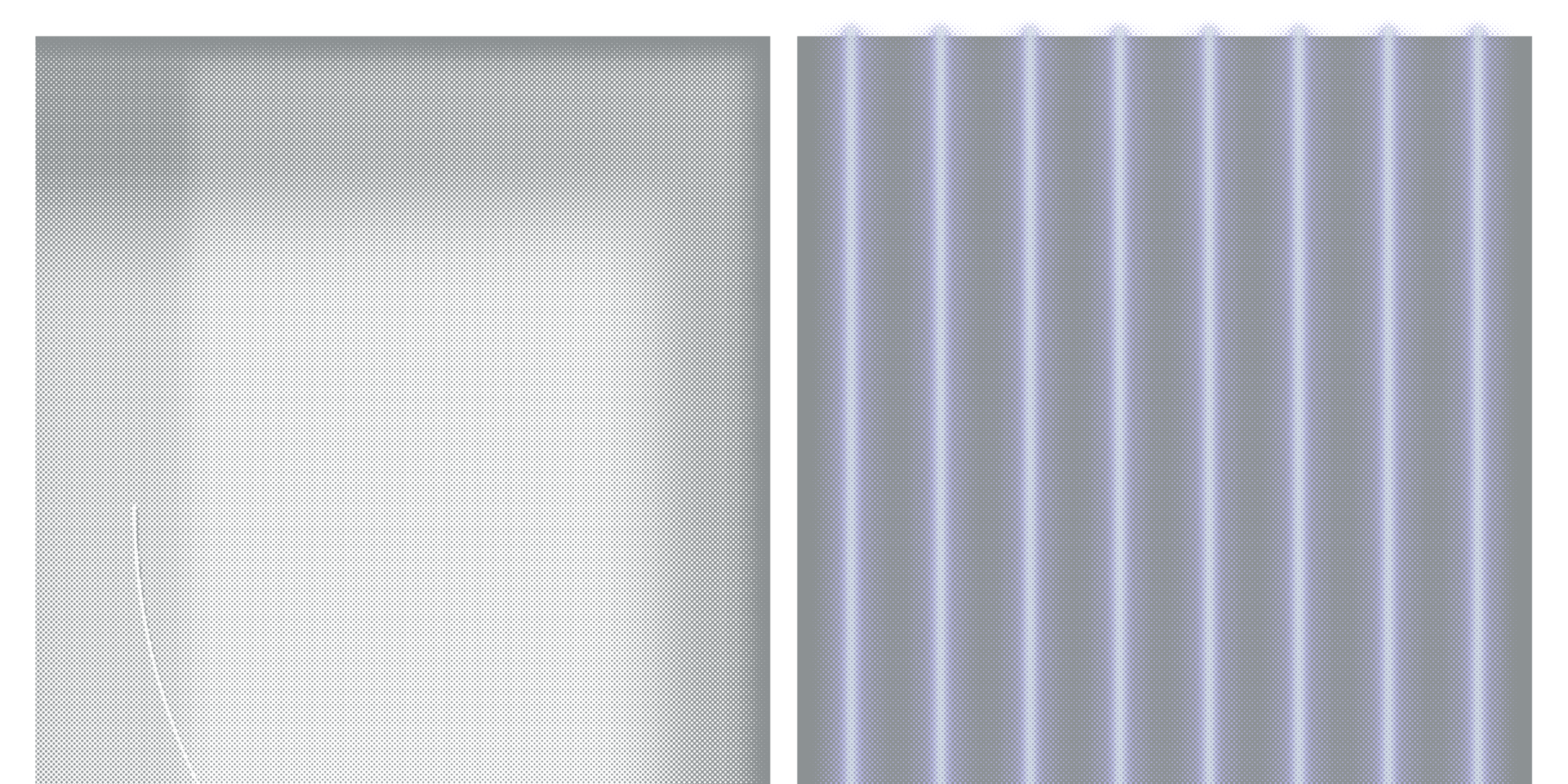
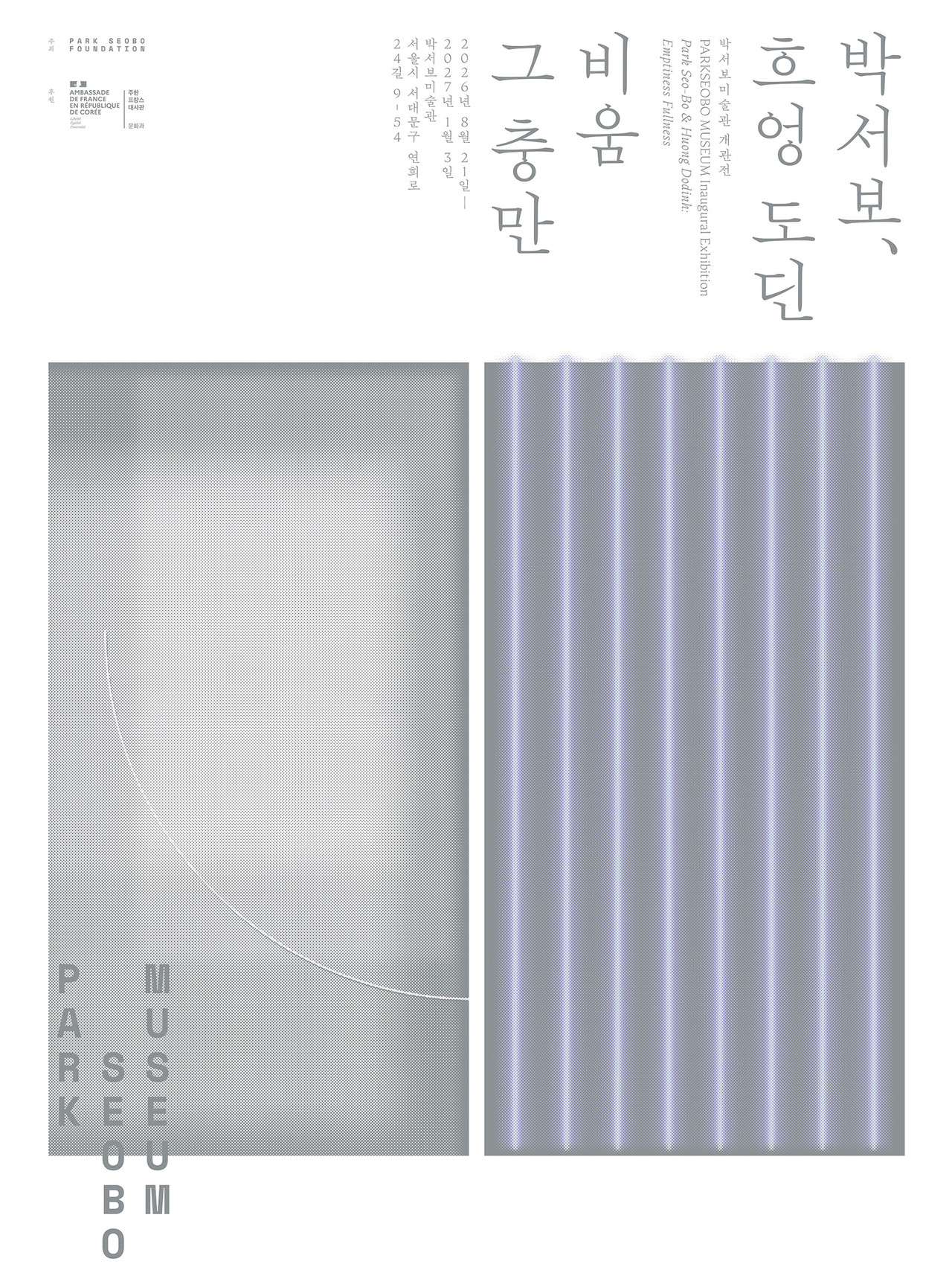
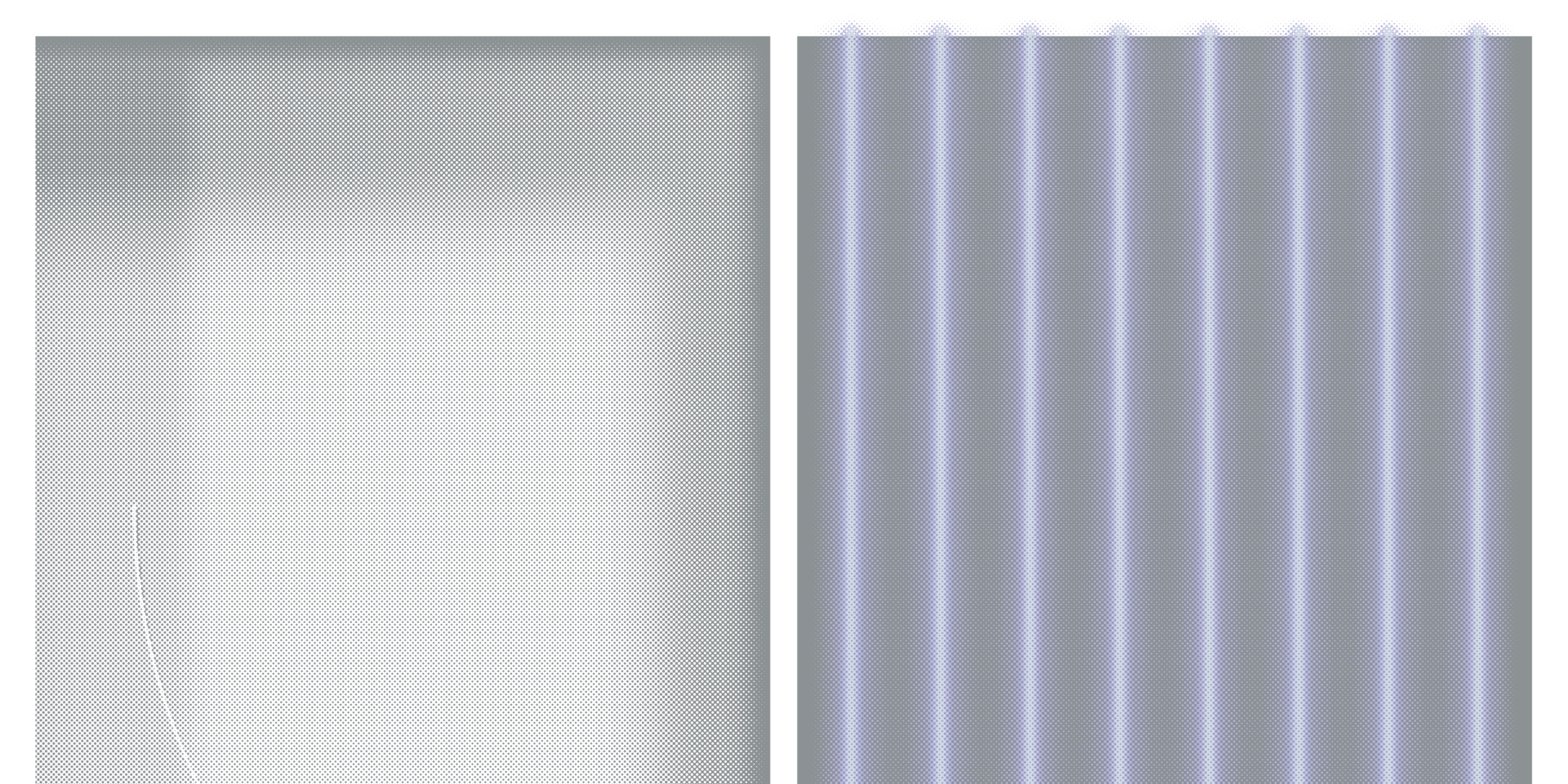
1 / 3 Image: Park Seo-Bo Museum
The Park Seo-Bo Museum stands in a lane in Yeonhui-dong, right next to the studio where Park Seo-Bo worked.
Park Seo-Bo & Huong Dodinh: Emptiness Fullness is the opening exhibition of the Park Seo-Bo Museum. The museum is built on Park Seo-Bo's art and the spirit he left behind, and on the roughly three thousand works he donated to the Park Seo-Bo Foundation during his lifetime.
It pairs Park Seo-Bo (1931–2023) with Huong Dodinh (b. 1945), who was born in Vietnam and works in France, in 25 paintings by Park and 17 by Huong Dodinh, 42 in all. Park draws lines again and again over a surface pasted with hanji paper; Huong Dodinh layers mineral pigment dozens of times. The museum sees the two as sharing one aesthetic: restraint, repetition, practice.
The show begins on the second basement level with the two artists' 1990s work and ends on the third floor with their white-toned pieces.
On the third floor is the Cube, a square room eight metres high, enclosed in translucent glass so that light from outside pours in.

After Yim Jik-soon died in 1996, an unfinished painting was left in his studio.
I Want to Paint the World Within marks thirty years since the death of Yim Jik-soon (1921–1996), and its title comes from words the painter left behind. It shows about 80 oil paintings, with drawings, watercolours and prints bringing the works to more than a hundred, along with some thirty personal belongings.
Yim was born in Goesan, in North Chungcheong, won the Presidential Prize at the Korean National Art Exhibition in 1957, and in 1961 took a post at Chosun University and settled in Gwangju. He painted girls and flowers, and also mountains and sea, and the landscapes of Mudeungsan and the southern coast, and is called the painter of flowers and women. The exhibition follows the work in chronological order, from the 1960s to the mid-1990s.
The unfinished painting left in the studio shows a landscape he saw in the United States the year before he died. He kept working through his kidney illness, and this painting was never completed. It is shown for the first time on the thirtieth anniversary, beside the easel he used.
The vase he used for his flower still lifes, and a palette with hardened paint, are in the galleries too.
- Open on certain days only
Major shows beyond Seoul
Major exhibitions at museums around Korea, outside Seoul.
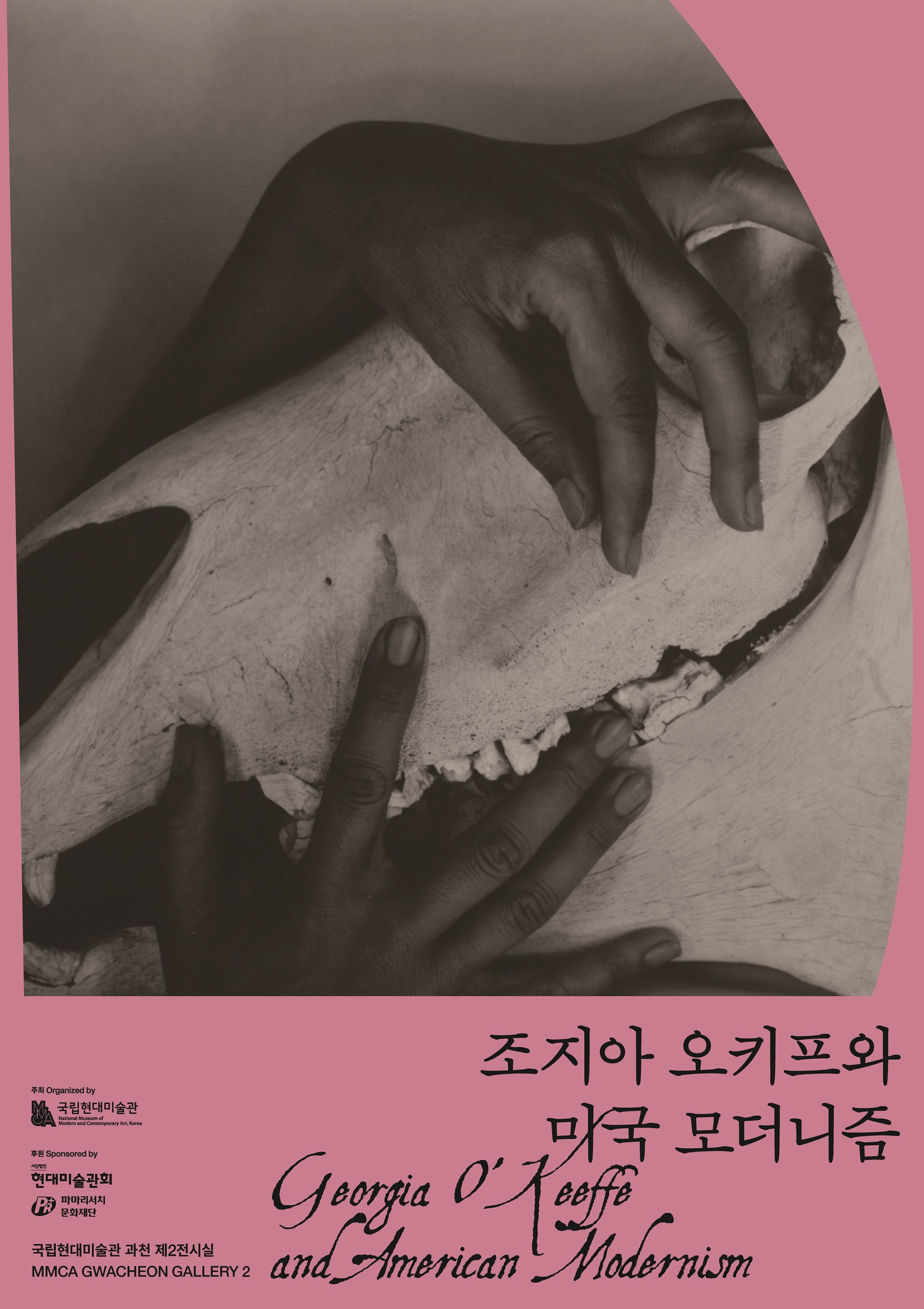
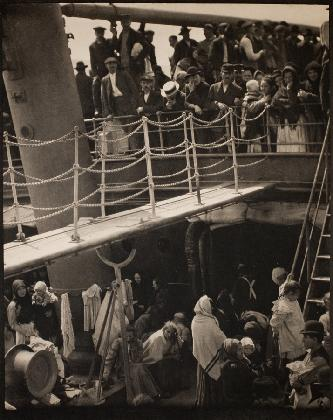
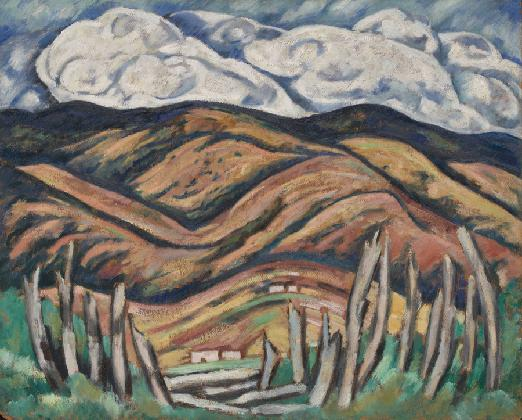
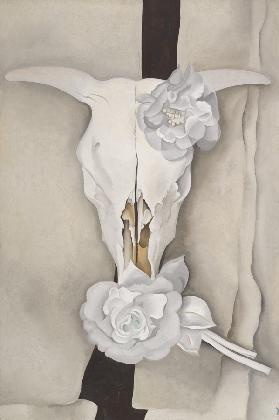
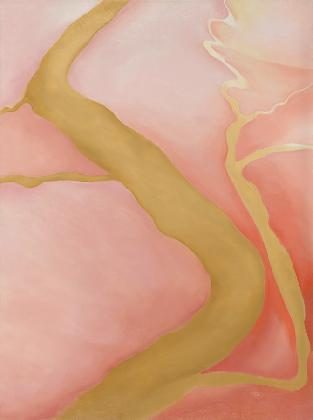
"How is new art made?" The O'Keeffe exhibition at MMCA Gwacheon begins with this question.
To the question of how new art is made, the National Museum of Modern and Contemporary Art answers that change needs not only a single genius but a community that shares its aims and supports it. Centred on the Alfred Stieglitz Collection of the Art Institute of Chicago, 107 works show how American artists of the early twentieth century went looking for an American modernism different both from tradition and from European modernism: the photographs of Paul Strand and Edward Weston, the paintings of Arthur Dove, Marsden Hartley, Charles Demuth and John Marin, and Georgia O'Keeffe.
Stieglitz took his photograph The Steerage in 1907, on a ship bound for Europe. It was several years before Stieglitz and those around him recognised it as a defining work of modernism. Marsden Hartley spent eighteen months in the American Southwest from 1918 into the next year, and wrote to Stieglitz that the country was big and clean and true. O'Keeffe first went to New Mexico some ten years later, in 1929.
The museum writes that the artists of the "circle" who gathered around Stieglitz in New York a hundred years ago have all died, but their works and stories remain. It adds that the people encouraging one another today in small studios and exhibition spaces are "today's art", to be recorded one day. It opens on 12 November in Gwacheon, Gyeonggi Province, and moves to the Museum of Contemporary Art Busan from April 2027.
In The Steerage, a white gangway divides the deck into upper and lower. On the upper level a man in a hat looks down, and below, people in headscarves crowd together.


1 / 3 Image: Daegu Art Museum
Roger Dutilleul was among the very first to buy paintings by Modigliani, Picasso, Braque and Miró.
Dutilleul was a collector in the north of France in the early twentieth century. When he died in 1956, his nephew Jean Masurel inherited most of the collection. It was Masurel who had bought the first Léger gouache, in the 1920s. In the early 1970s, feeling that the collection had grown too large to belong to one person, Masurel thought of founding a museum in his home region.
In 1979 Masurel and his wife Geneviève donated 186 works, and in 1983 the Lille Métropole Museum of Modern, Contemporary and Outsider Art (LaM) opened. With an art brut collection added later, LaM has shown more than 8,000 works to French audiences over forty-odd years.
In From Picasso to Kiki Smith: Portraits of Modernity, an exchange exhibition the Daegu Art Museum and LaM have put together from each other's collections, this collection comes to Korea for the first time: about a hundred works, from Modigliani, Picasso, Léger, Braque and Miró to Kiki Smith. It opens in Daegu on 17 November.
In Picasso's Woman with a Hat (1942), on the poster, a grey-brown woman sits in an armchair, her hat curling up like a whirlpool. The painting's earlier owner was Dutilleul.


1 / 3 Image: Asia Culture Center
The Impressionists at the Asia Culture Center in Gwangju, and a house by a river painted by Cézanne.
In Paul Cézanne's Country House by the River (around 1890), a house with a red roof sits between clumps of trees on either side, and the water below reflects it. House, water, and trees all seem built up from patches of colour laid one on another.
The painting hangs in the exhibition's first section, Water Landscapes and Reflections. In the same section is Claude Monet's Water Lily Pond (1907), most of which is sky and clouds reflected in the water. The center writes that the Impressionists went out of the studio to catch the moment when light and colour change from one instant to the next in nature.
Cézanne looked somewhere a little different. As the center puts it, he went beyond the impression of the moment before his eyes to search for the unchanging structure and form of things, and opened the door to Cubism and the art of the twentieth century. In one section, one painter follows the changing light and the other looks for the form that does not change.
All the works come from the collection of the Israel Museum in Jerusalem: originals by eleven Impressionist and Post-Impressionist painters, among them Monet, Renoir, Van Gogh, Cézanne, Pissarro, and Gauguin. The exhibition is in Halls 6 and 7 of the ACC Creation's complex exhibition space at the Asia Culture Center, until 21 February 2027.
If you have seen a good exhibition that isn't written up here yet, I would be glad to hear about it: hello@anthology-art.org
About this anthology: chosen each month by our editor, Yu. Every exhibition is checked against the venue's official site (as of Oct 29, 2026), and no listing is paid for. If dates or prices change, please refer to the venue's own announcement.
The Korean original of each title and venue name is shown in gray below it.
A little more art in your life
Every month, we write a letter about exhibitions we love and why we recommend them. Subscribing is free, and you can cancel at any time.
We will use your email address only to send the newsletter. Privacy
Taipei · Tokyo
Anthology in other cities. Each is its own local edition, opening with this month's anthology.