70 days left#Media art
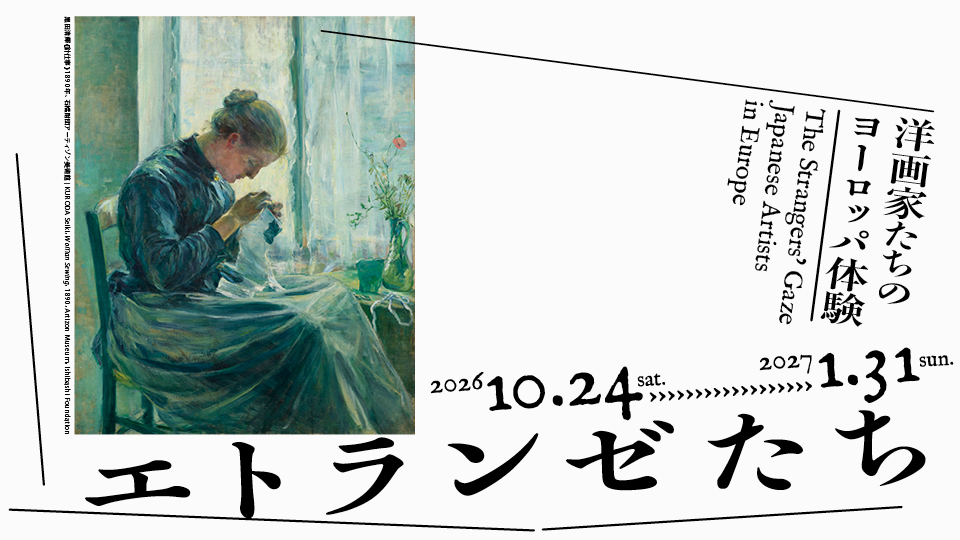
Jam Session: The Ishibashi Foundation Collection × FUJII Hikaru WHOSE LIGHT?
Japanese original:
ジャム・セッション 石橋財団コレクション×藤井光 WHOSE LIGHT? —だれのひかりか
Each year the Artizon Museum invites an artist to jam with the Ishibashi Foundation Collection; the seventh session features Hikaru Fujii. Starting from light as truth in Plato's allegory of the cave, Fujii turns the question around to ask who is shining the light. Twenty-two collection works from antiquity to the postwar era are shown with more than ten works by Fujii, including new ones, such as an installation made from the foundation's Syrian and Palestinian glass and medieval Iranian ceramics.
1 / 5 Image: Artizon Museum
- Dates
- Oct 24, 2026 – Jan 31, 2027
- Venue
- Artizon Museum (アーティゾン美術館) · Marunouchi & Kyobashi (Tokyo Station)東京都中央区京橋1-7-2
Getting there
5 min walk from the Yaesu Central Exit of JR Tokyo Station or Exits 6/7 of Kyobashi Station (Tokyo Metro Ginza Line)
- Hours
- 10:00–18:00 · Closed: Mon
- Admission
- General ¥1,500Original: 一般 1,500円
- Artists
- Organized by
The calendar entry covers the whole run, so you won't need to look the dates up again. Please check opening hours and closing days before your visit.
Booking
Booking recommended.
Booking recommended; tickets are also sold at the door.
From the venue's announcements, checked Nov 20, 2026. Slots and availability can change; please check the official page before you book. Source: アーティゾン美術館 公式
Entry notes
Web-reserved tickets are ¥1,200 for adults and window tickets ¥1,500. University, vocational school and high school students enter free but must reserve on the web and show a student ID. Reservation slots are limited; the museum window also sells tickets when slots remain, and web tickets stop selling 10 minutes before each entry slot ends. Visitors with a disability certificate (plus one companion) and junior high school students and younger enter free without a reservation.
- Web-reserved tickets are ¥1,200 for adults and window tickets ¥1,500. University, vocational school and high school students enter free but must reserve on the web and show a student ID. Reservation slots are limited; the museum window also sells tickets when slots remain, and web tickets stop selling 10 minutes before each entry slot ends. Visitors with a disability certificate (plus one companion) and junior high school students and younger enter free without a reservation. (Source: アーティゾン美術館, 2026)
- Paid general admission requires booking an entry slot in advance, online or through Lawson Ticket. Slots run one hour each: eight between 10:00 and 17:30 (the last is 17:00–17:30), and three between 17:00 and 19:30 on late-opening days. You may enter at any time within your slot. Booking closes 10 minutes before the slot ends, slots are capped, and entry is not possible once a slot is full. A confirmed booking cannot be cancelled; its date and time can be changed twice up to the day of the booking. The museum counter sells tickets only while online tickets remain. (Source: アーティゾン美術館:チケット, 2026)
- Junior high school students and younger, holders of a disability certificate and one companion, and holders of invitation or discount tickets need no reservation. High school, vocational, university and graduate students enter free but must book online and show a student ID. Groups of 10 or more must contact the Group Desk in advance. (Source: アーティゾン美術館:チケット, 2026)
From the organizer's announcements and press reports. Arrangements can change; please check the official site before your visit.
Knowledge cards
Media art and video artメディアアートとビデオ・アートArt that takes electronic and digital media, such as television, video, computers, and sensors, as its material.Read moreClose
01About
In March 1963, Nam June Paik showed Exposition of Music – Electronic Television at Galerie Parnass in Wuppertal, West Germany, scattering television sets through the rooms and distorting their pictures with magnets; this is often taken as the starting point of media art. The works that followed take a few broad forms: single-channel video, shown on one screen with a fixed running time like a film; video installation, which arranges several monitors, projections, and objects in a space that visitors walk through; and interactive works that change in response to a visitor's movement, voice, or brain waves. Cathode-ray tube sets and other equipment are produced less and less and are hard to find even second-hand, so keeping such works alive means weighing repair against replacement; Paik himself allowed owners to make the technical changes needed to keep his works running.
02In the gallery
Read the medium line on the label. “72 monitors, 4-channel video” means 72 screens are showing four different videos: find the screens playing the same one and see how they are arranged. For a single-channel work, the label gives the running time; check it before deciding where to start watching.
Wall label terms in Japanese
- メディアアート
- Media art
- シングルチャンネル
- Single-channel video
- 映像○チャンネル
- Video, N channels (N different videos)
- ビデオ・インスタレーション
- Video installation
- インタラクティブ
- Interactive
- ブラウン管
- Cathode-ray tube (CRT)
03Notes
Media art ranges from single-screen video to video installations you walk into.
This time, at Jam Session: The Ishibashi Foundation Collection × FUJII Hikaru WHOSE LIGHT? —
Is a screen in the gallery a window to look into, or an object to walk around?
04Related
Nearby, after this one
Same venue · Artizon Museum
Same neighborhood · Marunouchi & Kyobashi (Tokyo Station)
Shows open on the same days as this one are listed first (regular closing days only).