Opens in 83 days#Media art
Som Supaparinya (Tentative Title)
Japanese original:
ソム・スパパリンヤ展(仮)
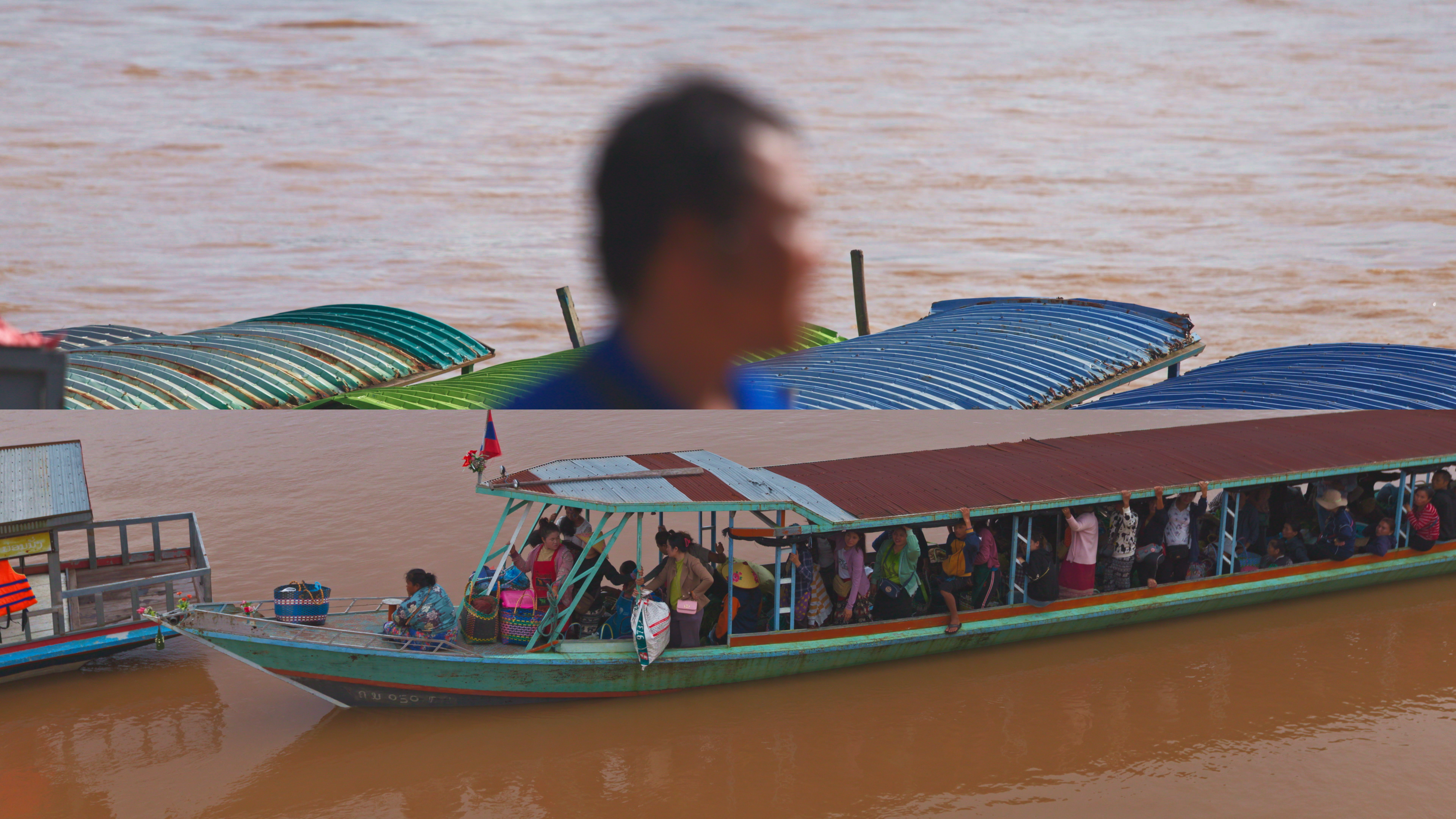
Som Supaparinya (b. 1973) works from Chiang Mai, Thailand, across video, objects and installation, and has made video since the 1990s. Her subjects include noodle culture, changing river landscapes, power generation and banned books, through which she looks at how environmental issues, history and political ideology affect civil society. This mid-career survey includes new work produced after she received the Han Nefkens Foundation's Southeast Asian Video Art Production Grant.
- Dates
- Feb 13 – May 23, 2027
- Venue
- Hiroshima City Museum of Contemporary Art (広島市現代美術館) · Hiroshima広島県広島市南区比治山公園1-1
Getting there
From Hijiyama-shita stop on Hiroden tram line 5 (to Hiroshima Port), about 500 m uphill
- Hours
- 10:00–17:00 · Closed: Mon
The calendar entry starts on opening day and covers the whole run, so you won't need to look the dates up again. Please check opening hours and closing days before your visit.
Entry notes
Hiroshima City Museum of Contemporary Art is open 10:00–17:00, with last entry 30 minutes before closing. It is closed on Mondays and over the New Year (27 December to 1 January); when a Monday is a national holiday or 6 August, it opens and closes the next weekday instead. Collection exhibition: ¥350 for adults, ¥250 for university students, ¥150 for high school students and visitors 65 and over. Special exhibition prices vary by exhibition. Junior high school students and younger enter free, as do international students (with a student ID and the like) and holders of disability certificates and similar documents plus one companion. Advance tickets for special exhibitions are sold until the day before opening, at the ticket counter on the 1st floor and in the online shop 339. The collection exhibition is free on the third Sunday of each month, and the whole museum is free on 3 November.
- Hiroshima City Museum of Contemporary Art is open 10:00–17:00, with last entry 30 minutes before closing. It is closed on Mondays and over the New Year (27 December to 1 January); when a Monday is a national holiday or 6 August, it opens and closes the next weekday instead. Collection exhibition: ¥350 for adults, ¥250 for university students, ¥150 for high school students and visitors 65 and over. Special exhibition prices vary by exhibition. Junior high school students and younger enter free, as do international students (with a student ID and the like) and holders of disability certificates and similar documents plus one companion. Advance tickets for special exhibitions are sold until the day before opening, at the ticket counter on the 1st floor and in the online shop 339. The collection exhibition is free on the third Sunday of each month, and the whole museum is free on 3 November. (Source: 広島市現代美術館:来館案内, 2026)
- The Somsuphaphan exhibition (working title) runs from 13 February to 23 May 2027 in Galleries B-2 and B-3. It is closed on Mondays (open on 22 March and 3 May), and on 23 March and 6 May. The official exhibition page does not list the price for this show yet. (Source: 広島市現代美術館:ソム・スパパリンヤ展(仮), 2026)
From the organizer's announcements and press reports. Arrangements can change; please check the official site before your visit.
Knowledge cards
Media art and video artメディアアートとビデオ・アートArt that takes electronic and digital media, such as television, video, computers, and sensors, as its material.Read moreClose
01About
In March 1963, Nam June Paik showed Exposition of Music – Electronic Television at Galerie Parnass in Wuppertal, West Germany, scattering television sets through the rooms and distorting their pictures with magnets; this is often taken as the starting point of media art. The works that followed take a few broad forms: single-channel video, shown on one screen with a fixed running time like a film; video installation, which arranges several monitors, projections, and objects in a space that visitors walk through; and interactive works that change in response to a visitor's movement, voice, or brain waves. Cathode-ray tube sets and other equipment are produced less and less and are hard to find even second-hand, so keeping such works alive means weighing repair against replacement; Paik himself allowed owners to make the technical changes needed to keep his works running.
02In the gallery
Read the medium line on the label. “72 monitors, 4-channel video” means 72 screens are showing four different videos: find the screens playing the same one and see how they are arranged. For a single-channel work, the label gives the running time; check it before deciding where to start watching.
Wall label terms in Japanese
- メディアアート
- Media art
- シングルチャンネル
- Single-channel video
- 映像○チャンネル
- Video, N channels (N different videos)
- ビデオ・インスタレーション
- Video installation
- インタラクティブ
- Interactive
- ブラウン管
- Cathode-ray tube (CRT)
03Notes
Media art ranges from single-screen video to video installations you walk into.
This time, at Som Supaparinya (Tentative Title) —
Is a screen in the gallery a window to look into, or an object to walk around?
04Related
Installation ArtインスタレーションThree-dimensional work that does not sit on a wall or a pedestal but changes how a whole space feels, and that visitors walk into.Read moreClose
01About
Installations are often made for one particular site, and visitors move through them, so where you stand is part of the looking. Materials range from everyday objects and natural materials to video and sound, and a work may be permanent or taken down when the exhibition closes. As the name of an art form, “installation” is first recorded by the Oxford English Dictionary in 1969; in 1958 Allan Kaprow called the indoor spaces he transformed “Environments.” The events the Gutai Art Association staged in Japan from 1954 are counted among early installation art, and they influenced Kaprow. Some artists step inside their own installations: Aki Sasamoto builds spaces from string, tubes, household things and sound, then talks and moves within them, so that the work becomes an event that changes over time.
02In the gallery
Look from the entrance, from the middle and from a corner. Notice how the light, the sound, and the path you take change the work.
Wall label terms in Japanese
- インスタレーション
- Installation
- サイトスペシフィック
- Site-specific
- エンヴァイラメント(環境)
- Environment
- 具体美術協会
- Gutai Art Association
- パフォーマンス
- Performance
03Notes
Installations are mostly made for a particular place, and where you stand is part of the looking.
This time, at Som Supaparinya (Tentative Title) —
After moving to a few spots, where do you think the work begins, and where does it end?