Opens in 34 days#Design & architecture
40th Anniversary Exhibition: Ikuko Hatoyama × Kazunori Akita—"Contrapoint of Dreams: A Microcosm of Manga and Graphic Design"
Japanese original:
40th Anniversary Exhibition 鳩山郁子×秋田和徳 夢みるコントルポワン ―漫画とグラフィックデザインの小宇宙―
The manga artist Ikuko Hatoyama debuted in 1987 in the monthly Garo and draws fantastical stories of boys with a delicate line; the graphic designer Kazunori Akita has created meticulous design work for musicians such as BUCK-TICK and Kiyoharu. As both reach forty years of work in 2027, the Yayoi Museum holds the first exhibition surveying their careers, including twenty years of collaboration on rock band artwork.
1 / 5 Image: Yayoi Museum of Art · Takehisa Yumeji Museum
- Dates
- Dec 26, 2026 – Mar 28, 2027
- Venue
- Yayoi Museum of Art · Takehisa Yumeji Museum (弥生美術館・竹久夢二美術館) · Bunkyo東京都文京区弥生2-4-3
Getting there
7 min walk from Exit 1 of Nezu Station (Chiyoda Line) or Exit 1 of Todaimae Station (Namboku Line)
- Hours
- 10:00–17:00 · Closed: Mon
- Admission
- General ¥1,200Original: 一般 1,200円
The calendar entry starts on opening day and covers the whole run, so you won't need to look the dates up again. Please check opening hours and closing days before your visit.
Entry notes
Open 10:00–17:00 with last entry at 16:30; closed on Mondays (open on 11 January and 22 March; closed on 12 January and 23 March) and from 30 December to 4 January. Adults ¥1,200, university and high school students ¥1,000, elementary and junior high school students ¥500; one ticket admits you to both the Yayoi Museum and the Yumeji Museum.
- Open 10:00–17:00 with last entry at 16:30; closed on Mondays (open on 11 January and 22 March; closed on 12 January and 23 March) and from 30 December to 4 January. Adults ¥1,200, university and high school students ¥1,000, elementary and junior high school students ¥500; one ticket admits you to both the Yayoi Museum and the Yumeji Museum. (Source: 弥生美術館・竹久夢二美術館:次回の展覧会, 2027)
From the organizer's announcements and press reports. Arrangements can change; please check the official site before your visit.
Knowledge cards
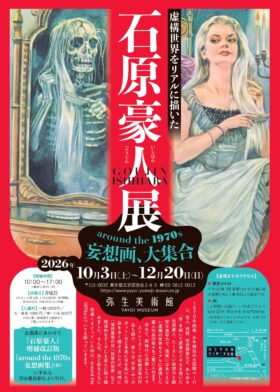
Illustration (sashie)挿絵・イラストレーションPictures made for printed matter such as books, magazines, newspapers, and sheet music; in Japan they were called sashie, and the word “illustration” came into use from the late 1950s.Read moreClose
01About
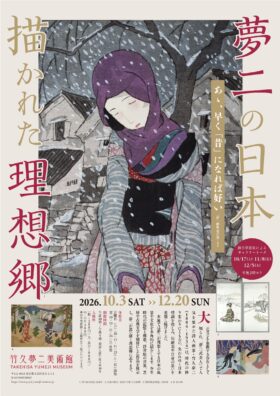
Sashie are pictures placed in text-based media such as magazines, newspapers, and books, for example to help readers understand. In the Edo period, ukiyo-e artists drew black-and-white illustrations for kusazōshi and yomihon; after the Meiji Restoration, ukiyo-e artists were hired to illustrate newspaper serial novels, and Tsukioka Yoshitoshi and his pupil Mizuno Toshikata established that genre. In the 1900s, as printing moved from woodblocks to photomechanical plates, it became easier for Western-style painters to take up illustration, and when the magazine Shirakaba featured Aubrey Beardsley in 1911, many illustrators were influenced. From the late 1920s, as magazines spread, painters such as Nakahara Jun'ichi and Fukiya Kōji worked as illustrators full-time. Takehisa Yumeji won wide popularity through magazines, poem-picture books, and sheet-music covers, and his women, unlike earlier ukiyo-e-style illustrations, were taken up by young people as reflecting a modern sense of beauty. Around 1970, Ishihara Gōjin and others filled the large illustrated-explainer pages of boys' magazines with monsters and strange phenomena drawn in minute detail. The word “illustration” took root after the war; in the 1960s it became a genre independent of graphic design, and illustrators became an independent profession from the 1970s on.
02In the gallery
On a cover or a page, look at how the picture meets the title and the text: does it leave room for the words, or make the lettering part of the picture?
Wall label terms in Japanese
- 挿絵
- Sashie (illustration)
- 口絵
- Frontispiece (kuchi-e)
- イラストレーション
- Illustration
- 装幀
- Book design (sōtei)
- 夢二式美人
- Yumeji-style beauty
03Notes
An illustration sits beside words, leaving room for them or drawing them into the picture.
This time, at Ikuko Hatoyama × Kazunori Akita—"Contrapoint of Dreams: A Microcosm of Manga and Graphic Design" —
Beside what words, song, or story did an illustration first sit? What gave you the idea?