53 days left#Sculpture & installation#Kids & family
2026 Guandu International Nature Art Festival | Mythic Habitat: Whispers of the Spirits in the Wetland
Chinese original:
2026 關渡國際自然藝術季|神話棲地:濕地上的眾神絮語
Held at Guandu Nature Park since 2006, the Guandu International Nature Art Festival invites artists from Taiwan and abroad each year for a residency, during which they build outdoor installations on the wetland from natural materials. The 2026 edition, Mythic Habitat: Whispers of the Spirits in the Wetland, places works by six artists and groups from Taiwan, Japan and Hong Kong across the park's wetland, with one at Guandu Temple, the oldest Mazu temple in northern Taiwan. In Tsuneo Sekiguchi's The Car of Myth, for example, a 1960s American car is sealed in earth and sown with seeds.
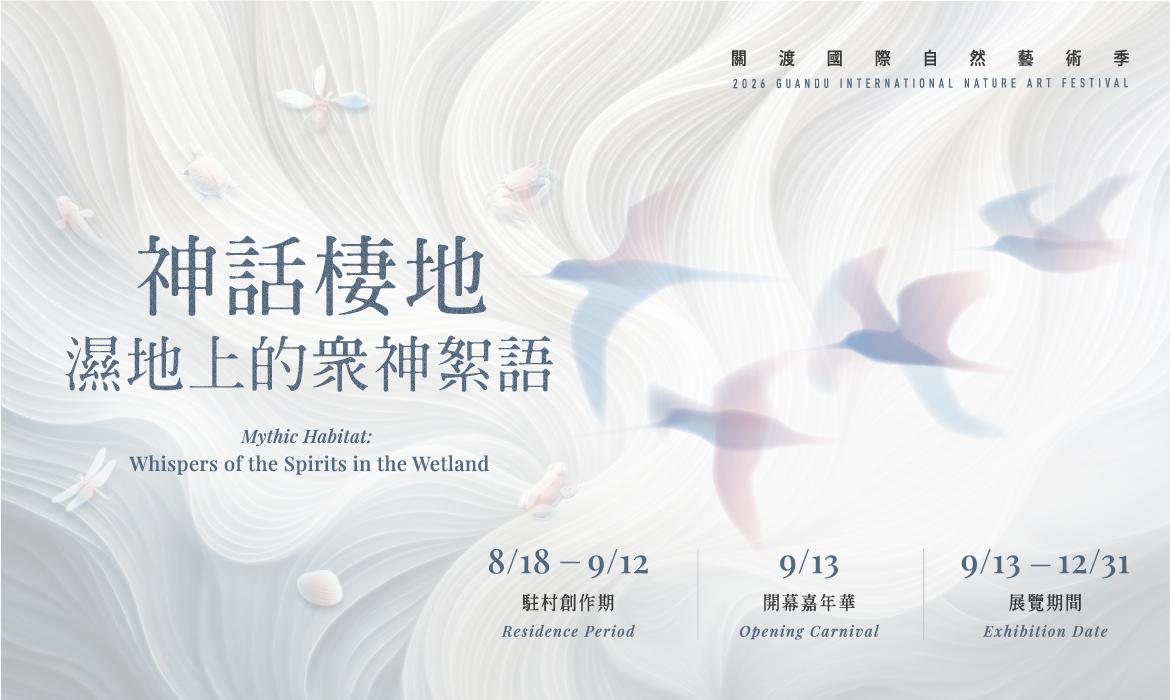
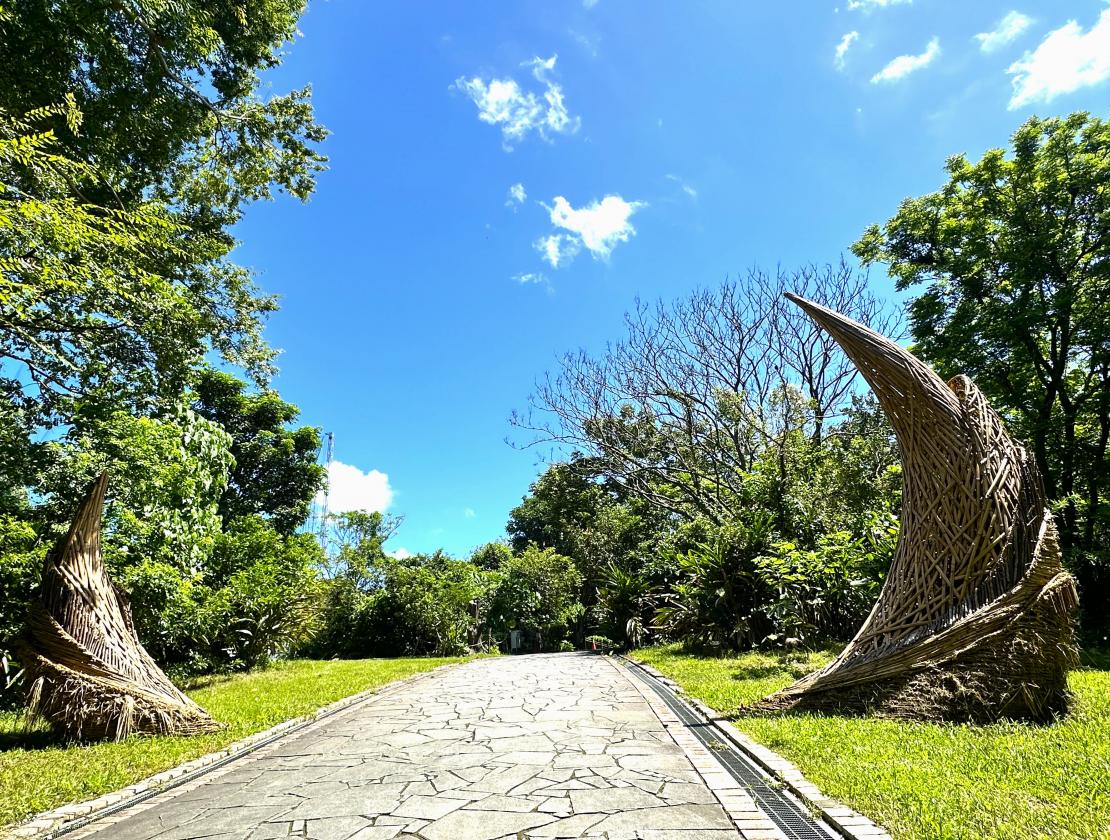
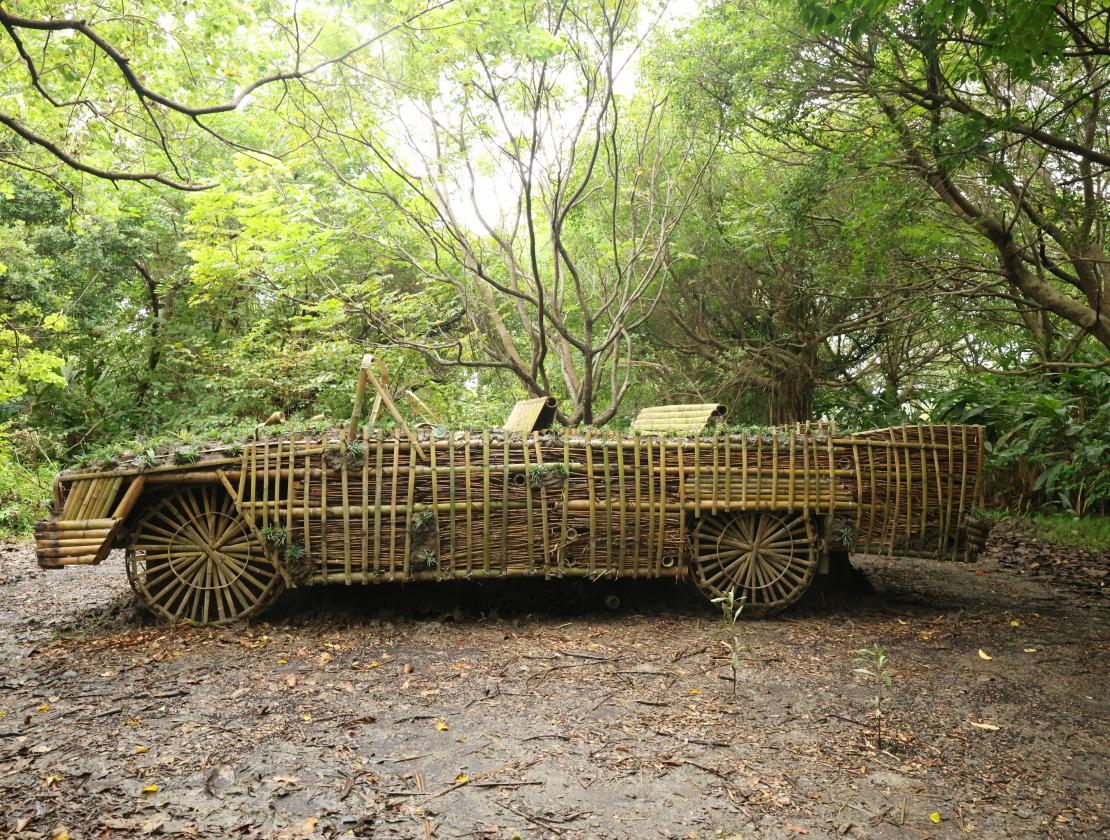
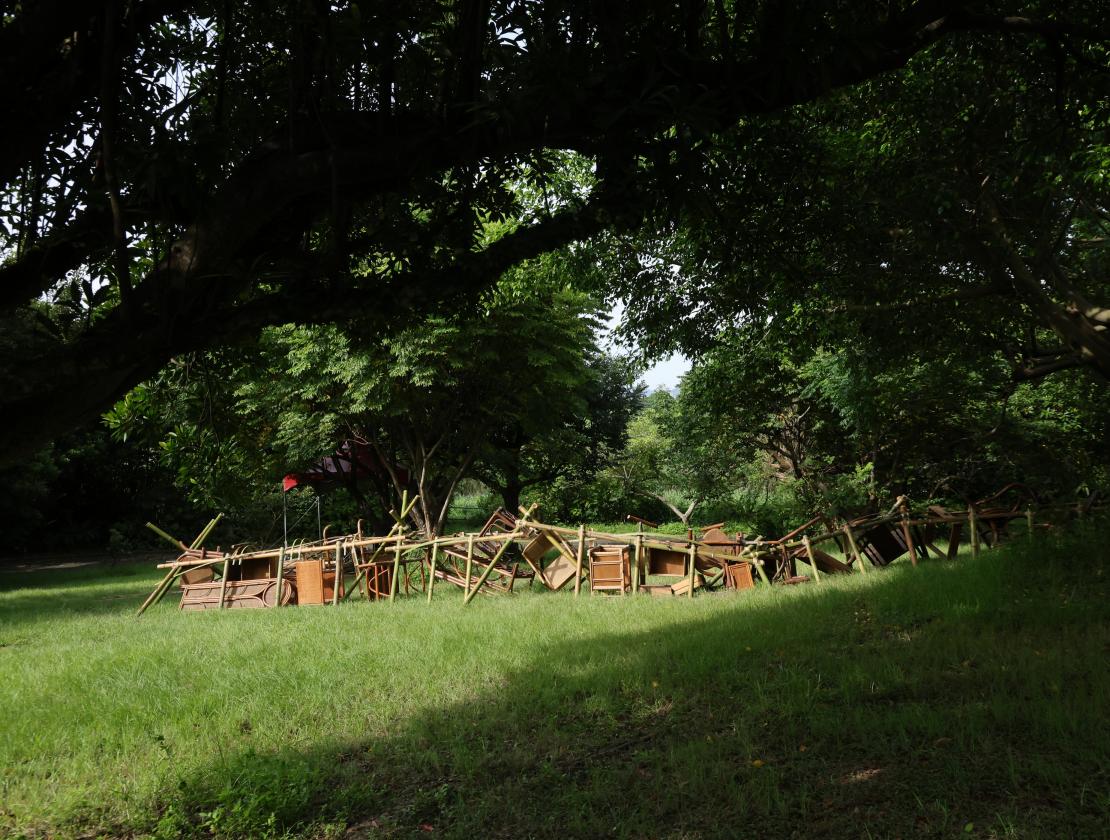
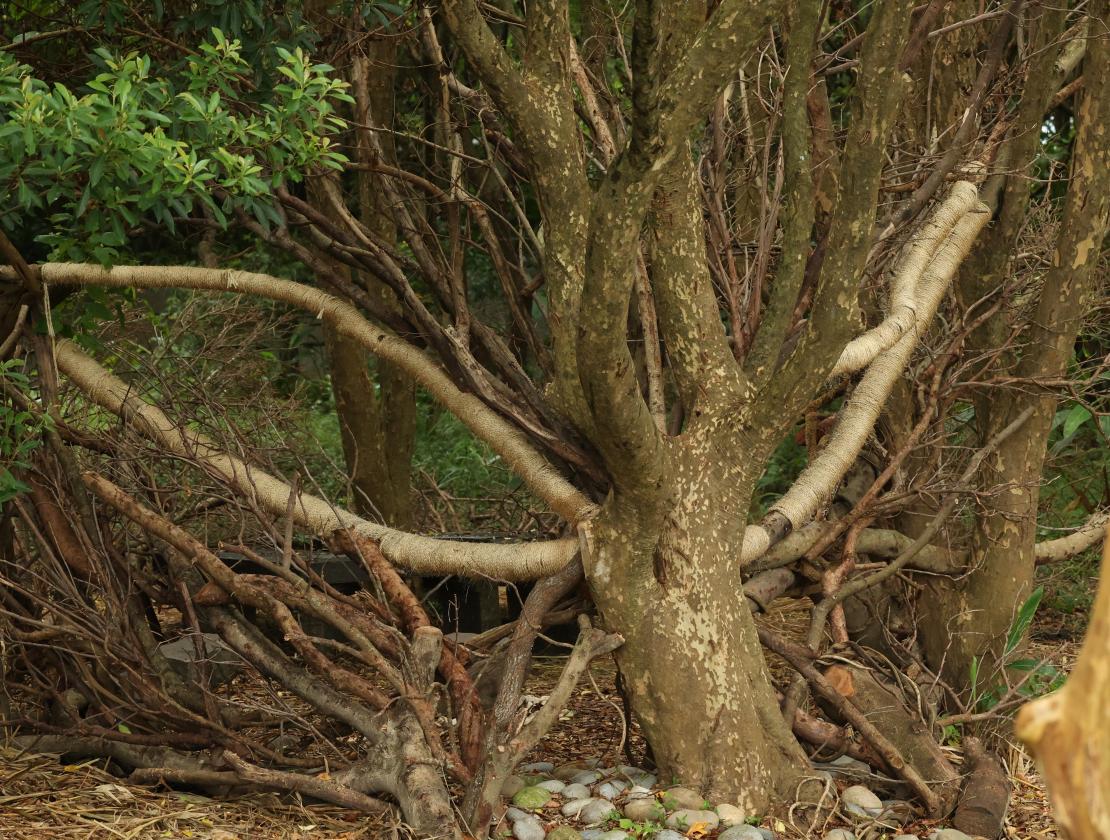
1 / 5 Image: 關渡國際自然藝術季
- Dates
- Sep 13 – Dec 31, 2026
- Venue
- Guandu Nature Park (關渡自然公園) · Beitou
- Address
- 臺北市北投區關渡路55號MRT Guandu Station, Exit 1; about a 10-minute walk, or bus Red 35 or Minibus 23 to Guandu Nature ParkOpen in Google Maps
- Hours
- 09:00–17:00Closed: Mon
- Admission
- Park entry, full price NT$60Original: 入園全票 60 元
Visit planning
The calendar entry covers the whole run of the exhibition. Please check opening hours and closing days before your visit.
Entry notes
One of the six works stands outside the park, beside the Qunxian Hall of Guandu Temple, and needs no ticket; the organizers suggest seeing it first and then buying a ticket for the park.
- One of the six works stands outside the park, beside the Qunxian Hall of Guandu Temple, and needs no ticket; the organizers suggest seeing it first and then buying a ticket for the park. (Source: 關渡國際自然藝術季, 2026)
- From October to March, ticket sales and entry end at 16:30 on weekdays and 17:00 on weekends and holidays. (Source: 關渡自然公園, 2026)
From the organizer's announcements and press reports. Arrangements can change; please check the official site before your visit.
Related exhibitions
Same genre · Sculpture & installation / Kids & family

Credits
- Artists
- Yen-Chen Wang, Chi-Hao Bai, Wei-Xiang Lin, Kwok-Hin Tang, Tsuneo Sekiguchi, Kuei-Chih Lee
Knowledge cards
Artist residency藝術家駐村A programme that lets artists leave their usual workplace and live and work somewhere else for a while.Read moreClose
01About
One forerunner of the residency is the French Academy in Rome, founded in 1666: young French artists who won the Prix de Rome could live and study in Rome for three to five years, and since 1803 the academy has been housed in the Villa Medici, where it still hosts artists in residence. Residencies today usually provide a studio and somewhere to live, sometimes with a living allowance or money for materials, so that artists have time to research and make work in an unfamiliar setting; some hold open studios, letting visitors walk into the workspace and see work still in progress. Taiwan's first non-profit international artist village was Bamboo Curtain Studio, which Hsiao Li-hung opened in 1995 in a converted family chicken coop by the Tamsui River; it closed its site at the end of 2021. Treasure Hill Artist Village opened in 2010 in a hillside settlement that grew up after the war, with artists living alongside the residents. This winter's open studio shows four Taiwanese artists back from residencies in Thailand, Germany, Japan, and South Korea.
02In the gallery
On the labels, note where each work was made; then look for materials, images, or sounds that could only have been found in that place.
Wall label terms in Chinese
- 藝術進駐
- Artist-in-residence (AIR)
- 駐村
- Residency
- 開放工作室
- Open studio
- 藝術村
- Artist village
03Notes
A residency sends an artist to live somewhere else for a while and make work in unfamiliar surroundings.
This time, at 2026 Guandu International Nature Art Festival | Mythic Habitat: Whispers of the Spirits in the Wetland —
Which materials, images, or sounds in the work could only have come from that place?
04Related
Installation art裝置藝術Large-scale, mixed-media constructions, often made for a specific place or a limited time, that the viewer often walks into.Read moreClose
01About
An installation is not a set of separate artworks but one whole experience, centred on how the viewer perceives it. The artist Ilya Kabakov said that the main actor in the total installation, the centre toward which everything is addressed, is the viewer. Forerunners include Kurt Schwitters' Merzbau and the “environments” Allan Kaprow made from about 1957; from the 1960s installation became a major strand of modern art. In Taipei, Chen Chao-hua uses altered compressors and condensing techniques so that frost forms and melts again and again in the gallery, and in When Tomorrow is Forgotten at MOCA Taipei, one artist, drawing on their own care work, brings the spaces, objects, and traces of labour from care settings into the exhibition. A label reading “dimensions variable” means the size of the work changes with the space it is shown in.
02In the gallery
Pause at the entrance to take in the whole space before you step in; once inside, notice what changes as you move.
Wall label terms in Chinese
- 裝置
- Installation
- 複合媒材
- Mixed media
- 特定場域
- Site-specific
- 尺寸依場地而定
- Dimensions variable
03Notes
The parts of an installation add up to one experience, and what matters is how you perceive it.
This time, at 2026 Guandu International Nature Art Festival | Mythic Habitat: Whispers of the Spirits in the Wetland —
Having walked through it, where do you think the work begins, and where does it end?