56 days left#Photography
Art Window Project―Breathing Ocean: Water, Whenua, Us
Chinese original:
松山文創園區藝術窗框計畫一海潮如息:水、土地與我們
The second installment of this year’s Art Window Project, made with the Auckland Festival of Photography in New Zealand, takes water as its subject and shows photographs of how Aucklanders live alongside it. The images come from the festival’s Auckland Photo Day and the Auckland Photo Blog archives, plus four pictures by photojournalists of the New Zealand Herald. They are displayed in the window frames of the north-facing tobacco factory building on Cultural and Creative Street, as part of the park’s annual Songyanland Festival.
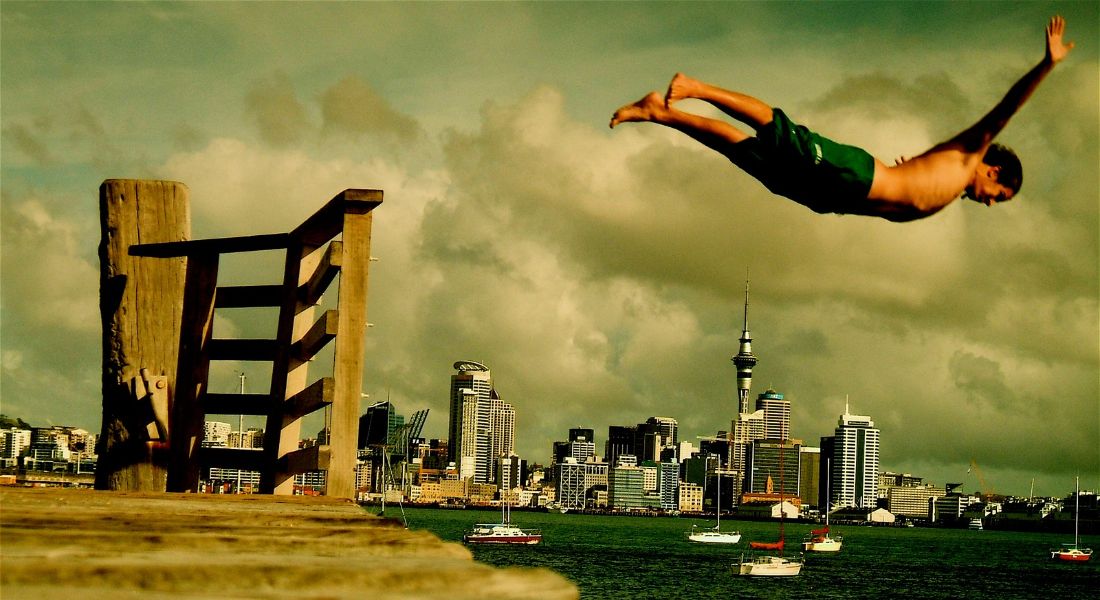

1 / 2 Image: Songshan Cultural and Creative Park
- Dates
- Nov 6, 2026 – Jan 3, 2027
- Venue
- Songshan Cultural and Creative Park (松山文創園區) · Songshan Cultural and Creative Park
- Address
- 臺北市信義區光復南路133號MRT Sun Yat-Sen Memorial Hall Station, Exit 5; about 350 m on foot along Guangfu South RoadOpen in Google Maps
- Hours
- 00:00–24:00
- Admission
- FreeOriginal: 免費
Visit planning
The calendar entry covers the whole run of the exhibition. Please check opening hours and closing days before your visit.
Nearby, after this one
Same venue · Songshan Cultural and Creative Park
Same neighborhood · Songshan Cultural and Creative Park
Shows open on the same days as this one are listed first (regular closing days only).
Related exhibitions
Same genre · Photography
Credits
- Planning
Knowledge cards
Photography攝影Making images by recording light, chemically on a light-sensitive material such as film, or electronically with an image sensor.Read moreClose
01About
In 1826 or 1827 Nicéphore Niépce first fixed an image captured with a camera, after an exposure of at least eight hours. His associate Louis Daguerre developed the daguerreotype, the first photographic process to be publicly announced and commercially viable; its details were made public in Paris in August 1839. Later materials cut exposures from minutes to seconds, and then to a fraction of a second. Labels may name how a print was made: the gelatin silver print is the most common process in black-and-white photography, and a chromogenic print, or C-print, is a colour print made from a colour negative, a transparency, or a digital image. A photograph is not always taken at the moment the shutter meets the scene. For Landscape Sublime (2013–), Anastasia Samoylova printed stock landscape images from the internet, built them into collages in her studio, and photographed them again; for Image Cities (2021–2022) she used telephoto lenses, reflections, and spatial compression to layer advertising, buildings, and passers-by into dense compositions.
02In the gallery
Choose one photograph, take in the whole frame, then step closer and look at its edges: what did the photographer keep inside the frame, and what was left out?
Wall label terms in Chinese
- 照片
- Photograph
- 曝光
- Exposure
- 明膠銀鹽相片
- Gelatin silver print
- 顯色印相(C-print)
- Chromogenic print (C-print)
03Notes
A photograph isn't always the instant the shutter fell; it may be staged or collaged and photographed again.
This time, at Art Window Project―Breathing Ocean: Water, Whenua, Us —
Looking at what's inside and outside the frame, was it caught in a moment, or arranged?