203 days left
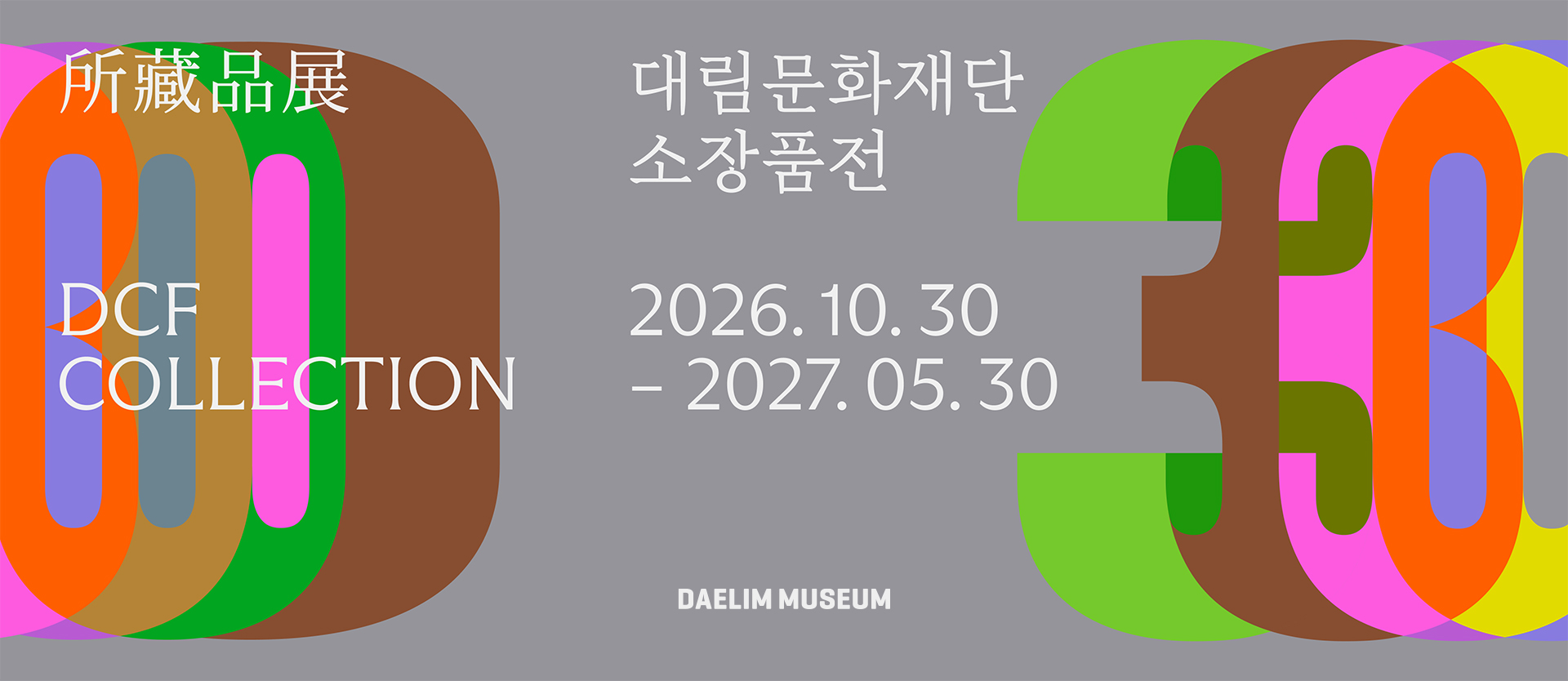
DCF COLLECTION: Exhibition of Works from the Daelim Cultural Foundation Collection
Korean original:
DCF COLLECTION: 대림문화재단 소장품전
Marking the Daelim Museum's 30th anniversary, the exhibition opens the Daelim Cultural Foundation's collection with about 70 works by 28 artists, from Picasso to Nam June Paik. The works come from Korea and abroad and range from the mid-20th century to today. Admission is free, with or without a reservation, though visitors without one may have to wait.
- Dates
- Oct 30, 2026 – May 30, 2027
- Venue
- Daelim Museum (대림미술관) · Seochon
- Address
- 서울특별시 종로구 자하문로4길 21Line 3 Gyeongbokgung Station, Exit 3 or Exit 4, on footOpen in Naver MapOpen in Google Maps
Visit planning
The calendar entry covers the whole run of the exhibition. Please check opening hours and closing days before your visit.
Nearby, after this one
Same neighborhood · Seochon
Shows open on the same days as this one are listed first (regular closing days only).

Credits
- Artists
- Park Seo-Bo, Pablo Picasso, Lee Daiwon, Kim Tschangyeul, Lee Ufan, Kim Woong, Paik Nam June
Knowledge cards
Écriture〈묘법〉Park Seo-bo's series from the late 1960s to his last years, built from repeated lines.Read moreClose
01About
In 1967 Park Seo-bo watched his three-year-old son struggling to write within the squares of a practice sheet, and the idea began there. Early Écriture paintings are pencil lines drawn over and over into wet oil paint; from the 1980s he used hanji, laying damp paper on the canvas and pushing it into ridges with his hands and tools; from the 2000s the works turned to vivid color, known as Color Écriture. The materials changed across the three periods, while the repeated gesture stayed at the heart of the work.
02In the gallery
First tell which period the work in front of you belongs to: pencil lines, ridges of hanji, or vivid color.
Wall label terms in Korean
- 묘법
- Écriture
- 색채 묘법
- Color Écriture
- 한지
- Hanji
03Notes
Across its three periods Myobeop changes materials, but never the repeated gesture.
This time, at DCF COLLECTION: Exhibition of Works from the Daelim Cultural Foundation Collection —
When one gesture is repeated a thousand times, what do you feel is left?
04Related
Dansaekhwa단색화Abstract painting that emerged in Korea from the 1970s, marked by a single tone and repeated making.Read moreClose
01About
These paintings depict no particular subject; what matters is how they are made. One action is repeated, and the traces it leaves become the work. Park Seo-bo's Écriture began with pencil lines drawn again and again into wet paint, and from the 1980s pushed ridges into damp hanji; Yun Hyong-keun let thinned paint seep slowly into linen and called it “Heaven and Earth.” The name Dansaekhwa was only proposed in 2000, as a way to group these works together.
02In the gallery
Look closely at the surface first, then step back and take in the whole field of color.
Wall label terms in Korean
03Notes
Dansaekhwa depicts no objects; what it shows is the trace of a gesture made again and again.
This time, at DCF COLLECTION: Exhibition of Works from the Daelim Cultural Foundation Collection —
Up close, what traces of repetition can you see?