7 days left
The 5th Jeju Biennale 2026: Iyahong – The Art of Metamorphosis
Korean original:
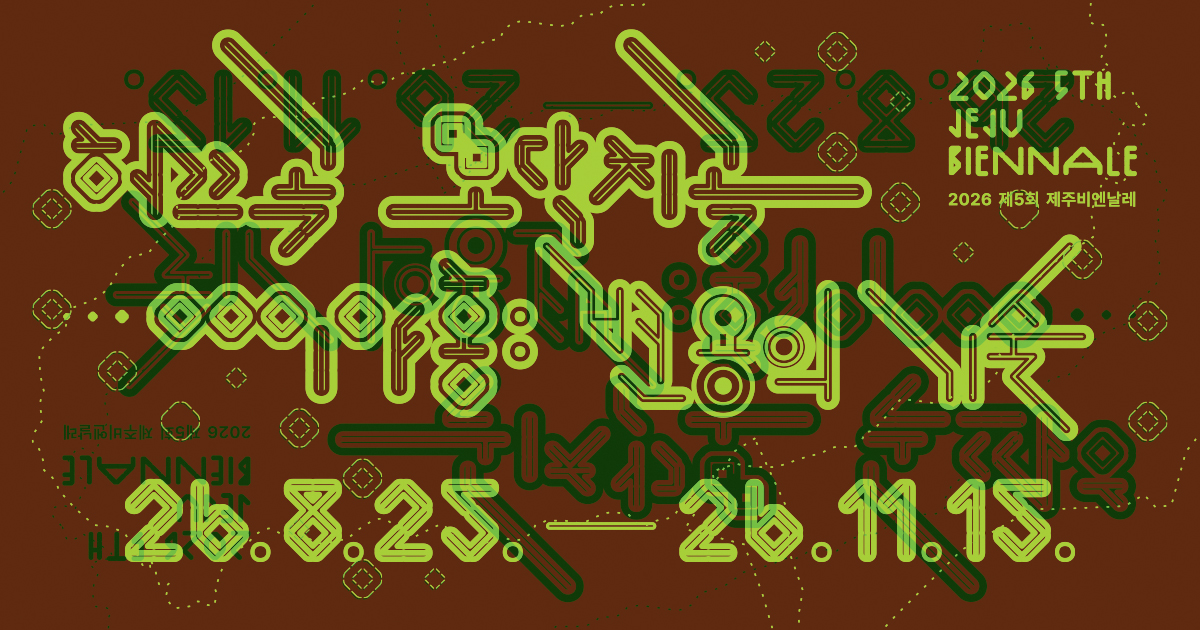
2026 제5회 제주비엔날레 《허끄곡 모닥치곡 이야홍: 변용의 기술》
Its theme, Iyahong, is taken from the refrain of a Jeju folk song and looks at how the island's native culture mixed, gathered and was transformed after meeting northern civilisations, following three threads: exile, myth and stone culture. The biennale spreads over five sites: the Jeju Museum of Art, the Obaekjanggun Gallery at Jeju Stone Park, and three spaces in Jeju's old downtown. Tickets are sold at the museum; the three downtown spaces are free.
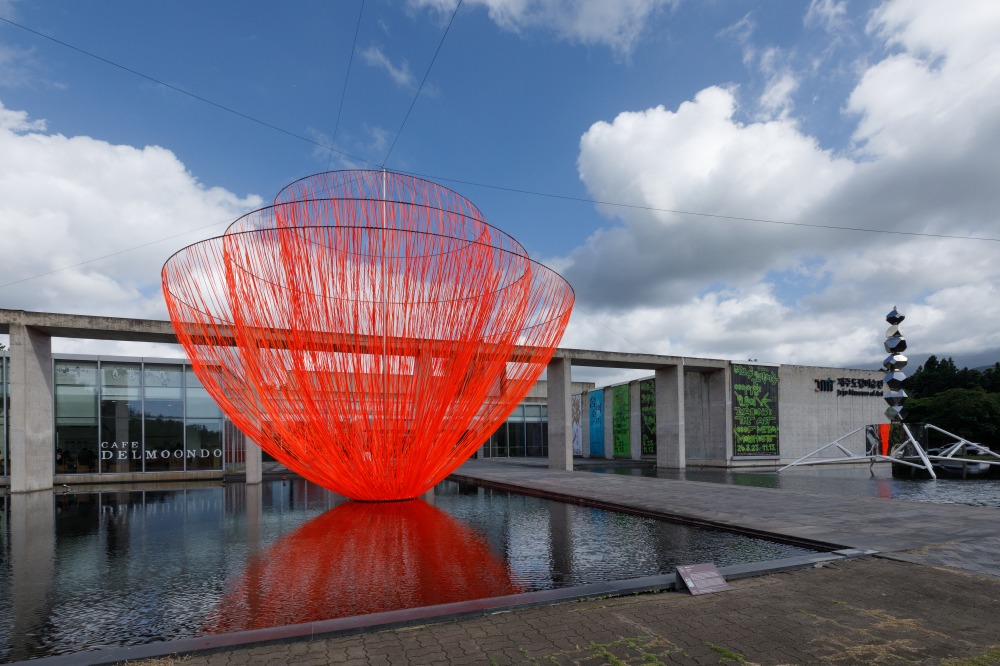
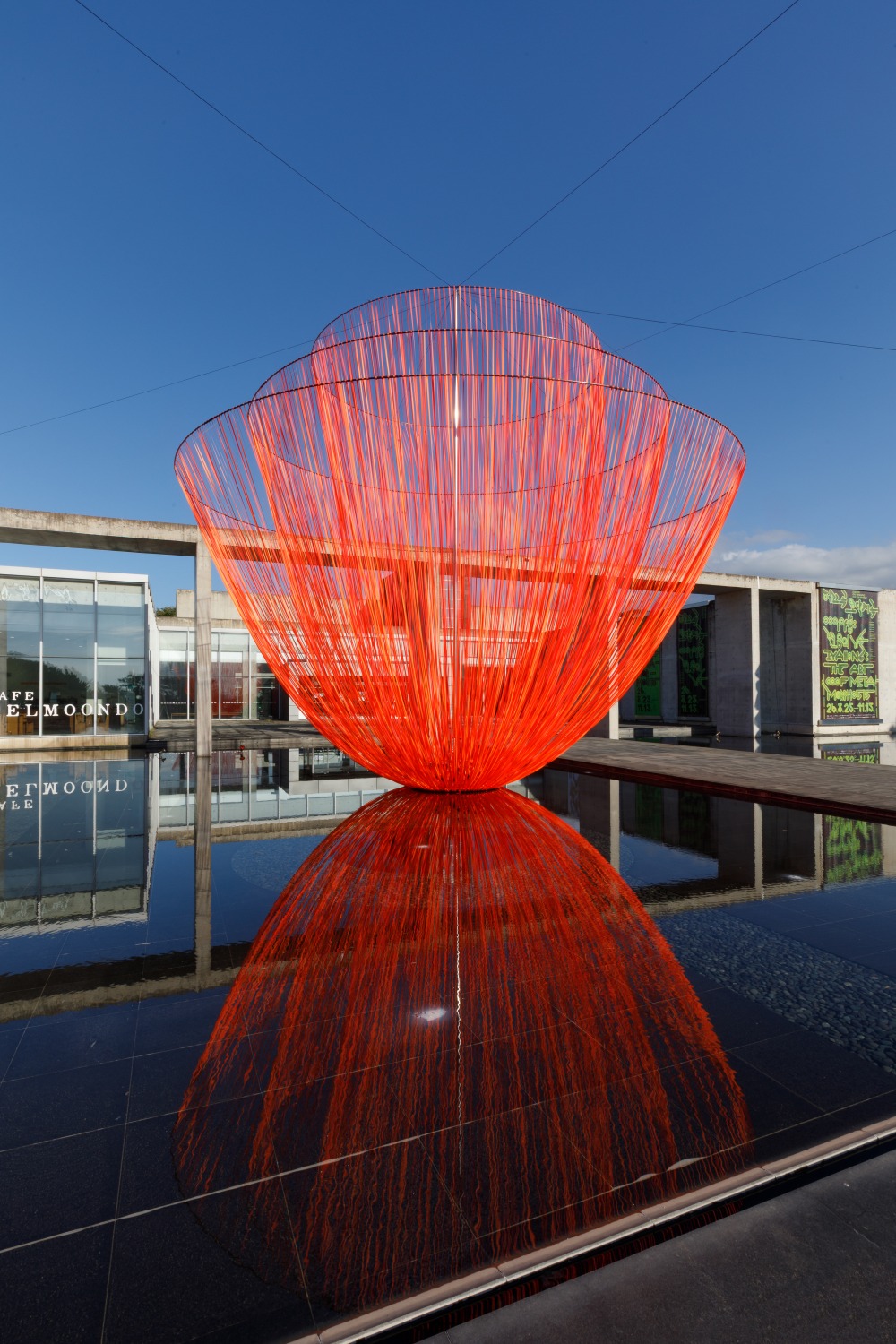
1 / 3 Image: Jeju Museum of Art
- Dates
- Aug 25 – Nov 15, 2026
- Venue
- Jeju Museum of Art (제주도립미술관) · Jeju
- Address
- 제주특별자치도 제주시 1100로 2894-78From Jeju International Airport stop 6, bus 465 or 466 to Jeju Museum of Art Entrance, then about a 9-minute walkOpen in Naver MapOpen in Google Maps
- Admission
- Adults ₩8,000Original: 성인 8,000원
Visit planning
The calendar entry covers the whole run of the exhibition. Please check opening hours and closing days before your visit.
Entry notes
In October and November the Jeju Museum of Art is open 10:00–18:00 and closed on Mondays (when a Monday is a holiday, it closes on the next non-holiday instead); the three downtown spaces close on Mondays and public holidays. A biennale ticket also admits you free to Jeju Stone Park.
- In October and November the Jeju Museum of Art is open 10:00–18:00 and closed on Mondays (when a Monday is a holiday, it closes on the next non-holiday instead); the three downtown spaces close on Mondays and public holidays. A biennale ticket also admits you free to Jeju Stone Park. (Source: 제주비엔날레: 관람 정보, 2026)
- Two prices are published: the biennale website gives 8,000 won for adults at the Jeju Museum of Art (4,000 won for Jeju residents), while the Ministry of Culture, Sports and Tourism's event page gives 2,000 won for adults. (Source: 문화체육관광부: 2026 제5회 제주비엔날레, 2026)
From the organizer's announcements and press reports. Arrangements can change; please check the official site before your visit.
On now and coming up
Recently opened · Major shows beyond Seoul


Credits
- Organized by
- Jeju Special Self-Governing Province
Knowledge cards
Biennale비엔날레A large international exhibition of contemporary art; the Italian word means "every two years".Read moreClose
01About
The Venice Biennale, first held in 1895, is the precedent most often named. In the 1990s biennials multiplied, and the number around the world grew from about five to more than 250. Korea's Gwangju Biennale was founded in September 1995. The fifth Jeju Biennale runs for 83 days, from 25 August to 15 November 2026, with 69 artists and teams across five venues. Its theme is a Jeju-dialect phrase, "허끄곡 모닥치곡 이야홍", roughly "mixing, gathering, stirring up the fun", and it is split into three sub-themes: exile, stone culture and myth. Exile is at the Jeju Museum of Art, stone culture at the Ogbaekjang Gallery of the Jeju Stone Park, and myth in three spaces in the old town.
02In the gallery
At each venue, first read the sub-theme at the entrance, then choose one work and think about how it connects to the main theme.
Wall label terms in Korean
- 비엔날레
- Biennale (biennial)
- 큐레이터
- Curator
- 소주제
- Sub-theme
03Notes
At a biennale, curators set a theme and the works are spread across sub-themes and venues.
This time, at The 5th Jeju Biennale 2026: Iyahong – The Art of Metamorphosis —
Once a work sits under the theme, what more did you see in it?
04Related
Installation Art설치 미술Not a single object on a wall or pedestal, but three-dimensional work that changes a whole space and that visitors move through.Read moreClose
01About
Installations are often made for a particular site, and visitors move within them, so where your body stands is part of the looking. The materials can be everyday objects, fabric, video, or sound, and a work may be taken down after the exhibition and never shown again. The term first appears in writing in 1969; earlier, in 1958, Allan Kaprow called the indoor spaces he transformed “Environments.” Do Ho Suh's Seoul Home (1999) is a life-size replica of his childhood home in Korea in polyester fabric and silk on thin metal rods; it folds up for transport, and each time it moves to a new city, that city's name is added to the title.
02In the gallery
Look from several places, outside, inside, and from a distance, and notice how the light, the sound, and your path change.
Wall label terms in Korean
- 설치
- Installation
- 장소 특정적
- Site-specific
- 환경
- Environment
03Notes
An installation changes the whole space, and where your body stands is part of the looking.
This time, at The 5th Jeju Biennale 2026: Iyahong – The Art of Metamorphosis —
Once you are inside the work, what changes with where you stand?