54 days left#Painting
150 Years After His Death: Ekin Tells, Ekin Is Told
Japanese original:
没後150年 語る絵金、語られる絵金
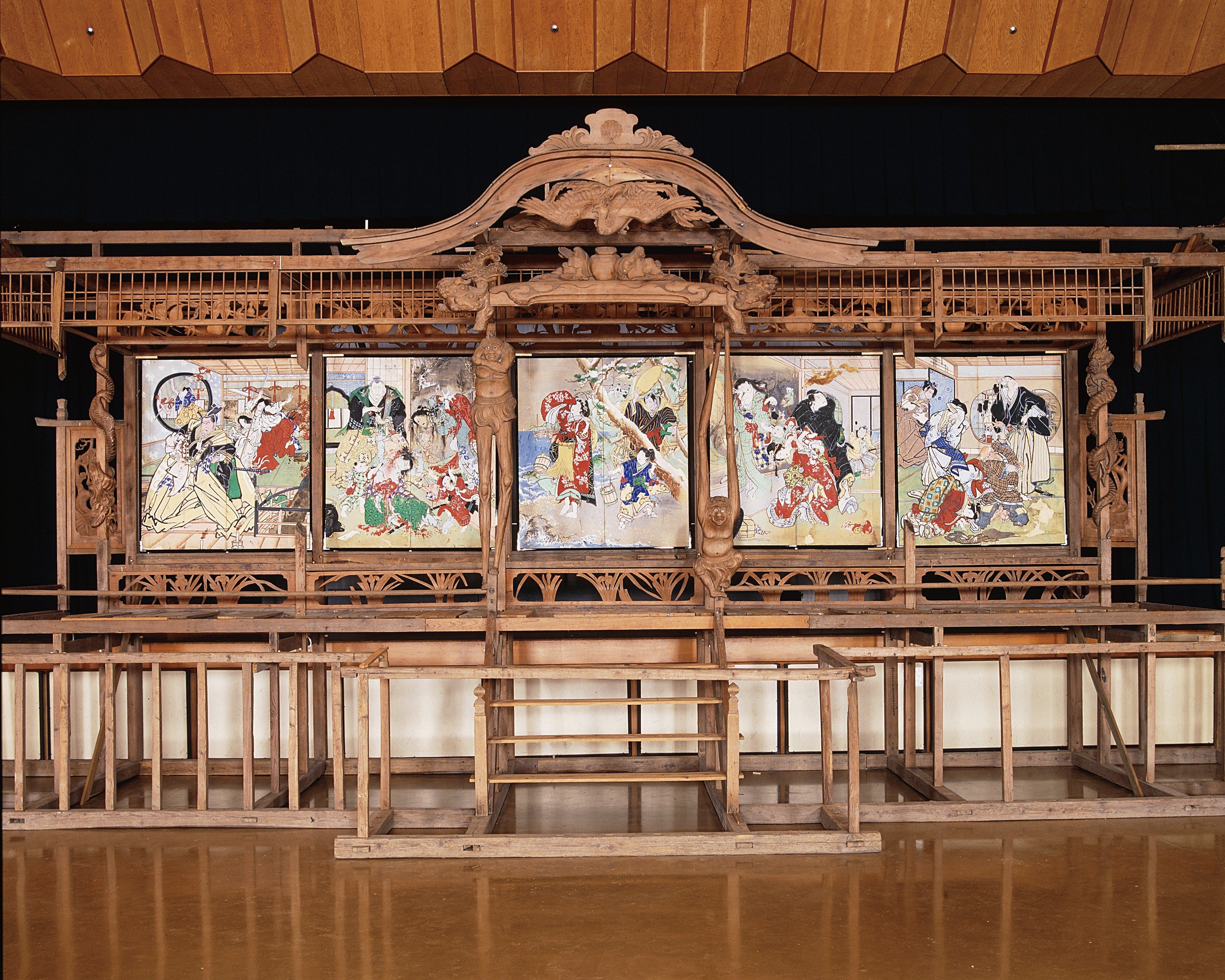
Ekin (1812–1876), a painter of late-Edo Tosa, created the distinctive style of 'theatre-picture screens' that are lit by candles at summer festivals. The show presents his light, humorous side through major works, traces the 'Ekin culture' kept alive by Kochi people's storytelling, and unveils the humorous works The Fart Battle and Night Visits, restored in 2023.
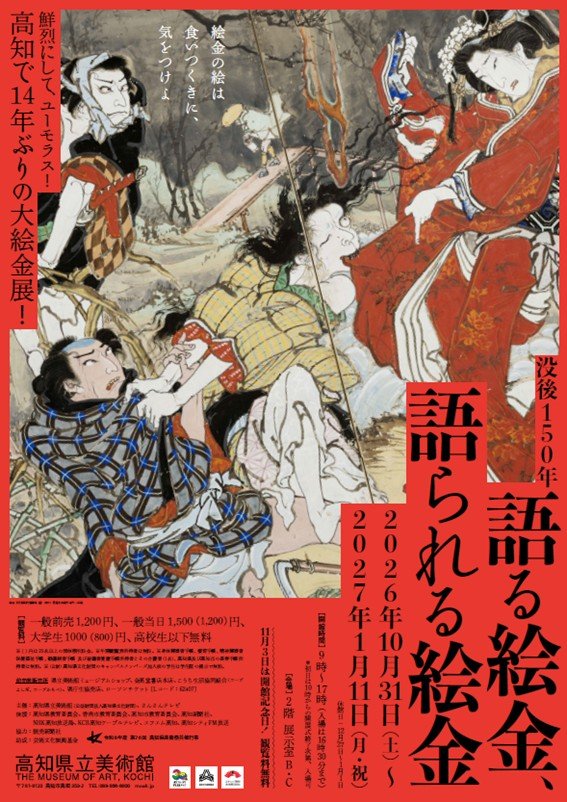
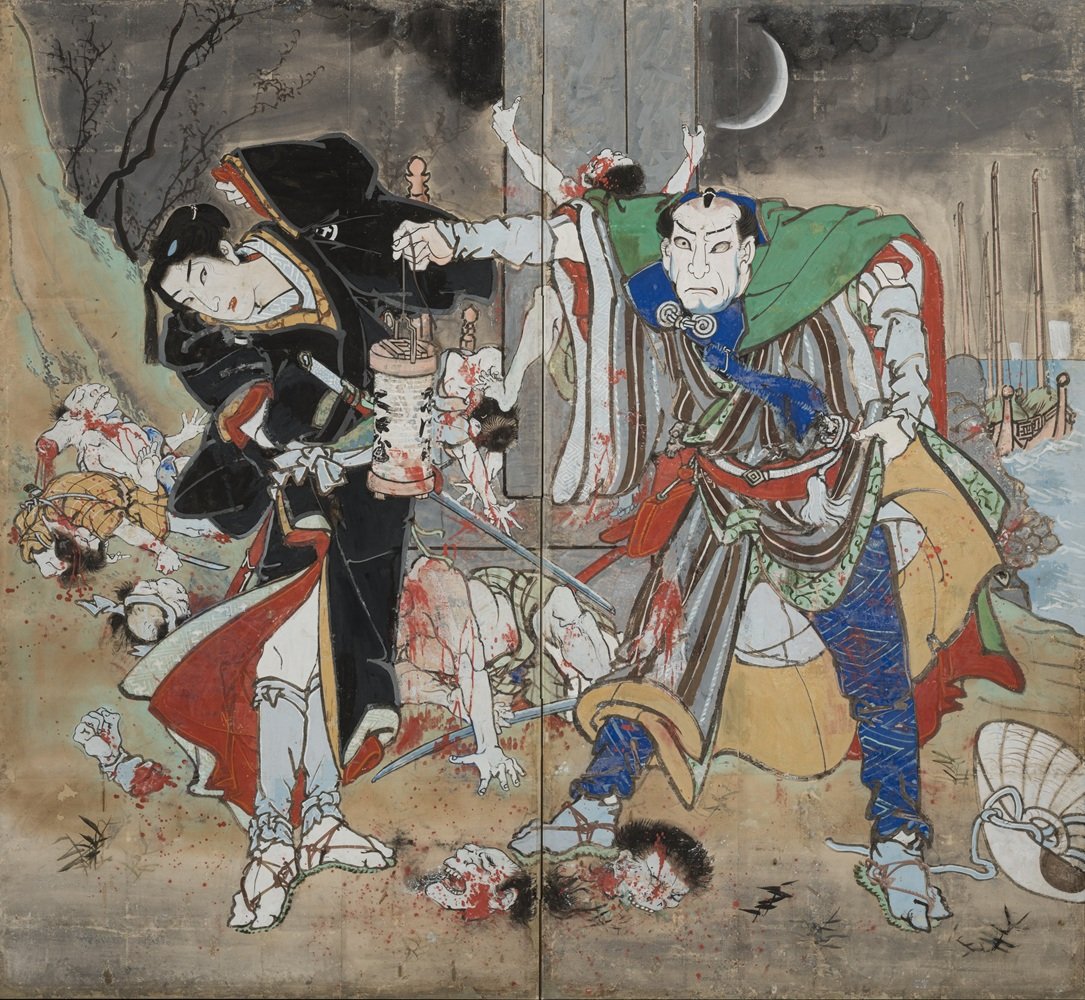
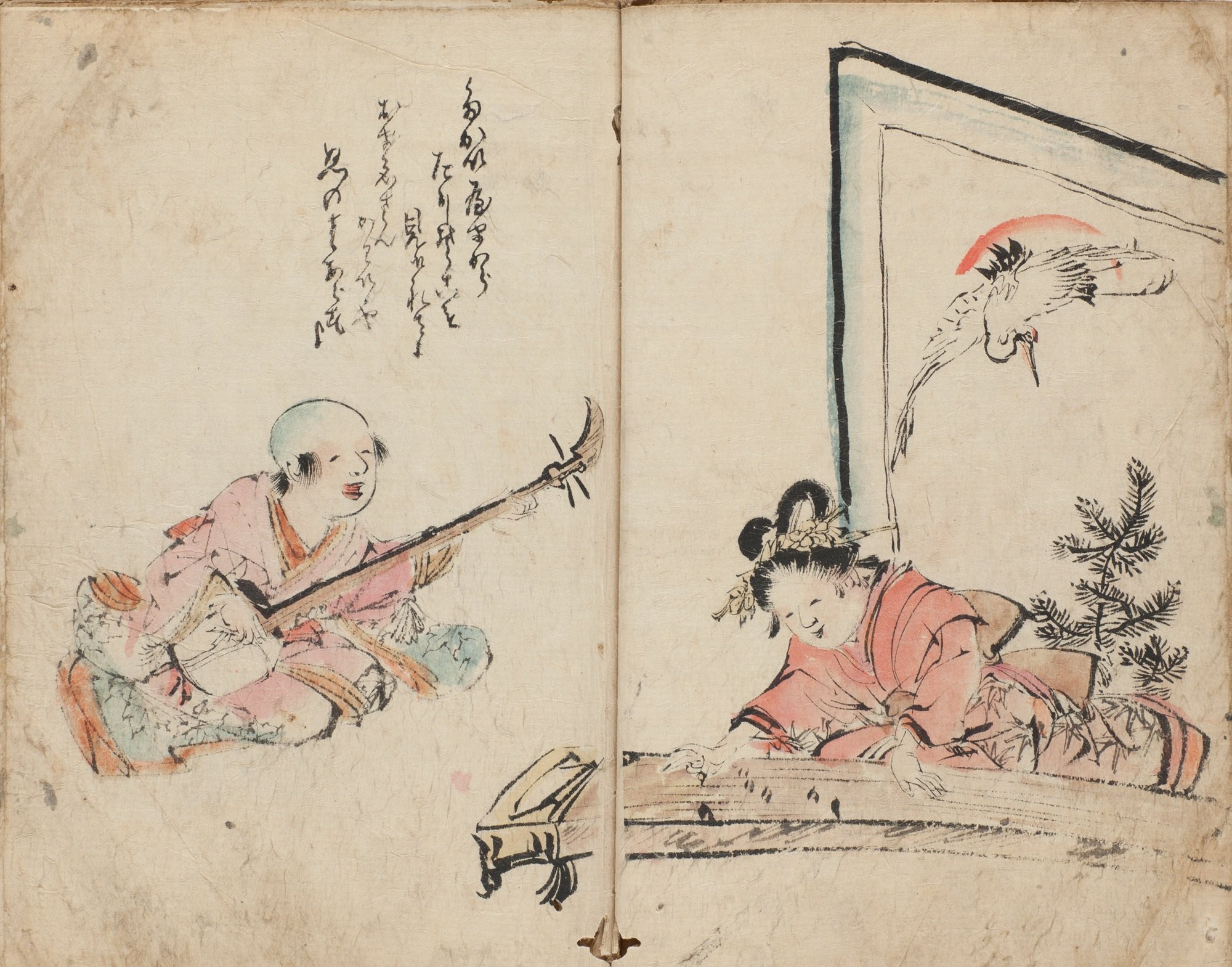
1 / 4 Image: Kochi Prefectural Museum of Art 展覧会ポスター(主視覚)
- Dates
- Oct 31, 2026 – Jan 11, 2027
- Venue
- Kochi Prefectural Museum of Art (高知県立美術館) · Kochi高知県高知市高須353-2
Getting there
By Tosaden tram, get off at Kenritsu Bijutsukan-dori stop and walk 5 min (about 15 min by tram from Harimayabashi); by airport shuttle bus, get off at Kuzushima and walk 15 min; about 20 min by car from JR Kochi Station
- Hours
- 09:00–17:00
- Admission
- 一般 1,500円(前売 1,200円)
- Artists
- Ekin
- Curators
- Nakatani Yuri
The calendar entry covers the whole run, so you won't need to look the dates up again. Please check opening hours and closing days before your visit.
Guided tours
Suojoruri recital and talk 'The World of Ekin, Told by a Gidayu Performer': Sunday, 22 Nov 2026, 18:00–19:00, with 竹本美園 (gidayu performer), in Galleries B and C. ¥500 (day's exhibition ticket also required), 20 places, reservation by phone (088-866-8000). Language not stated.
- TalkNov 22 (Sun)Suojoruri recital and talk 'The World of Ekin, Told by a Gidayu Performer': Sunday, 22 Nov 2026, 18:00–19:00, with 竹本美園 (gidayu performer), in Galleries B and C. ¥500 (day's exhibition ticket also required), 20 places, reservation by phone (088-866-8000). Language not stated.
- TalkNov 29 (Sun)Sign Language and Art Chat Time: Sunday, 29 Nov 2026, 13:30–15:30, with 尾﨑里美 (sign language cafe instructor, Deaf), in Gallery B, with sign interpretation support. About 10 places; cafe charge paid on site; reservation through the application form.
- TalkDec 13 (Sun)Gallery talk: Sunday, 13 Dec 2026, 10:00–11:00, by 中谷有里 (curator in charge), in Galleries B and C. Free with an exhibition ticket; no reservation. Language not stated.
Source: 高知県立美術館 没後150年 語る絵金、語られる絵金. From the venue's and organizer's announcements. Schedules, languages and fees can change; please check the official site before your visit.
Organizers and partners
Organized by: Kochi Prefectural Museum of Art, Sun Sun Television
- Organized by
- Kochi Prefectural Museum of Art
- Sun Sun Television
- In cooperation with
- The Yomiuri Shimbun
Organizing this exhibition? Write to us to add or correct anything here: hello@anthology-art.org
Knowledge cards
Folding screens (byōbu)屏風A folding partition of wooden frames covered with paper or silk, set up to block wind, divide a room, and carry pictures, often as a left–right pair.Read moreClose
01About
A byōbu is a wooden frame covered with paper or silk, joined in two, four, six, or eight panels so that it folds. The oldest record of one reaching Japan dates from 686: the Nihon Shoki lists screens among gifts from Silla. It blocks wind, divides a room, and decorates it, and from the Middle Ages screens were made as left–right pairs with related pictures. A pair of six-panel screens is a rokkyoku issō; a single one is an isseki. In the Muromachi period screens carried ink landscapes and flowers and birds; the Momoyama period added colorful genre scenes and city views, and the screen became a main format for large paintings. The Kanō school devised a gold-ground, colored style for flower-and-bird paintings, and Sōtatsu of the Rinpa school left many fine ones. Later came small pillow screens and, for tea gatherings, the furosaki screen.
02In the gallery
Look at the two halves of a pair one after the other, moving your eyes from one end to the other; what is drawn may change along the way.
Wall label terms in Japanese
- 屏風
- Folding screen (byōbu)
- 六曲一双
- Pair of six-panel screens (rokkyoku issō)
- 右隻・左隻
- Right and left screens (useki / saseki)
- 風炉先屏風
- Furosaki screen
03Notes
On gold-ground screens, the gold shimmers as you move, and the picture seems to move with you.
This time, at 150 Years After His Death: Ekin Tells, Ekin Is Told —
As your eyes go from one end of the picture to the other, what do you see change?