50 days left
MOMAT Collection
Japanese original:
所蔵作品展 MOMATコレクション
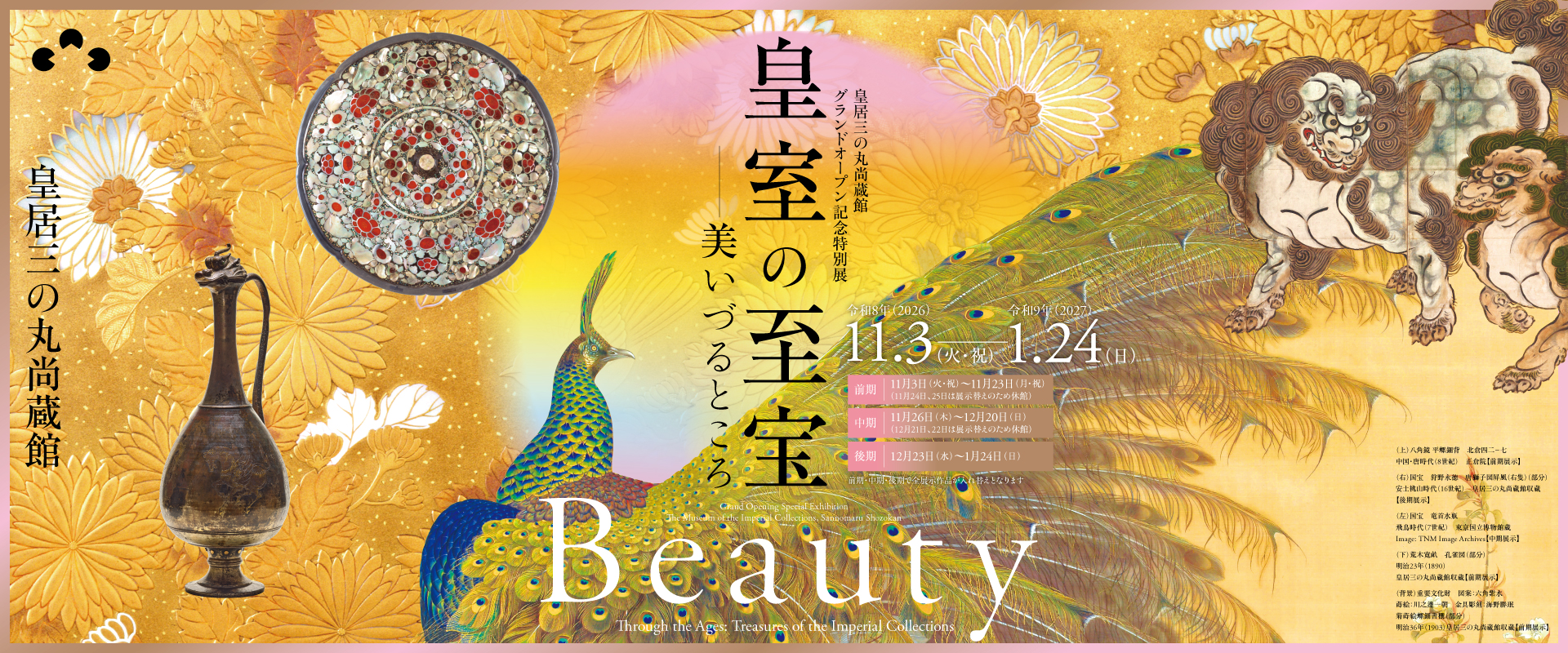
Since opening in 1952, the National Museum of Modern Art, Tokyo has collected more than 14,000 works, and shows about 200 at a time across twelve rooms that trace Japanese modern and contemporary art from the late 19th century to today. In the first period (to 15 November), Kaburaki Kiyokata's Important Cultural Property Tsukiji Akashi-chō and two companion works return after seven years, followed in the second period by Yasuda Yukihiko's Camp at Kise River; rooms linked to the Yumeji exhibition introduce Taishō café culture and its waitresses. On floors 2 to 4.
1 / 5 Image: The National Museum of Modern Art, Tokyo
- Dates
- Sep 29, 2026 – Jan 11, 2027
- Venue
- The National Museum of Modern Art, Tokyo (東京国立近代美術館) · Takebashi & Kitanomaru Park東京都千代田区北の丸公園3-1
Getting there
3 min walk from Exit 1b, Takebashi Station (Tokyo Metro Tozai Line)
- Hours
- 10:00–17:00 · Closed: Mon
- Admission
- General ¥500Original: 一般 500円
- Organized by
The calendar entry covers the whole run, so you won't need to look the dates up again. Please check opening hours and closing days before your visit.
Entry notes
Closed on Mondays (open on October 12, November 23 and January 11, 2027) and on October 13, October 22, November 24 and December 28 to January 1. Open until 20:00 on Fridays and Saturdays; last entry 30 minutes before closing. From 17:00 on Fridays and Saturdays the general ticket is 300 yen. Kiyokata Kaburaki's three Important Cultural Properties are shown only until November 15; from November 17, Yasuda Yukihiko's Kise River Encampment takes their place.
- Closed on Mondays (open on October 12, November 23 and January 11, 2027) and on October 13, October 22, November 24 and December 28 to January 1. Open until 20:00 on Fridays and Saturdays; last entry 30 minutes before closing. From 17:00 on Fridays and Saturdays the general ticket is 300 yen. Kiyokata Kaburaki's three Important Cultural Properties are shown only until November 15; from November 17, Yasuda Yukihiko's Kise River Encampment takes their place. (Source: 東京国立近代美術館:所蔵作品展 MOMATコレクション, 2026)
From the organizer's announcements and press reports. Arrangements can change; please check the official site before your visit.
Guided tours
Gallery talks by museum staff on 'Seeing the Story': Fridays 19:00–19:30 from 23 Oct to 18 Dec 2026 at the 3rd-floor elevator hall inside the collection galleries. Free with an admission ticket, no capacity limit; no sign-up method is stated. Remaining sessions and speakers: 20 Nov 齊藤佳代, 27 Nov 山本桃子, 4 Dec 端山聡子 (guests 藤田百合 and 守屋史世), 11 Dec 佐原しおり, 18 Dec 齊藤佳代, all museum staff. Language is not stated.
- TalkGallery talks by museum staff on 'Seeing the Story': Fridays 19:00–19:30 from 23 Oct to 18 Dec 2026 at the 3rd-floor elevator hall inside the collection galleries. Free with an admission ticket, no capacity limit; no sign-up method is stated. Remaining sessions and speakers: 20 Nov 齊藤佳代, 27 Nov 山本桃子, 4 Dec 端山聡子 (guests 藤田百合 and 守屋史世), 11 Dec 佐原しおり, 18 Dec 齊藤佳代, all museum staff. Language is not stated.
- TourExhibit attendants by MOMAT guide staff on 'Seeing the Story': Saturdays 11:00–14:00, starting on the spot (14, 21 and 28 Nov; 5, 12 and 19 Dec 2026; 9 Jan 2027) in Room 10 on the 3rd floor of the collection galleries. Free with an admission ticket, no capacity limit; no sign-up, as staff begin when they approach visitors in the room. Language is not stated.
Source: 東京国立近代美術館 職員によるギャラリートーク, 東京国立近代美術館 展示アテンド. From the venue's and organizer's announcements. Schedules, languages and fees can change; please check the official site before your visit.
Knowledge cards
Nihonga日本画A name that arose in the Meiji era to set Japanese painting apart from oil painting from Europe; it is mostly painted with mineral pigments, ink, and animal glue on silk or Japanese paper.Read moreClose
01About
When oil painting arrived from Europe in the 1870s it was called Western painting, or yōga; the painting Japan already had came to be called nihonga. The word first appeared in 1882, as the translation of “Japanese painting” in Ernest Fenollosa's lecture The True Theory of Art. The Tokyo Fine Arts School, opened in 1889, taught only nihonga and no Western painting. Its main pigments are grains of crushed minerals, which do not stick on their own and are mixed with animal glue; it is mostly painted on silk or Japanese paper. The Yamatane Museum of Art, opened in 1966, was the first museum in Japan devoted to nihonga.
02In the gallery
Look at the surface from an angle: the coarser the mineral grains, the darker and more vivid the color; the finer, the paler and whiter.
Wall label terms in Japanese
- 日本画
- Nihonga
- 岩絵具
- Mineral pigment
- 膠
- Animal glue
- 絹本
- On silk
03Notes
Nihonga uses pigments ground from minerals, and the size of the grain changes how deep a colour looks.
This time, at MOMAT Collection —
Does the same color look the same in different parts of the picture?
04Related
Yōga洋画Oil painting brought to Japan from Europe from the 1870s, also called Western painting, and the work Japanese painters made in it.Read moreClose
01About
In 1876 the Technical Fine Arts School opened as part of the Imperial College of Engineering, and the Italian painter Antonio Fontanesi was hired to teach painting. He stayed two years, and his students included early yōga painters such as Asai Chū and Koyama Shōtarō. The school closed in 1883; the Tokyo Fine Arts School, which opened in 1889, at first taught only nihonga and no Western painting. After the Meiji Restoration many Japanese went to Europe to learn Western culture, and yōga painters such as Kuroda Seiki, Fujishima Takeji, Yasui Sōtarō, and Foujita Tsuguharu all painted there.
02In the gallery
Notice how the painter uses light and dark color to show light falling on things.
Wall label terms in Japanese
- 洋画
- Yōga (Western-style painting)
- 油彩
- Oil
- 工部美術学校
- Technical Fine Arts School
- 日本画
- Nihonga
03Notes
Yōga is the oil painting Japanese painters learned from Europe, and many of them painted there.
This time, at MOMAT Collection —
Does the scene or the sitter look as if it is in Japan, or in Europe?
04Related
Other cards (1)Hide other cards
Bijinga (pictures of beautiful women)美人画Pictures whose subject is the beauty of women, in looks or in spirit; the name was born in Japan, and many follow on from the ukiyo-e of the Edo period.Read moreClose
01About
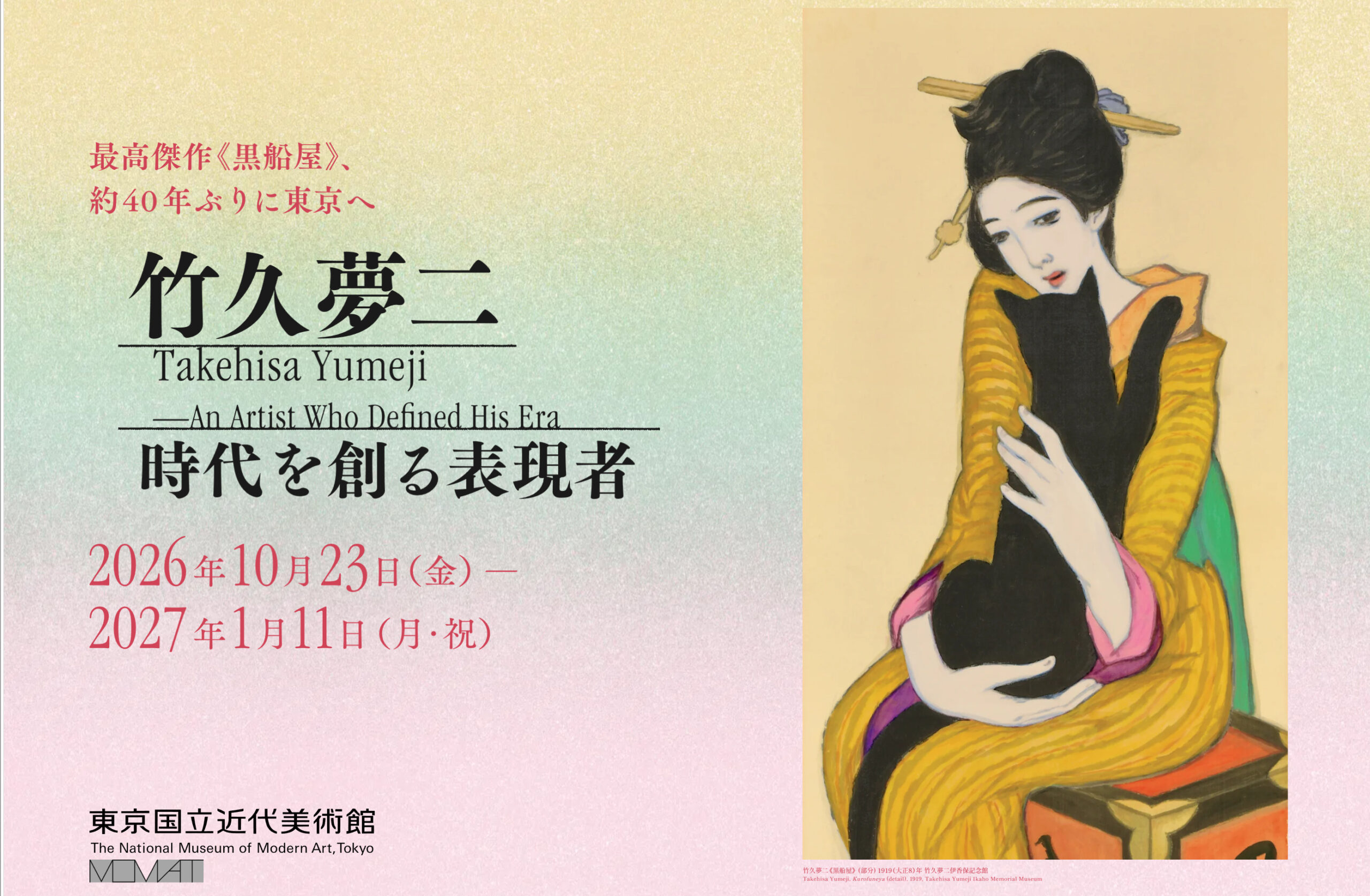
Women have been painted since early times, but they came to be painted in great numbers in the ukiyo-e of the Edo period, when such pictures were called bijin-e or onna-e. In ukiyo-e, what mattered was less whether the picture looked like the woman herself than which artist's type she was drawn in: Suzuki Harunobu's slight, girlish women, Torii Kiyonaga's tall women with long limbs, Kitagawa Utamaro's close-up busts. In modern nihonga after the Meiji era, bijinga became the name of a genre, and Kaburaki Kiyokata in Tokyo and Uemura Shōen in Kyoto were spoken of together as “Shōen in the west, Kiyokata in the east.” In the Taishō era Takehisa Yumeji joined an ukiyo-e-like manner to Taishō romanticism, and his women with large, wistful eyes, called Yumeji-style beauties, won wide popularity.
02In the gallery
Look beyond the face: the pattern of the kimono, the hairstyle, what she holds, the flowers and grasses around her. Which of them tell you the season, or how she lives?
03Notes
In bijinga, what mattered was not likeness to the sitter but which painter's type the figure followed.
This time, at MOMAT Collection —
Where do you find the beauty in a bijinga: in the face, or in the gesture and dress?
04Related
Nearby, after this one
Same venue · The National Museum of Modern Art, Tokyo
Same neighborhood · Takebashi & Kitanomaru Park
Shows open on the same days as this one are listed first (regular closing days only).