45 days left
MOT Collection: Past Light, Present Sight
Japanese original:
MOTコレクション いつかの光を今みている
The Museum of Contemporary Art Tokyo holds about 6,100 works, mostly postwar. This collection display focuses on light and time, from Yoshida Hiroshi's light-filled woodblock prints of famous Tokyo sites made about a hundred years ago to Hikaru Fujii's video of the museum's empty galleries during the pandemic. Works by Mami Kosemura, Kimio Tsuchiya, Arisa Kumagai, and Fujii are shown for the first time since their acquisition, along with a large work by Shigeo Toya, who died in April this year.
1 / 4 Image: Museum of Contemporary Art, Tokyo
- Dates
- Sep 19, 2026 – Jan 6, 2027
- Venue
- Museum of Contemporary Art, Tokyo (東京都現代美術館) · Kiyosumi-Shirakawa東京都江東区三好4-1-1
Getting there
9 min walk from Exit B2, Kiyosumi-shirakawa Station (Tokyo Metro Hanzomon Line)
- Hours
- 10:00–18:00 · Closed: Mon
- Admission
- General ¥500Original: 一般 500円
- Artists
- Yayoi Kusama
- Arisa Kumagai
- Mami Kosemura
- Ushio Shinohara
- Hiroshi Sugimoto
- Naoko Sekine
All artists(22)Show less
- Yayoi Kusama
- Arisa Kumagai
- Mami Kosemura
- Ushio Shinohara
- Hiroshi Sugimoto
- Naoko Sekine
- Koichi Tateishi
- Kimio Tsuchiya
- Shigeo Toya
- Hiroshi Nakamura
- Tetsuya Noda
- Hideko Fukushima
- Hikaru Fujii
- Yoko Matsumoto
- Saori Miyake
- Katsuhiro Yamaguchi
- Tadanori Yokoo
- Hiroshi Yoshida
- Masunobu Yoshimura
- Dan Flavin
- Agnes Martin
- Ad Reinhardt
- Organized by
- Tokyo Metropolitan Government
- Museum of Contemporary Art, Tokyo
The calendar entry covers the whole run, so you won't need to look the dates up again. Please check opening hours and closing days before your visit.
Entry notes
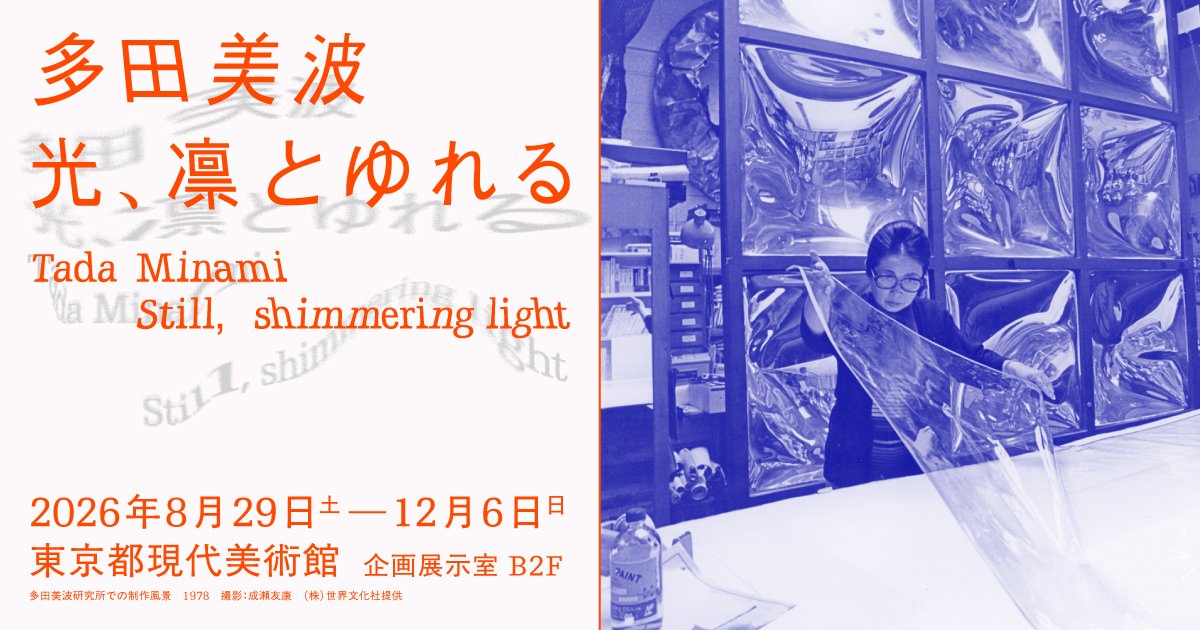
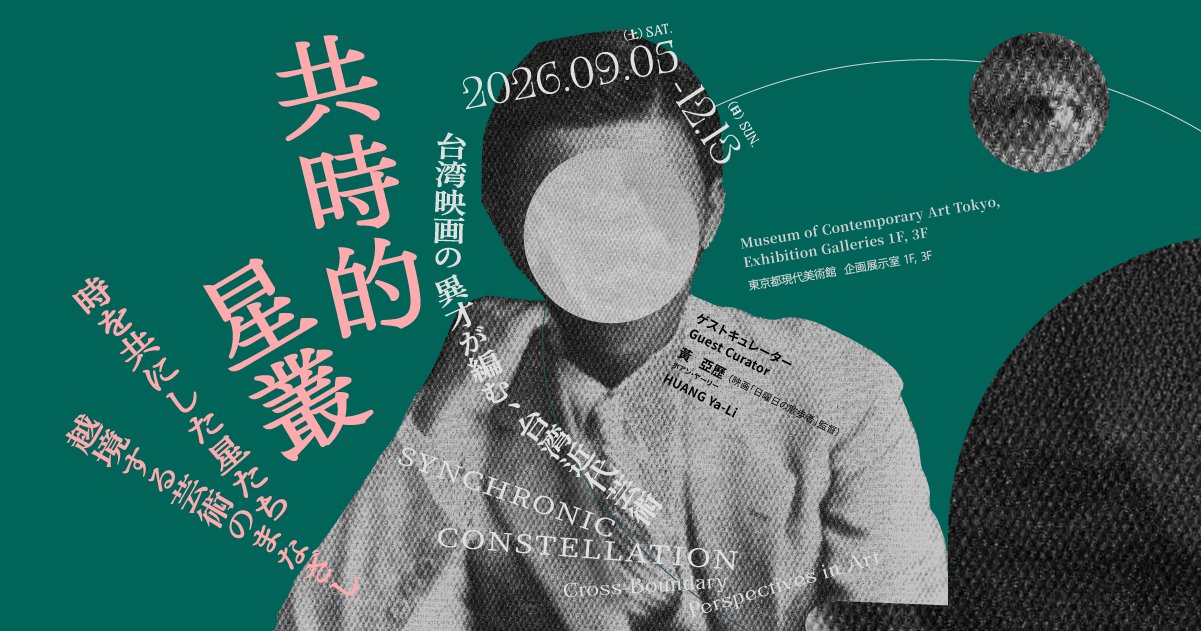
Closed on Mondays (open on September 21, October 12 and November 23) and on September 24, October 13, November 24 and December 28 to January 1. On every Friday in November it stays open until 20:00 (last entry 30 minutes before closing); entry after 17:00 is 20 percent off and free for students (proof required). Junior high school students and younger enter free. Tickets to the special exhibitions on Minami Tada and on Synchronic Constellation also admit you to this show.
- Closed on Mondays (open on September 21, October 12 and November 23) and on September 24, October 13, November 24 and December 28 to January 1. On every Friday in November it stays open until 20:00 (last entry 30 minutes before closing); entry after 17:00 is 20 percent off and free for students (proof required). Junior high school students and younger enter free. Tickets to the special exhibitions on Minami Tada and on Synchronic Constellation also admit you to this show. (Source: 東京都現代美術館:MOTコレクション いつかの光を今みている, 2026)
From the organizer's announcements and press reports. Arrangements can change; please check the official site before your visit.
Guided tours
Access guides for the collection exhibition: a large-print guide, 'Tweet Talk' with Uni-Voice audio codes, and a tactile floor map. A fee is not stated.
- Audio guideAccess guides for the collection exhibition: a large-print guide, 'Tweet Talk' with Uni-Voice audio codes, and a tactile floor map. A fee is not stated.
Source: 東京都現代美術館 バリアフリー/アクセシビリティ. From the venue's and organizer's announcements. Schedules, languages and fees can change; please check the official site before your visit.
Knowledge cards
Modern sculpture: from mass to space近現代の彫刻:量塊から空間へSculpture since the 20th century: not only a solid mass carved or modelled, but forms built from many materials that count the surrounding space and light as part of the work.Read moreClose
01About
Traditional sculpture has two ways of working: carving, which removes material, and modelling, which adds it, as with clay; a modelled form may then be cast in metal. In the early 20th century the Cubists assembled works from different materials, and construction became a new way of making sculpture. In 1920 Naum Gabo, with his brother Antoine Pevsner, published the Realistic Manifesto in Moscow, calling for an art freed from volume and mass and grounded in space and time. Sculpture since then has used industrial materials such as steel, acrylic, and glass; some works move (kinetic sculpture), and some take light as their material. In Japan, too, postwar abstract sculpture turned away from academic figurative work that prized mass and stability, toward space and the environment.
02In the gallery
Walk once around the work, and look from a different height. With surfaces that reflect or let light through, watch how the work changes with where you stand and with the light in the room; with open or linear forms, look at the shape of the space that passes through them.
Wall label terms in Japanese
- 彫刻(カーヴィング)
- Carving
- 塑造
- Modelling
- 鋳造
- Casting
- 構成(コンストラクション)
- Construction
- 量塊(マッス)
- Mass
- キネティック・アート
- Kinetic art
03Notes
Twentieth-century sculpture doesn't just make a mass; it brings the surrounding space and light into the work.
This time, at MOT Collection: Past Light, Present Sight —
After walking around it, where do you think the work ends?
04Related
Media art and video artメディアアートとビデオ・アートArt that takes electronic and digital media, such as television, video, computers, and sensors, as its material.Read moreClose
01About
In March 1963, Nam June Paik showed Exposition of Music – Electronic Television at Galerie Parnass in Wuppertal, West Germany, scattering television sets through the rooms and distorting their pictures with magnets; this is often taken as the starting point of media art. The works that followed take a few broad forms: single-channel video, shown on one screen with a fixed running time like a film; video installation, which arranges several monitors, projections, and objects in a space that visitors walk through; and interactive works that change in response to a visitor's movement, voice, or brain waves. Cathode-ray tube sets and other equipment are produced less and less and are hard to find even second-hand, so keeping such works alive means weighing repair against replacement; Paik himself allowed owners to make the technical changes needed to keep his works running.
02In the gallery
Read the medium line on the label. “72 monitors, 4-channel video” means 72 screens are showing four different videos: find the screens playing the same one and see how they are arranged. For a single-channel work, the label gives the running time; check it before deciding where to start watching.
Wall label terms in Japanese
- メディアアート
- Media art
- シングルチャンネル
- Single-channel video
- 映像○チャンネル
- Video, N channels (N different videos)
- ビデオ・インスタレーション
- Video installation
- インタラクティブ
- Interactive
- ブラウン管
- Cathode-ray tube (CRT)
03Notes
Media art ranges from single-screen video to video installations you walk into.
This time, at MOT Collection: Past Light, Present Sight —
Is a screen in the gallery a window to look into, or an object to walk around?
04Related
Nearby, after this one
Same venue · Museum of Contemporary Art, Tokyo
Same neighborhood · Kiyosumi-Shirakawa
Shows open on the same days as this one are listed first (regular closing days only).