14 days left#Sculpture & installation
Tada Minami: Still, Shimmering Light
Japanese original:
多田美波―光、凛と ゆれる
Minami Tada (1924–2014), born in Kaohsiung, Taiwan, was an abstract sculptor in postwar Japan who made some 200 sculptures and 500 architectural works for parks, stations, city halls, hotels, and theatres. A pioneer in bringing industrial materials into art, she made the reflection, transmission, and refraction of light the core of her forms. This first major retrospective since her death shows about 70 works with archival material, and rebuilds at full size her lost ball-chain chandelier, Chaindelier (1963).
1 / 4 Image: Museum of Contemporary Art, Tokyo
- Dates
- Aug 29 – Dec 6, 2026
- Venue
- Museum of Contemporary Art, Tokyo (東京都現代美術館) · Kiyosumi-Shirakawa東京都江東区三好4-1-1
Getting there
9 min walk from Exit B2, Kiyosumi-shirakawa Station (Tokyo Metro Hanzomon Line)
- Hours
- 10:00–18:00 · Closed: Mon
- Admission
- General ¥1,600Original: 一般 1,600円
- Artists
The calendar entry covers the whole run, so you won't need to look the dates up again. Please check opening hours and closing days before your visit.
Entry notes
Closed on Mondays (open on November 23) and on November 24. 10:00–18:00; open until 20:00 on every Friday in November, with last entry 30 minutes before closing. On Fridays in November, admission after 17:00 is 20% off and free for students (proof required). Adults ¥1,600. An online ticket admits one person to this exhibition once and cannot be cancelled or changed after purchase; day tickets are also sold at the museum counter. The ticket also admits you to the MOT Collection on the same day.
- Closed on Mondays (open on November 23) and on November 24. 10:00–18:00; open until 20:00 on every Friday in November, with last entry 30 minutes before closing. On Fridays in November, admission after 17:00 is 20% off and free for students (proof required). Adults ¥1,600. An online ticket admits one person to this exhibition once and cannot be cancelled or changed after purchase; day tickets are also sold at the museum counter. The ticket also admits you to the MOT Collection on the same day. (Source: 東京都現代美術館:多田美波―光、凛と ゆれる, 2026)
From the organizer's announcements and press reports. Arrangements can change; please check the official site before your visit.
Guided tours
A Japanese audio guide narrated by a curator, available free on your own smartphone through the Bloomberg Connects app; no device rental. Text can be auto-translated into more than 50 languages.
- Audio guideA Japanese audio guide narrated by a curator, available free on your own smartphone through the Bloomberg Connects app; no device rental. Text can be auto-translated into more than 50 languages.
Source: 東京都現代美術館 展覧会ページ. From the venue's and organizer's announcements. Schedules, languages and fees can change; please check the official site before your visit.
Organizers and partners
Organized by: Museum of Contemporary Art, Tokyo
- Organized by
- In cooperation with
- Nirasaki Omura Art Museum
- Olive Bay Hotel Co., Ltd.
- L'Orangerie International Art Consultant Co. Ltd.
Organizing this exhibition? Write to us to add or correct anything here: hello@anthology-art.org
Knowledge cards
Retrospective exhibitions回顧展A retrospective brings together work and records from across an artist's career so that a body of work can be seen in sequence and from more than one angle.Read moreClose
01About
A retrospective can place early and later works, different media, sketches, photographs or other records in relation to one another. The Tokyo Metropolitan Art Museum describes its Tada Minami exhibition as a large-scale retrospective that surveys about seventy years of work through paintings, sculptures, light works, architectural parts, photographs and sketches. The National Museum of Western Art describes its Turner exhibition as a retrospective arranged by themes and a loose chronology, with contemporary works placed beside Turner's. This makes comparison more useful than hunting for a single representative piece. When you visit one, move back and forth between periods and ask what each change of material or setting does to your view.
02In the gallery
Start with one early and one later work, then compare their material, scale, pace and surroundings.
03Notes
Compare changes across periods, materials and ways of working.
This time, at Tada Minami: Still, Shimmering Light —
What has changed, and what has stayed with the artist?
04Related
Modern sculpture: from mass to space近現代の彫刻:量塊から空間へSculpture since the 20th century: not only a solid mass carved or modelled, but forms built from many materials that count the surrounding space and light as part of the work.Read moreClose
01About
Traditional sculpture has two ways of working: carving, which removes material, and modelling, which adds it, as with clay; a modelled form may then be cast in metal. In the early 20th century the Cubists assembled works from different materials, and construction became a new way of making sculpture. In 1920 Naum Gabo, with his brother Antoine Pevsner, published the Realistic Manifesto in Moscow, calling for an art freed from volume and mass and grounded in space and time. Sculpture since then has used industrial materials such as steel, acrylic, and glass; some works move (kinetic sculpture), and some take light as their material. In Japan, too, postwar abstract sculpture turned away from academic figurative work that prized mass and stability, toward space and the environment.
02In the gallery
Walk once around the work, and look from a different height. With surfaces that reflect or let light through, watch how the work changes with where you stand and with the light in the room; with open or linear forms, look at the shape of the space that passes through them.
Wall label terms in Japanese
- 彫刻(カーヴィング)
- Carving
- 塑造
- Modelling
- 鋳造
- Casting
- 構成(コンストラクション)
- Construction
- 量塊(マッス)
- Mass
- キネティック・アート
- Kinetic art
03Notes
Twentieth-century sculpture doesn't just make a mass; it brings the surrounding space and light into the work.
This time, at Tada Minami: Still, Shimmering Light —
After walking around it, where do you think the work ends?
04Related
Nearby, after this one
Same venue · Museum of Contemporary Art, Tokyo
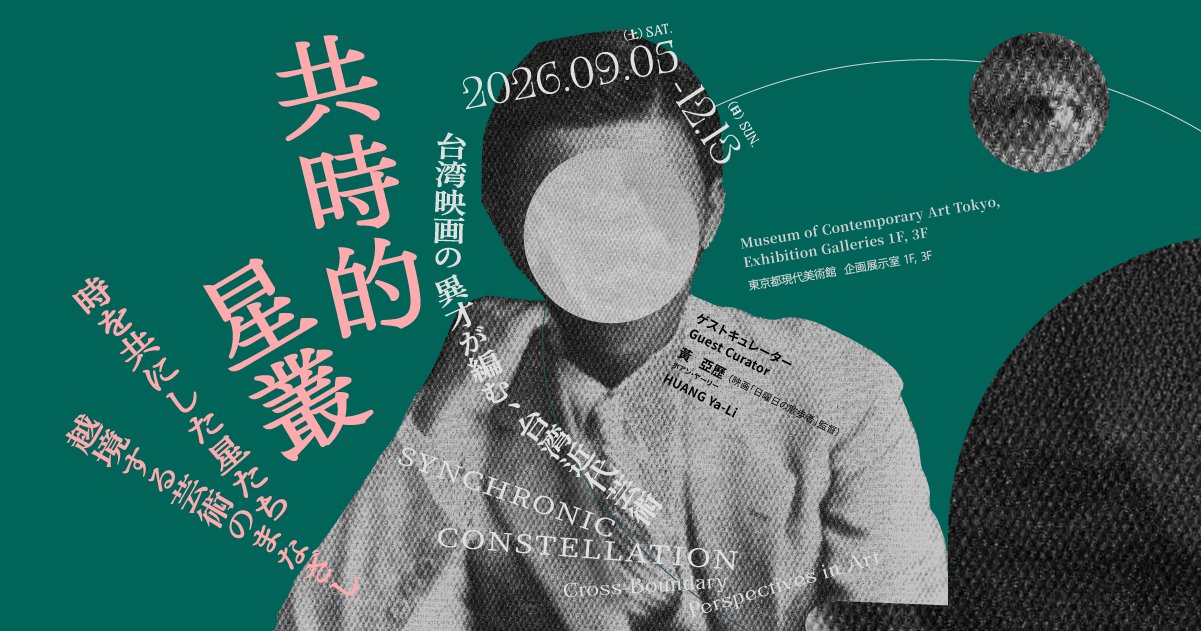
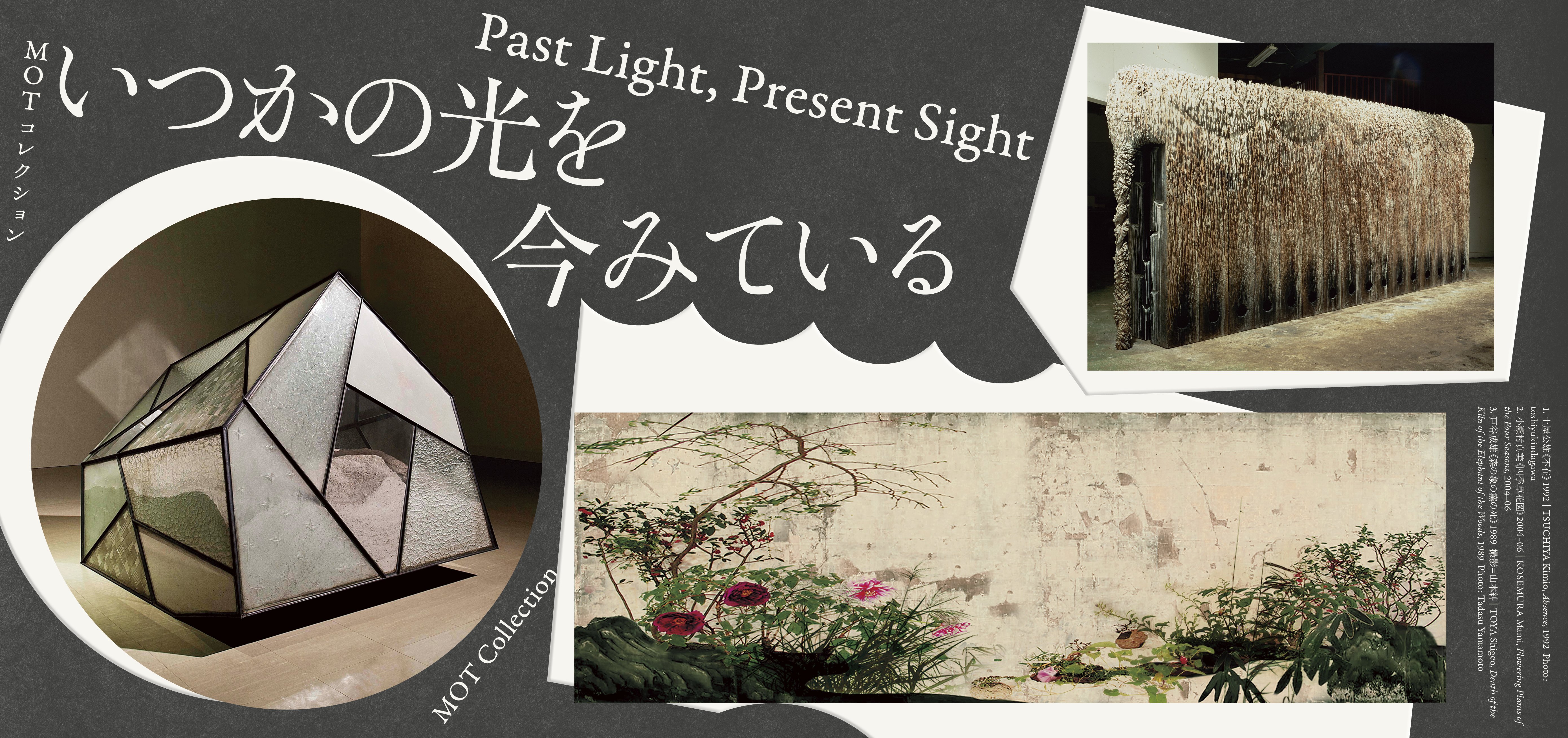
Same neighborhood · Kiyosumi-Shirakawa
Shows open on the same days as this one are listed first (regular closing days only).