Opens in 5 days#Painting
Renoir and Japan: Our Renoir — The Eternal Smile Japan Fell in Love With
Japanese original:
わたしたちのルノワール ー日本が恋した永遠のほほえみ
The show traces how Renoir went from a distant French painter to 'our Renoir' in Japan, through works brought over in the Meiji and Taisho eras, Japanese Western-style painters he influenced, and Renoir, Monet, Sisley, Pissarro and Cezanne paintings from museums and companies across the country.

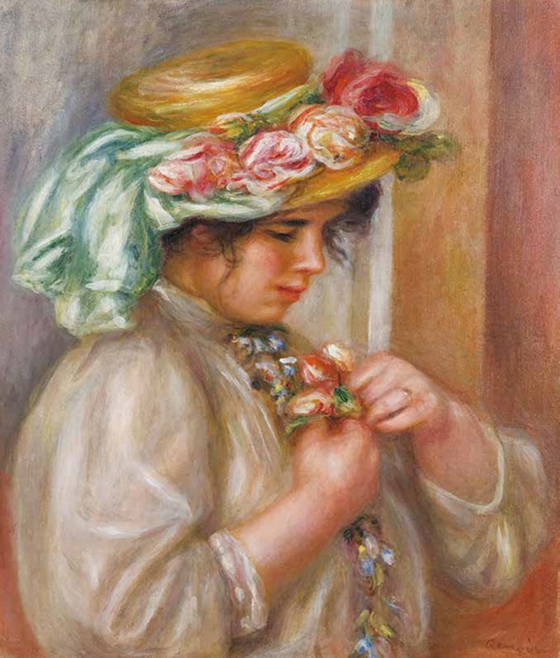
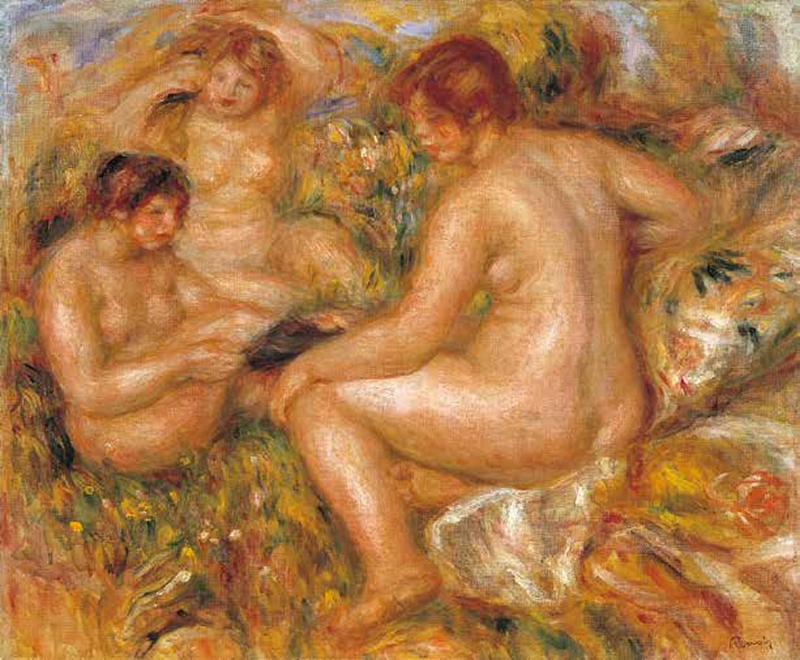
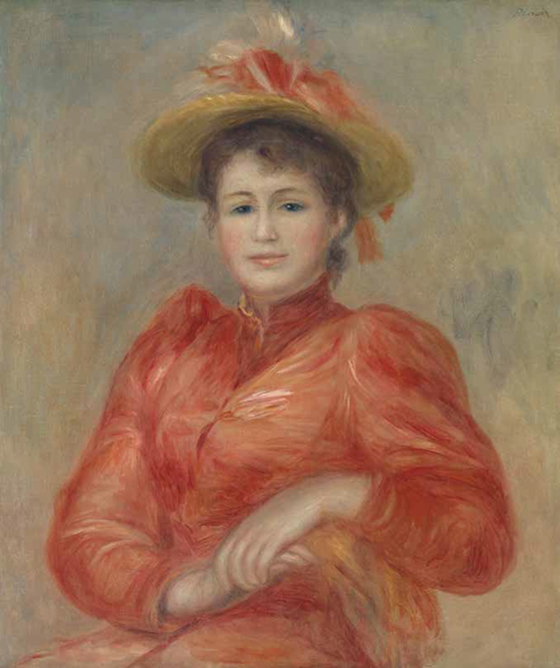
1 / 4 Image: Oita Prefectural Museum of Art ピエール=オーギュスト・ルノワール《レースの帽子の少女》1891年 ポーラ美術館蔵(大分展フライヤー)
- Dates
- Nov 23, 2026 – Jan 17, 2027
- Venue
- Oita Prefectural Museum of Art (大分県立美術館) · Oita大分県大分市寿町2番1号
Getting there
From the Fuchu Chuo (north) exit of JR Oita Station it is about 15 min on foot; or take an Oita Kotsu bus from stop 7 outside the station to Oasis Hiroba-mae, right by the museum
- Hours
- 10:00–19:00
- Admission
- General ¥1,600Original: 一般 1,600円
- Artists
- Pierre-Auguste Renoir
- Umehara Ryuzaburo
- Yamashita Shintaro
- Mitsutani Kunishiro
- Nakamura Tsune
- Claude Monet
- Alfred Sisley
- Camille Pissarro
- Paul Cezanne
The calendar entry starts on opening day and covers the whole run, so you won't need to look the dates up again. Please check opening hours and closing days before your visit.
Guided tours
Curator gallery talks: Saturdays 28 Nov, 5 Dec, 19 Dec, 26 Dec 2026 and 2, 9, 16 Jan 2027, and Sunday 17 Jan 2027. No registration needed. Time, language and capacity are not stated.
- TalkCurator gallery talks: Saturdays 28 Nov, 5 Dec, 19 Dec, 26 Dec 2026 and 2, 9, 16 Jan 2027, and Sunday 17 Jan 2027. No registration needed. Time, language and capacity are not stated.
Source: 大分県立美術館 わたしたちのルノワール展. From the venue's and organizer's announcements. Schedules, languages and fees can change; please check the official site before your visit.
Organizers and partners
Organized by: Oita Prefectural Museum of Art, TOS Television Oita
- Organized by
- Oita Prefectural Museum of Art
- TOS Television Oita
- Co-organized by
- Oita Godo Shimbun
- In cooperation with
- Pola Art Foundation, Pola Museum of Art
Organizing this exhibition? Write to us to add or correct anything here: hello@anthology-art.org
Knowledge cards
Yōga洋画Oil painting brought to Japan from Europe from the 1870s, also called Western painting, and the work Japanese painters made in it.Read moreClose
01About
In 1876 the Technical Fine Arts School opened as part of the Imperial College of Engineering, and the Italian painter Antonio Fontanesi was hired to teach painting. He stayed two years, and his students included early yōga painters such as Asai Chū and Koyama Shōtarō. The school closed in 1883; the Tokyo Fine Arts School, which opened in 1889, at first taught only nihonga and no Western painting. After the Meiji Restoration many Japanese went to Europe to learn Western culture, and yōga painters such as Kuroda Seiki, Fujishima Takeji, Yasui Sōtarō, and Foujita Tsuguharu all painted there.
02In the gallery
Notice how the painter uses light and dark color to show light falling on things.
Wall label terms in Japanese
- 洋画
- Yōga (Western-style painting)
- 油彩
- Oil
- 工部美術学校
- Technical Fine Arts School
- 日本画
- Nihonga
03Notes
Yōga is the oil painting Japanese painters learned from Europe, and many of them painted there.
This time, at Renoir and Japan: Our Renoir — The Eternal Smile Japan Fell in Love With —
Does the scene or the sitter look as if it is in Japan, or in Europe?
04Related
Pierre-Auguste RenoirPierre-Auguste Renoir (1841–1919)Pierre-Auguste Renoir (1841–1919) was a French painter and one of the founding members of Impressionism. In the summer of 1869 he painted beside Claude Monet at La Grenouillère, outside Paris, where short, quick brushstrokes and a brightened palette helped shape the Impressionist aesthetic; at the end of the 1870s he turned to the old masters in search of structure and permanence, and after a trip to Italy in 1881 his figures became more clearly outlined and more sculptural. In later life he lived mostly in the south of France and took up sculpture.Read moreClose
01Characteristics of his style
In Renoir's pictures, notice three features:
- faces and skin painted with fine, even brushstrokes, against looser brushwork in the background (Two Sisters (On the Terrace), A Girl with a Watering Can)
- light and shade broken into patches of colour that fall on clothes, ground and crowd (Bal du moulin de la Galette)
- from the 1880s, figures with clearer outlines and a sculptural quality, contrasting with the background (the left side of The Umbrellas, The Great Bathers)
02Periods and key works
1869: painting beside Monet at La Grenouillère
In 1869 Renoir and Claude Monet painted the same scene at La Grenouillère, a resort just outside Paris. With short, quick strokes and unmixed colours they recorded sunlight and the reflections on the water directly; to their contemporaries such pictures looked unfinished, like sketches. The Metropolitan Museum of Art considers that this painting campaign catalysed the Impressionist aesthetic.
La Grenouillère (1869) · Nationalmuseum, Stockholm
A group of men in suits and women in crinolines shelter under a tree on the small artificial island known as the Camembert or the flowerpot. Sunlight filters through the leaves and sparkles on the Seine; Renoir catches the moment in short, quick brushstrokes and colours straight from the tube.
Nationalmuseum, Stockholm, 1869Wikimedia Commons · Public Domain
1876–1878: large group-show pictures and portraits
In the mid-1870s Renoir painted Parisian modern life, such as the crowd at a Montmartre dance hall, and from 1876 also anecdotal scenes of women and children, with more regular brushwork than in his landscapes. His portraits attracted patrons of avant-garde taste: in 1879 he declined the invitation to the fourth Impressionist exhibition and returned to the Salon with Madame Georges Charpentier and Her Children, which was well received, and portraiture became a steady source of income.
Bal du moulin de la Galette (1876) · Musée d'Orsay, Paris
The Musée d'Orsay notes that Renoir included some of his friends, but cared above all about the lively, joyful atmosphere of this popular dance hall on the Butte Montmartre. The moving crowd, in both natural and artificial light, is painted with vibrant, coloured touches; the sense that forms are dissolving was one reason for the critics' negative reactions. It was shown at the third Impressionist exhibition in 1877 and passed to the State in 1896 through the bequest of Gustave Caillebotte.
Musée d'Orsay, Paris, 1876Wikimedia Commons · Public Domain A Girl with a Watering Can (1876) · National Gallery of Art, Washington, D.C.
The National Gallery of Art notes that from 1876 Renoir began to paint anecdotal scenes of women and children. Here the handling is more controlled and regular than in his landscapes, with even brushstrokes and delicate touches, especially in the face. Several identifications have been proposed for the girl, but the museum finds none convincing; a neighbourhood child is more likely, and a girl with similar curly blond hair, blue eyes and the same dress appears in other paintings by him.
National Gallery of Art, Washington, D.C., 1876Wikimedia Commons · CC0 Madame Georges Charpentier and Her Children (1878) · Metropolitan Museum of Art, New York
Commissioned by the publisher Georges Charpentier. His wife Marguerite wears an elegant gown made by Charles Frederick Worth; their three-year-old son Paul, following the fashion of the time, had not yet had his hair cut, and wears clothes very like those of his sister Georgette, who sits at left with the family dog. The Met's essay adds that the picture displays the Charpentiers' taste for Japanese art.
Metropolitan Museum of Art, New York, 1878Wikimedia Commons · CC0
1880–1883: a renewed search for structure and clarity
With financial security, Renoir grew sceptical of the durability of the Impressionist aesthetic, refused to take part in the Impressionist exhibition and turned to the old masters for an art of structure, craft and permanence. According to the Metropolitan Museum of Art, Luncheon of the Boating Party was his first painting in this vein: compared with Bal du moulin de la Galette, the figures are more solid and clearer, and their placement in space is better defined. Faces in this period, as in Two Sisters (On the Terrace), are painted precisely, while the backdrop keeps loose Impressionist brushwork.
Luncheon of the Boating Party (1880–1881) · The Phillips Collection, Washington, D.C.
The Phillips Collection notes that most of the models, all friends of the artist, have been identified: Caillebotte sits backward on his chair and stares across the table at Aline Charigot, Renoir's future wife, who coos at her terrier, while Alphonse Fournaise Jr., the restaurant owner's son, leans on the balcony railing surveying the scene. The picture unites figure painting, still life and landscape in one tightly composed image.
The Phillips Collection, Washington, D.C., 1880–1881Wikimedia Commons · Public Domain Two Sisters (On the Terrace) (1881) · Art Institute of Chicago, Chicago
The Art Institute of Chicago notes that, despite the title, the two were not sisters: Renoir paid unrelated models. The faces are painted with controlled, precise brushwork that creates a porcelain-like surface, in contrast with the diaphanous Impressionist backdrop of river, boats and blossoming trees beyond the terrace railing; the younger girl's flower-bouquet headdress is echoed in the brightly coloured skeins of yarn in the basket. The setting is the Restaurant Fournaise in Chatou, and the painting was shown at the Impressionist exhibition of 1882.
Art Institute of Chicago, Chicago, 1881Wikimedia Commons · Public Domain Dance at Bougival (1883) · Museum of Fine Arts, Boston
The Museum of Fine Arts, Boston notes that the open-air cafés of Bougival, a town on the Seine, were popular recreation spots for city dwellers, including the Impressionists. The café floor is littered with cigarettes, burnt matches and a small bouquet of flowers; an amateur boatman in a straw hat sweeps his stylish partner along in a waltz, and their gloveless hands, flushed cheeks and closeness suggest a sensuous subtext. Renoir, the son of a dressmaker and a tailor, delighted in contemporary fashion details such as the woman's red bonnet trimmed with purple fruits.
Museum of Fine Arts, Boston, 1883Wikimedia Commons · Public Domain
1881–1887: line and form after Italy
In 1881–82 Renoir travelled to Italy, where he was inspired by Raphael's frescoes in the Villa Farnesina in Rome and by ancient Roman wall paintings in Naples; he also admired Jean-Auguste-Dominique Ingres, especially his drawings, and on the way back stayed a long time with Paul Cézanne in Provence. He felt that classical art had a purity and grandeur that his own work lacked. Afterwards his figures have firmer outlines and a stronger sense of three-dimensional form, and a series of sculptural nudes in a vague landscape culminated in The Great Bathers.
The Umbrellas (約 1881–1886) · National Gallery, London
The National Gallery notes that the picture was painted in two stages about four years apart. The mother and her two daughters on the right and the woman in profile in the centre (about 1880–81) are painted with delicate feathery touches and without crisp outlines; the young woman holding a bandbox on the left and the man behind her were repainted in 1884–85 in a more linear style, with clear outlines, precisely drawn features and more even brushwork. The fashions show the interval too: the clothes on the right came into vogue around 1881, while the cut of the young woman's dress on the left only became fashionable around 1885.
National Gallery, London, c. 1881–1886Wikimedia Commons · Public Domain The Great Bathers (1884–1887) · Philadelphia Museum of Art, Philadelphia
The Philadelphia Museum of Art notes that the picture shows a fleeting moment in which one bather playfully threatens to splash a companion, yet it has a timeless, monumental quality: the figures are sculptural against a shimmering landscape, and the careful application of dry paint reflects the tradition of seventeenth- and eighteenth-century French painting. Renoir laboured over it for three years in an attempt to reconcile that tradition with modern painting, making numerous preparatory drawings for individual figures and at least two full-scale multifigure drawings. Faced with criticism of his new style, an exhausted Renoir never again devoted such painstaking effort to a single work.
Philadelphia Museum of Art, Philadelphia, 1884–1887Wikimedia Commons · Public Domain
1892: Young Girls at the Piano, bought by the State
In the early 1890s Renoir's friends and admirers objected that the French State had never bought anything from the painter, then almost fifty. In 1892 Stéphane Mallarmé, who knew and admired him, and Roger Marx, a young Beaux-Arts official open to new trends, took steps to bring Impressionist works into the national museums, and Young Girls at the Piano was acquired after an informal commission and placed in the Musée du Luxembourg. Renoir painted several finished versions of the composition; the Musée d'Orsay notes that such concentrated effort on a single composition remains unique, and suggests that he may have wanted to give the museums a perfectly accomplished work.
Young Girls at the Piano (1892) · Musée d'Orsay, Paris
The Musée d'Orsay notes that strong, supple drawing clearly defines the figures while the palette is given free rein to lyricism. The subject recalls a classical theme popular with eighteenth-century French painters, notably Jean-Honoré Fragonard; Renoir sought to paint an ideal world of graceful young girls but, scorning mere imitation, set it in an elegant, comfortably furnished bourgeois interior of his own time. There are three other finished versions of the same composition (one in the Metropolitan Museum of Art, New York), an oil sketch and a pastel of the same size.
Musée d'Orsay, Paris, 1892Wikimedia Commons · Public Domain
1916: bronze sculpture with Guino
In his old age Renoir lived mostly on the Mediterranean coast of southern France and took up sculpture: the Metropolitan Museum of Art's essay says he hired a young assistant, Richard Guino, to make models after his designs. The museum lists the 1916 bronze Washerwoman under Auguste Renoir and Richard Guino.
Washerwoman (1916) · Metropolitan Museum of Art, New York
A bronze about 34 cm high. The Metropolitan Museum of Art lists the makers as Auguste Renoir and Richard Guino; according to the museum's essay, when Renoir took up sculpture late in life his young assistant Guino made models after his designs.
Metropolitan Museum of Art, New York, 1916The Metropolitan Museum of Art · CC0
03Where to see his work
Principal collections
Musée d'Orsay Paris, France
Its holdings include Bal du moulin de la Galette (1876) and Young Girls at the Piano (1892).
Nationalmuseum Stockholm, Sweden
Its holdings include La Grenouillère (1869).
Other collections
The Metropolitan Museum of Art New York, USA
Its holdings include Madame Georges Charpentier and Her Children (1878) and Washerwoman (1916, listed by the museum under Auguste Renoir and Richard Guino).
National Gallery of Art Washington, D.C., USA
Its holdings include A Girl with a Watering Can (1876).
The Phillips Collection Washington, D.C., USA
Its holdings include Luncheon of the Boating Party (1880–1881).
Art Institute of Chicago Chicago, USA
Its holdings include Two Sisters (On the Terrace) (1881).
Museum of Fine Arts, Boston Boston, USA
Its holdings include Dance at Bougival (1883).
National Gallery London, UK
Its holdings include The Umbrellas (about 1881–86).
Philadelphia Museum of Art Philadelphia, USA
Its holdings include The Great Bathers (1884–1887).
04In the gallery
First look at the faces and clothes: are the strokes fine and even, or broken into patches of colour? Then see whether the figures' outlines are clear or dissolve into the background.
Notes
Compare the figures with the background: which appears more solid?
This time, at Renoir and Japan: Our Renoir — The Eternal Smile Japan Fell in Love With —
Where are the contours clearer, in the figures or in the landscape?


