Opens in 8 days
Edward Gorey: Secret Messages
Japanese original:
エドワード・ゴーリー 秘密のメッセージ
Edward Gorey (1925–2000) was a picture-book author who drew eerie little stories in dense monochrome line. The exhibition presents about 300 works: original drawings for books and illustrations, posters and publications, some shown in Japan for the first time. Five chapters cover his own books, illustrations for other writers, book design and stage work.
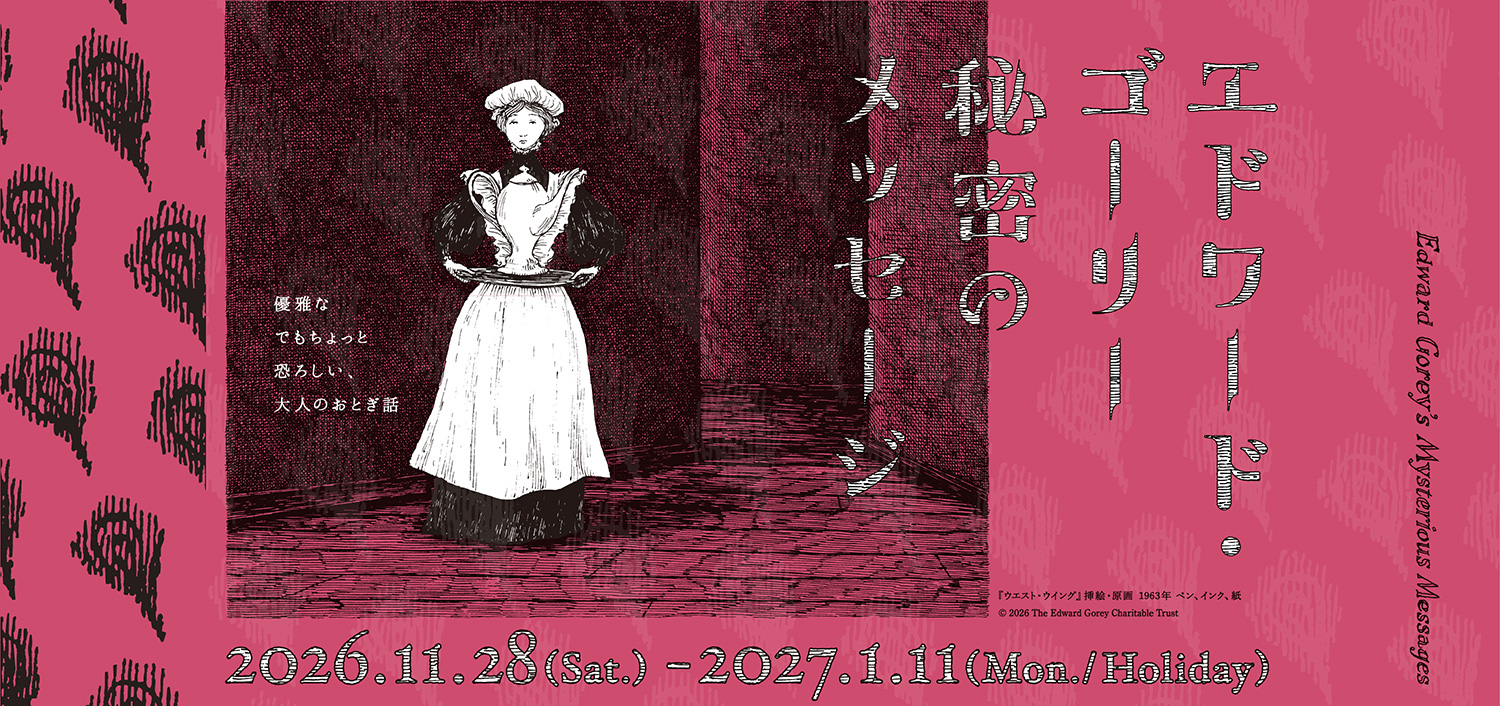
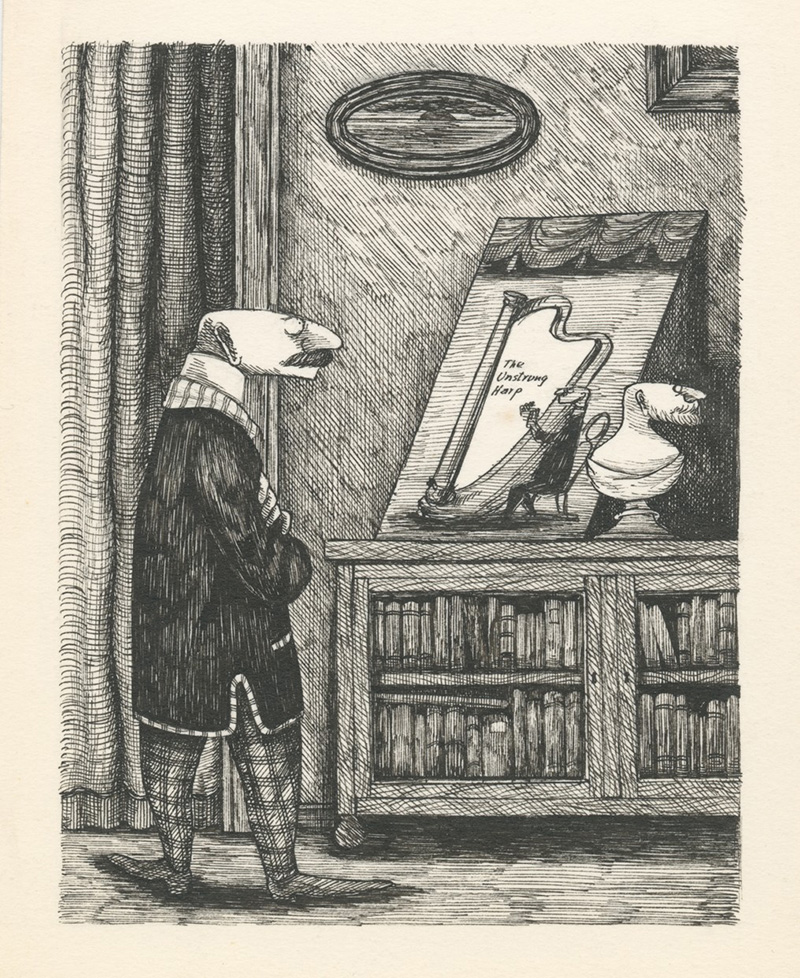
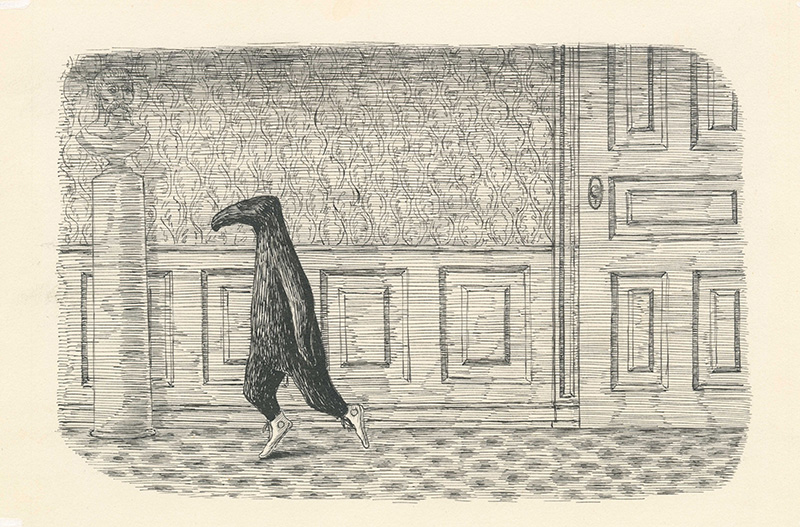
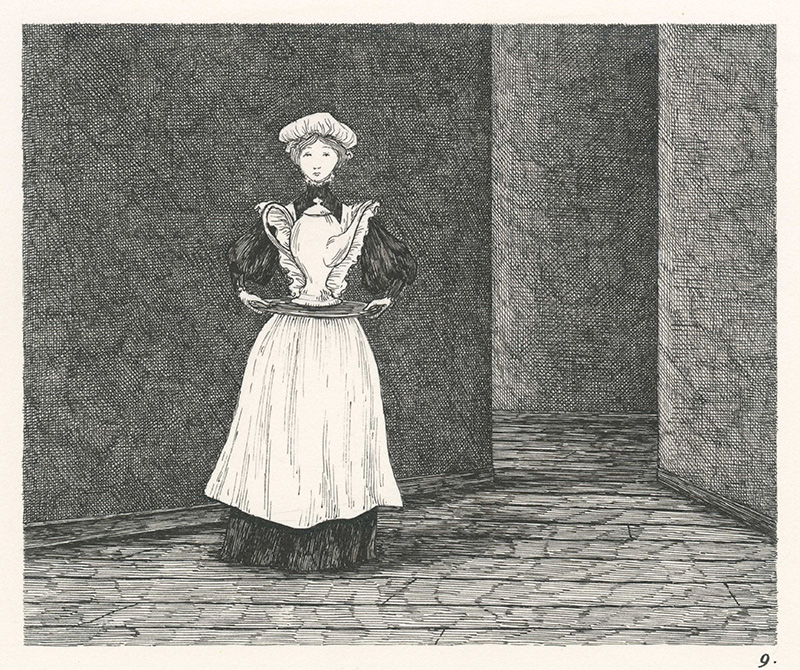
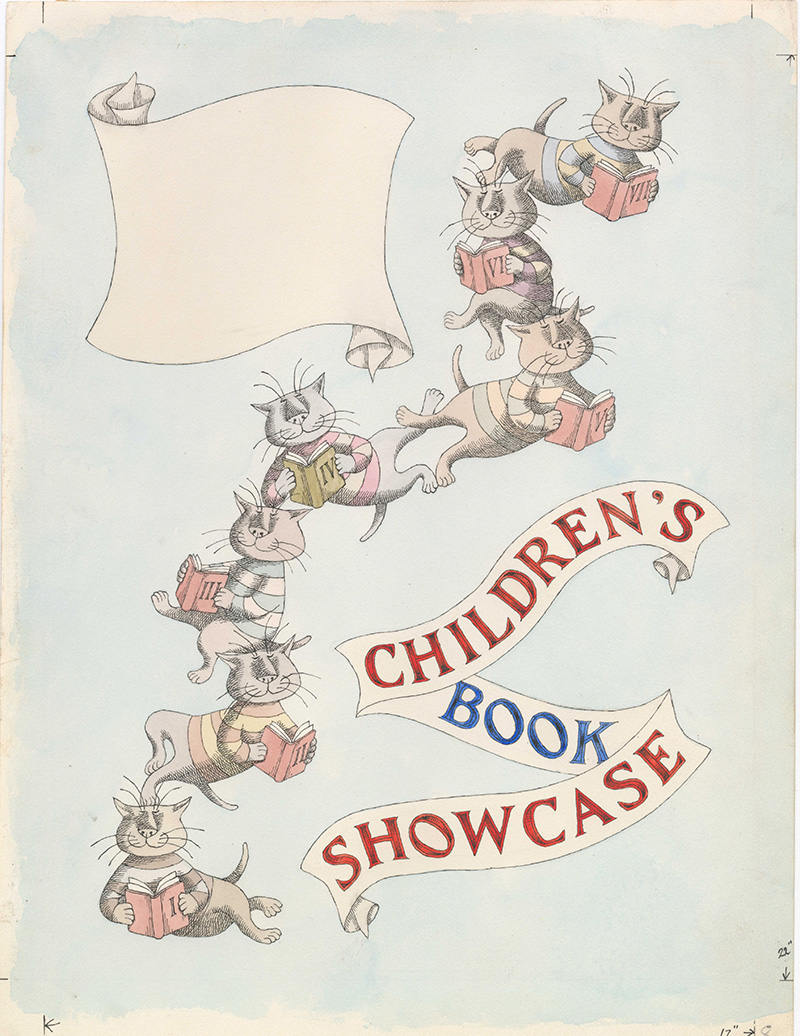
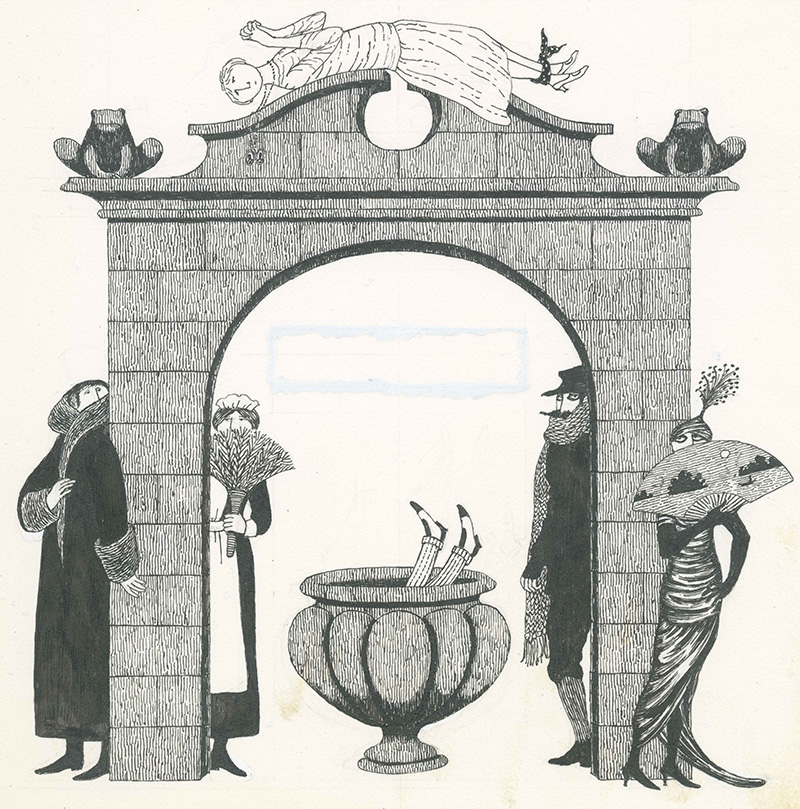
1 / 6 Image: Shizuoka City Art Museum
- Dates
- Nov 28, 2026 – Jan 11, 2027
- Venue
- Shizuoka City Art Museum (静岡市美術館) · Shizuoka静岡県静岡市葵区紺屋町17-1 葵タワー3階
Getting there
From the north exit of JR Shizuoka Station it is about 3 minutes on foot through the underpass, or about 5 minutes from Shizutetsu Shin-Shizuoka Station; about 1 hour by Tokaido Shinkansen Hikari from Tokyo or Nagoya
- Hours
- 10:00–19:00 · Closed: Mon
- Admission
- General ¥1,500Original: 一般 1,500円
- Artists
- Edward Gorey
The calendar entry starts on opening day and covers the whole run, so you won't need to look the dates up again. Please check opening hours and closing days before your visit.
Tickets and booking
No booking needed; advance tickets on sale until Nov 27.
No booking needed.
Advance tickets · ¥1,300
On sale until Nov 27, 2026
For visits Nov 28, 2026 – Jan 11, 2027
From the venue's and organizer's announcements, checked Nov 19, 2026. Tickets can sell out early or change; please check the official page before you buy. Source: 静岡市美術館:エドワード・ゴーリー 秘密のメッセージ
Organizers and partners
Organized by: Shizuoka City Art Museum, Shizuoka City, Shizuoka City Cultural Promotion Foundation, Shizuoka Daiichi Television
- Organized by
- Shizuoka City Art Museum
- Shizuoka City
- Shizuoka City Cultural Promotion Foundation
- Shizuoka Daiichi Television
- In cooperation with
- Edward Gorey Charitable Trust
- The Edward Gorey House (Cape Cod)
Organizing this exhibition? Write to us to add or correct anything here: hello@anthology-art.org
Knowledge cards
Illustration (sashie)挿絵・イラストレーションPictures made for printed matter such as books, magazines, newspapers, and sheet music; in Japan they were called sashie, and the word “illustration” came into use from the late 1950s.Read moreClose
01About
Sashie are pictures placed in text-based media such as magazines, newspapers, and books, for example to help readers understand. In the Edo period, ukiyo-e artists drew black-and-white illustrations for kusazōshi and yomihon; after the Meiji Restoration, ukiyo-e artists were hired to illustrate newspaper serial novels, and Tsukioka Yoshitoshi and his pupil Mizuno Toshikata established that genre. In the 1900s, as printing moved from woodblocks to photomechanical plates, it became easier for Western-style painters to take up illustration, and when the magazine Shirakaba featured Aubrey Beardsley in 1911, many illustrators were influenced. From the late 1920s, as magazines spread, painters such as Nakahara Jun'ichi and Fukiya Kōji worked as illustrators full-time. Takehisa Yumeji won wide popularity through magazines, poem-picture books, and sheet-music covers, and his women, unlike earlier ukiyo-e-style illustrations, were taken up by young people as reflecting a modern sense of beauty. Around 1970, Ishihara Gōjin and others filled the large illustrated-explainer pages of boys' magazines with monsters and strange phenomena drawn in minute detail. The word “illustration” took root after the war; in the 1960s it became a genre independent of graphic design, and illustrators became an independent profession from the 1970s on.
02In the gallery
On a cover or a page, look at how the picture meets the title and the text: does it leave room for the words, or make the lettering part of the picture?
Wall label terms in Japanese
- 挿絵
- Sashie (illustration)
- 口絵
- Frontispiece (kuchi-e)
- イラストレーション
- Illustration
- 装幀
- Book design (sōtei)
- 夢二式美人
- Yumeji-style beauty
03Notes
An illustration sits beside words, leaving room for them or drawing them into the picture.
This time, at Edward Gorey: Secret Messages —
Beside what words, song, or story did an illustration first sit? What gave you the idea?
