Opens in 64 days#Painting
Takehisa Yumeji: Creator Who Shaped His Era
Japanese original:
竹久夢二 時代を創る表現者
Takehisa Yumeji (1884–1934) worked across painting, book design, commercial design and writing from the end of the Meiji era to the start of Showa. His images carried traces of Edo, a longing for foreign lands and the modern city, and the "Yumeji-style" women and his designs are still loved today. The show gathers works from Yumeji collections across Japan, including his masterpiece Kurofuneya, lent out for the first time in about 40 years, with Japanese-style and oil paintings, book and small-goods designs and scrapbooks, to see him afresh as an artist who responded to his time.
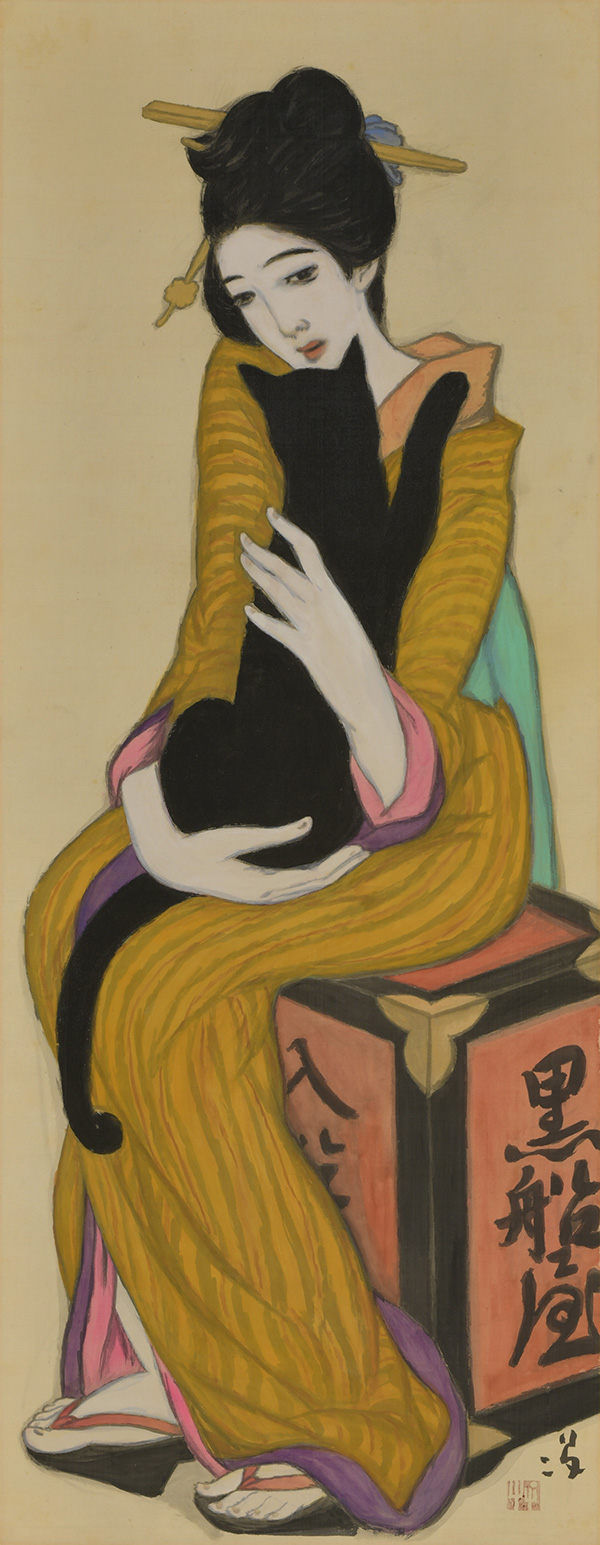


1 / 4 Image: 静岡市美術館 竹久夢二《黒船屋》 1919年 竹久夢二伊香保記念館
- Dates
- Jan 23 – Mar 28, 2027
- Venue
- Shizuoka City Art Museum (静岡市美術館) · Shizuoka静岡県静岡市葵区紺屋町17-1 葵タワー3階
Getting there
From the north exit of JR Shizuoka Station it is about 3 minutes on foot through the underpass, or about 5 minutes from Shizutetsu Shin-Shizuoka Station; about 1 hour by Tokaido Shinkansen Hikari from Tokyo or Nagoya
- Hours
- 10:00–19:00 · Closed: Mon
- Artists
- Organized by
- Shizuoka City Art Museum
- Shizuoka City
- Shizuoka City Cultural Promotion Foundation
- Shizuoka Shimbun and Shizuoka Broadcasting System
The calendar entry starts on opening day and covers the whole run, so you won't need to look the dates up again. Please check opening hours and closing days before your visit.
Tickets and booking
Advance tickets on sale from Dec 1.
Advance tickets · ¥1,400
On sale from Dec 1, 2026
From the venue's and organizer's announcements, checked Nov 20, 2026. Tickets can sell out early or change; please check the official page before you buy. Source: 静岡市美術館:竹久夢二 時代を創る表現者
Entry notes
Admission on the day is 1,600 yen for adults and 1,200 yen for university and high school students and visitors aged 70 and over; junior high school students and younger are free. Advance tickets (on sale 1 December 2026 to 22 January 2027) cost 1,400 yen and 1,000 yen respectively, and the advance price also applies to groups of 20 or more on the day. Advance and general advance pair tickets are sold at the museum (counter and online tickets) and through ticket agencies; there are no pair tickets on the day. Details of online tickets will be announced later.
- Admission on the day is 1,600 yen for adults and 1,200 yen for university and high school students and visitors aged 70 and over; junior high school students and younger are free. Advance tickets (on sale 1 December 2026 to 22 January 2027) cost 1,400 yen and 1,000 yen respectively, and the advance price also applies to groups of 20 or more on the day. Advance and general advance pair tickets are sold at the museum (counter and online tickets) and through ticket agencies; there are no pair tickets on the day. Details of online tickets will be announced later. (Source: 静岡市美術館:竹久夢二 時代を創る表現者, 2026)
- The exhibition runs from 23 January to 28 March 2027, with a change of works between the first part (23 January to 14 February) and the second (16 February to 28 March). Open 10:00–19:00 (last entry to the galleries 30 minutes before closing); closed on Mondays and on 23 March, and open on 22 March. (Source: 静岡市美術館:竹久夢二 時代を創る表現者, 2026)
From the organizer's announcements and press reports. Arrangements can change; please check the official site before your visit.
Knowledge cards
Retrospective exhibitions回顧展A retrospective brings together work and records from across an artist's career so that a body of work can be seen in sequence and from more than one angle.Read moreClose
01About
A retrospective can place early and later works, different media, sketches, photographs or other records in relation to one another. The Tokyo Metropolitan Art Museum describes its Tada Minami exhibition as a large-scale retrospective that surveys about seventy years of work through paintings, sculptures, light works, architectural parts, photographs and sketches. The National Museum of Western Art describes its Turner exhibition as a retrospective arranged by themes and a loose chronology, with contemporary works placed beside Turner's. This makes comparison more useful than hunting for a single representative piece. When you visit one, move back and forth between periods and ask what each change of material or setting does to your view.
02In the gallery
Start with one early and one later work, then compare their material, scale, pace and surroundings.
03Notes
Compare changes across periods, materials and ways of working.
This time, at Takehisa Yumeji: Creator Who Shaped His Era —
What has changed, and what has stayed with the artist?
04Related
Bijinga (pictures of beautiful women)美人画Pictures whose subject is the beauty of women, in looks or in spirit; the name was born in Japan, and many follow on from the ukiyo-e of the Edo period.Read moreClose
01About
Women have been painted since early times, but they came to be painted in great numbers in the ukiyo-e of the Edo period, when such pictures were called bijin-e or onna-e. In ukiyo-e, what mattered was less whether the picture looked like the woman herself than which artist's type she was drawn in: Suzuki Harunobu's slight, girlish women, Torii Kiyonaga's tall women with long limbs, Kitagawa Utamaro's close-up busts. In modern nihonga after the Meiji era, bijinga became the name of a genre, and Kaburaki Kiyokata in Tokyo and Uemura Shōen in Kyoto were spoken of together as “Shōen in the west, Kiyokata in the east.” In the Taishō era Takehisa Yumeji joined an ukiyo-e-like manner to Taishō romanticism, and his women with large, wistful eyes, called Yumeji-style beauties, won wide popularity.
02In the gallery
Look beyond the face: the pattern of the kimono, the hairstyle, what she holds, the flowers and grasses around her. Which of them tell you the season, or how she lives?
03Notes
In bijinga, what mattered was not likeness to the sitter but which painter's type the figure followed.
This time, at Takehisa Yumeji: Creator Who Shaped His Era —
Where do you find the beauty in a bijinga: in the face, or in the gesture and dress?