Out of Town
Taichung Winter Exhibitions 2026–27Four museums, eight exhibitions, October to May
Chosen by our editor and checked against each venue's official site. No paid listings. About this anthology
1 / 4 Image: Taichung Art Museum
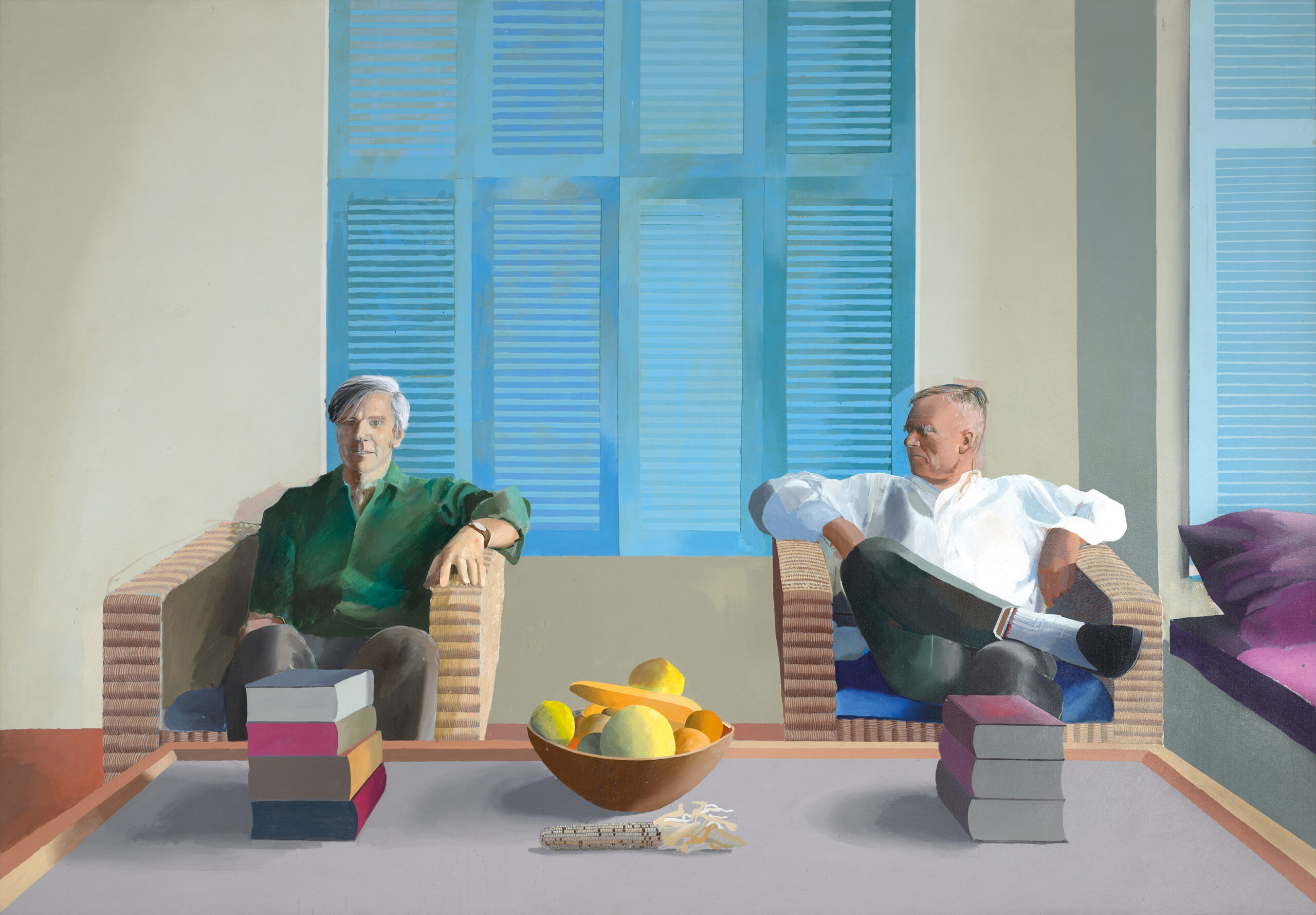
In David Hockney's painting, the writer Christopher Isherwood turns to look at the partner sitting beside him.
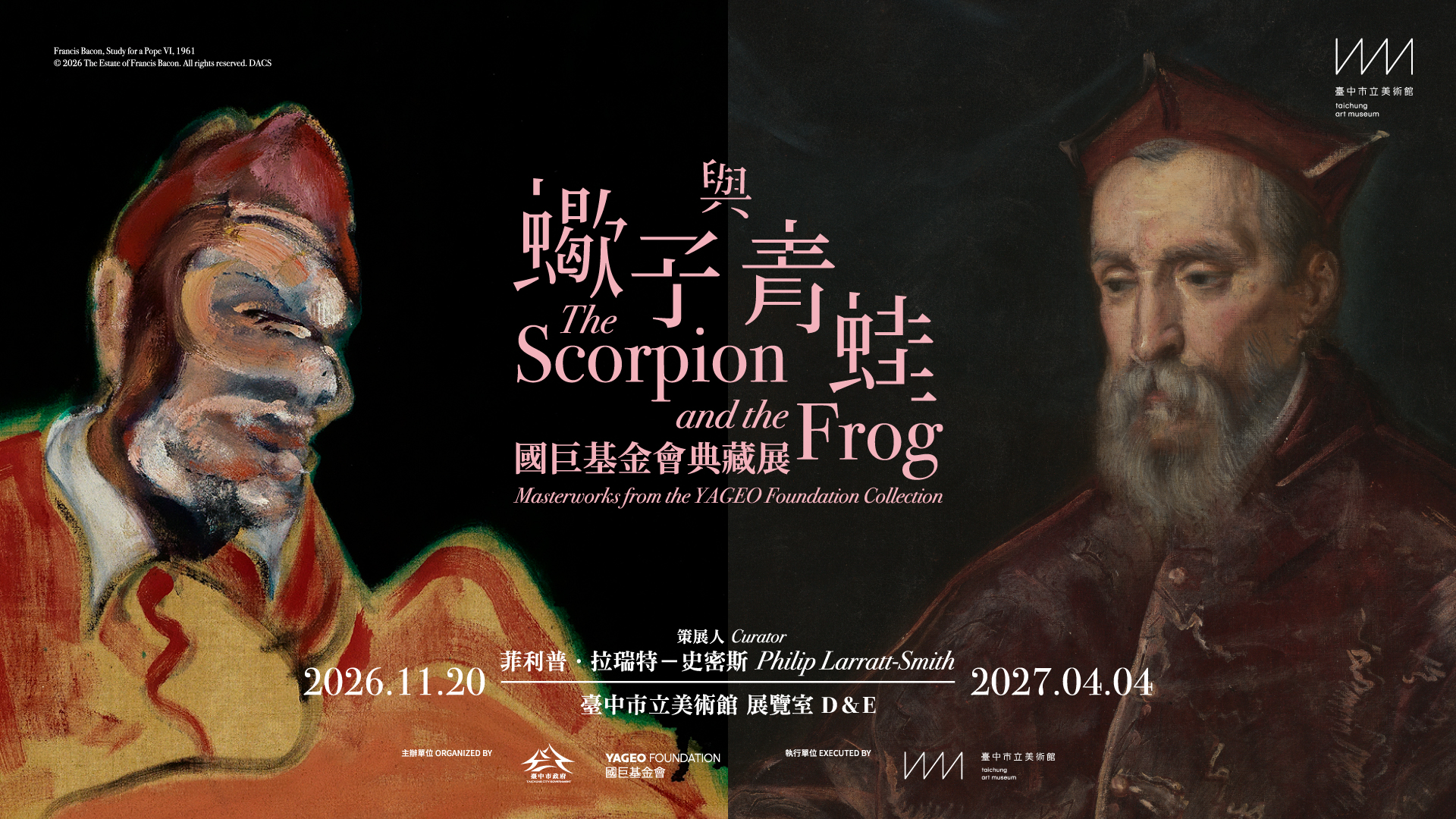
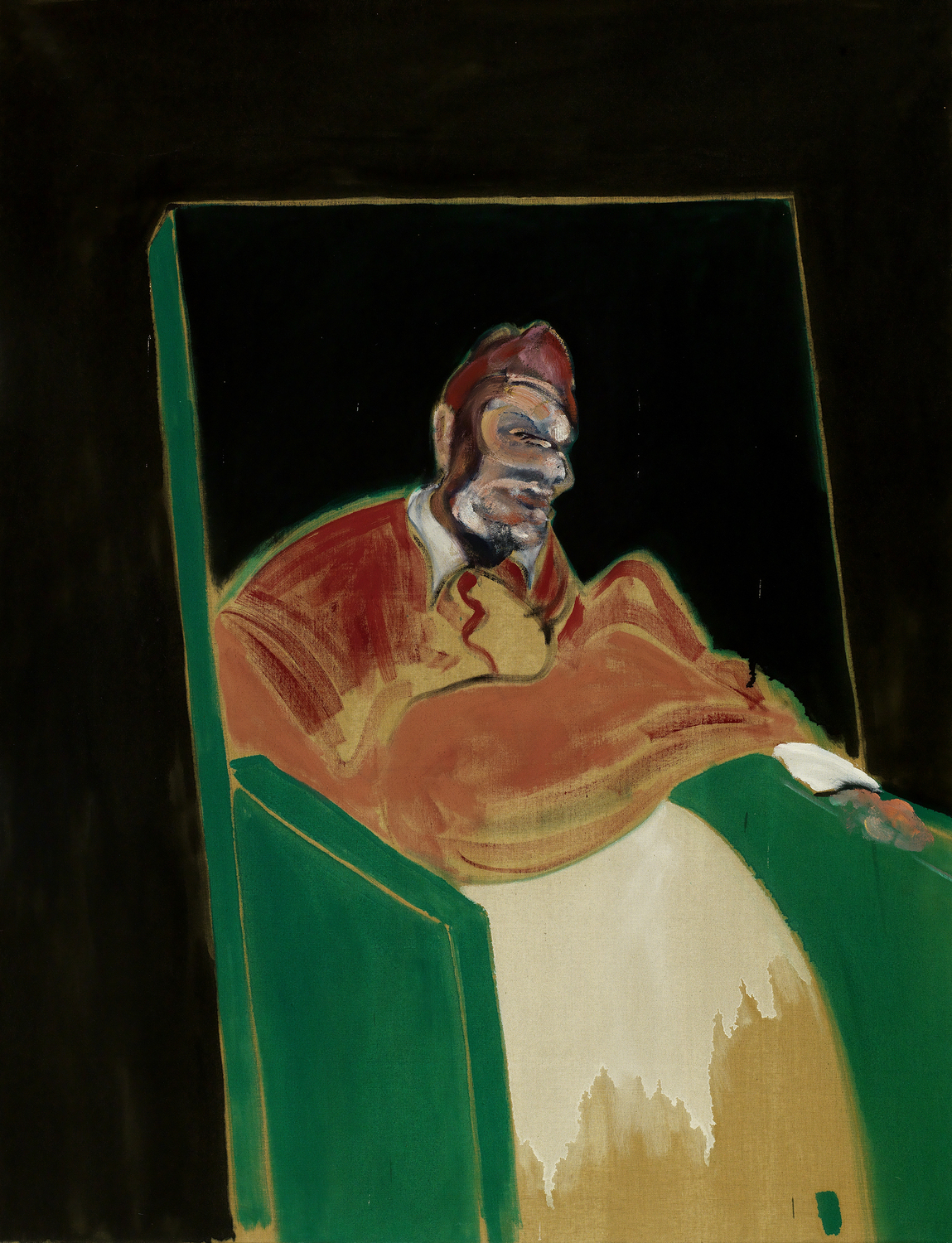
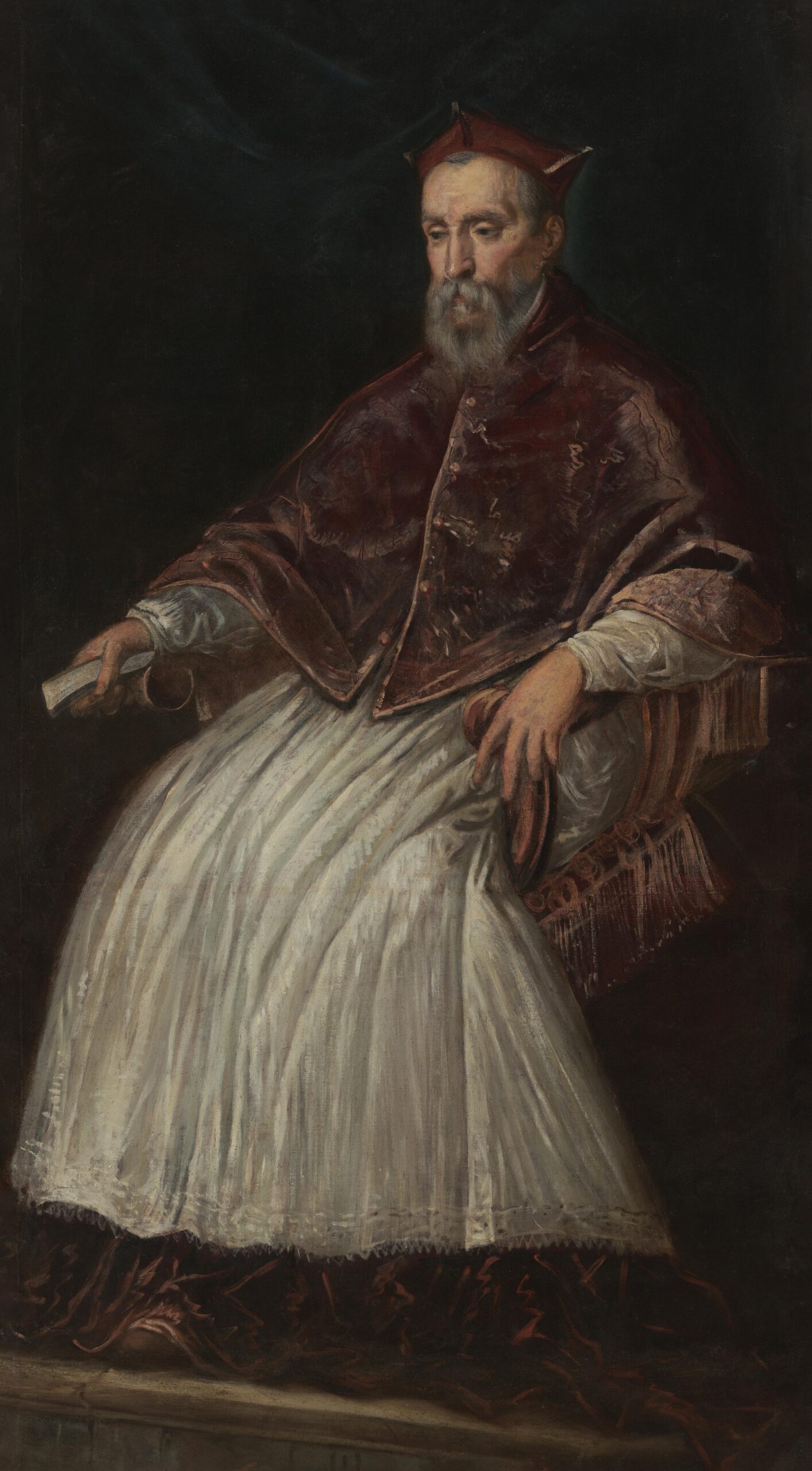
The Taichung Art Museum's The Scorpion and the Frog: Masterworks from the YAGEO Foundation Collection draws 66 works from the foundation's collection, from the Renaissance to the present, 55 of them shown in Taiwan for the first time. The artists include Artemisia Gentileschi, Klimt, Sanyu, Picasso, Rothko, Warhol, Richter, Jeff Koons and Hiroshi Sugimoto.
The title comes from a Russian fable: the scorpion asks the frog to carry it across the river, cannot go against its nature, stings the frog on the way, and both go under. The museum says the frog stands for reason and morality, the scorpion for desire, fate and human nature. The curator, Philip Larratt-Smith, is based in New York and since 2019 has been curator of the Easton Foundation, which looks after the legacy of Louise Bourgeois; here he sets works centuries apart against each other instead of ordering them by period and type.
Christopher Isherwood and Don Bachardy, which the museum calls the masterpiece among Hockney's double portraits, is also shown in Taiwan for the first time. It shows the writer Isherwood and his partner Bachardy. The museum says the two sit apart yet lean on each other, mirroring the way reason and instinct rise and fall.
Each man sits in his own chair. Isherwood turns his head to look at Bachardy; Bachardy looks out of the picture.
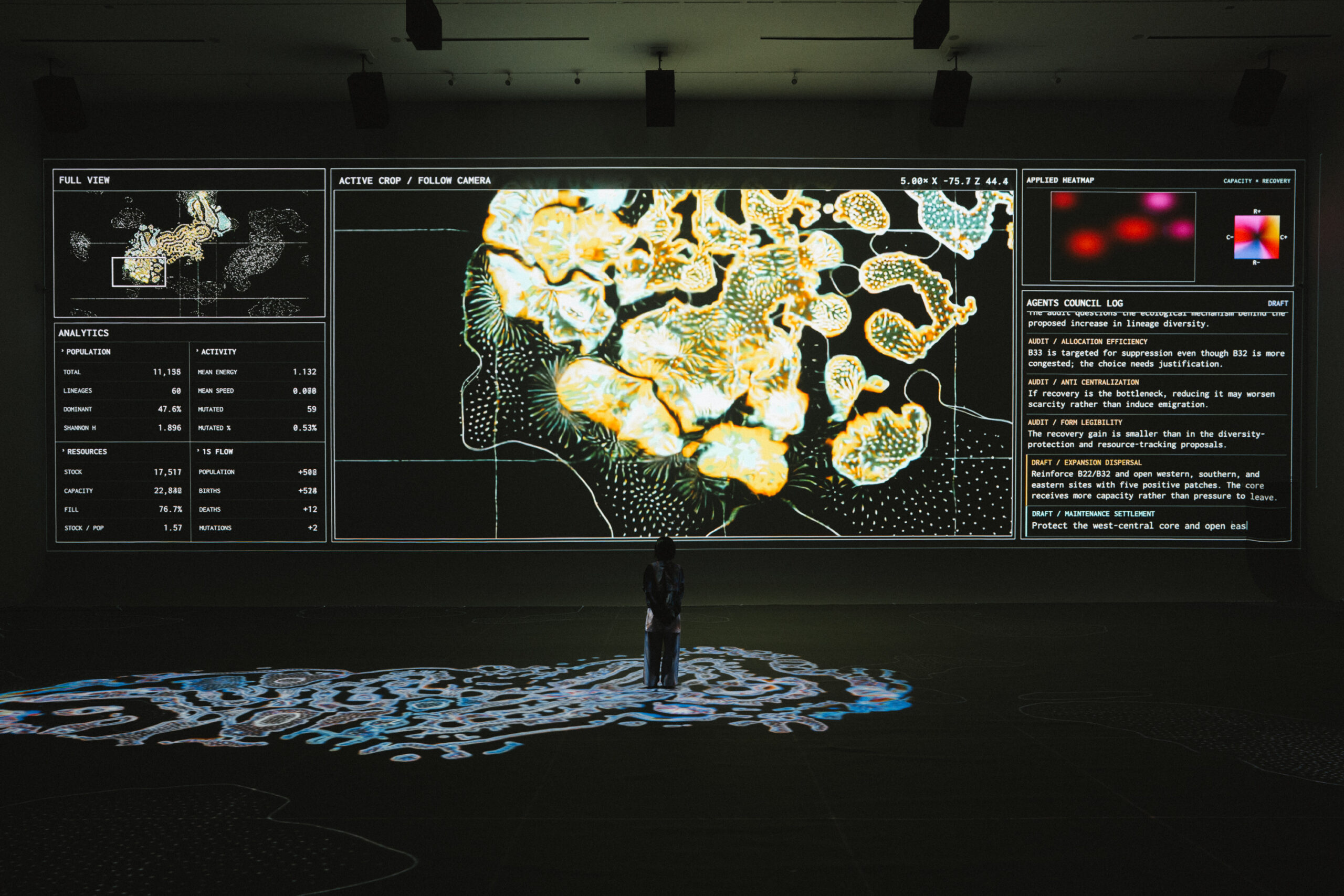
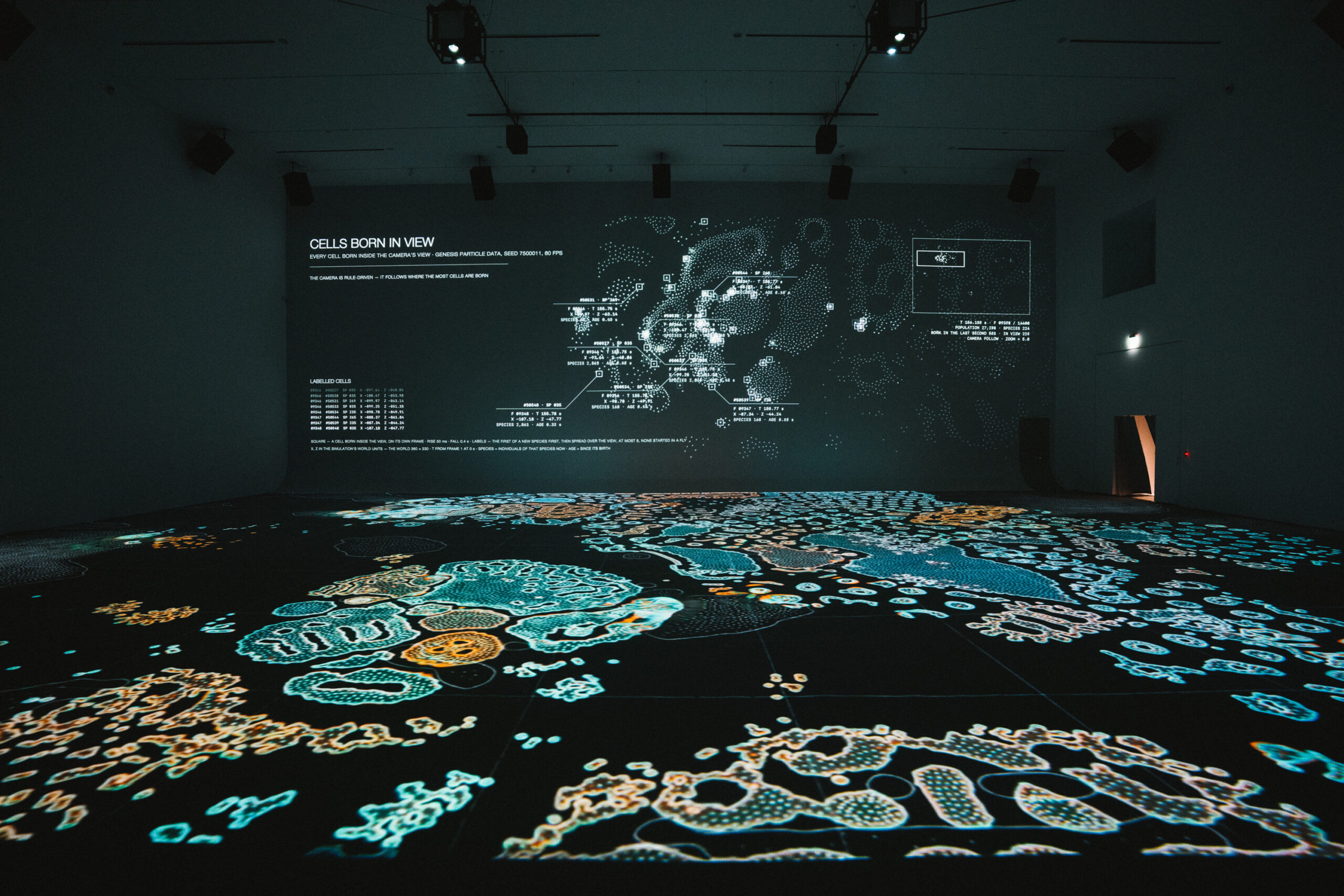
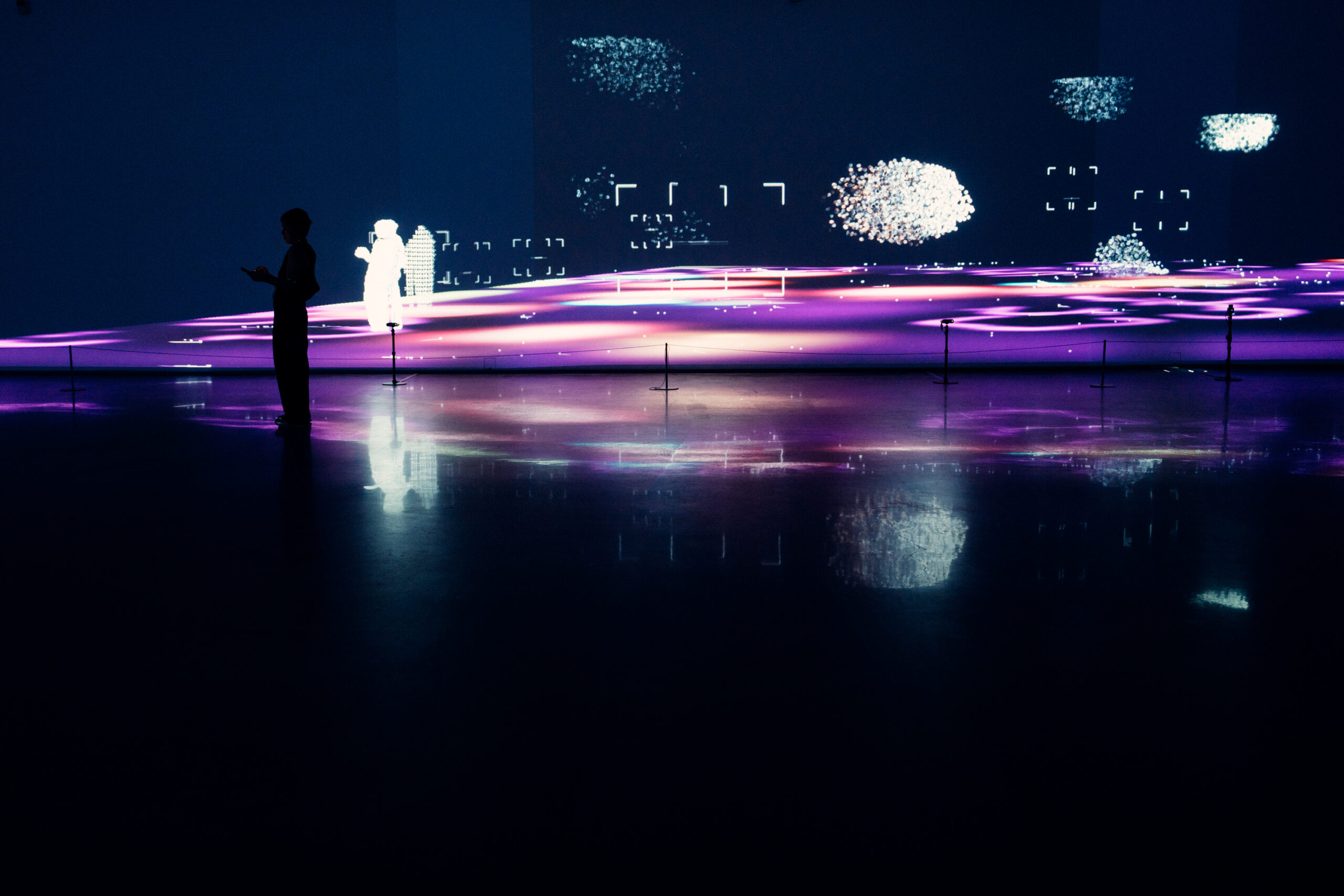
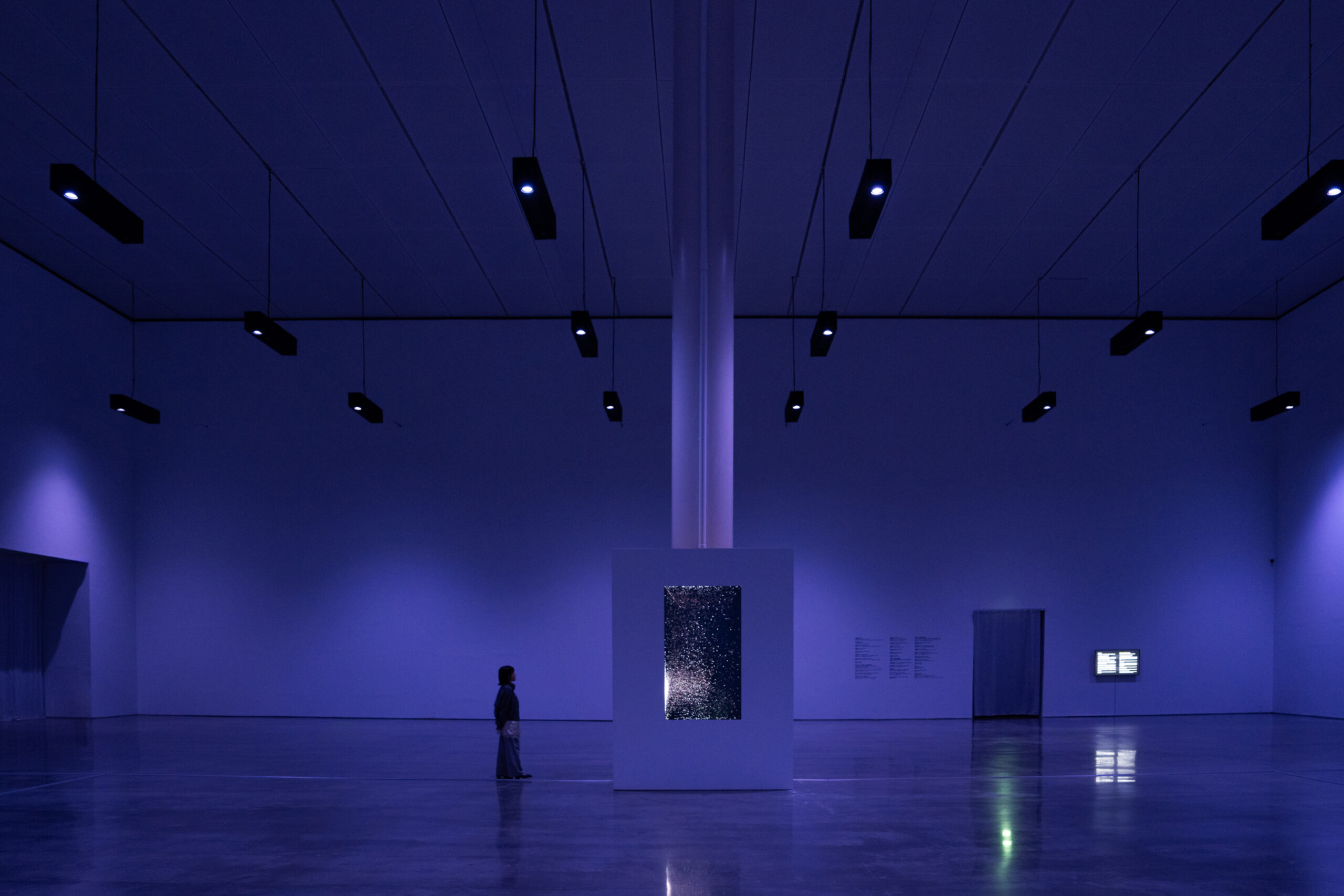
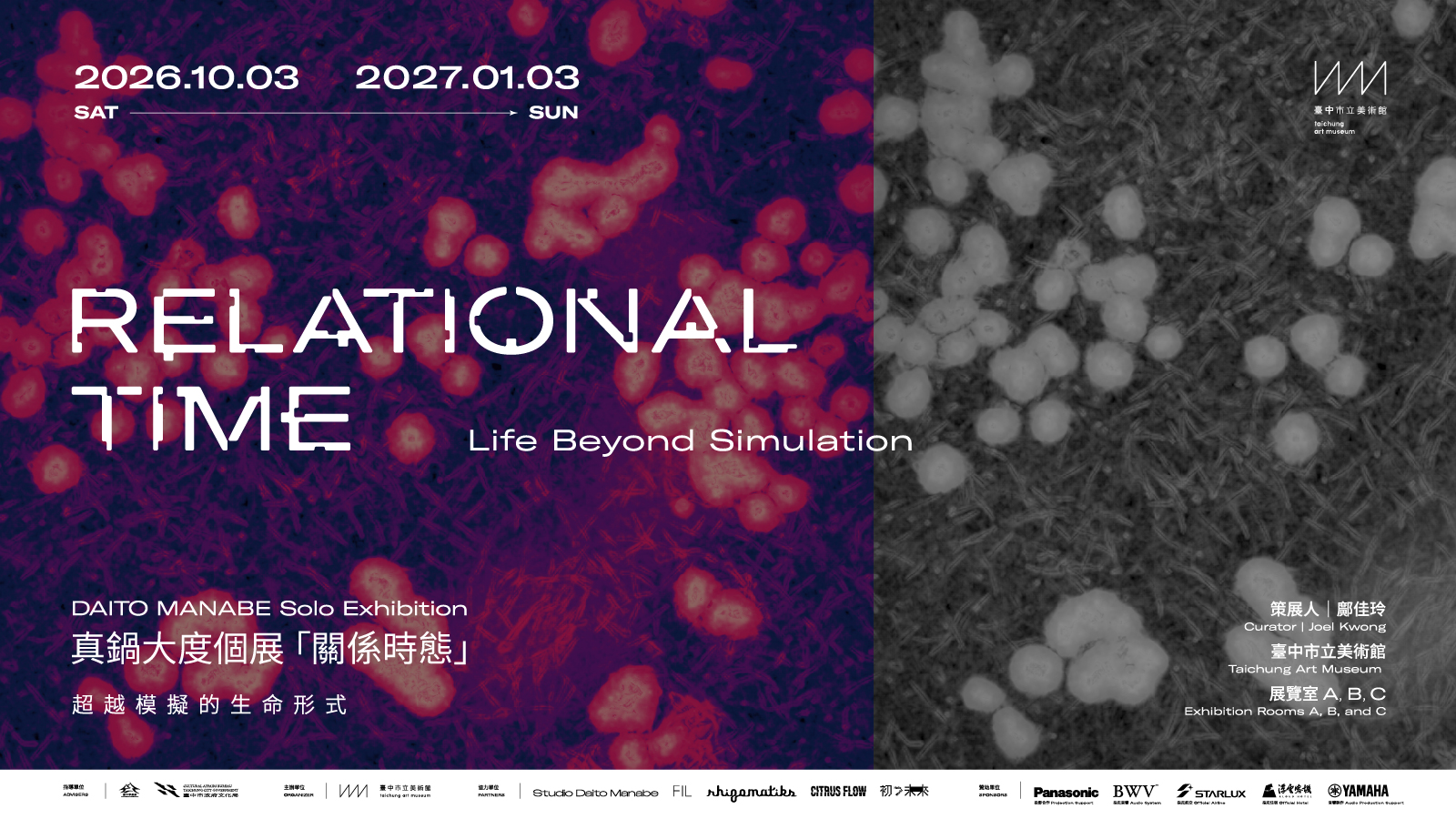
1 / 5 Image: Taichung Art Museum 「關係時態」—超越模擬的生命形式。圖片來源:臺中市立美術館。攝影:尖蚪映畫工作室
The work Daito Manabe has made for the Taichung Art Museum remembers where you stopped.
Daito Manabe's solo exhibition at the Taichung Art Museum is called Relational Time. The museum's text begins with a contrast: a machine can simulate a thousand futures in a second, while a person needs time to build trust, to hesitate, to heal and to remember. The exhibition proposes that time itself is born of relationships.
Daito Manabe is an artist, a programmer and a composer. For more than twenty years he has experimented across artificial synesthesia, machine learning and systems of many autonomous agents, always asking the same thing: how relationships are built in a computational environment. In his early works he turned movement, muscle activity and physiological signals into sound and image; later he reached into neural networks and brain organoids, small pieces of brain tissue grown in a laboratory.
The exhibition is made of three connected environments: a society of autonomous agents generated in real time, a shifting ecology formed by people and machines interacting, and a network of sound flowing through the building. The system keeps remembering, adjusting and responding. The subtitle, Life Beyond Simulation, means, the museum says, a turn from using computation to describe life toward creating the conditions in which relationships, memory and adaptation slowly form over time. The curator is Joel Kwong from Hong Kong, Programme Director of the Microwave International New Media Arts Festival.
Every time a visitor stops or moves, it rewrites what the work becomes next. The work forms in the present, and carries on from there.
1 / 3 Image: CMP Block Museum of Arts
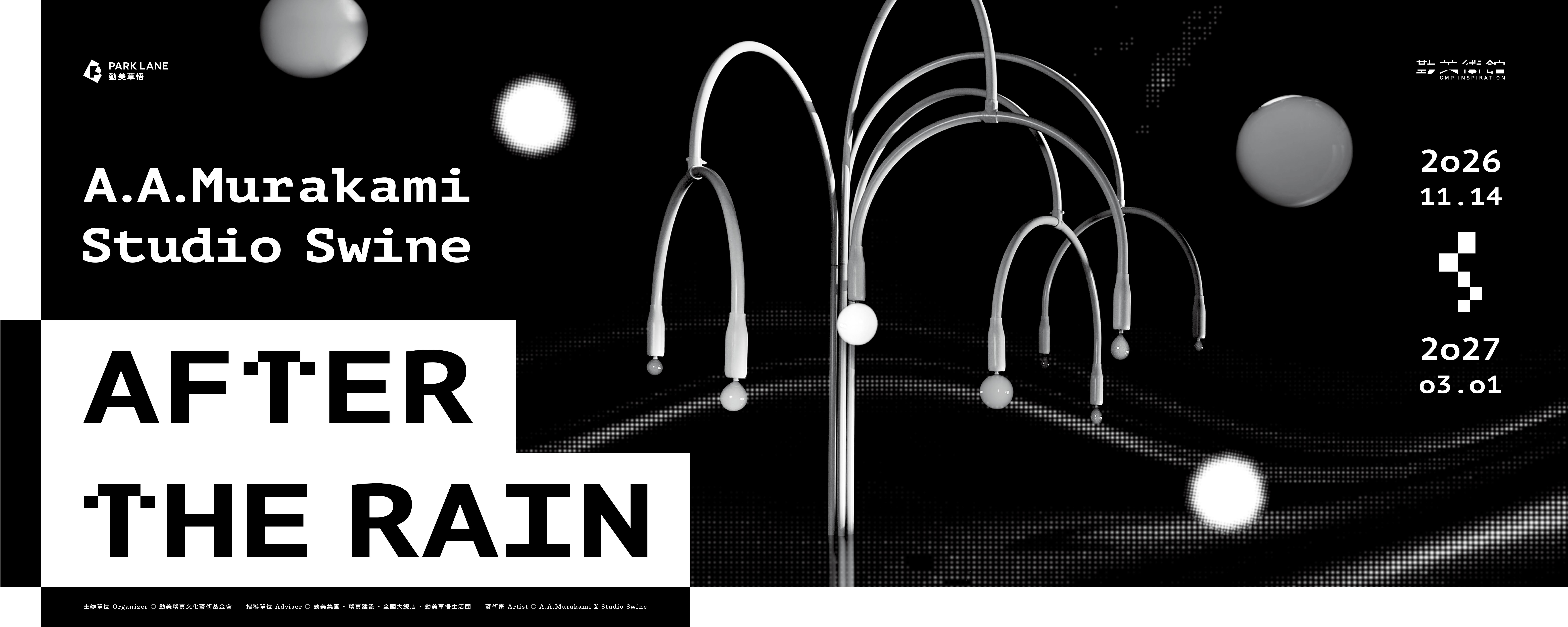
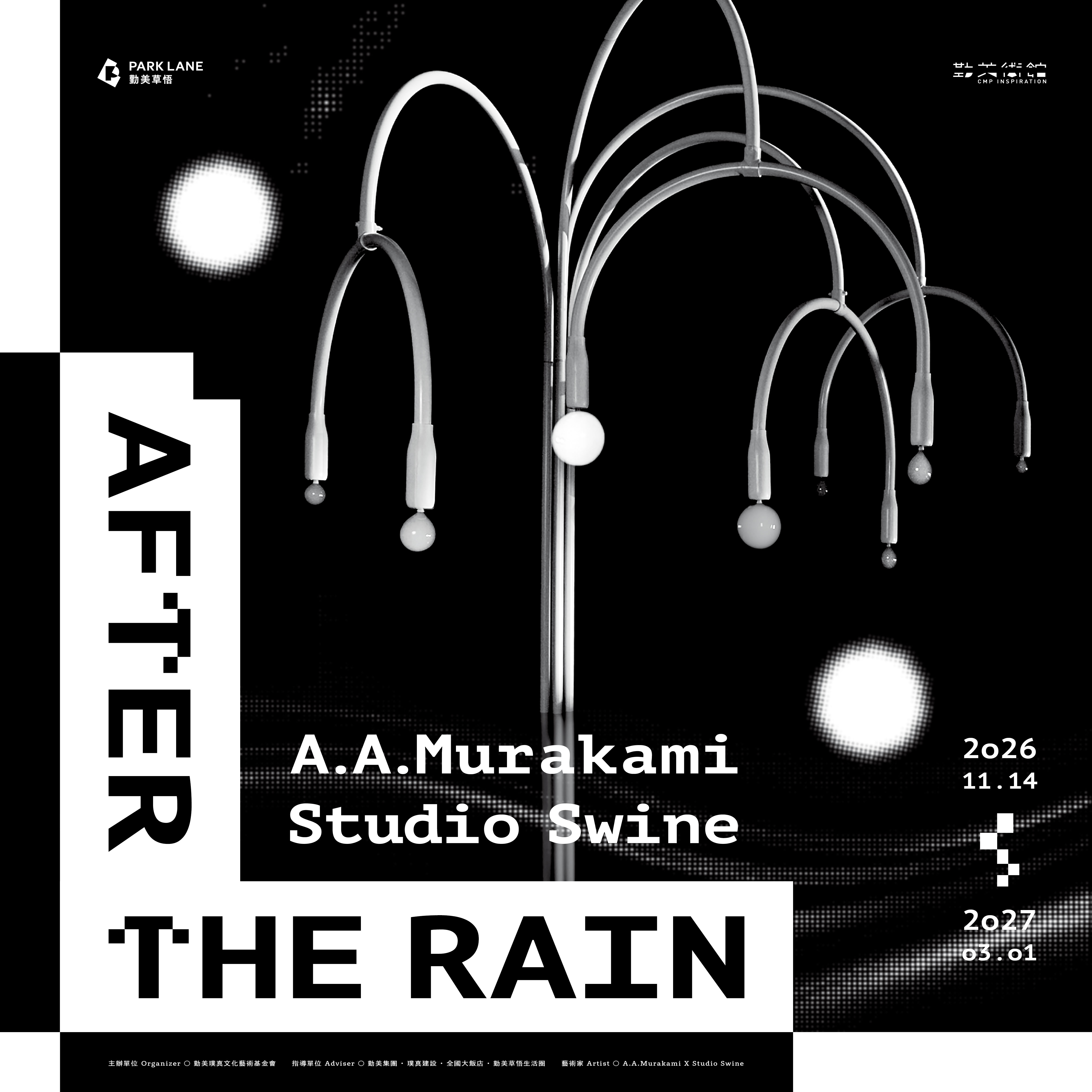
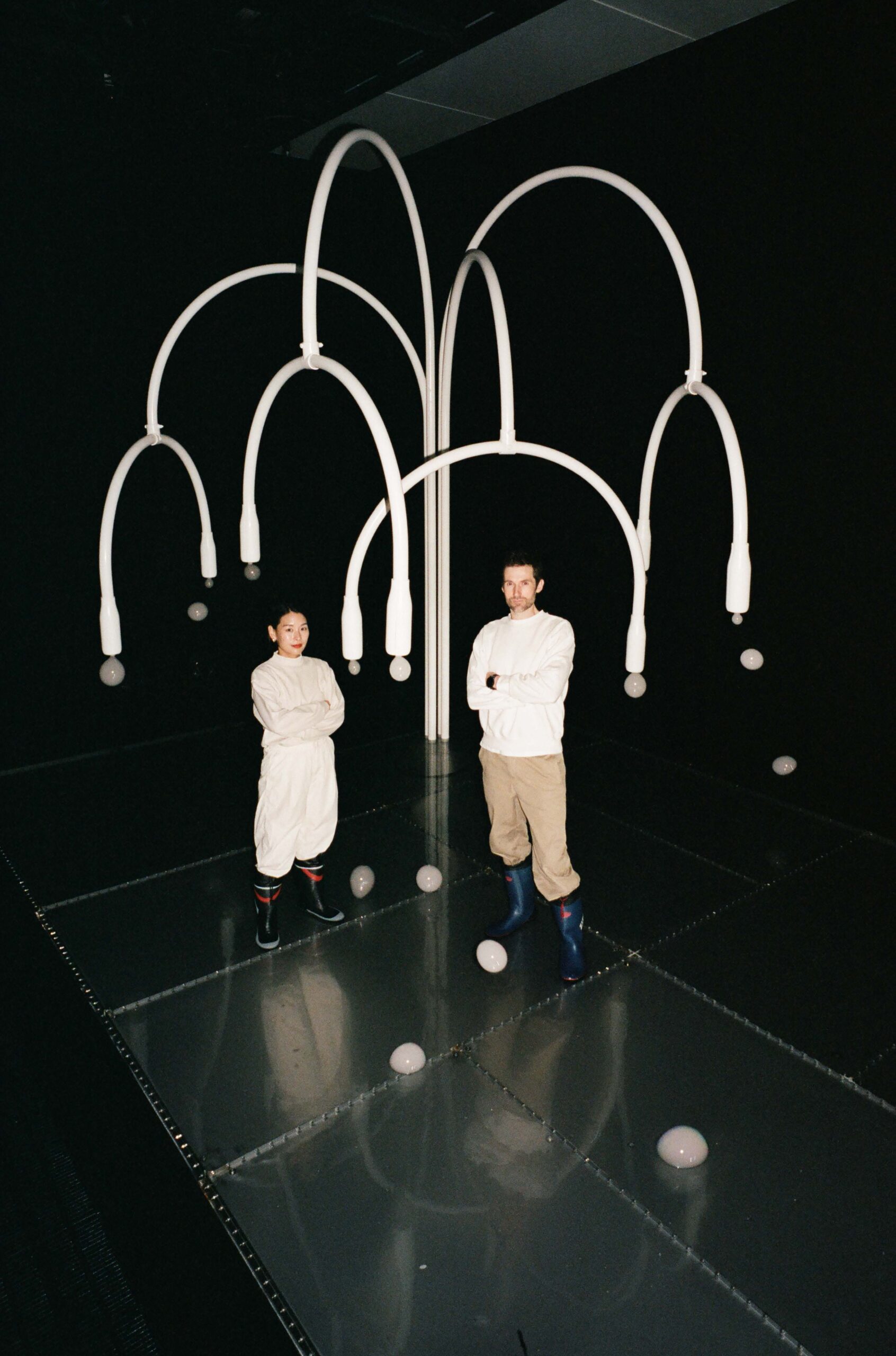
After the rain stops, the surroundings are quiet and the soil is nourished.
After the Rain starts from nature and explores the many relations between design and art. In the work of Studio Swine and A.A. Murakami, nature is not only depicted but can be felt in the body.
Studio Swine begins with waste and sustainable materials, following the paths along which materials circulate.
A.A. Murakami joins art and technology, using fleeting matter to create immersive experiences.
The exhibition is at the CMP Block Museum of Arts (勤美術館) on the Calligraphy Greenway (草悟道). The museum says such a moment after rain is not unfamiliar to it: the building blends into nature, light passes through the branches, and the noise of the city draws away.
1 / 2 Image: National Taiwan Museum of Fine Arts
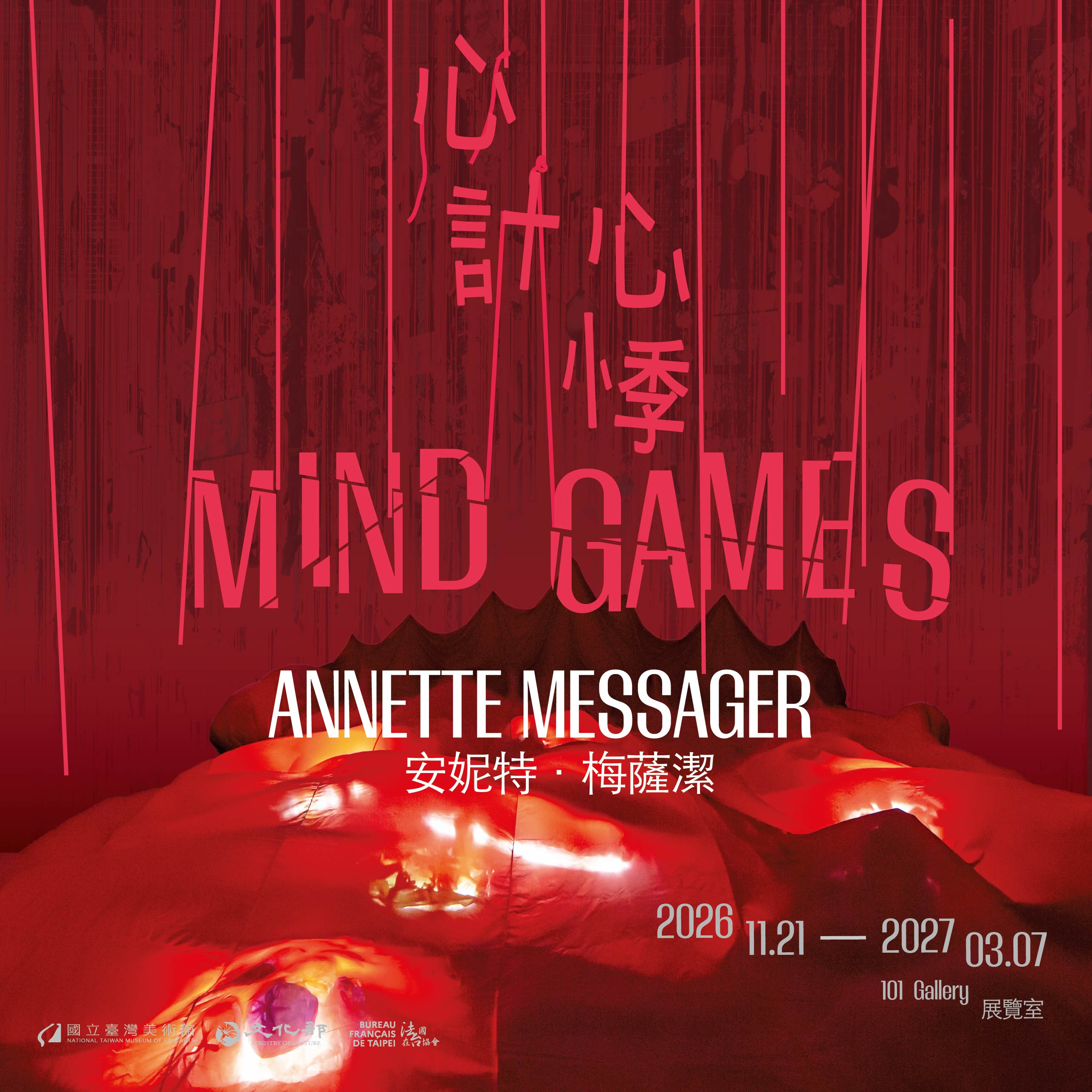
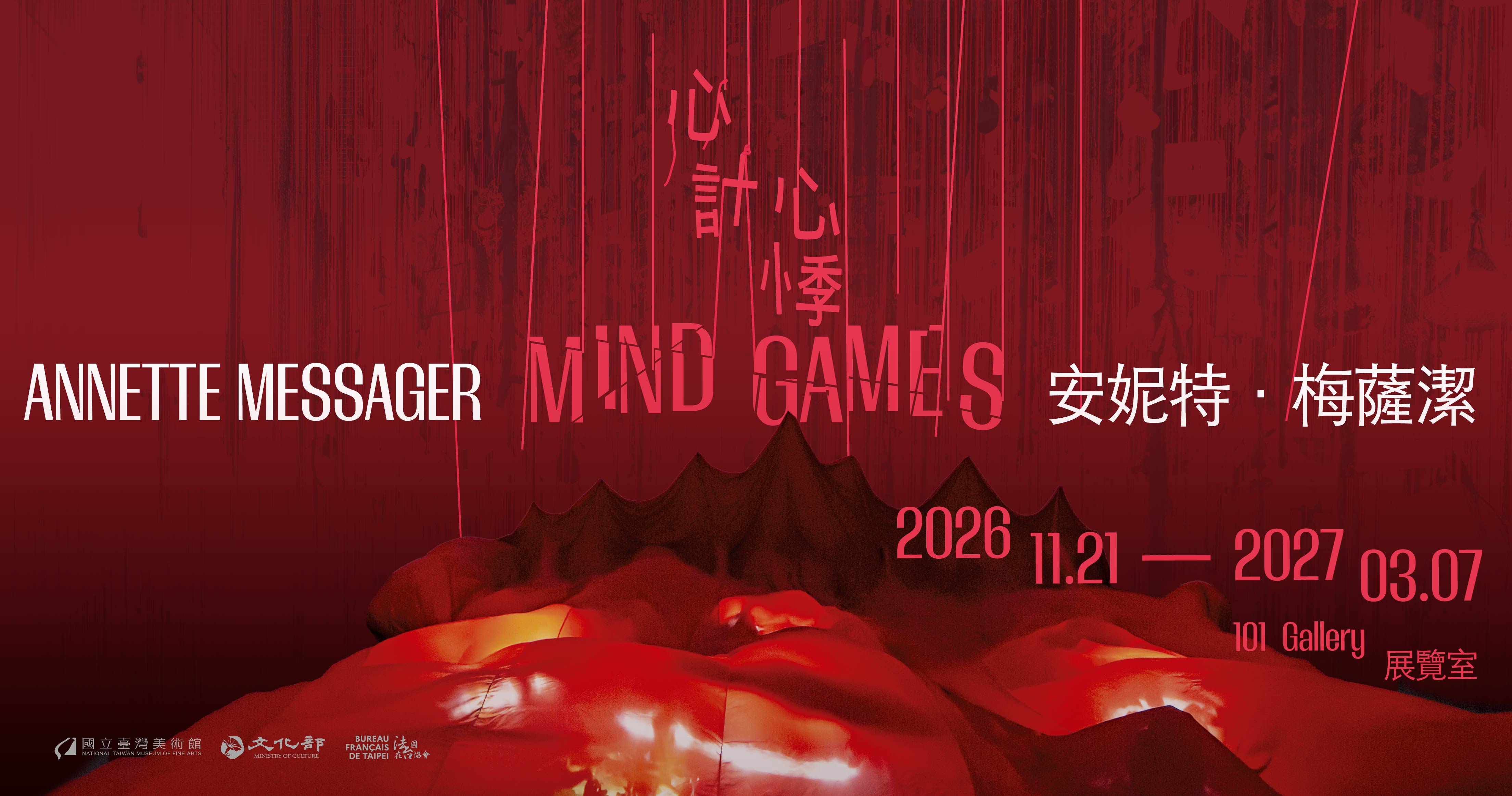
Red cotton thread and rope, with photographs, clothes, and dolls attached, hang from the air and enclose a heart-shaped space.
Annette Messager's work looks friendly, humorous, even childlike, but behind it often lie ambiguity, unease, and contradiction. She makes work from everyday objects, textiles, photography, text, and motorized installations, and lets familiar things show an unfamiliar face.
This is Messager's first large exhibition in Taiwan, organized by the National Taiwan Museum of Fine Arts. She began working in the 1970s, when women artists still faced many limits, and she has not bound herself to a single medium or set form. In 2005 she represented France at the 51st Venice Biennale and won the Golden Lion for the large installation Casino.
Dependence–Independence (依賴–獨立, 1995–1996) is on loan from the National Museum of Contemporary Art in Athens. A great deal of red cotton thread, rope, photographs, clothes, and dolls hang down from above and form a huge heart-shaped space, turning memory and complicated feeling into a space that can be seen, walked into, and sensed.
Little Mouse's Stroll (小老鼠的漫步, 2026) is a new work made for this exhibition. The museum points out that a soft textile sculpture wrapped in a large fishing net presents an image of trophies, in strong contrast with a mouse doll beside it, and that the seemingly playful scene creates an ambiguous relation between freedom and constraint. The mouse doll is tied to a low post and can only circle along a fixed path, driven by a mechanism.
1 / 2 Image: National Taiwan Museum of Fine Arts
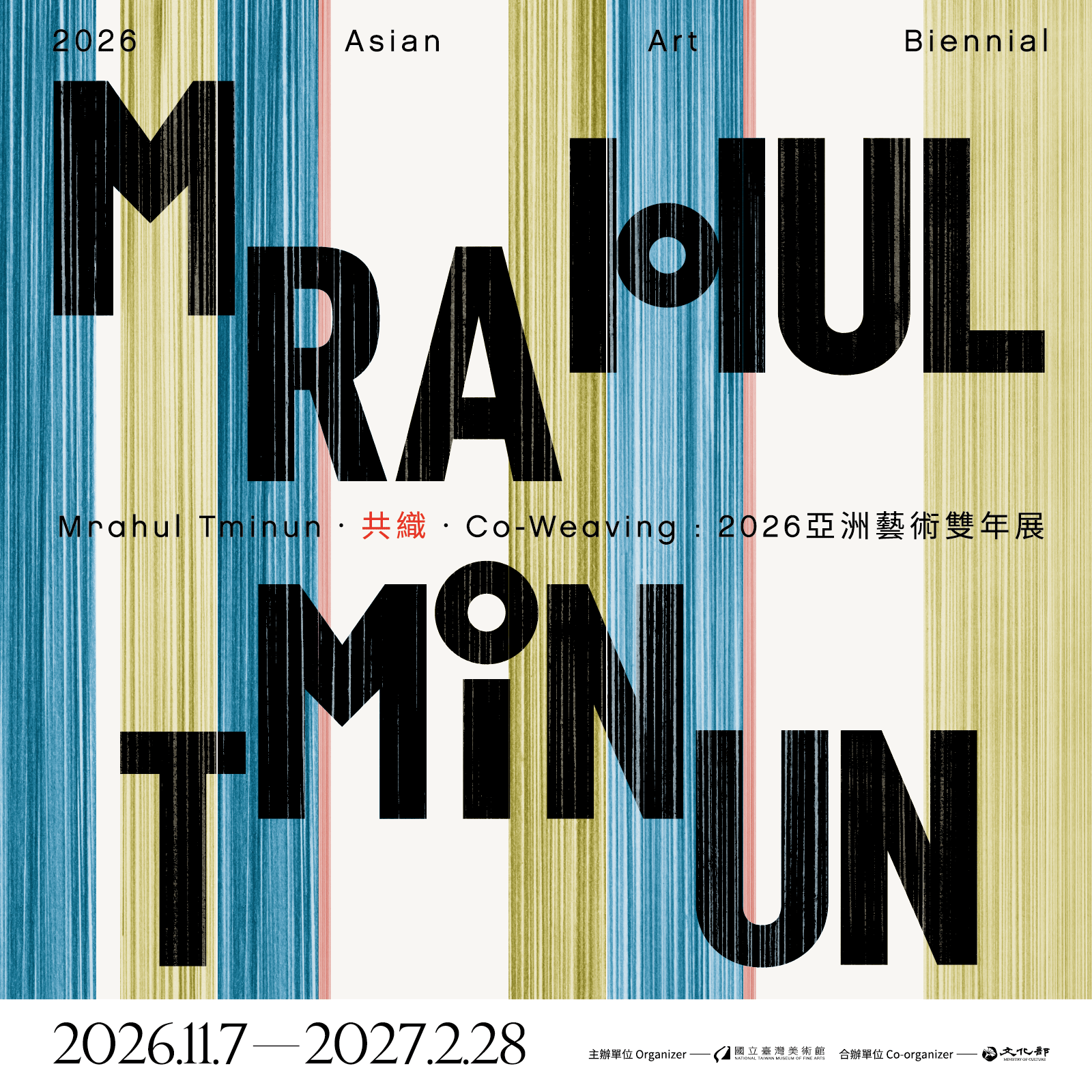
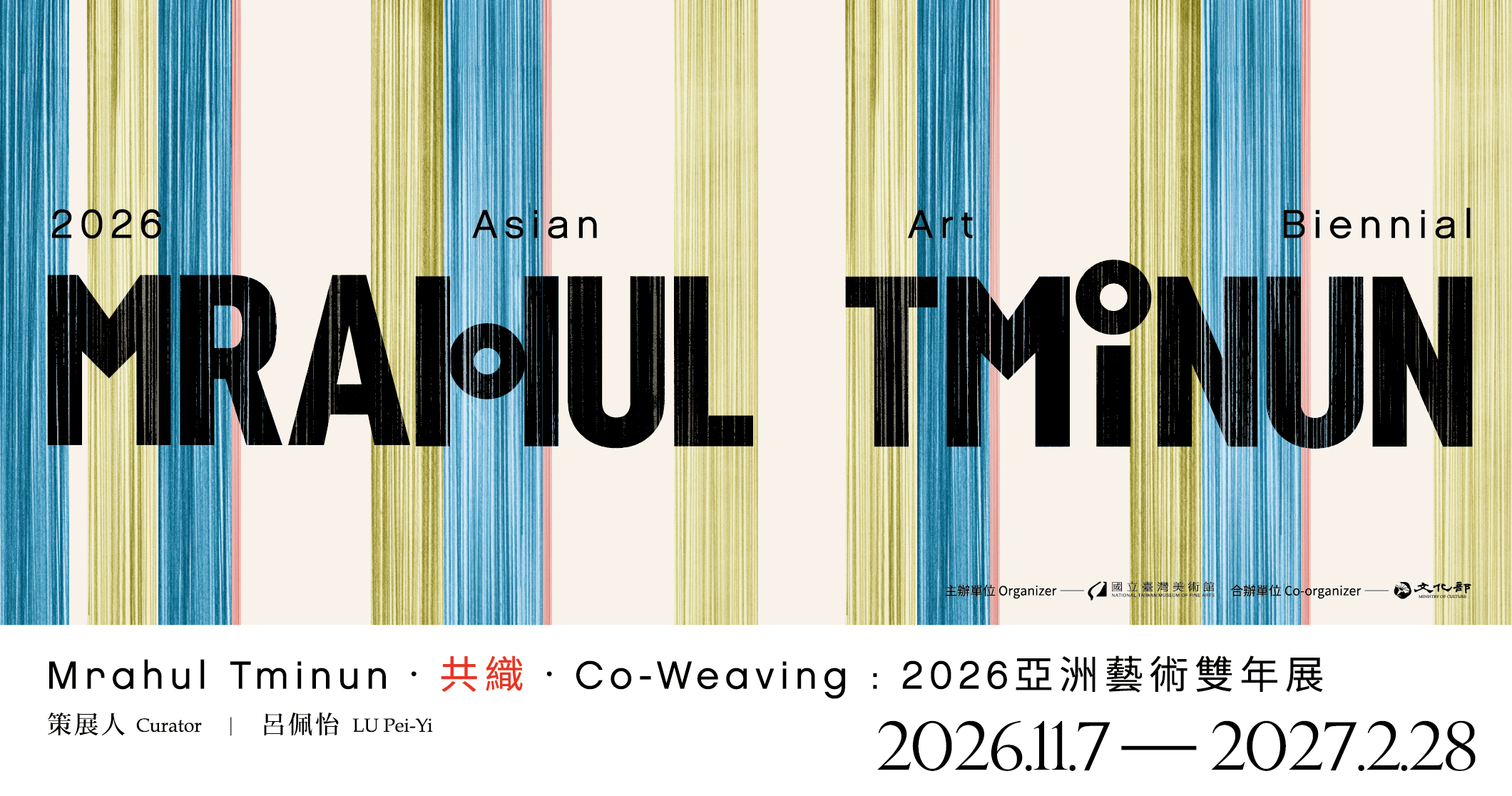
Women of a tribe gather in the plaza to weave together, keeping each other company and talking things over.
The title of the 10th Asian Art Biennial, Mrahul Tminun, is in the Truku (Taroko) language: Tminun means weaving, and Mrahul means a crowd, a gathering. The title is set in Truku, Chinese, and English side by side.
It refers to the daily practice of tribal women weaving together in the plaza, keeping each other company and talking things over. The exhibition takes this practice as its core concept and method, which it calls co-weaving: many collaborators working together to build a larger structure.
So the exhibition does not treat Asia only as a geographical entity, but as a field of closely connected relations. It holds the layered, tangled, hard-to-undo colonial histories of Asia, and asks how, across such deep cultural differences, Asian places can come to know one another, and how they can weave together within those differences. Thirty art collectives, independent art spaces, and artists who work with communities take part, and the curating itself is treated as a kind of weaving.
The exhibition is built from three directions: weaving as a method, artists as weavers, and weaving people together. It attends to what mainstream contemporary art overlooks or excludes, and to the marginal perspectives of women, Indigenous peoples, and queer people. There are also seven co-learning projects; one of them, 縫紉人生 (Sewing Lives), is about the life stories of women garment workers in Malaysia in the 1970s.
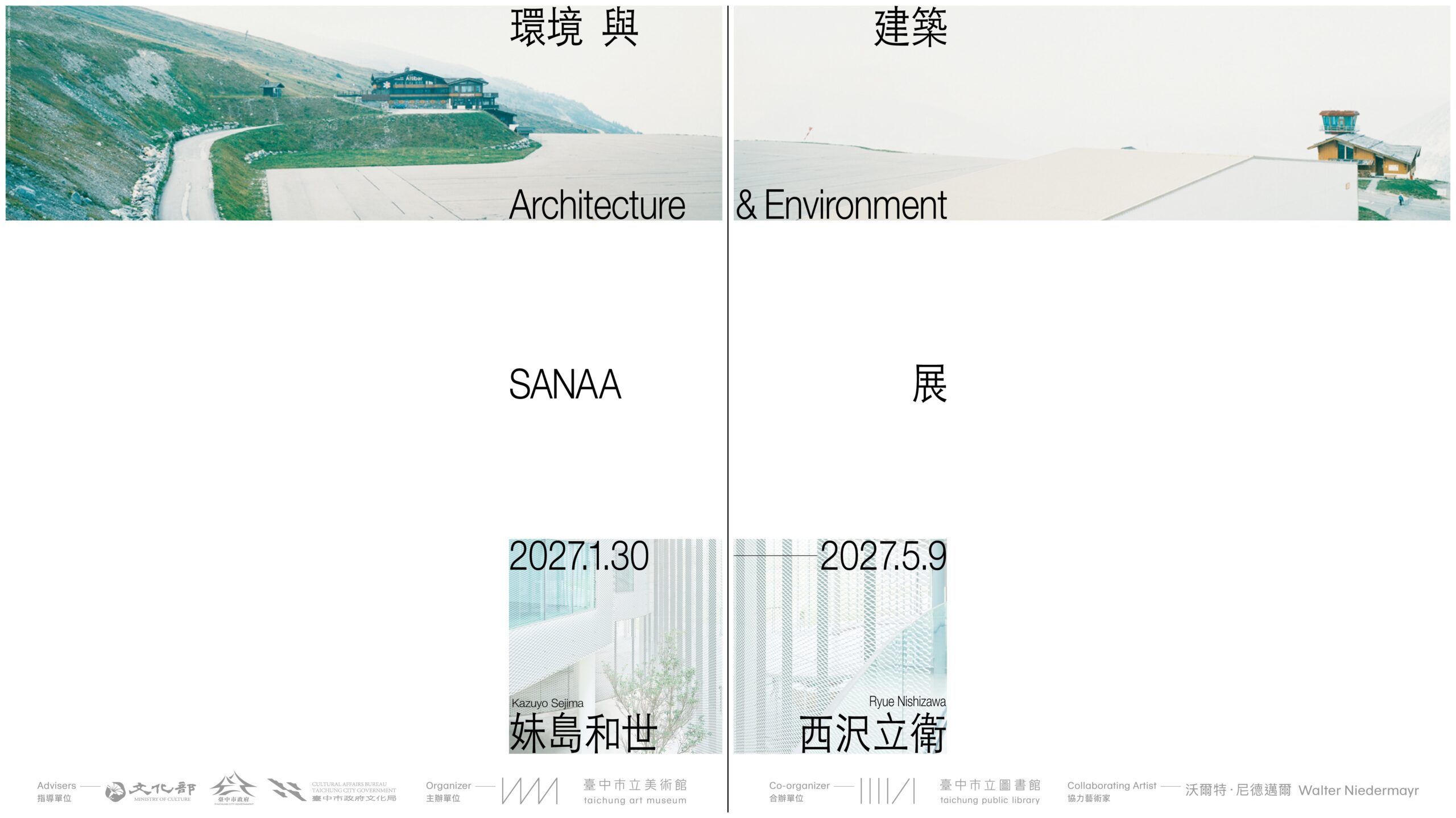
1 / 4 Image: Taichung Art Museum
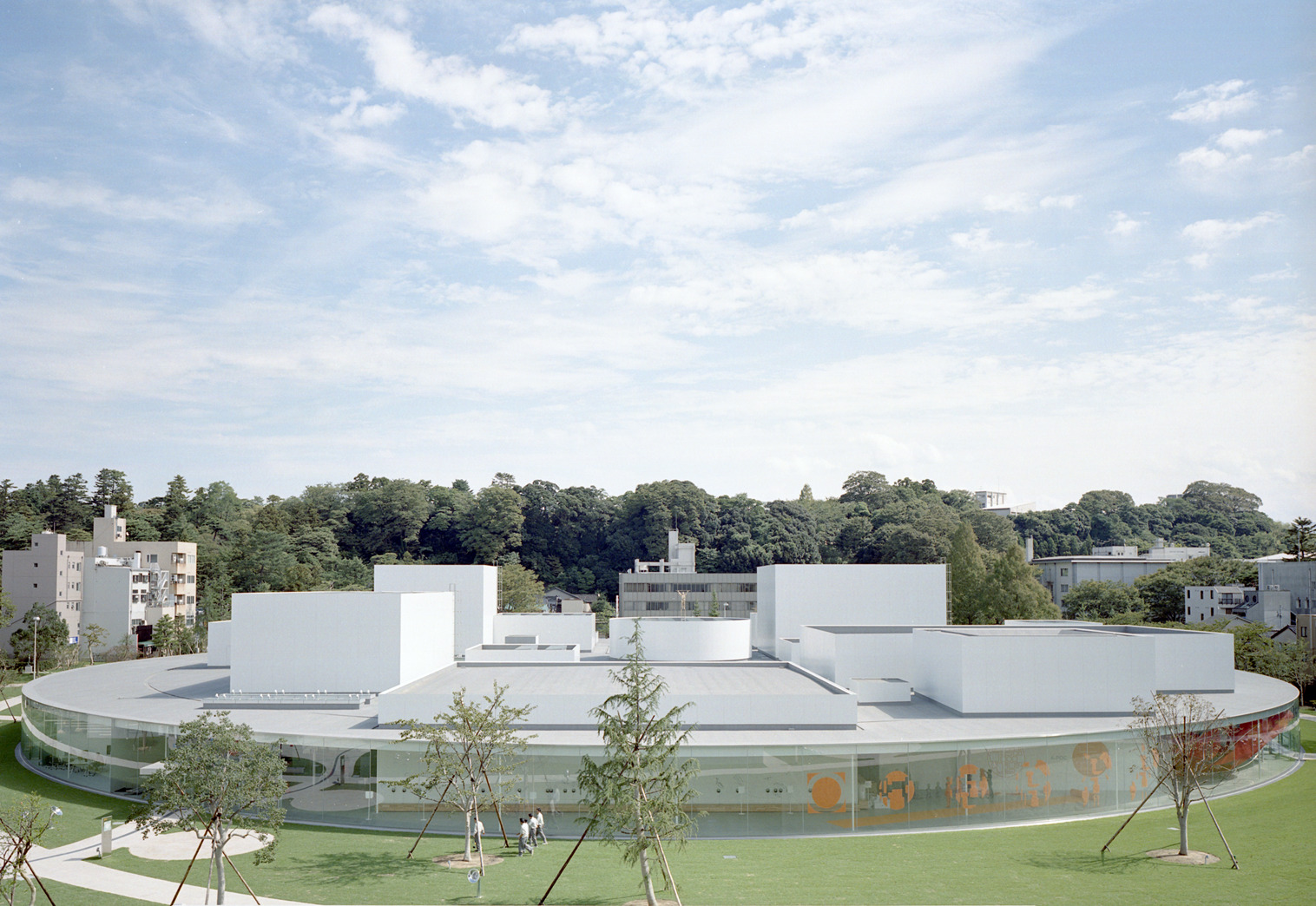
The 21st Century Museum of Contemporary Art, Kanazawa (2004), is open like a park and blends into the city.
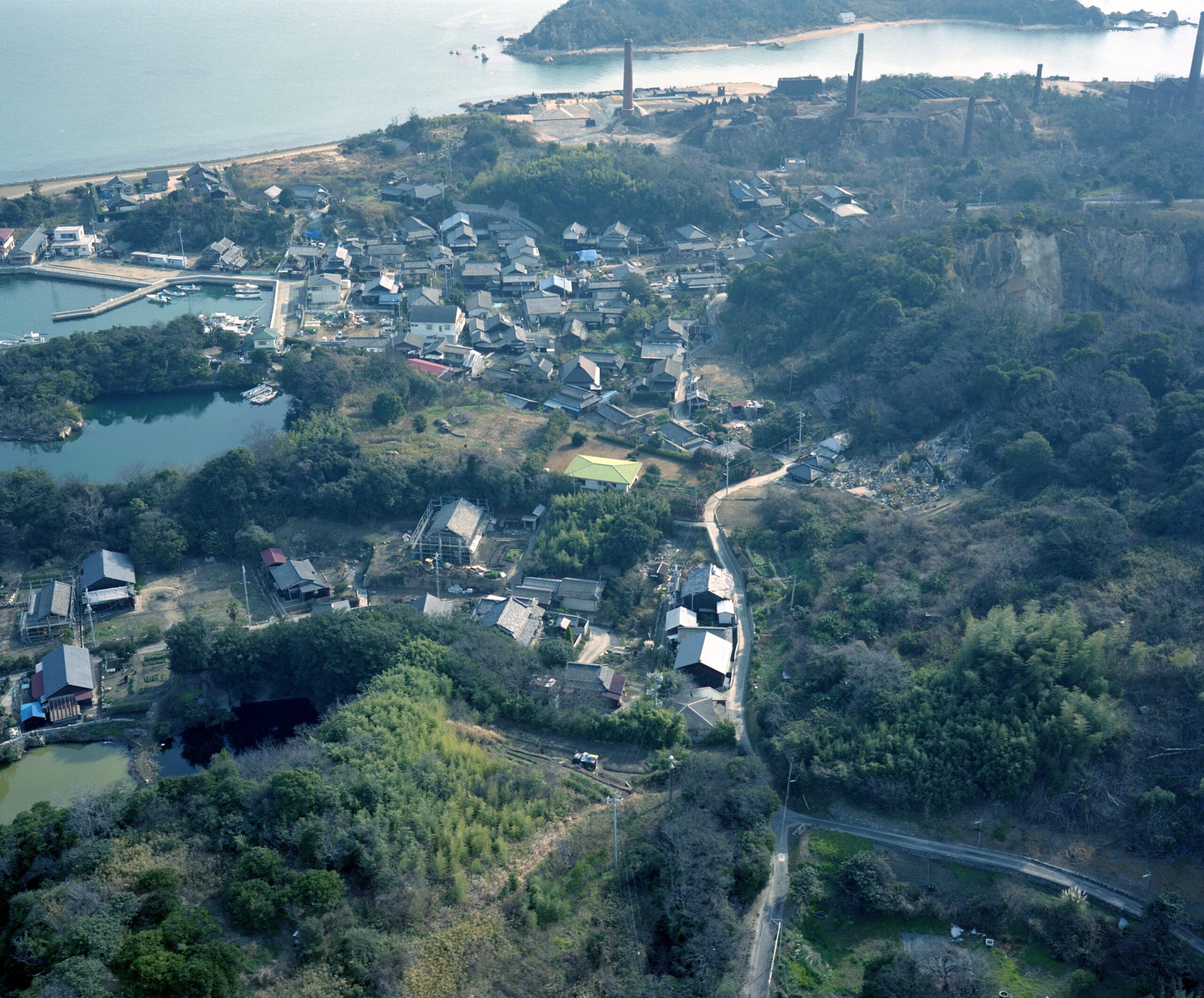
Environment and Architecture is a central subject SANAA has thought about for a long time: architecture is not an object that divides inside from outside and creates boundaries, but tries to be a place that connects people's behavior with the surrounding environment.
SANAA was founded in 1995 by Kazuyo Sejima (妹島和世) and Ryue Nishizawa (西澤立衛). The exhibition presents the design practice of three offices, SANAA, Kazuyo Sejima & Associates, and Office of Ryue Nishizawa, whose activities influence and extend one another. It also looks back from the early years to the present, at how their understanding of environment and architecture, and their methods of design and realization, have changed.
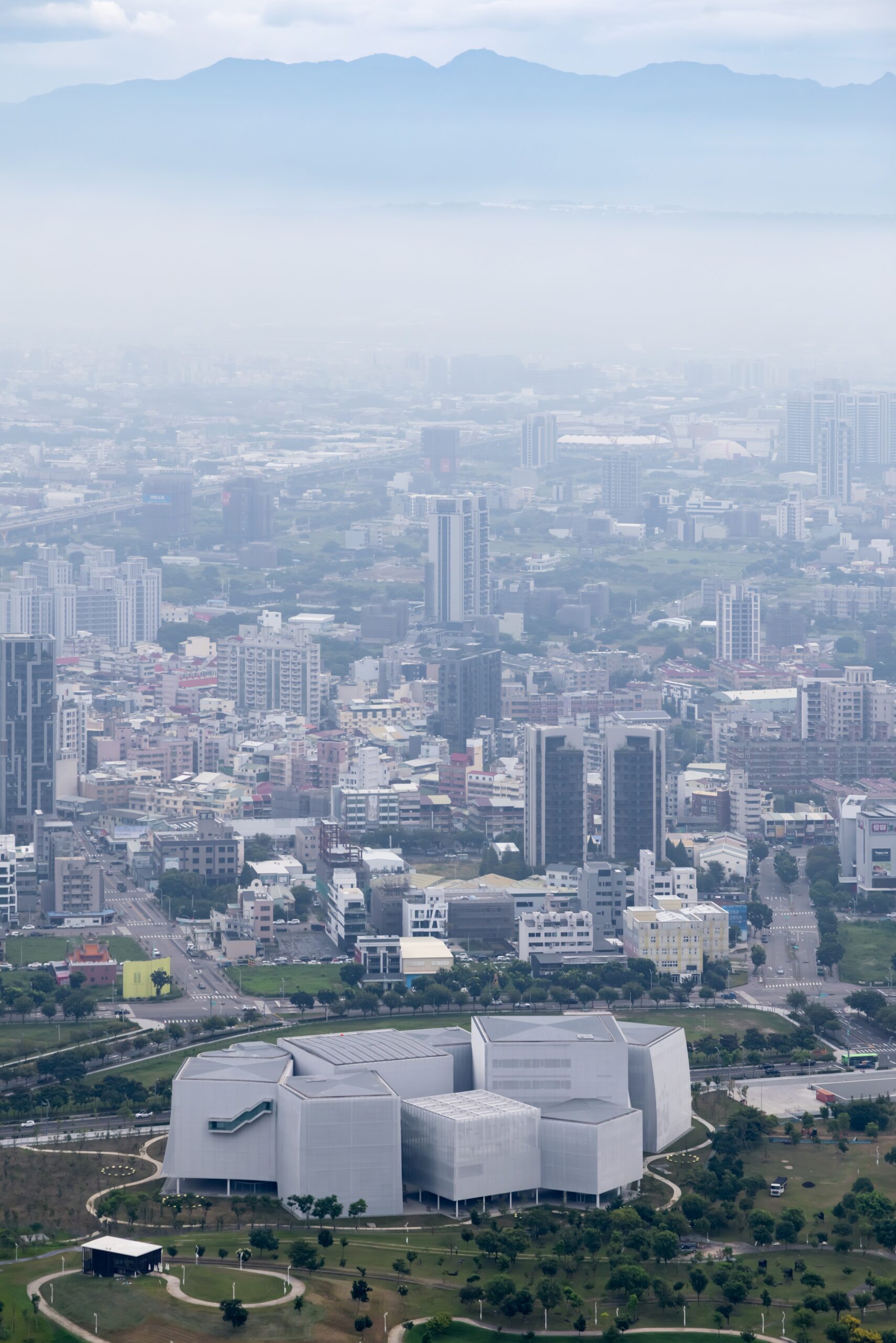
SANAA's works include the 21st Century Museum of Contemporary Art in Kanazawa (2004), the New Museum in New York (2007), the Louvre-Lens (2012), and, in Taiwan, the Taichung Green Museumbrary (臺中綠美圖, 2025).
1 / 2 Image: National Taiwan Museum of Fine Arts
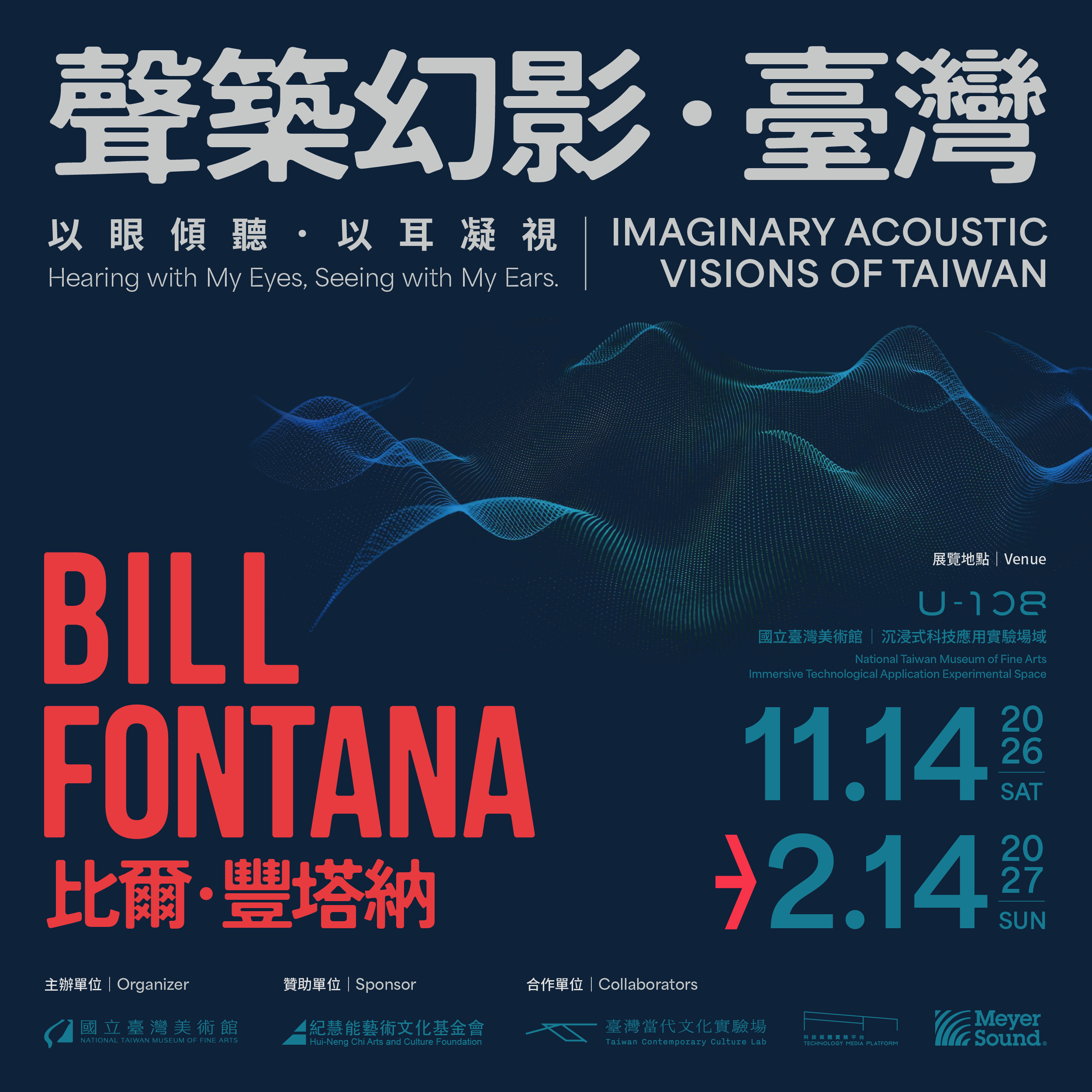
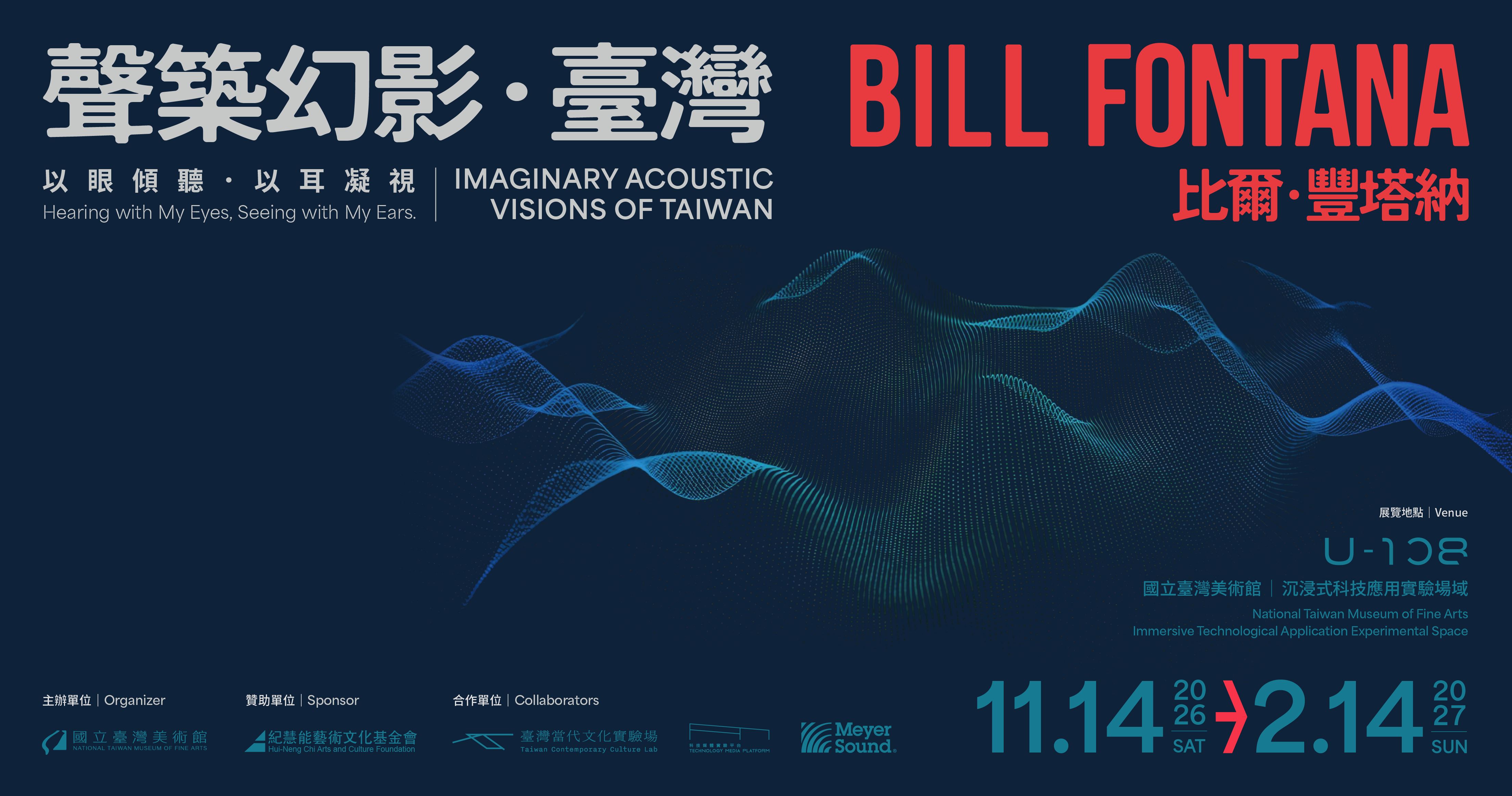
Besides the sounds the ear can hear, Bill Fontana records the vibrations hidden inside things, which we never hear.
Bill Fontana, born in Cleveland in 1947, is a composer and a pioneer of sound art. He treats sound as a material for sculpture and calls his works sound sculptures.
Besides microphones, he fixes sensors to the surfaces of objects and buildings and records two kinds of sound: what can be heard, and the vibration hidden inside. In Taiwan this spring he recorded the forest of Alishan, the water of the Shigang Dam, the Tianhou Temple in Lukang and Longshan Temple, and the sound beneath the geothermal fields of Yangmingshan.
This solo exhibition at the National Taiwan Museum of Fine Arts in Taichung brings together immersive sound sculptures, acoustic and vibration recordings, video and multiple-exposure photographs. The second half of its title, Listening with the Eyes, Gazing with the Ears, asks you to listen with your eyes and look with your ears, and find the everyday world around you again.
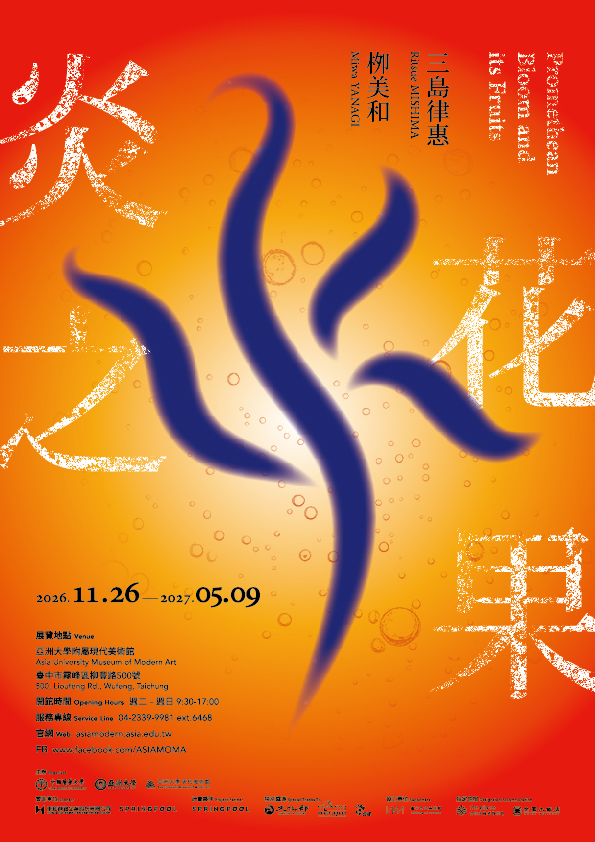
Steel and glass both take their shape through fire.
Flower and Fruit of Flame (炎之花果) takes fire as the origin of its concept and extends from humans, culture, and the environment to flower and fruit as a contemporary metaphor.
Flower stands for the development and blossoming of civilization; fruit stands for the two sides of civilization's expansion: the gains of technological leaps, and the consequences of environmental destruction.
This is the second part of the Asia University Museum of Modern Art's Contemporary Art Masters series, and it shows two Japanese women artists. Miwa Yanagi (栁美和) represented Japan at the 53rd Venice Biennale in 2009. Ritsue Mishima (三島律惠) was, in 2022, the first Japanese artist invited to hold a solo exhibition at the Gallerie dell'Accademia in Venice.
The exhibition, in Wufeng, Taichung, works with Tung Ho Steel (東和鋼鐵) and Chunchi Glass (春池玻璃), and through the transformation by fire it calls up reflection on sustainable coexistence with nature.
If you have seen a good exhibition that isn't written up here yet, I would be glad to hear about it: hello@anthology-art.org
About this anthology: major exhibitions outside Taipei, chosen by our editor, Yu, and updated as shows open and close. Every exhibition is checked against the venue's official site or announcement (as of Nov 12, 2026), and no listing is paid for. If dates or prices change, please refer to the venue's own announcement.
The Chinese original of each title and venue name is shown in gray below it.
A little more art in your life
Every month, we write a letter about exhibitions we love and why we recommend them. Subscribing is free, and you can cancel at any time.
We will use your email address only to send the newsletter. Privacy