Opens in 56 days#Painting
Cats Galore: Cats in Ukiyo-e
Japanese original:
ねこ∞(づくし)―浮世絵のなかのねこたち
With the cooperation of the Hirano Museum of Art, the show centers on ukiyo-e that take cats as their subject, by masters such as Utagawa Hiroshige and Utagawa Kuniyoshi. In these prints cats appear in beauty portraits, are personified as actors or story characters, and sometimes startle viewers with fearsome looks.

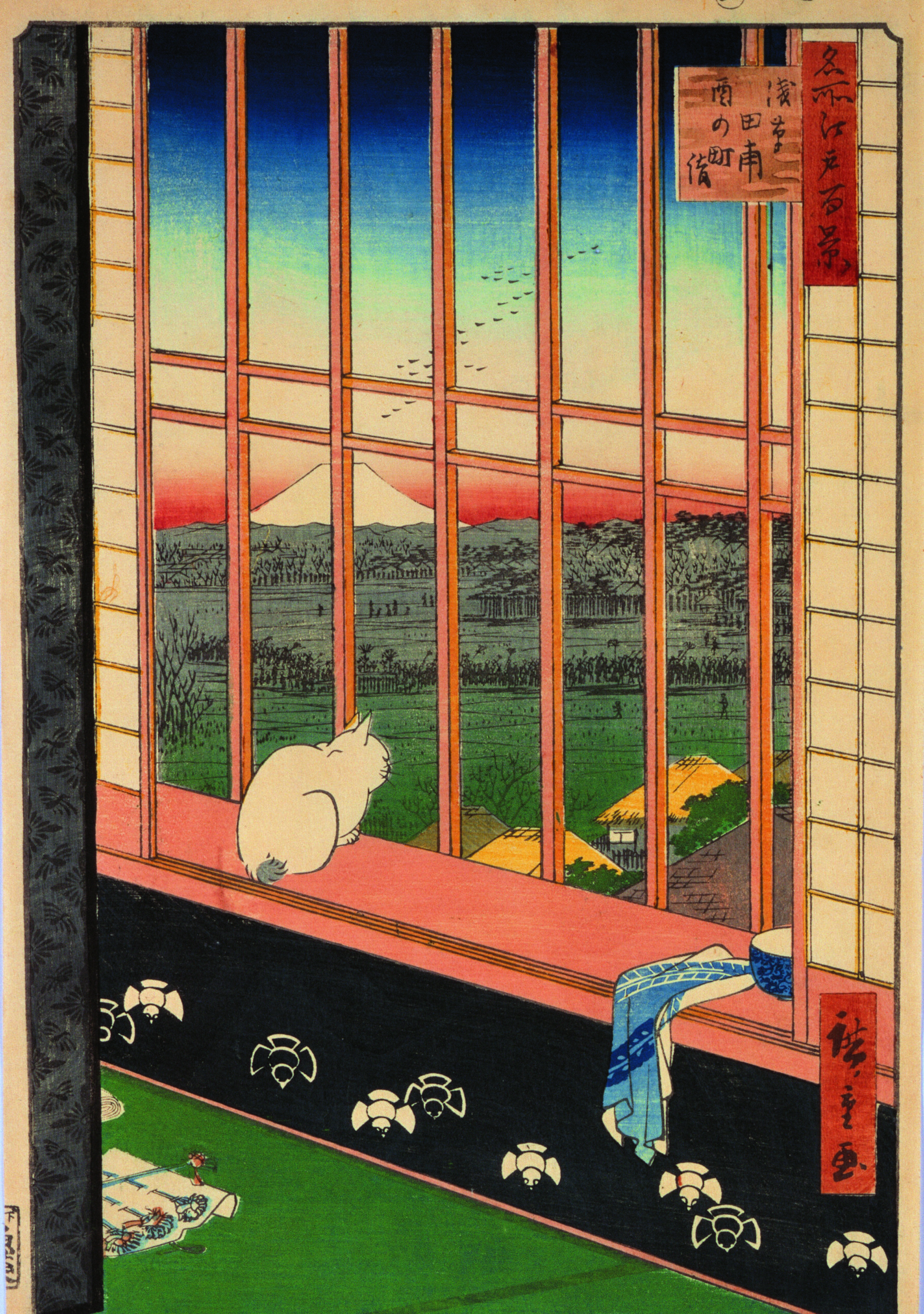
1 / 2 Image: Fukuoka Prefectural Museum of Art 高橋松亭「白猫」1926年(公益財団法人平野美術館蔵)
- Dates
- Jan 13 – Mar 7, 2027
- Venue
- Fukuoka Prefectural Museum of Art (福岡県立美術館) · Fukuoka福岡県福岡市中央区天神5丁目2-1
Getting there
From Tenjin Station on the Kuko Line, walk about 10 min from Exit East 1a or 1b of the Tenjin Underground Mall; from Nishitetsu Fukuoka (Tenjin) Station, about 15 min on foot. From Hakata Station, take the Nishitetsu BRT to Fukuoka Shimin Hall Kita-guchi, then walk 2 min
- Hours
- 10:00–18:00 · Closed: Mon
- Artists
- Utagawa Hiroshige
- Utagawa Kuniyoshi
- Takahashi Shotei
The calendar entry starts on opening day and covers the whole run, so you won't need to look the dates up again. Please check opening hours and closing days before your visit.
Guided tours
'Chatting Together About the Art' viewing sessions: Saturdays 16 Jan and 13 Feb 2027. Free with an exhibition ticket. Time, host, language, registration and capacity are not stated.
- Tour'Chatting Together About the Art' viewing sessions: Saturdays 16 Jan and 13 Feb 2027. Free with an exhibition ticket. Time, host, language, registration and capacity are not stated.
Source: 福岡県立美術館 ねこ∞(づくし)展. From the venue's and organizer's announcements. Schedules, languages and fees can change; please check the official site before your visit.
Organizers and partners
Organized by: Fukuoka Prefectural Museum of Art
- Organized by
- Loans from
- Hirano Museum of Art
Organizing this exhibition? Write to us to add or correct anything here: hello@anthology-art.org
Knowledge cards
Bijinga (pictures of beautiful women)美人画Pictures whose subject is the beauty of women, in looks or in spirit; the name was born in Japan, and many follow on from the ukiyo-e of the Edo period.Read moreClose
01About
Women have been painted since early times, but they came to be painted in great numbers in the ukiyo-e of the Edo period, when such pictures were called bijin-e or onna-e. In ukiyo-e, what mattered was less whether the picture looked like the woman herself than which artist's type she was drawn in: Suzuki Harunobu's slight, girlish women, Torii Kiyonaga's tall women with long limbs, Kitagawa Utamaro's close-up busts. In modern nihonga after the Meiji era, bijinga became the name of a genre, and Kaburaki Kiyokata in Tokyo and Uemura Shōen in Kyoto were spoken of together as “Shōen in the west, Kiyokata in the east.” In the Taishō era Takehisa Yumeji joined an ukiyo-e-like manner to Taishō romanticism, and his women with large, wistful eyes, called Yumeji-style beauties, won wide popularity.
02In the gallery
Look beyond the face: the pattern of the kimono, the hairstyle, what she holds, the flowers and grasses around her. Which of them tell you the season, or how she lives?
03Notes
In bijinga, what mattered was not likeness to the sitter but which painter's type the figure followed.
This time, at Cats Galore: Cats in Ukiyo-e —
Where do you find the beauty in a bijinga: in the face, or in the gesture and dress?
04Related
Ukiyo-e浮世絵Pictures of the life of the day, popular in Japan from the 17th to the 19th century; most are woodblock prints.Read moreClose
01About
“Ukiyo” means the floating world, the world of the present. Subjects include beautiful women, kabuki actors, sumo wrestlers, scenes from history, and famous places; around the 1830s Katsushika Hokusai and Utagawa Hiroshige made landscape a genre of its own. A few are paintings by the artist's own hand, but most are prints, made by four people in turn: the publisher paid, the designer drew, the carver cut the blocks, and the printer printed. Early prints used black ink alone; around 1765, exchanging calendar prints in many colors became a fashion, publishers then sold such prints as nishiki-e, “brocade pictures,” and full-color printing spread.
02In the gallery
In front of a print, find an edge where two colors meet. Each color has its own block; the printer lines the paper up with the registration marks cut into the block and prints from light colors to dark, one over another.
Wall label terms in Japanese
- 浮世絵
- Ukiyo-e
- 錦絵
- Nishiki-e (full-color print)
- 肉筆画
- Painting (by the artist's hand)
- 見当
- Registration mark
03Notes
Ukiyo-e landscapes often tell the season with mist, rain, snow, and moonlight.
This time, at Cats Galore: Cats in Ukiyo-e —
Where in the picture do you feel the season, or the hour?