39 days left#Painting#Sculpture & installation
Kojiro Matsukata × Tokutaro Yamamura: The Passion of Collecting—Bringing Rodin to Japan, Bringing Gutai to the World
Japanese original:
松方幸次郎 × 山村德太郎 蒐集のパッション―ロダンを日本へ、具体を世界へ
Matsukata Kojiro (1866–1950) built a major collection of Western art in Europe, while Yamamura Tokutaro (1926–1986) gathered postwar Japanese avant-garde art in the Kansai region, centered on the Gutai group. Drawing on the collections of the National Museum of Western Art and the Hyogo Prefectural Museum of Art, the show features Rodin's Gates of Hell and sets the two collectors in dialogue.
Featured in: Hyogo Winter Exhibitions 2026–27


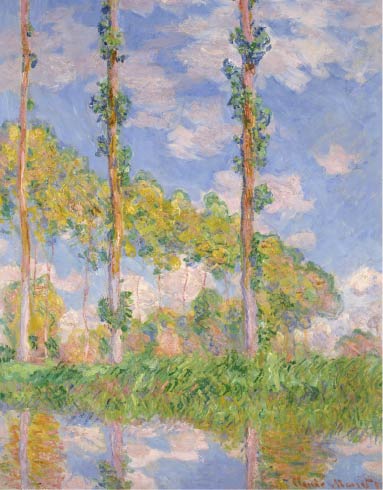
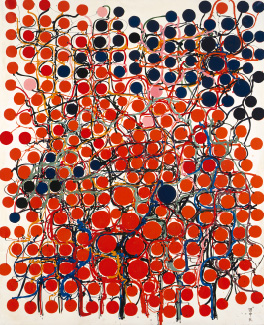
1 / 4 Image: Hyogo Prefectural Museum of Art
- Dates
- Oct 10 – Dec 27, 2026
- Venue
- Hyogo Prefectural Museum of Art (兵庫県立美術館) · Hyogo兵庫県神戸市中央区脇浜海岸通1-1-1
Getting there
About 8 min on foot south of Hanshin Iwaya Station (Hyogo Prefectural Museum of Art); about 10 min from the south exit of JR Nada Station; or about 15 min by Kobe City Bus (routes 101, 29) from JR Sannomiya Station to the Kenritsu Bijutsukan-mae stop
- Hours
- 10:00–18:00 · Closed: Mon
- Admission
- General ¥1,800Original: 一般 1,800円
- Artists
- Auguste Rodin
- Claude Monet
- Shiraga Kazuo
- Tanaka Atsuko
- Yoshihara Jiro
- Motonaga Sadamasa
- Saito Yoshishige
- Tsutaka Waichi
- Shinohara Ushio
- Takamatsu Jiro
The calendar entry covers the whole run, so you won't need to look the dates up again. Please check opening hours and closing days before your visit.
Guided tours
Museum volunteer talks: every Sunday during the run, 11:00–11:15, in the Lecture Room (80 seats, first come, first served). Language and fee are not stated on the site.
- TourMuseum volunteer talks: every Sunday during the run, 11:00–11:15, in the Lecture Room (80 seats, first come, first served). Language and fee are not stated on the site.
- Audio guideAudio guide: ¥800 (tax included) per person, one device per visit; narrated by 窪田等. Languages and how to rent are not stated on the site.
- GroupsGroup visits: groups of 20 or more must get in touch one month ahead. Group admission for this exhibition: general ¥1,600 (university students ¥1,000, ages 70+ ¥800, among other categories). Contact details and whether a guide is offered are not stated.
- TalkNov 23 (Mon)Commemorative lecture 'Matsukata Collection and Rodin Sculpture': Monday, 23 Nov 2026 (public holiday), 14:00–15:30 (doors 13:30), by 陳岡めぐみ (Chief of Curatorial Division, The National Museum of Western Art, Tokyo), at KOBELCO Museum Hall (150 seats, first come, first served). Exhibition ticket required; priority seats for Friends members. Language not stated.
- TalkDec 19 (Sat)Curator talk: Saturday, 19 Dec 2026, 11:00–11:45, in the Lecture Room (80 seats, first come, first served). Language and fee are not stated on the site.
Source: 兵庫県立美術館 松方幸次郎 × 山村德太郎 展. From the venue's and organizer's announcements. Schedules, languages and fees can change; please check the official site before your visit.
Organizers and partners
Organized by: Hyogo Prefectural Museum of Art
- Organized by
- Co-organized by
- The National Museum of Western Art, Tokyo
- National Art Research Center, Tokyo
- The Kobe Shimbun
- In cooperation with
- Kawasaki Heavy Industries, Ltd.
- Nihon Yamamura Glass Co., Ltd.
Organizing this exhibition? Write to us to add or correct anything here: hello@anthology-art.org
Knowledge cards
Matsukata Collection松方コレクションThe art Matsukata Kōjirō bought in Europe from 1916; the part France returned to Japan in 1959 became the foundation of the National Museum of Western Art.Read moreClose
01About
Matsukata Kōjirō, third son of the Meiji statesman Matsukata Masayoshi, became the first president of Kawasaki Shipbuilding in 1896. After shipbuilding brought him large profits during the First World War, he travelled often to Europe for about ten years from 1916, buying works from galleries. Some 400 works left in Paris were placed under French state control as enemy property at the end of the Second World War; France later decided, for Franco-Japanese friendship, to return most of them to Japan as a gift, and the National Museum of Western Art was founded in 1959 to receive and show them. Renoir's Woman with a Hat, for example, was bought by Matsukata from Galerie Durand-Ruel in 1921, sequestered by the French government in 1944, and transferred to the Japanese government in 1959.
02In the gallery
When you read a label, look for where the work came from and the year it entered the museum.
Wall label terms in Japanese
- 松方コレクション
- Matsukata Collection
- 寄贈返還
- Returned as a gift
- 来歴
- Provenance
03Notes
The Matsukata Collection is what one businessman chose in Europe over about ten years.
This time, at Kojiro Matsukata × Tokutaro Yamamura: The Passion of Collecting—Bringing Rodin to Japan, Bringing Gutai to the World —
After a few works, what kind of painting do you think the collector loved?
04Related
Modern sculpture: from mass to space近現代の彫刻:量塊から空間へSculpture since the 20th century: not only a solid mass carved or modelled, but forms built from many materials that count the surrounding space and light as part of the work.Read moreClose
01About
Traditional sculpture has two ways of working: carving, which removes material, and modelling, which adds it, as with clay; a modelled form may then be cast in metal. In the early 20th century the Cubists assembled works from different materials, and construction became a new way of making sculpture. In 1920 Naum Gabo, with his brother Antoine Pevsner, published the Realistic Manifesto in Moscow, calling for an art freed from volume and mass and grounded in space and time. Sculpture since then has used industrial materials such as steel, acrylic, and glass; some works move (kinetic sculpture), and some take light as their material. In Japan, too, postwar abstract sculpture turned away from academic figurative work that prized mass and stability, toward space and the environment.
02In the gallery
Walk once around the work, and look from a different height. With surfaces that reflect or let light through, watch how the work changes with where you stand and with the light in the room; with open or linear forms, look at the shape of the space that passes through them.
Wall label terms in Japanese
- 彫刻(カーヴィング)
- Carving
- 塑造
- Modelling
- 鋳造
- Casting
- 構成(コンストラクション)
- Construction
- 量塊(マッス)
- Mass
- キネティック・アート
- Kinetic art
03Notes
Twentieth-century sculpture doesn't just make a mass; it brings the surrounding space and light into the work.
This time, at Kojiro Matsukata × Tokutaro Yamamura: The Passion of Collecting—Bringing Rodin to Japan, Bringing Gutai to the World —
After walking around it, where do you think the work ends?