3 days left#Painting
The Whims of the Transient World: Ukiyo-e That Keeps Us Laughing and the Turbulent Times of the Late Edo and Meiji Periods
Japanese original:
うき世のたわむれ:笑いつづける浮世絵と幕末明治の渦
About 250 prints, mainly from the museum's own ukiyo-e collection, show how comic and satirical pictures of the late Edo and Meiji periods kept their humour through disaster and war. They include caricatures by Utagawa Hiroshige and Utagawa Kuniyoshi, catfish prints (namazu-e, made after the 1855 Edo earthquake), measles prints, Shosai Ikkei's kaika-e of a modernizing Tokyo and Kobayashi Kiyochika's ponchi-e satire. Works change between the first and second halves.
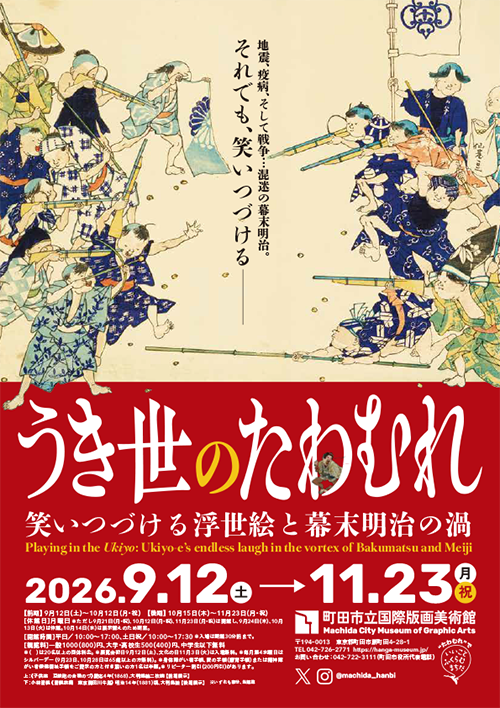
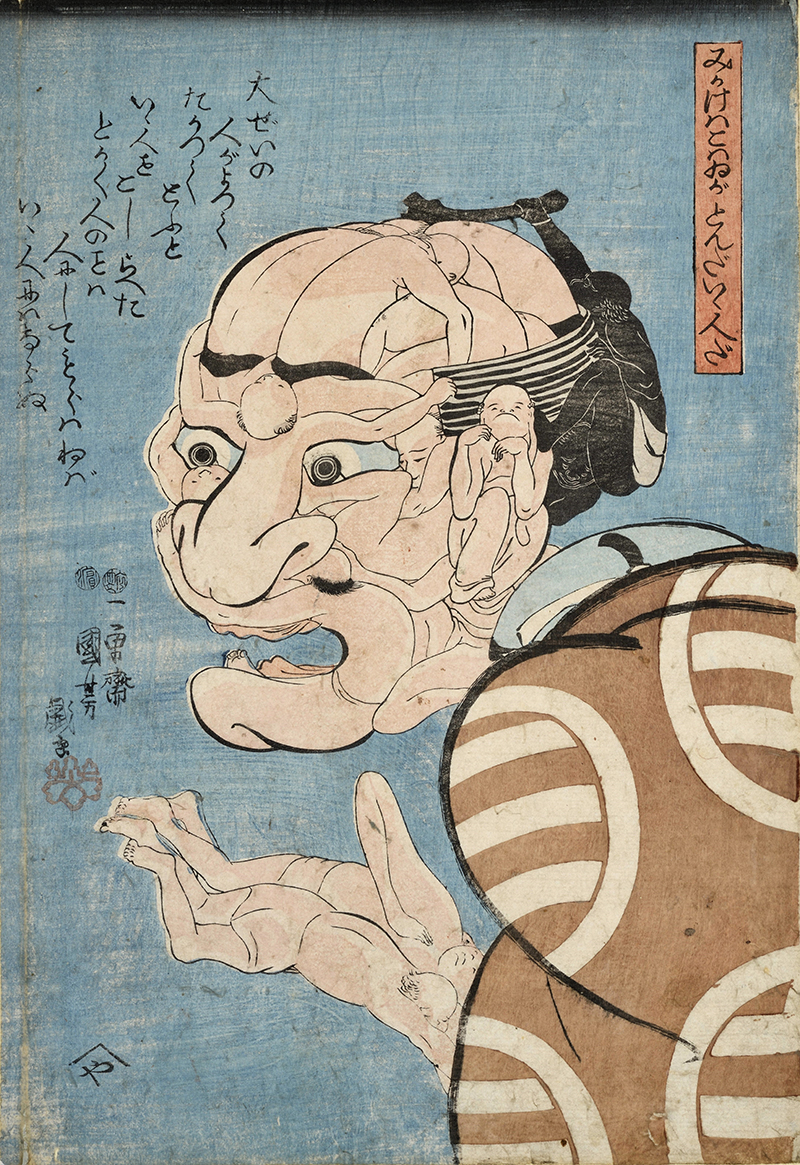
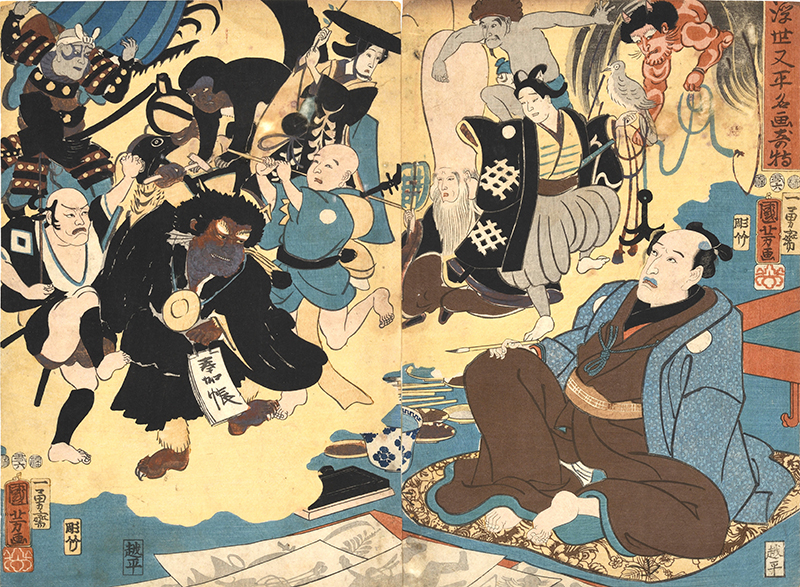
1 / 4 Image: 町田市立国際版画美術館 公式サイト 展覧会ポスター
- Dates
- Sep 12 – Nov 23, 2026
- Venue
- Machida City Museum of International Print Art (町田市立国際版画美術館) · 町田市東京都町田市原町田4-28-1
Getting there
12–15 min on foot from Machida Station (Odakyu Line, JR Yokohama Line); or take a bus from Machida Bus Center to Haramachida 4-chome, then walk about 5 min
- Hours
- 10:00–17:00 · Closed: Mon
- Admission
- General ¥1,000Original: 一般 1,000円
- Artists
- Utagawa Hiroshige
- Utagawa Kuniyoshi
- Shosai Ikkei
- Kobayashi Kiyochika
- Tsukioka Yoshitoshi
- Utagawa Yoshimori
- Organized by
The calendar entry covers the whole run, so you won't need to look the dates up again. Please check opening hours and closing days before your visit.
Entry notes
Open 10:00–17:00 on weekdays and until 17:30 on weekends and holidays; last entry 30 minutes before closing. Closed on Mondays, but open on Monday 23 November. Admission is ¥1,000 for adults and ¥500 for university and high-school students; junior-high students and younger enter free. A ¥200 discount applies when you show a ticket stub from this exhibition. The permanent exhibition rooms are free.
- Open 10:00–17:00 on weekdays and until 17:30 on weekends and holidays; last entry 30 minutes before closing. Closed on Mondays, but open on Monday 23 November. Admission is ¥1,000 for adults and ¥500 for university and high-school students; junior-high students and younger enter free. A ¥200 discount applies when you show a ticket stub from this exhibition. The permanent exhibition rooms are free. (Source: 町田市立国際版画美術館:うき世のたわむれ, 2026)
From the organizer's announcements and press reports. Arrangements can change; please check the official site before your visit.
Knowledge cards
Ukiyo-e浮世絵Pictures of the life of the day, popular in Japan from the 17th to the 19th century; most are woodblock prints.Read moreClose
01About
“Ukiyo” means the floating world, the world of the present. Subjects include beautiful women, kabuki actors, sumo wrestlers, scenes from history, and famous places; around the 1830s Katsushika Hokusai and Utagawa Hiroshige made landscape a genre of its own. A few are paintings by the artist's own hand, but most are prints, made by four people in turn: the publisher paid, the designer drew, the carver cut the blocks, and the printer printed. Early prints used black ink alone; around 1765, exchanging calendar prints in many colors became a fashion, publishers then sold such prints as nishiki-e, “brocade pictures,” and full-color printing spread.
02In the gallery
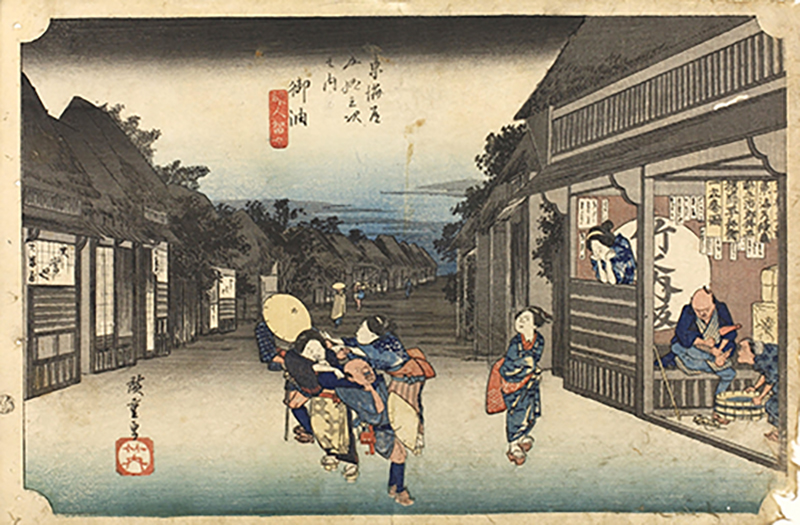
In front of a print, find an edge where two colors meet. Each color has its own block; the printer lines the paper up with the registration marks cut into the block and prints from light colors to dark, one over another.
Wall label terms in Japanese
- 浮世絵
- Ukiyo-e
- 錦絵
- Nishiki-e (full-color print)
- 肉筆画
- Painting (by the artist's hand)
- 見当
- Registration mark
03Notes
Ukiyo-e landscapes often tell the season with mist, rain, snow, and moonlight.
This time, at The Whims of the Transient World: Ukiyo-e That Keeps Us Laughing and the Turbulent Times of the Late Edo and Meiji Periods —
Where in the picture do you feel the season, or the hour?