54 days left#Design & architecture
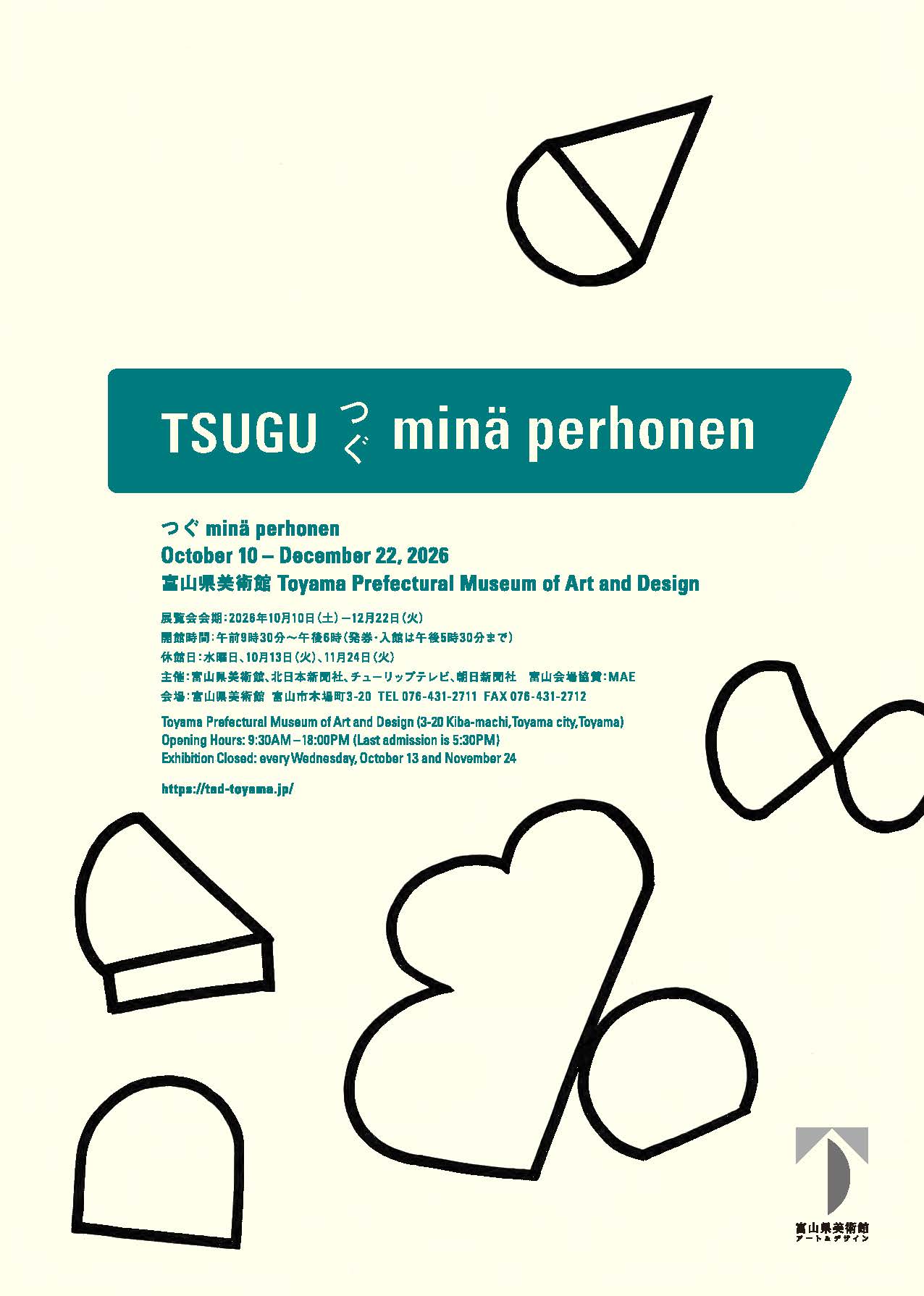
"Design Chronicle" Exhibition: What Was Created, and What Changed?
Japanese original:
デザイン・クロニクル展 なにが生まれて、なにが変わった?
Centered on the museum's design collection, the exhibition follows a little over a hundred years of design: from the Arts and Crafts movement of the late 19th century through Art Nouveau and Art Deco to Modernism as represented by the Bauhaus, and on to the postwar years. The museum says it is the first show since its move to Kanazawa to survey three-dimensional and graphic design together.
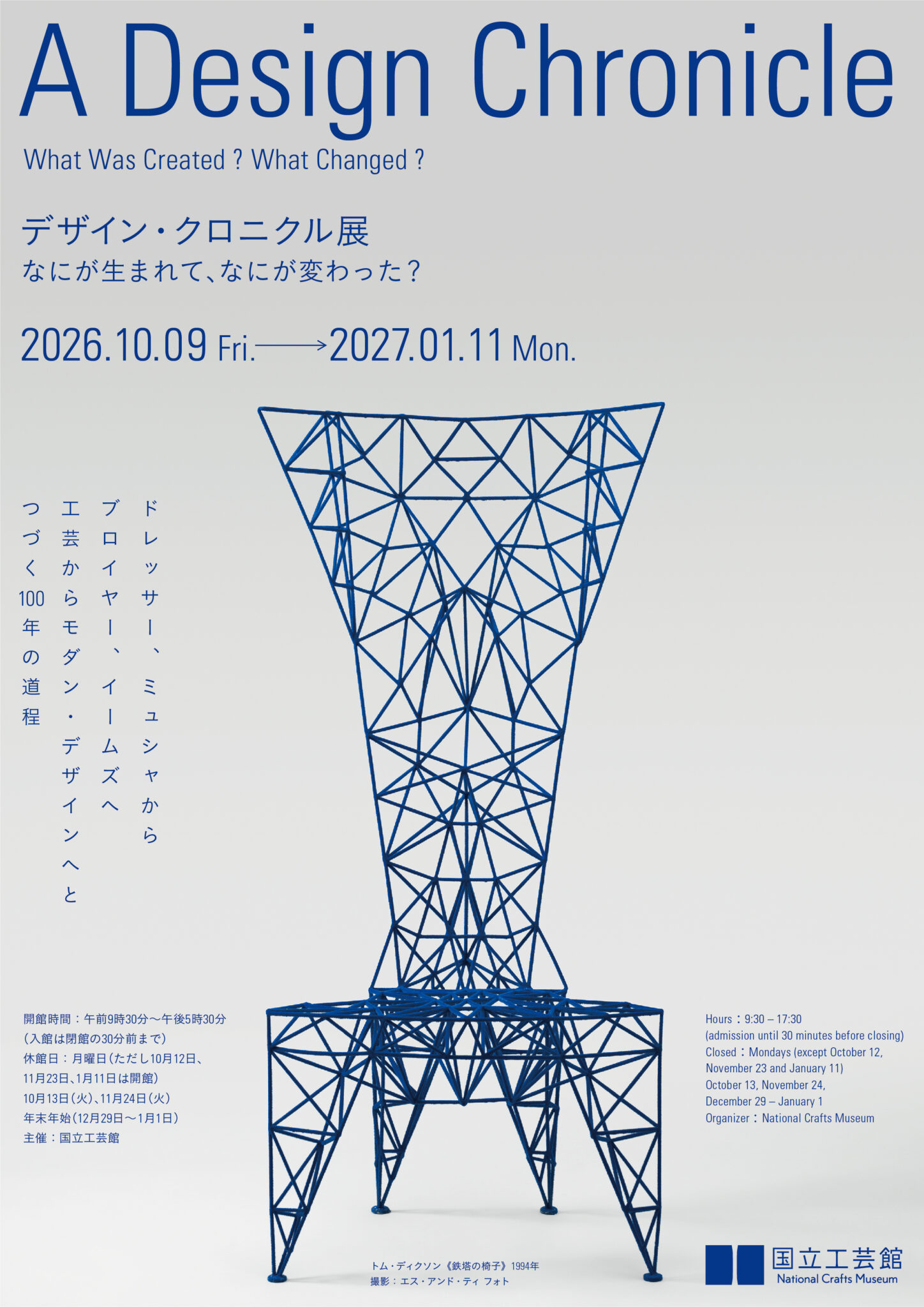
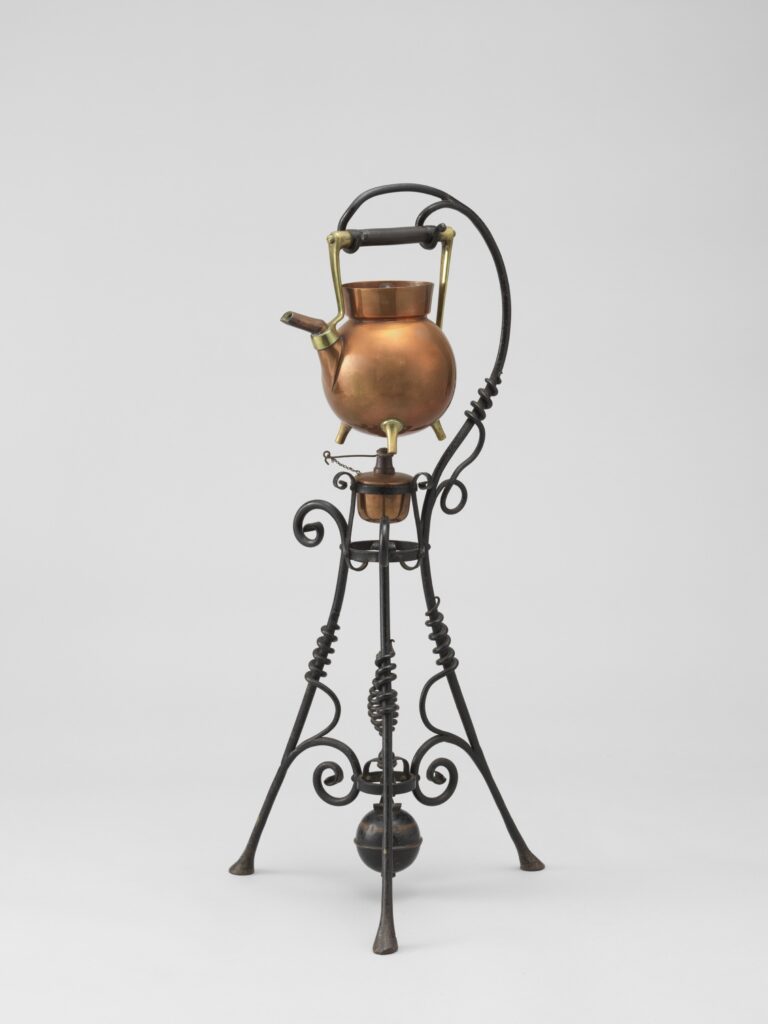
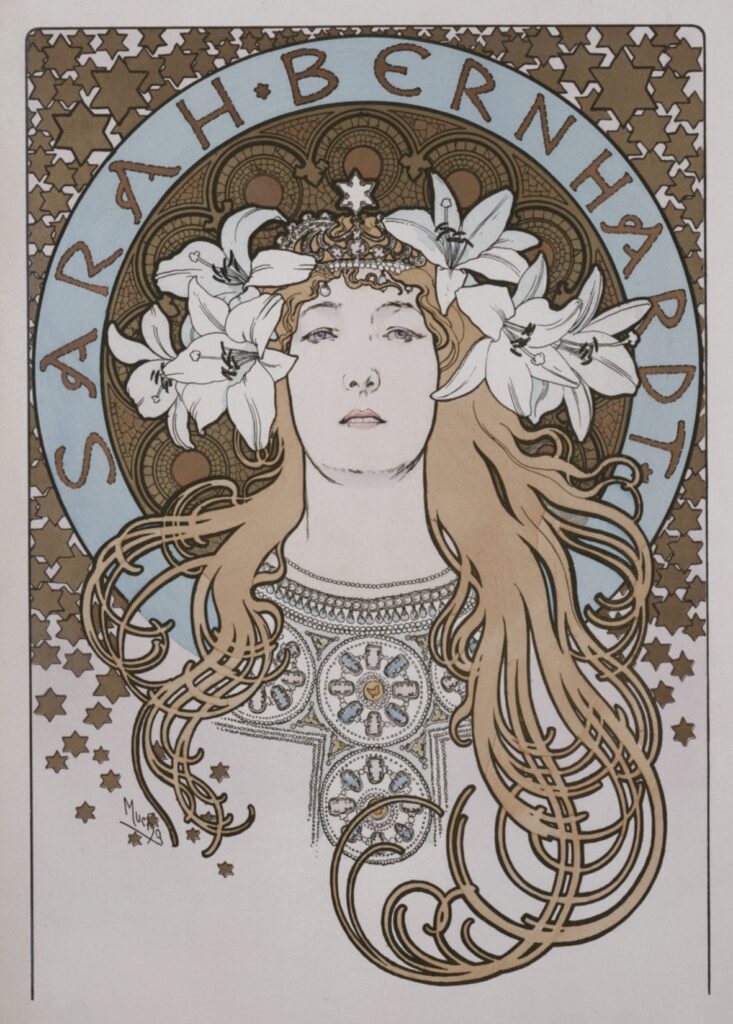
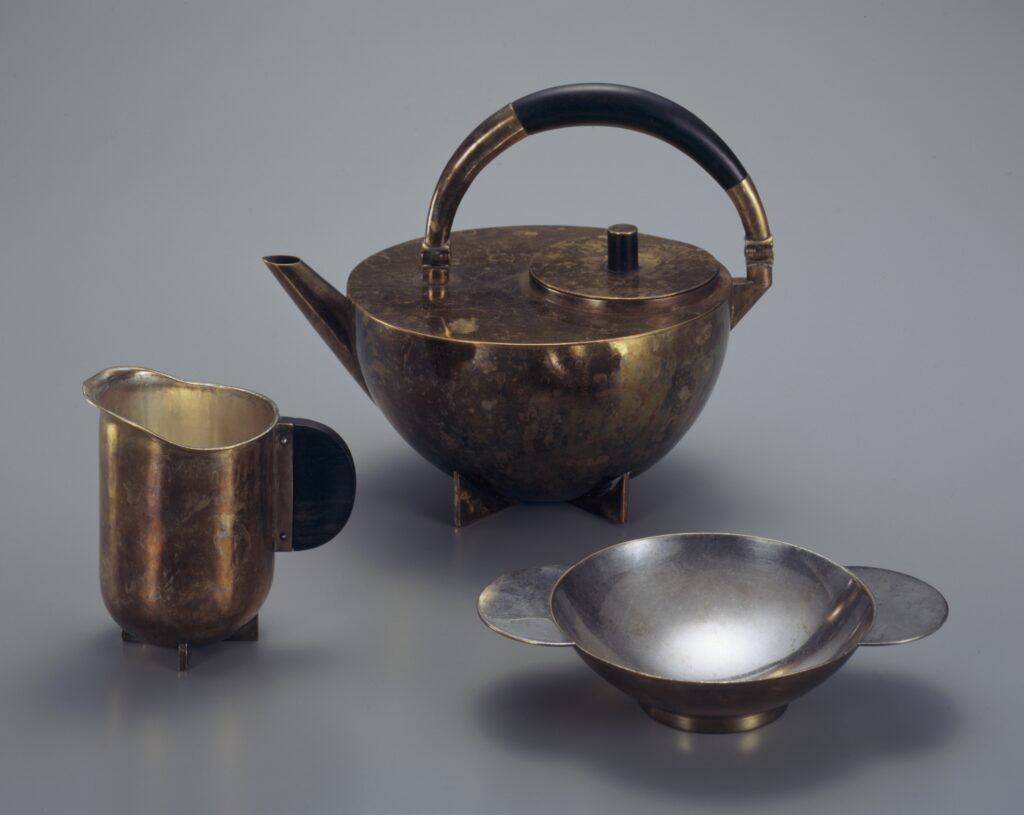
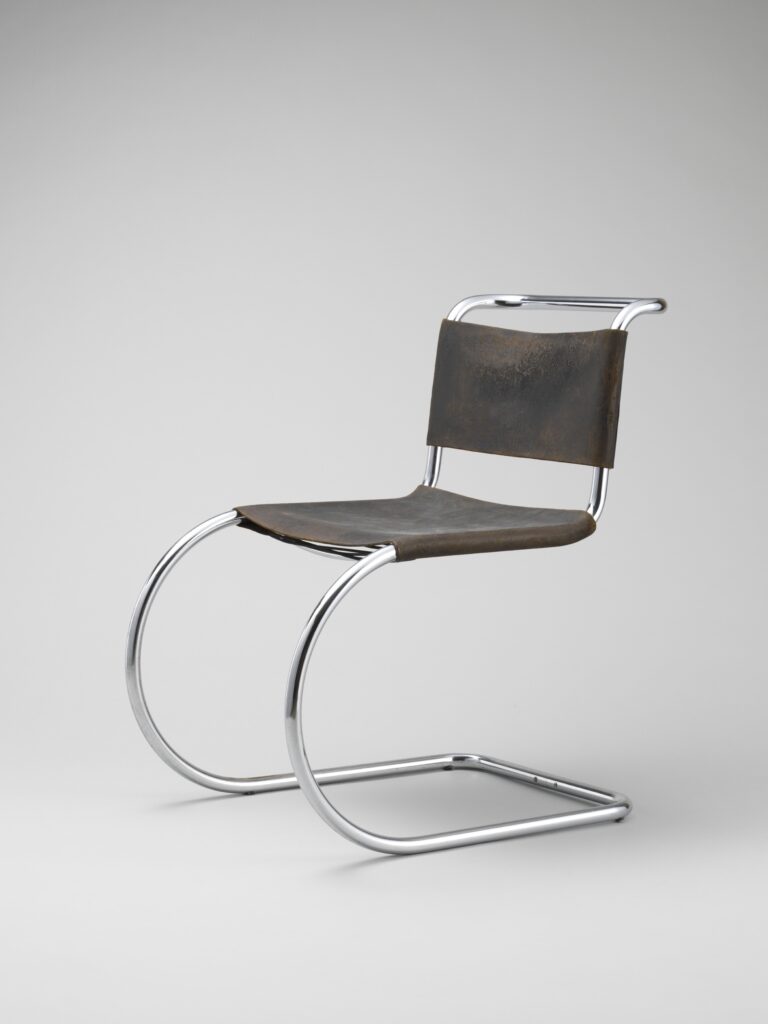
1 / 5 Image: National Museum of Crafts デザイン・クロニクル展 なにが生まれて、なにが変わった?(フライヤー)
- Dates
- Oct 9, 2026 – Jan 11, 2027
- Venue
- National Museum of Crafts (国立工芸館) · Ishikawa石川県金沢市出羽町3-2
Getting there
From the east exit (Kenrokuen exit) of JR Kanazawa Station, take a bus from stop 3 (about 12 min) to Hirosaka / 21st Century Museum and walk 7 min; or take a bus from stop 6 to Dewamachi and walk about 5 min
- Hours
- 09:30–17:30 · Closed: Mon
- Admission
- General ¥1,200Original: 一般 1,200円
- Artists
- Christopher Dresser
- Alphonse Mucha
- Pierre Chareau
- Marianne Brandt
- Ludwig Mies van der Rohe
- Charles & Ray Eames
- Enzo Mari
- Organized by
The calendar entry covers the whole run, so you won't need to look the dates up again. Please check opening hours and closing days before your visit.
Knowledge cards
Art Decoアール・デコA style of design in furniture, decorative objects, and architecture from the 1920s and 1930s, recognizable by its geometric forms.Read moreClose
01About
The name comes from a Paris fair of 1925, the International Exhibition of Modern Decorative and Industrial Arts, though it became a common label only in the 1960s. The style can be read both as the heir of Art Nouveau and as a reaction against it. Furniture, ceramics, textiles, jewellery, and glass all show it, and it was a leading look for cinemas and hotels. What mainly separates it from Art Nouveau is Cubism, which pushed Art Deco designs toward fragmented, geometric forms, although some designs kept plant motifs and flowing curves. Its inspirations were wide-ranging: Egyptian art of antiquity, Aztec art and other art from ancient Central America, the look of modern ships, trains, and cars, the Bauhaus school, and the modern buildings and designs of architects like Le Corbusier and Ludwig Mies van der Rohe. At the time it also circulated under other names, such as style moderne, and people did not yet see it as one distinct, coherent style.
02In the gallery
Find an object or a design and pick out its geometric shapes, then look for any plant-like curves that survive among them. Does anything recall a ship, a train, or a car?
Wall label terms in Japanese
- アール・デコ
- Art Deco
- アール・ヌーヴォー
- Art Nouveau
- 幾何学的
- Geometric
- キュビスム
- Cubism
03Notes
Art Deco usually reads as geometric, a look that came largely from Cubism.
This time, at "Design Chronicle" Exhibition: What Was Created, and What Changed? —
On an object, a building, or a pattern, do you see straight lines and geometric shapes, or curves?
04Related
Industrial designインダストリアルデザインThe design of goods made in quantity by machine: deciding a product's shape and use before it is made.Read moreClose
01About
The term was first used in the United States in the 1920s for specialist designers working on product design. Henry Ford's introduction of the production line in the car industry in 1913, and its later use for other goods, prompted artists to try to combine art and technology. Russian Constructivism and the German Bauhaus drew on the machine age, and the Bauhaus also shaped modern architecture; they stressed form following function and produced abstract, geometric designs. In Japan, the Japan Industrial Design Association (JIDA) is the public-interest association of industrial designers. Today the World Design Organization calls industrial design a strategic problem-solving process that drives innovation and builds business success, covering products, systems, services, and experiences.
02In the gallery
Pick an everyday product and imagine making a thousand of it: which parts look easy for a machine to repeat, such as even edges, joined panels, or a molded surface?
Wall label terms in Japanese
- インダストリアルデザイン
- Industrial design
- プロダクトデザイン
- Product design
- 大量生産
- Mass production
03Notes
Industrial design shapes a product for machine production and for use.
This time, at "Design Chronicle" Exhibition: What Was Created, and What Changed? —
On an everyday product, can you tell which part of its shape is there to make it easy to use?