Opens in 148 days#Kids & family#Media art
It Might Be the Shinsuke Yoshitake Exhibition
Japanese original:
ヨシタケシンスケ展かもしれない
The first large-scale solo exhibition of picture-book author Shinsuke Yoshitake (born 1973 in Kanagawa Prefecture), touring Japan since April 2022. More than 400 items are shown, including the small sketches that seed his ideas, original picture-book art, three-dimensional pieces he devised for the show and items from his own collection, offering a look inside the artist's head. Since his first picture book, Ringo kamoshirenai (2013), he has kept drawing, with a fine pen nib, the endless fantasies in his mind and the small habits of people.
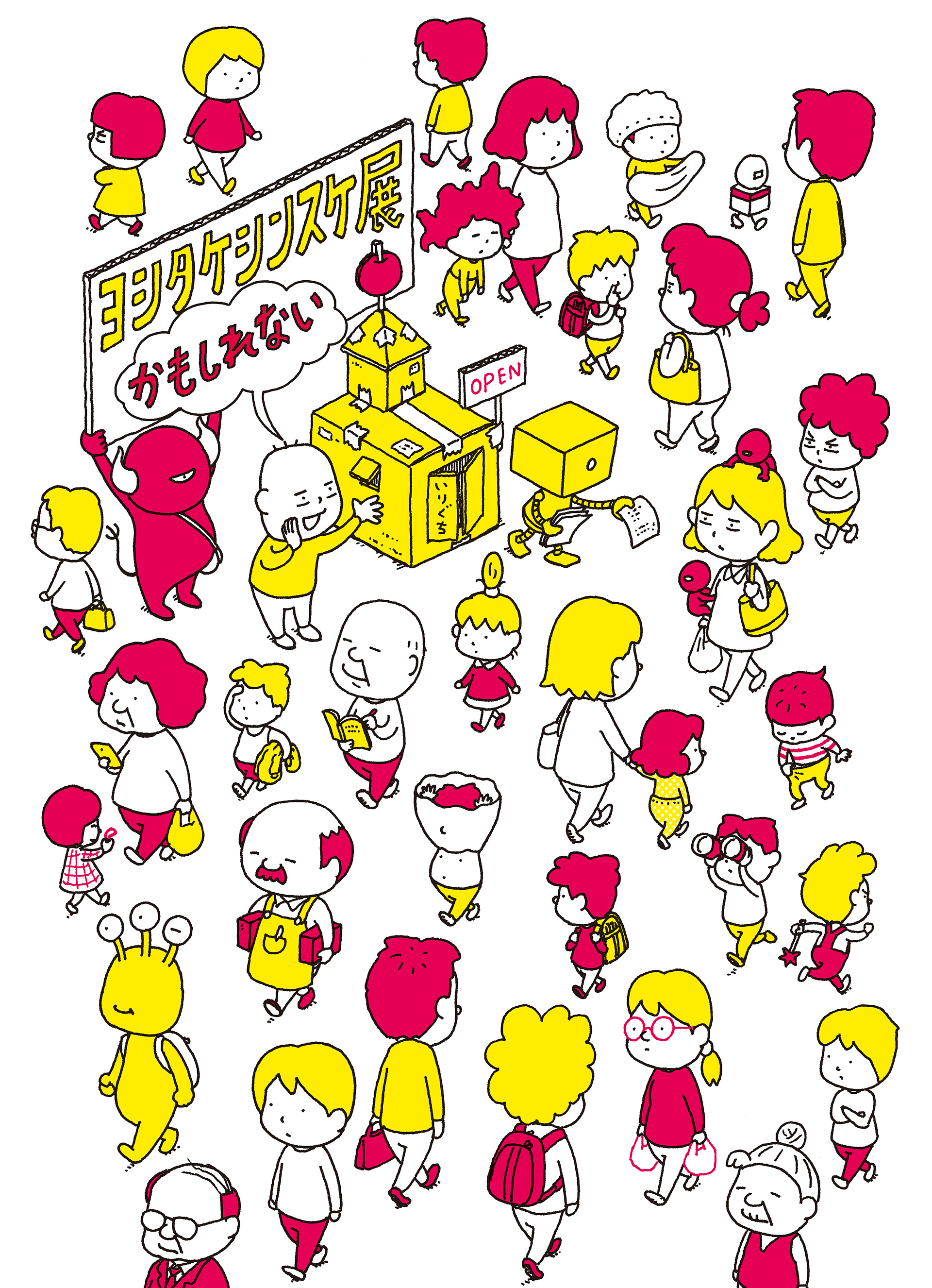


1 / 4 Image: Sapporo Art Park Museum 展覽主視覺 ©Shinsuke Yoshitake(巡迴展官方網站 yoshitake-ten.exhibit.jp)
- Dates
- Apr 17 – Jun 13, 2027
- Venue
- Sapporo Art Park Museum (札幌芸術の森美術館) · Hokkaido北海道札幌市南区芸術の森2丁目75番地
Getting there
From Makomanai Station (Namboku Line), take a Chuo Bus on the Takino line from Bus Stop 2 for about 15 min and get off at Geijutsu-no-Mori Iriguchi (Sapporo Station to Makomanai is about 17 min by subway; bus fare ¥360 for adults)
- Hours
- 09:45–17:00 · Closed: Mon
- Admission
- General ¥1,600Original: 一般 1,600円
- Artists
- Organized by
- Sapporo Art Park Museum
- TV Hokkaido (TVh)
- HTB北海道電視台
- The Asahi Shimbun
- Hakusensha
The calendar entry starts on opening day and covers the whole run, so you won't need to look the dates up again. Please check opening hours and closing days before your visit.
Entry notes
The show runs from 17 April to 13 June 2027. Open 9:45–17:00 in April and May and 9:45–17:30 in June, with entry until 30 minutes before closing. The official page lists 19 and 26 April (Mondays) as closed days.
- The show runs from 17 April to 13 June 2027. Open 9:45–17:00 in April and May and 9:45–17:30 in June, with entry until 30 minutes before closing. The official page lists 19 and 26 April (Mondays) as closed days. (Source: 札幌藝術之森美術館:ヨシタケシンスケ展, 2026)
- Tickets are ¥1,600 for adults (¥1,400 in advance or for groups of 20 or more), ¥1,100 for high-school and university students (¥900) and ¥600 for elementary and junior-high students (¥500); preschool children are free. Visitors aged 65 and over pay ¥1,300 on the day with proof of age. The official page says advance tickets go on sale in late January 2027. Holders of a disability certificate and one companion enter free when they show it at the ticket window. (Source: 札幌藝術之森美術館:ヨシタケシンスケ展, 2026)
From the organizer's announcements and press reports. Arrangements can change; please check the official site before your visit.
Knowledge cards
Illustration (sashie)挿絵・イラストレーションPictures made for printed matter such as books, magazines, newspapers, and sheet music; in Japan they were called sashie, and the word “illustration” came into use from the late 1950s.Read moreClose
01About
Sashie are pictures placed in text-based media such as magazines, newspapers, and books, for example to help readers understand. In the Edo period, ukiyo-e artists drew black-and-white illustrations for kusazōshi and yomihon; after the Meiji Restoration, ukiyo-e artists were hired to illustrate newspaper serial novels, and Tsukioka Yoshitoshi and his pupil Mizuno Toshikata established that genre. In the 1900s, as printing moved from woodblocks to photomechanical plates, it became easier for Western-style painters to take up illustration, and when the magazine Shirakaba featured Aubrey Beardsley in 1911, many illustrators were influenced. From the late 1920s, as magazines spread, painters such as Nakahara Jun'ichi and Fukiya Kōji worked as illustrators full-time. Takehisa Yumeji won wide popularity through magazines, poem-picture books, and sheet-music covers, and his women, unlike earlier ukiyo-e-style illustrations, were taken up by young people as reflecting a modern sense of beauty. Around 1970, Ishihara Gōjin and others filled the large illustrated-explainer pages of boys' magazines with monsters and strange phenomena drawn in minute detail. The word “illustration” took root after the war; in the 1960s it became a genre independent of graphic design, and illustrators became an independent profession from the 1970s on.
02In the gallery
On a cover or a page, look at how the picture meets the title and the text: does it leave room for the words, or make the lettering part of the picture?
Wall label terms in Japanese
- 挿絵
- Sashie (illustration)
- 口絵
- Frontispiece (kuchi-e)
- イラストレーション
- Illustration
- 装幀
- Book design (sōtei)
- 夢二式美人
- Yumeji-style beauty
03Notes
An illustration sits beside words, leaving room for them or drawing them into the picture.
This time, at It Might Be the Shinsuke Yoshitake Exhibition —
Beside what words, song, or story did an illustration first sit? What gave you the idea?