Opens in 6 days#Painting
Copperplate Print Artist Komaï Tetsuro: Constellations on the Palm of His Hand
Japanese original:
銅版画家・駒井哲郎 掌上にひろがる星座のように
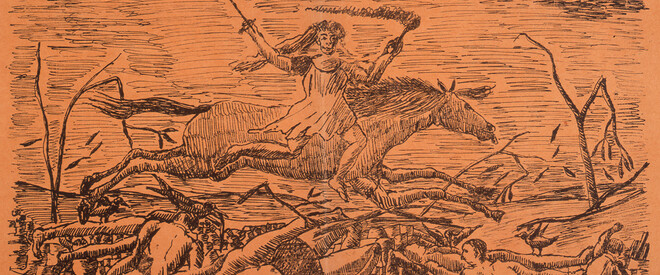
Tetsurō Komai (1920–1976), a major figure in the history of Japanese printmaking, fell for etching at 14, won a prize at the first São Paulo Biennial in 1951, and after studying in Paris worked in his Setagaya studio, also making books of poems and prints with poets. For the 50th anniversary of his death, the Setagaya Art Museum draws mainly on the collection donated by Yoshiharu Fukuhara to show some 300 items: prints, rare oil paintings, original illustrations shown for the first time, and prints and tools from Komai's own collection.
1 / 8 Image: Setagaya Art Museum
- Dates
- Nov 28, 2026 – Jan 31, 2027
- Venue
- Setagaya Art Museum (世田谷美術館) · Setagaya東京都世田谷区砧公園1-2
Getting there
17 min walk from Yoga Station (Tokyu Den-en-toshi Line), or a bus to the 'Bijutsukan' stop and a 3 min walk
- Hours
- 10:00–18:00 · Closed: Mon
- Admission
- General ¥1,400Original: 一般 1,400円
- Artists
- Organized by
- Setagaya Art Museum
- Tokyo Shimbun
The calendar entry starts on opening day and covers the whole run, so you won't need to look the dates up again. Please check opening hours and closing days before your visit.
Entry notes
Online tickets go on sale from 12:00 on Tuesday, November 17 (credit card or d Barai). Visitors who cannot buy online, or who use discounts such as the Arts Card, buy a same-day ticket at the museum counter; there may be a wait when the galleries are crowded.
- Online tickets go on sale from 12:00 on Tuesday, November 17 (credit card or d Barai). Visitors who cannot buy online, or who use discounts such as the Arts Card, buy a same-day ticket at the museum counter; there may be a wait when the galleries are crowded. (Source: 世田谷美術館, 2026)
- Open 10:00–18:00 (last entry 17:30). Closed on Mondays and from December 28 to January 4; open on Monday, January 11 (a national holiday) and closed the next day, Tuesday, January 12. (Source: 世田谷美術館, 2026)
From the organizer's announcements and press reports. Arrangements can change; please check the official site before your visit.
Guided tours
Lecture with sign-language interpretation (related program): Monday 11 Jan 2027 (public holiday), 14:00–15:00 (doors 13:30), by the printmaker 中林忠良 in the museum's auditorium. 140 seats, free; the site mentions no advance registration — admission tickets are handed out in front of the auditorium from 13:00.
- TalkJan 11 (Mon)Lecture with sign-language interpretation (related program): Monday 11 Jan 2027 (public holiday), 14:00–15:00 (doors 13:30), by the printmaker 中林忠良 in the museum's auditorium. 140 seats, free; the site mentions no advance registration — admission tickets are handed out in front of the auditorium from 13:00.
- TalkJan 13 (Wed)Lecture with sign-language interpretation, 'Komai Tetsuro: Trajectory of His Work' (駒井哲郎 創作の軌跡), co-hosted with the museum's friends' association: Wednesday 13 Jan 2027, 14:00–15:30 (doors 13:30), by the exhibition's curator 樋口茉呂奈 in the auditorium. 140 seats, free; no advance registration is mentioned — tickets are handed out in front of the auditorium from 13:00.
Source: 世田谷美術館 イベント「夢と現実のあわい」, 世田谷美術館 イベント「駒井哲郎 創作の軌跡」. From the venue's and organizer's announcements. Schedules, languages and fees can change; please check the official site before your visit.
Knowledge cards
Etching (copperplate print)銅版画(エッチング)A print made by cutting lines into a metal plate, usually copper, filling the grooves with ink, and pressing them onto paper; etching is the method of biting the lines with acid.Read moreClose
01About
A copperplate print is an intaglio print: unlike a woodcut, where the raised parts of the block print, ink is held in the sunken lines and areas. In etching, the plate is covered with a thin acid-resistant ground of wax or resin; the artist draws through it with a needle to expose the metal, and the plate is put in acid, which bites into the exposed lines to a depth that depends on time and the strength of the acid. After the ground is removed, ink is worked into the lines and wiped from the surface, and dampened paper is laid on the plate and run through a press under very high pressure, so that it takes the ink from the grooves. In drypoint, the needle scratches the plate directly, and the burr thrown up at the edge of the line also holds ink and becomes part of the printed line. Aquatint is a variant of etching that makes areas of tone rather than lines and is mostly used together with etching. Etching spread across Europe in the 16th century; in Japan, Shiba Kōkan made the first etching in 1783. Komai Tetsurō (1920–1976) discovered copperplate prints at fourteen; he seems to have regarded black and white as the essence of the medium, saying that “the good of copperplate prints lies in the world of black,” yet he also left many prints in colour.
02In the gallery
Go close and compare the lines: within one print, can you tell lines bitten deep from shallow ones by their width and darkness?
Wall label terms in Japanese
- 銅版画
- Copperplate print
- エッチング
- Etching
- 凹版
- Intaglio
- 腐食
- Biting (by acid)
- ドライポイント
- Drypoint
- アクアチント
- Aquatint
03Notes
Etching bites lines into copper with acid; the longer the plate stays in, the deeper the line.
This time, at Copperplate Print Artist Komaï Tetsuro: Constellations on the Palm of His Hand —
Up close, is a dark area built from lines, or printed as a tone?
04Related
Illustration (sashie)挿絵・イラストレーションPictures made for printed matter such as books, magazines, newspapers, and sheet music; in Japan they were called sashie, and the word “illustration” came into use from the late 1950s.Read moreClose
01About
Sashie are pictures placed in text-based media such as magazines, newspapers, and books, for example to help readers understand. In the Edo period, ukiyo-e artists drew black-and-white illustrations for kusazōshi and yomihon; after the Meiji Restoration, ukiyo-e artists were hired to illustrate newspaper serial novels, and Tsukioka Yoshitoshi and his pupil Mizuno Toshikata established that genre. In the 1900s, as printing moved from woodblocks to photomechanical plates, it became easier for Western-style painters to take up illustration, and when the magazine Shirakaba featured Aubrey Beardsley in 1911, many illustrators were influenced. From the late 1920s, as magazines spread, painters such as Nakahara Jun'ichi and Fukiya Kōji worked as illustrators full-time. Takehisa Yumeji won wide popularity through magazines, poem-picture books, and sheet-music covers, and his women, unlike earlier ukiyo-e-style illustrations, were taken up by young people as reflecting a modern sense of beauty. Around 1970, Ishihara Gōjin and others filled the large illustrated-explainer pages of boys' magazines with monsters and strange phenomena drawn in minute detail. The word “illustration” took root after the war; in the 1960s it became a genre independent of graphic design, and illustrators became an independent profession from the 1970s on.
02In the gallery
On a cover or a page, look at how the picture meets the title and the text: does it leave room for the words, or make the lettering part of the picture?
Wall label terms in Japanese
- 挿絵
- Sashie (illustration)
- 口絵
- Frontispiece (kuchi-e)
- イラストレーション
- Illustration
- 装幀
- Book design (sōtei)
- 夢二式美人
- Yumeji-style beauty
03Notes
An illustration sits beside words, leaving room for them or drawing them into the picture.
This time, at Copperplate Print Artist Komaï Tetsuro: Constellations on the Palm of His Hand —
Beside what words, song, or story did an illustration first sit? What gave you the idea?