56 days left#Photography
Rebuilding: Japan's Emerging Artists, Vol. 23
Japanese original:
ふたたびくみたてる 日本の新進作家 vol.23
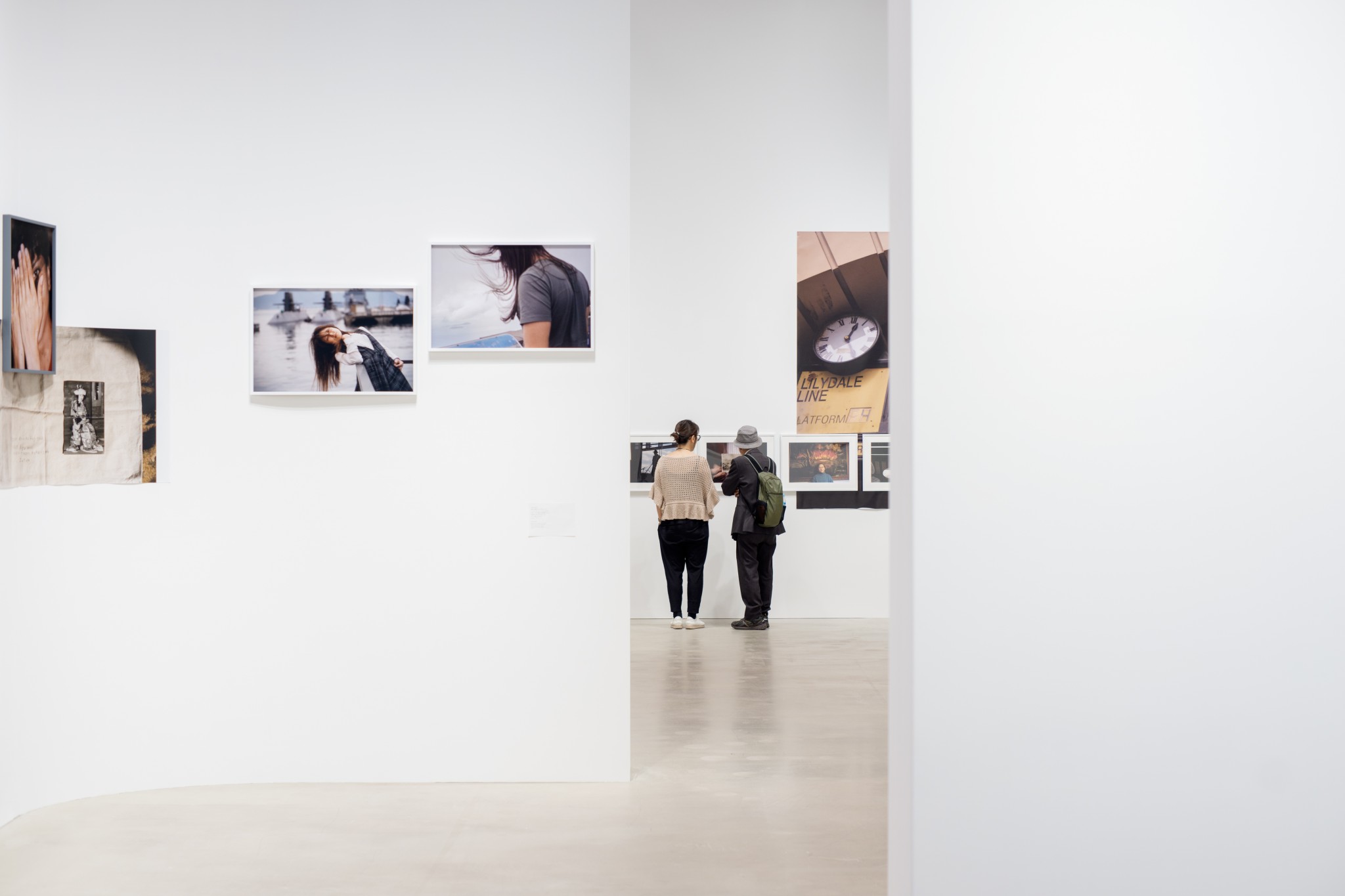
The 23rd edition of the Tokyo Photographic Art Museum's Contemporary Japanese Photography series, held since 2002, introduces five artists who work with AI, CG, stop-motion animation, and other techniques and materials: Sayuri Ichida, Taro Karibe, Zai Nomura, Mugi Hashimoto, and Asako Fujikura. It looks at how they draw on real memories and materials and reassemble them into new images. Ichida's installation, which reconstructs fragments of a school building in silkscreen on blackboards, is shown in Japan for the first time.
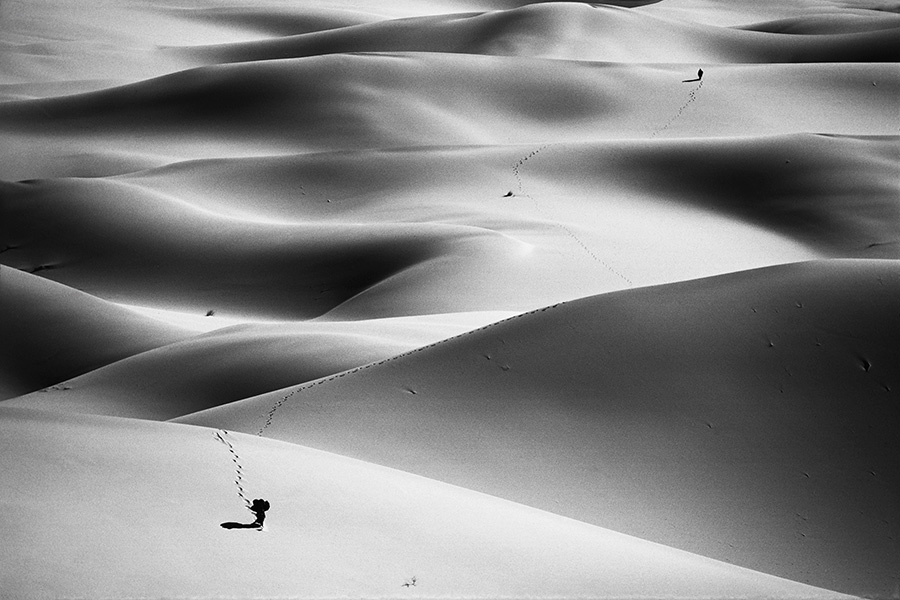
1 / 6 Image: Tokyo Photographic Art Museum 苅部太郎《あの海に見える岩を、弓で射よ #30》2022年 インクジェット・プリント 作家蔵 ⓒTaro Karibe
- Dates
- Sep 30, 2026 – Jan 17, 2027
- Venue
- Tokyo Photographic Art Museum (東京都写真美術館) · Ebisu & Meguro東京都目黒区三田1-13-3 恵比寿ガーデンプレイス内
Getting there
7 min walk from the East Exit, JR Ebisu Station
- Hours
- 10:00–18:00 · Closed: Mon
- Admission
- General ¥700Original: 一般 700円
- Artists
- Sayuri Ichida
- Taro Karibe
- Zai Nomura
- Baku Hashimoto
- Asako Fujikura
- Organized by
- Tokyo Photographic Art Museum
- Tokyo Shimbun
The calendar entry covers the whole run, so you won't need to look the dates up again. Please check opening hours and closing days before your visit.
Entry notes
Tickets for a chosen date and time can be bought online (external ticket site). Closed on Mondays (open when Monday is a holiday, with the next weekday closed) and from December 28 to January 1; free on October 1, January 2 and January 3, and for visitors 65 and over on the third Wednesday of each month. On Thursdays and Fridays from November 5 to 27, 17:00–20:00 is a special evening opening with discounted prices (free for students and high school students; adults and visitors 65 and over pay the group rate; ID required). Baku Hashimoto makes a stop-motion animation in public throughout the run.
- Tickets for a chosen date and time can be bought online (external ticket site). Closed on Mondays (open when Monday is a holiday, with the next weekday closed) and from December 28 to January 1; free on October 1, January 2 and January 3, and for visitors 65 and over on the third Wednesday of each month. On Thursdays and Fridays from November 5 to 27, 17:00–20:00 is a special evening opening with discounted prices (free for students and high school students; adults and visitors 65 and over pay the group rate; ID required). Baku Hashimoto makes a stop-motion animation in public throughout the run. (Source: 東京都写真美術館:ふたたびくみたてる 日本の新進作家 vol.23, 2026)
From the organizer's announcements and press reports. Arrangements can change; please check the official site before your visit.
Guided tours
Talks between participating artists and guests (5 in total, 2 left): Sunday 13 Dec 2026, 橋本麦 with 辻川幸一郎 (video artist), and Sunday 10 Jan 2027, 藤倉麻子 with 南後由和 (sociologist, Hosei University), both 14:00–15:30 in the 1st-floor hall. Free, no advance sign-up; numbered tickets are handed out at the 1st-floor reception from 10:00 on the day, 190 seats. Sign-language interpretation and text display are provided; ask for a reserved access seat when collecting a ticket.
- TalkTalks between participating artists and guests (5 in total, 2 left): Sunday 13 Dec 2026, 橋本麦 with 辻川幸一郎 (video artist), and Sunday 10 Jan 2027, 藤倉麻子 with 南後由和 (sociologist, Hosei University), both 14:00–15:30 in the 1st-floor hall. Free, no advance sign-up; numbered tickets are handed out at the 1st-floor reception from 10:00 on the day, 190 seats. Sign-language interpretation and text display are provided; ask for a reserved access seat when collecting a ticket.
- Audio guideAudio guide: the 5 participating artists talk about the exhibition, released as the 'TOPMUSEUM Podcast' (Spotify and Apple Podcast) to hear in the gallery or at home; the full text is on the museum site. Fee and language are not stated.
- TalkDec 11 (Fri)Gallery talk by the curator with sign-language interpretation: Friday 11 Dec 2026 at 14:00, meeting at the 3rd-floor gallery entrance. A valid ticket for the exhibition is needed; no sign-up method is stated.
Source: ふたたびくみたてる 日本の新進作家 vol.23(東京都写真美術館), 東京都写真美術館 音声ガイドのご案内. From the venue's and organizer's announcements. Schedules, languages and fees can change; please check the official site before your visit.
Knowledge cards
AnimationアニメーションMaking still drawings or puppets appear to move by showing slightly different images one after another in rapid succession.Read moreClose
01About
The word animation comes from the Latin animare, to give life. Because ordinary film runs at 24 frames a second, an animator shifts a drawing or puppet slightly, photographs one frame, and repeats. Two-dimensional techniques include cel animation, in which drawings on clear celluloid sheets are laid over a background, and cut-out animation, in which cut-out figures are swapped in turn. Three-dimensional puppet animation, also called stop-motion, moves its figures in the same way, one frame at a time. Some makers use no camera and scratch or colour the film strip directly. Moving drawings are older than cinema: Émile Reynaud invented the Praxinoscope in 1877, adapted it for projection, and from 1892 showed it in Paris with more than 600 hand-painted colour pictures. Tate dates computer animation to the 1960s.
02In the gallery
Pick a short stretch and watch which parts change from frame to frame and which stay put. In cel animation the drawn figures are laid over a background, so try to tell which is which.
Wall label terms in Japanese
- アニメーション
- Animation
- ストップモーション(コマ撮り)
- Stop-motion
- セル・アニメ
- Cel animation
- コマ
- Frame
03Notes
Animation is built from still images that change a little at a time, so look at what changes between one image and the next.
This time, at Rebuilding: Japan's Emerging Artists, Vol. 23 —
What do you see moving in the picture, and what never moves?
04Related
Media art and video artメディアアートとビデオ・アートArt that takes electronic and digital media, such as television, video, computers, and sensors, as its material.Read moreClose
01About
In March 1963, Nam June Paik showed Exposition of Music – Electronic Television at Galerie Parnass in Wuppertal, West Germany, scattering television sets through the rooms and distorting their pictures with magnets; this is often taken as the starting point of media art. The works that followed take a few broad forms: single-channel video, shown on one screen with a fixed running time like a film; video installation, which arranges several monitors, projections, and objects in a space that visitors walk through; and interactive works that change in response to a visitor's movement, voice, or brain waves. Cathode-ray tube sets and other equipment are produced less and less and are hard to find even second-hand, so keeping such works alive means weighing repair against replacement; Paik himself allowed owners to make the technical changes needed to keep his works running.
02In the gallery
Read the medium line on the label. “72 monitors, 4-channel video” means 72 screens are showing four different videos: find the screens playing the same one and see how they are arranged. For a single-channel work, the label gives the running time; check it before deciding where to start watching.
Wall label terms in Japanese
- メディアアート
- Media art
- シングルチャンネル
- Single-channel video
- 映像○チャンネル
- Video, N channels (N different videos)
- ビデオ・インスタレーション
- Video installation
- インタラクティブ
- Interactive
- ブラウン管
- Cathode-ray tube (CRT)
03Notes
Media art ranges from single-screen video to video installations you walk into.
This time, at Rebuilding: Japan's Emerging Artists, Vol. 23 —
Is a screen in the gallery a window to look into, or an object to walk around?
04Related
Nearby, after this one
Same venue · Tokyo Photographic Art Museum
Same neighborhood · Ebisu & Meguro
Shows open on the same days as this one are listed first (regular closing days only).