Out of Town
Tainan Winter Exhibitions 2026–27Seven exhibitions, from August to May
Chosen by our editor and checked against each venue's official site. No paid listings. About this anthology
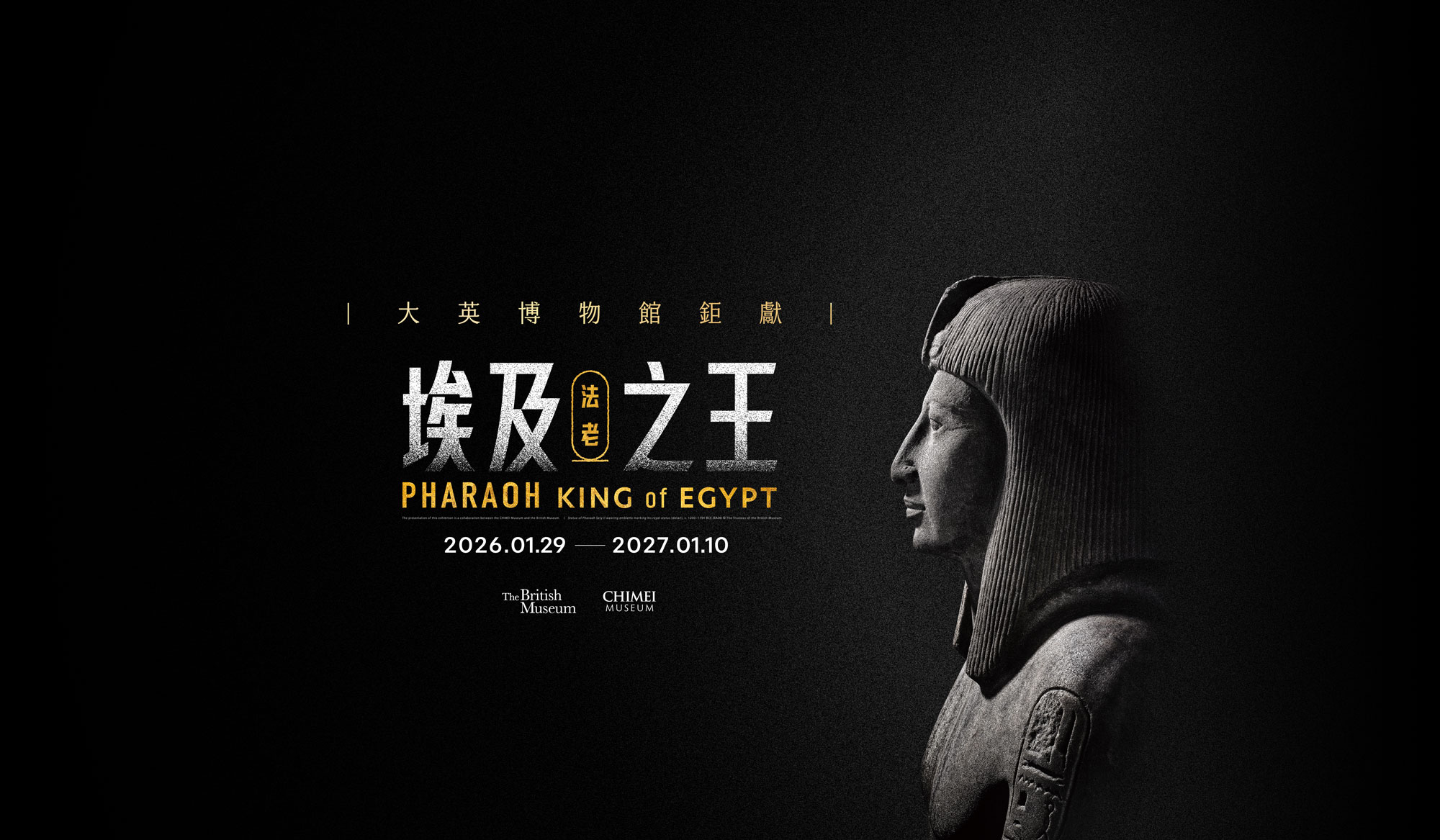


1 / 4 Image: Chimei Museum
The colossal head numbered EA1063 at the British Museum may be the Egyptian king Amenemhat III.
The British Museum dates the colossal head numbered EA1063 to around 1854 to 1808 BC. It says "may be" because statues of Egyptian kings were often re-inscribed with the names of later kings and reused, and their faces were deliberately idealised, so the face alone rarely tells you who it is.
The pharaoh was a ruler, and also a bridge between gods and people. The ancient Egyptians believed the king kept the order of the world and made offerings to the gods in the temples. On another object in the exhibition, a plaque, Amenemhat IV presents offerings to Atum, the creator god; it dates to around 1808 to 1799 BC, just after the previous king.
The Chimei Museum in Tainan has worked with the British Museum on this exhibition of 280 objects in seven themes: how a pharaoh became king and how he ruled, with gold jewellery, papyri and clay tablets from diplomatic letters. The museum says it is the largest group of pharaonic Egyptian objects ever to come to Taiwan. One of the oldest pieces is a relief of King Sanakht of the Third Dynasty, from around 2686 to 2613 BC. The pose of the king raising his mace and gripping an enemy by the hair recurs again and again in Egyptian art for more than two thousand years afterwards.
Of Ramesses II, who reigned for more than sixty years, only a fist of his colossal statue is here.

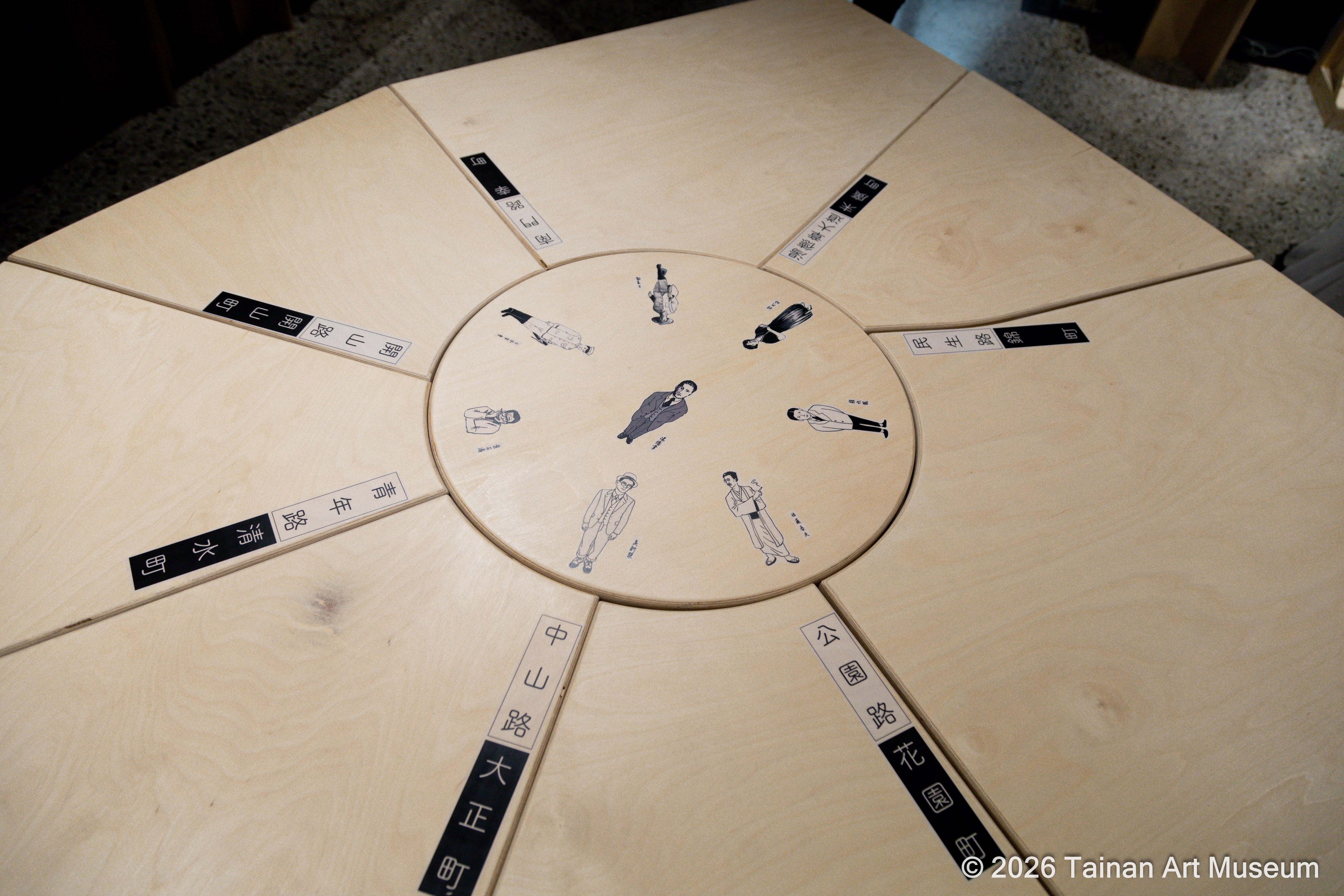
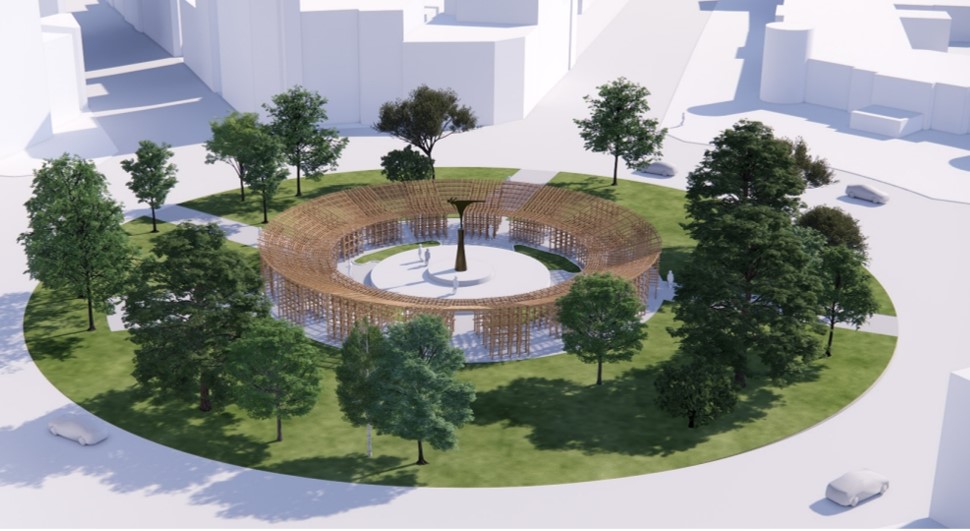
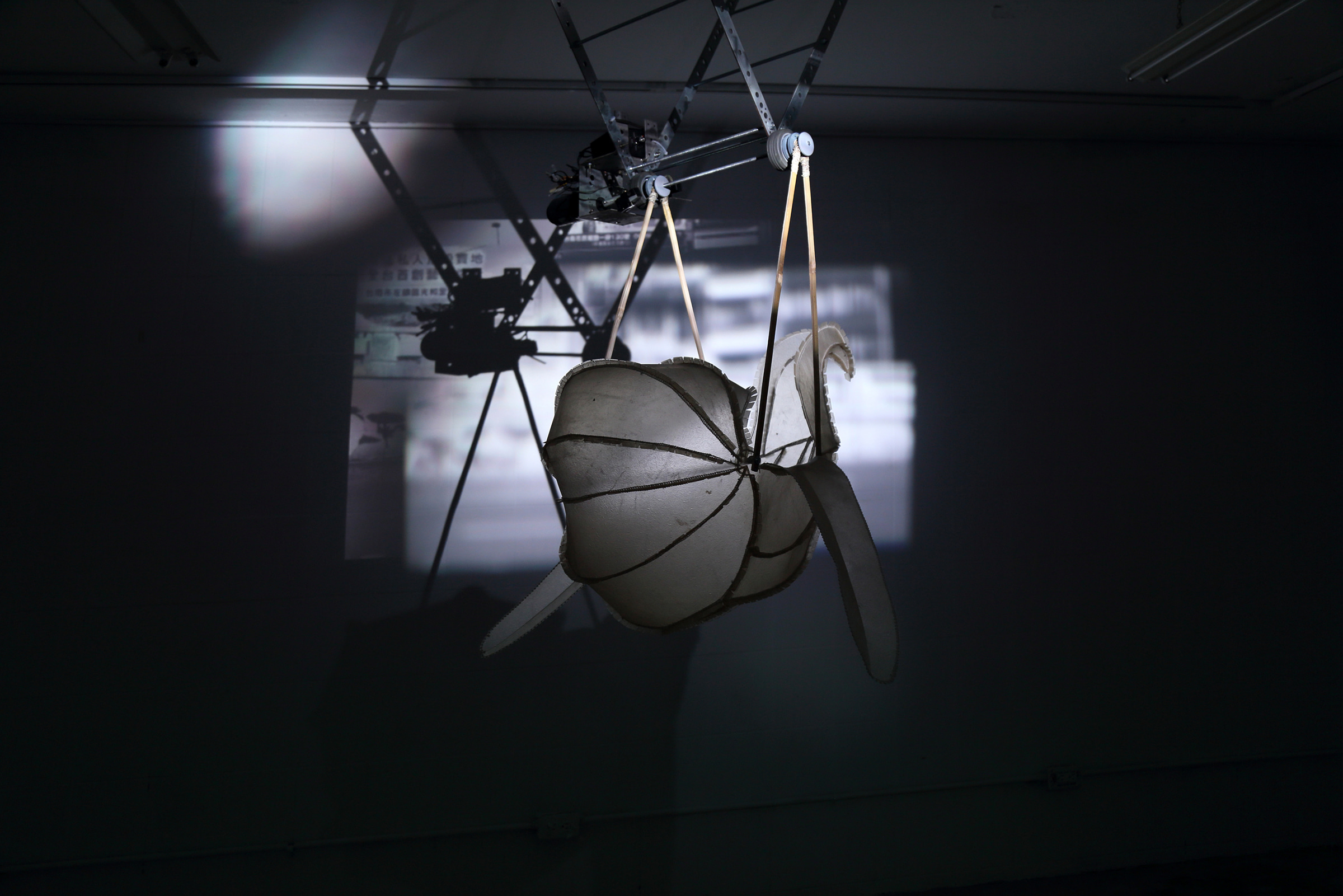
1 / 5 Image: Tainan Art Museum
At the centre of Tainan, Tang Te-chang Memorial Park is a roundabout with seven roads running out from it.
The first Tainan Art Biennale, Unfolding Circuits, takes its title from Tang Te-chang Memorial Park in the centre of Tainan: seven roads run out from this roundabout, and the exhibition, too, has seven routes, seven curators and seven themes. Tang Te-chang was a lawyer who was executed in this park during the 228 Incident; the park was later named after him.
The museum says a circuit is not only a road, but also the way space is reborn after one regime gives way to another, and the forms in which folk belief and resistance keep returning. One route, curated by Apex Lin Pang-soong, sets out a long-neglected history of art and design in Taiwan from 1895 to the 1960s; another, curated by Kao Jun-honn, centres on the Tapani Incident of 1915 and works through it with reenactment, theatre, sound and workshops.
The biennale spreads across 16 core venues and 16 satellite venues. Besides the Tainan Art Museum, they include the Tainan Confucius Temple, the Taiwan Prefecture City God Temple, Chuan Mei Theater, the Museum of Justice and the National Museum of Taiwan Literature.
From the museum to the Confucius Temple and on to Chuan Mei Theater, the exhibition lies scattered through the lanes of the old city.
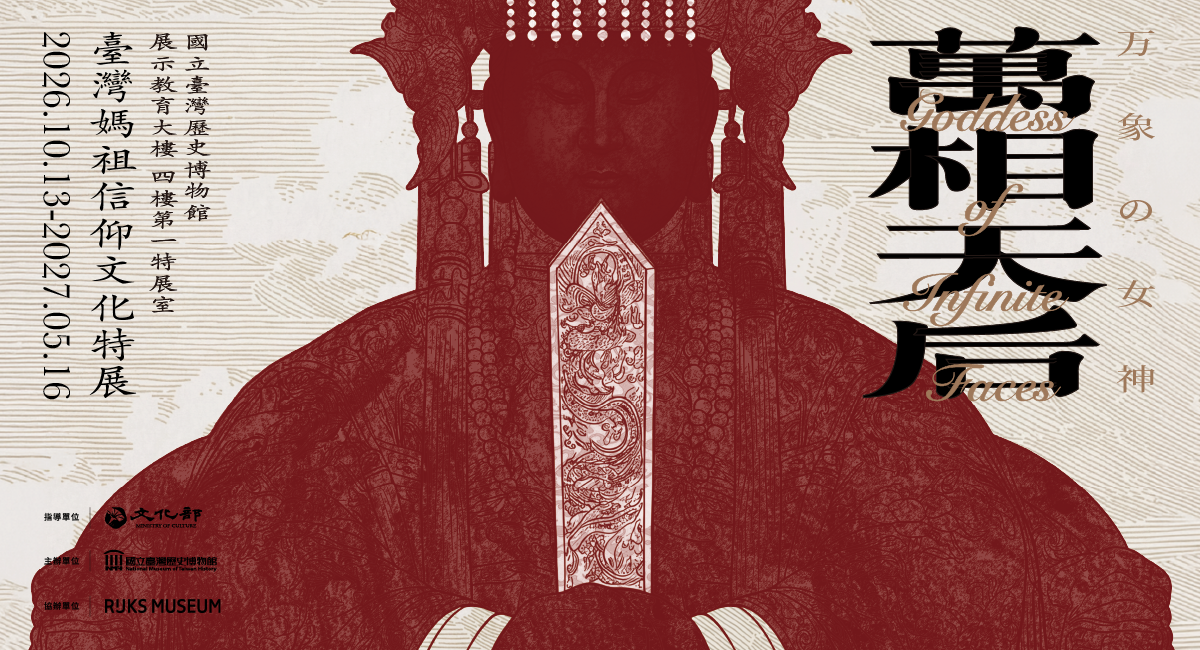
Robes and crowns, palanquins, plaques, and the cosmetics that worshippers offer to Mazu.
Mazu has many faces in Taiwan. The exhibition says this is because her miracles were never written once and for all: as the experience of the state, of social groups, and of individuals meets, the miracles are built and presented again and again. The objects come from the collection of the National Museum of Taiwan History, from institutions in Taiwan and abroad, and from important pieces handed down in Mazu temples across Taiwan.
Mazu began as Lin, a shaman known only by her family name, and became the Heavenly Empress through the miracles that later generations kept adding to her story. The exhibition follows this through images and texts of the 17th to 19th centuries. Among them, the Mazu miracle scrolls (媽祖聖蹟圖) and the Tianhou Zhaoying Lu (《天后昭應錄》) describe how, in the Kangxi era, Mazu appeared to help the conquest of Taiwan. Officials and people alike remembered her miracles through images, and her fate gradually moved in step with the empire's.
Her worship spread from the southeast coast of China along trade routes to the countries of East Asia, and sailors and migrants carried images and sacred objects across the sea. In Taiwan, differences of region and ethnic group gave her different names and forms: a filial daughter who brings honor to her parents, a tender Ma-po (媽婆) who cherishes her children, a healer who gives medicine in epidemics, a goddess who appears amid war.
Her power is held to attach to objects. The incense burner that receives the incense fire and the incense-carrying pole that carries the sacred fire are the most important carriers. Cosmetics and personal items offered to Mazu become sacred objects through offering and exchange, then return to the worshippers. Pilgrimage, procession, and the rite of passing the incense burner bring temples and people into contact with one another.
Today the worship also reaches distant people through live broadcasts and video. At the ritual sites, the exhibition says, strangers gather around tokens of affinity (結緣品), trade their own life experiences, and walk side by side.
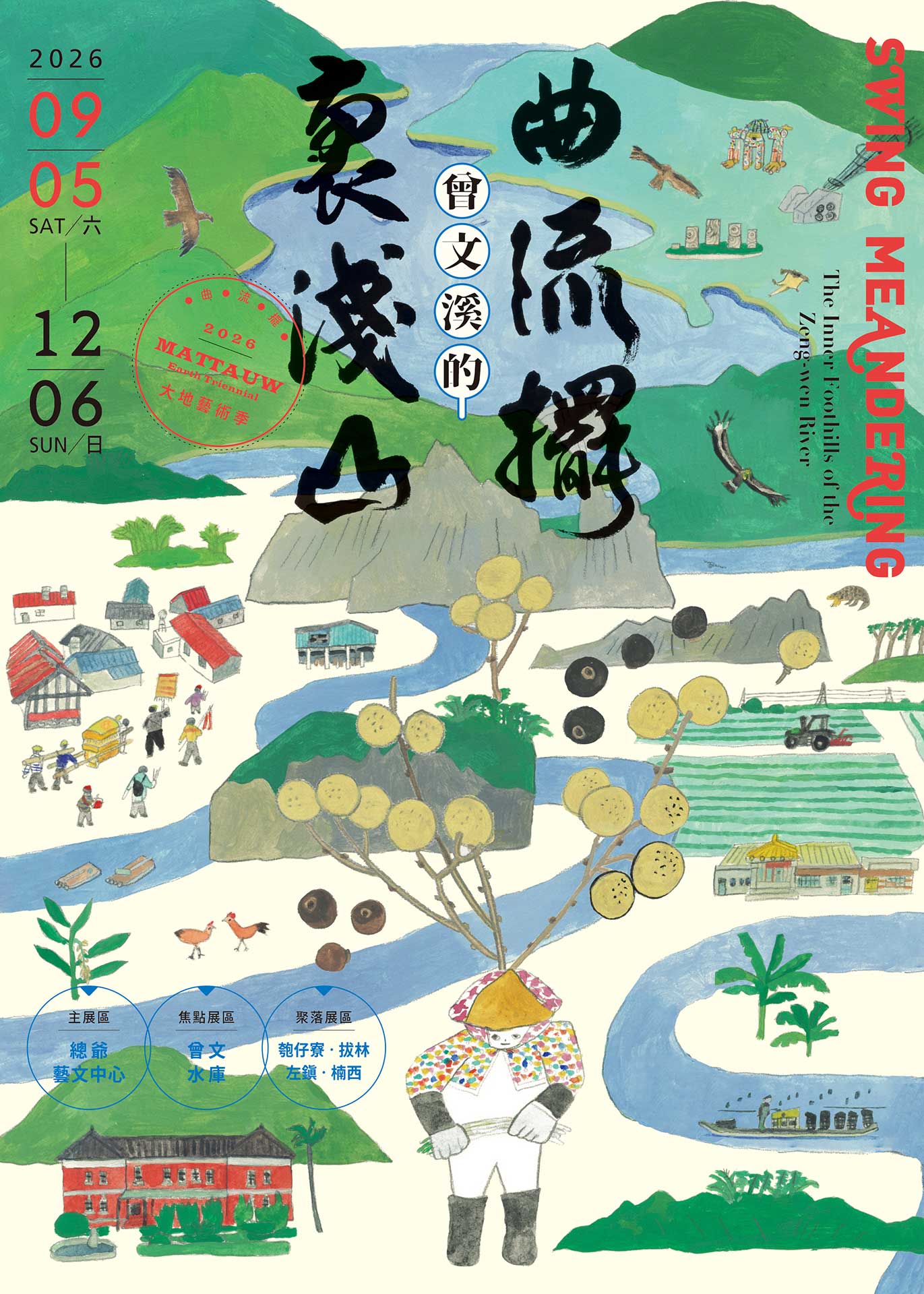
1 / 5 Image: Mattauw 大地藝術季官方網站(mattauw2026.art) 2026 Mattauw 大地藝術季 曲流擺:曾文溪的裏淺山 主視覺
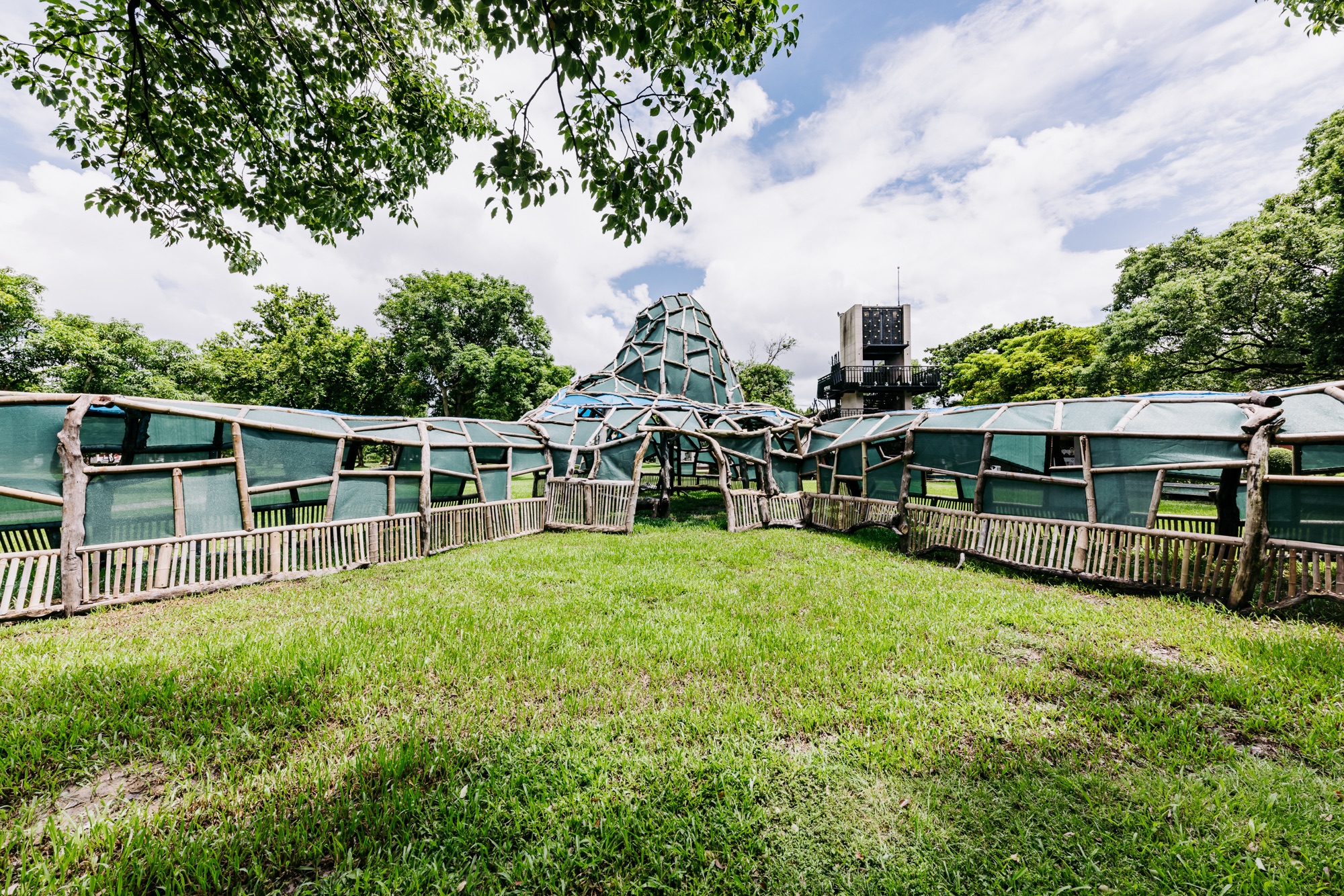
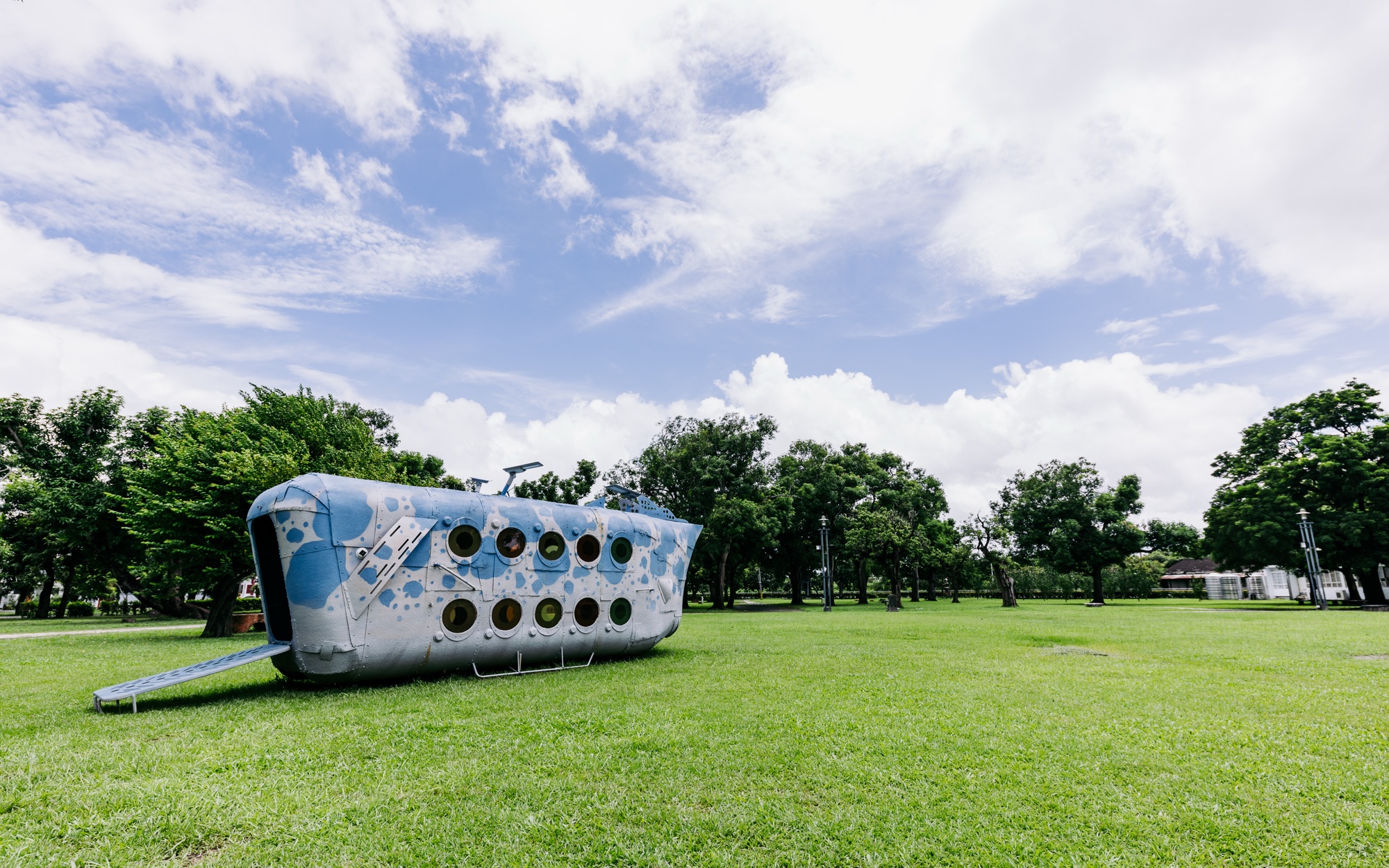
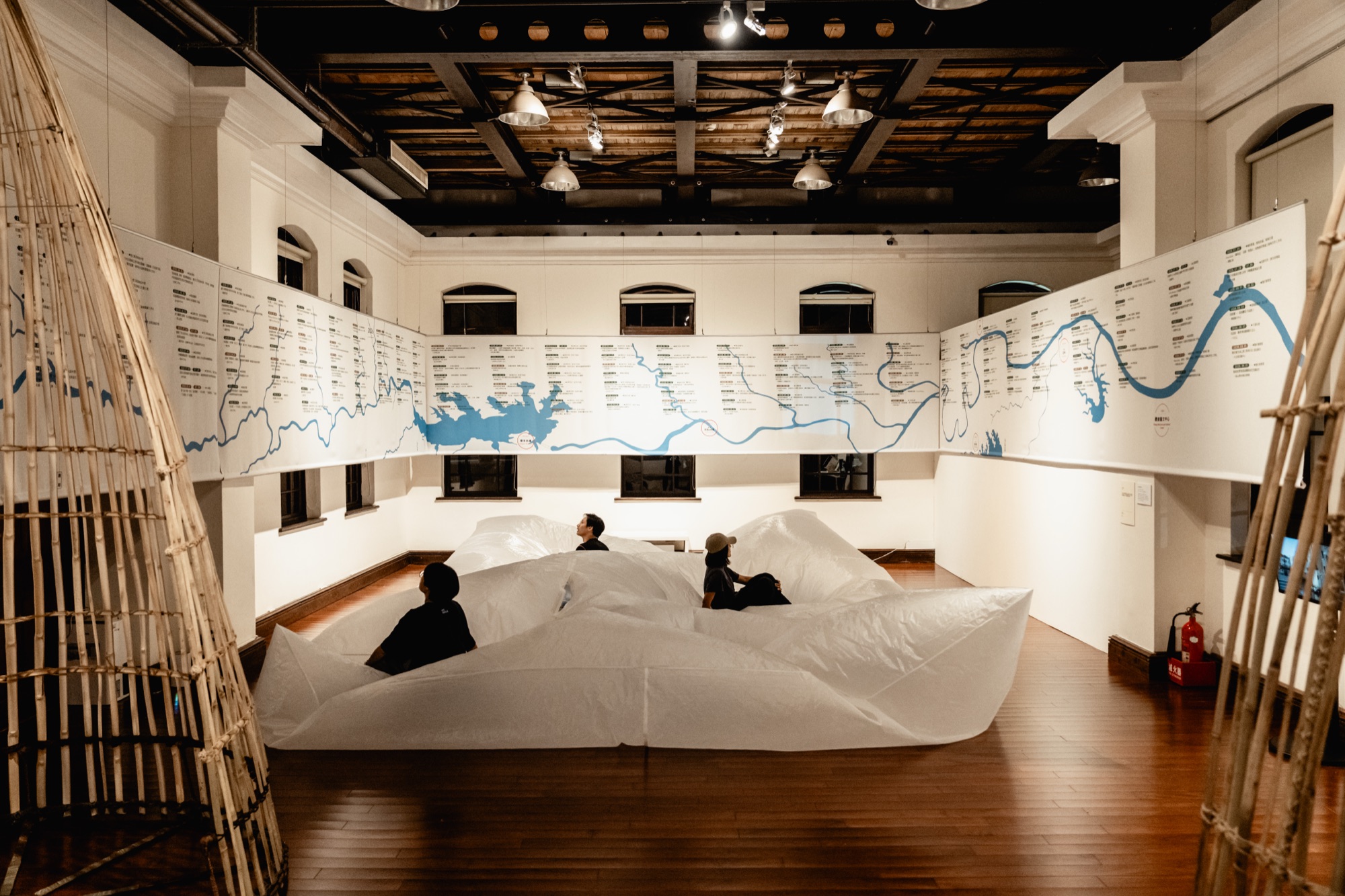
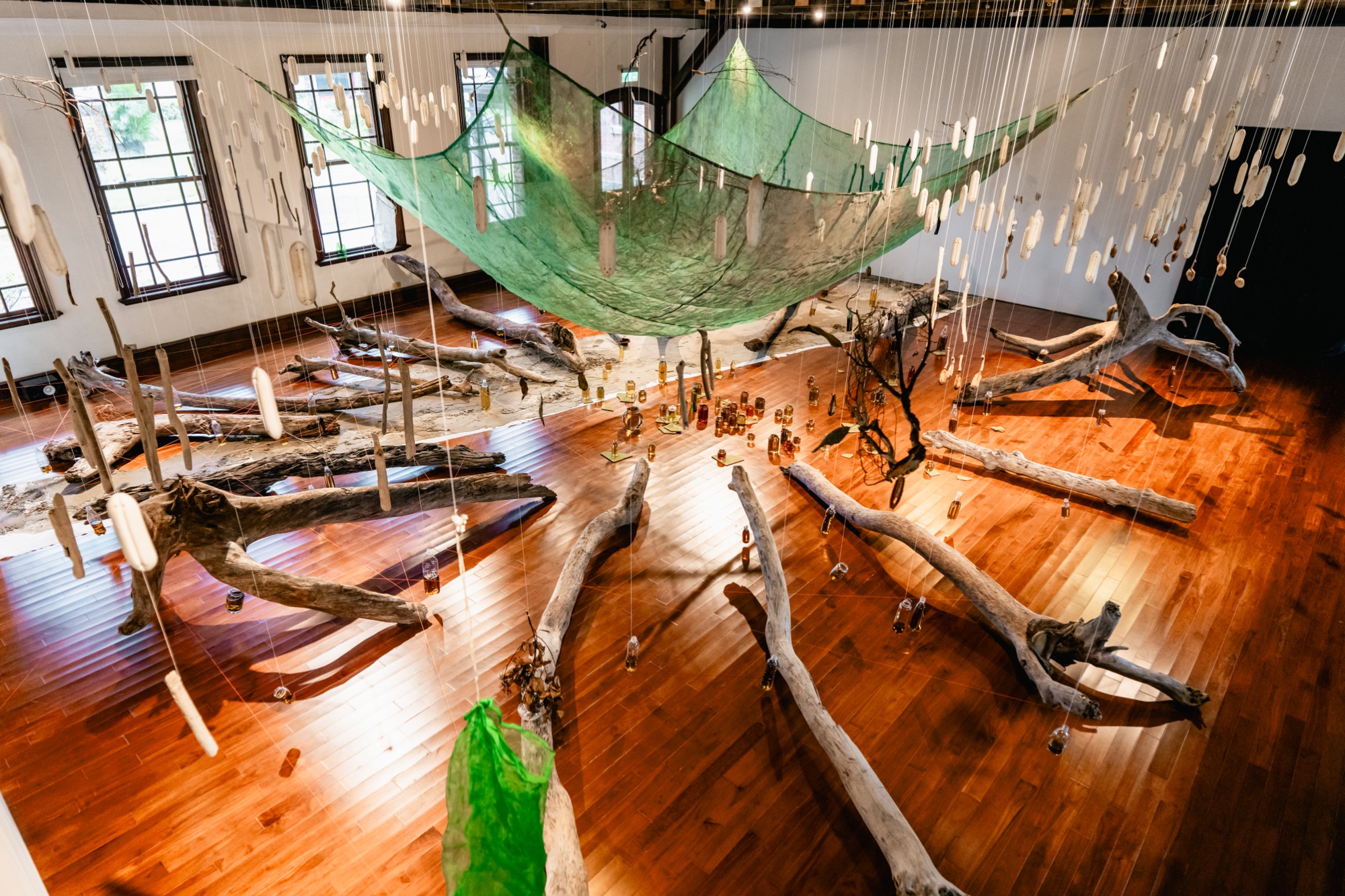
Works stand on the lawn and in the Red Building of an old sugar factory, and in the settlements of the Zengwen River basin.
The 2026 Mattauw Land Art Festival looks at the stretch of the Zengwen River between its two reservoirs. Under nearly a century of water management, the shallow-mountain communities of this area have gradually taken in many local cultures and economies. The curatorial team looks at the river from two views, "the whole watershed" and "the shallow-mountain belt," and attends both to how upstream and downstream depend on one another and to the "sacrifice system" within it.
The festival gathers three years of fieldwork into three axes. "Sensory Field" reads the river through smell, taste, hearing, and touch; "Public Dialogue" sets up a platform for discussion through experimental education and immersive experiences; "Settlement Sites" listens, in four settlements of the shallow-mountain belt, to the many meanings carried by the name Zengwen River. In all there are 41 works by 37 artists and groups, planned by eight curators.
The settlement venues are in Guantian (官田拔林), Liujia (六甲匏仔寮), Zuozhen (左鎮), and Nanxi (楠西照興、密枝). Zengwen Reservoir is the focus area, and Dingshan Elementary School in Qigu is a satellite venue.
The main venue is the Zongye Arts Center (總爺藝文中心) in Madou, Tainan. It began as the Zongye factory set up by the Meiji Sugar Company of Japan in 1912, an important base of the local sugar industry that holds the shared memories of Madou's residents. Works are placed on the lawn, in the Red Building, in the deputy manager's residence, and at the Sugar Studies Courtyard (糖學埕).
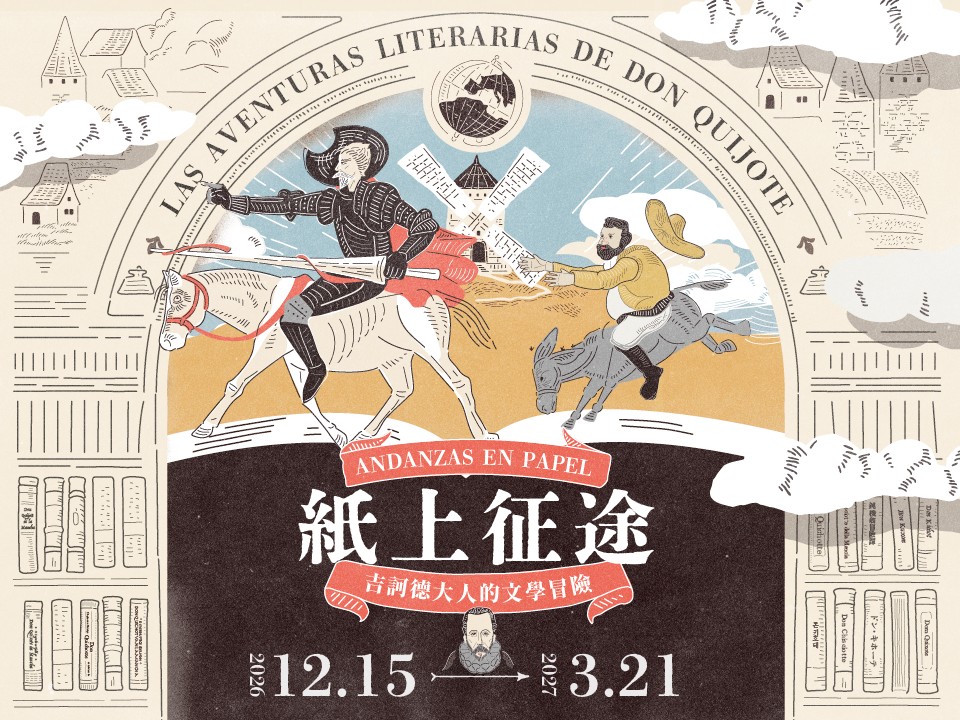
A windmill, a horse and a donkey, inside an arch built of bookshelves.
Paper Journey: Don Quixote's Literary Adventure is held by the National Museum of Taiwan Literature. It opens on 15 December 2026 and runs to 21 March 2027.
As of now, neither the museum's website nor its event page describes the exhibition. Only the title, the dates and a poster have been published. The poster's main title is in Spanish, Las aventuras literarias de Don Quijote, with the subtitle Andanzas en papel, set against the Chinese title.
In the middle of the poster, a knight rides a horse with a lance raised, a windmill behind him, and another figure on a donkey follows beside him. Around them is an arch made of bookshelves, with book titles in several languages on the spines. The contents will be added once the museum publishes them.
Details to come (as announced by the venue on Nov 2, 2026)
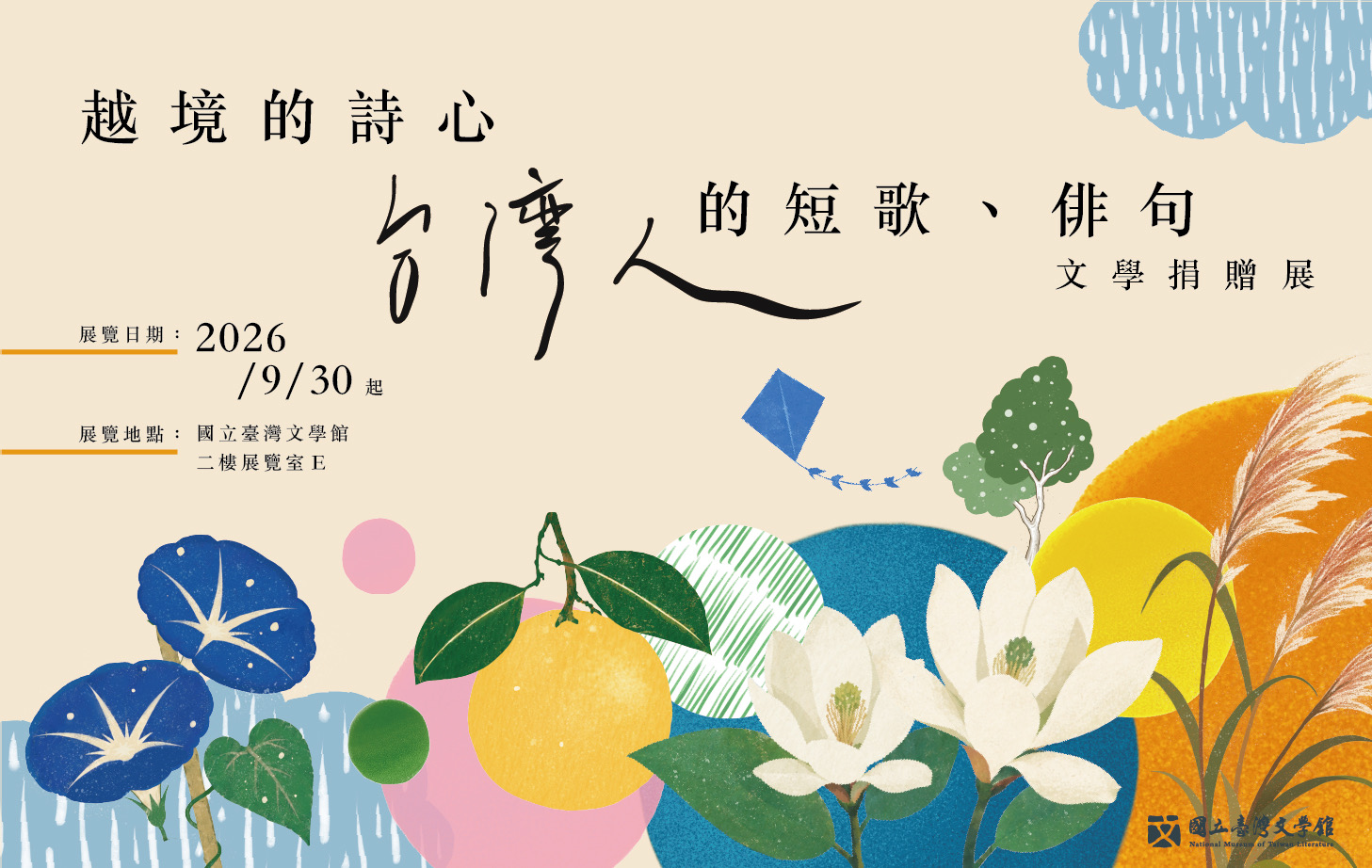

1 / 2 Image: National Taiwan Literature Museum
Tanka of thirty-one sounds, haiku of seventeen: people in Taiwan have written them from the Japanese colonial period to today.
Tanka and haiku are traditional Japanese fixed-form short poems. Built around the collection of the National Museum of Taiwan Literature, the exhibition follows how the two forms reached Taiwan, were learned by people there, and kept being written. A tanka has 31 sounds; a haiku has 17, comes out of tanka, and traditionally uses a seasonal word, a kigo (季語). It is a literary donation exhibition, showing objects given by writers and their families.
Tanka and haiku came to Taiwan with the Japanese during the colonial period (1895–1945). As educational opportunities grew, people in Taiwan came to command Japanese language and culture, and the two forms became part of an intellectual's literary education. The poet Guo Shuitan (郭水潭) described the boom of those years as one in which Taiwan saw only beginnings, never decline. In 1943 the literary group of the Salt Fields region founded a haiku society, Baiyou Yinshe (白柚吟社).
After the war, the Nationalist government's national-language policy banned Japanese, and many writers stopped writing. Some kept on quietly and founded societies: Wu Jiantang (吳建堂) founded the tanka society Taipei Kadan (台北歌壇) in 1968, and Huang Lingzhi (黃靈芝) the haiku society Taipei Haikukai (台北俳句會) in 1970. During the White Terror a name with "Taiwan" in it was not allowed, so Taipei Kadan became Taiwan Kadan (台灣歌壇) only in 2003.
These poets also turned haiku into other forms. Huang Lingzhi made wanpai (灣俳), Wu Yongfu (巫永福) Taiwanese-language haiku, and Zhan Bing (詹冰) ten-character poems (十字詩). Huang Lingzhi also compiled the Taiwan Haiku Saijiki (《台灣俳句歲時記》), developing seasonal words of Taiwan's own for haiku.
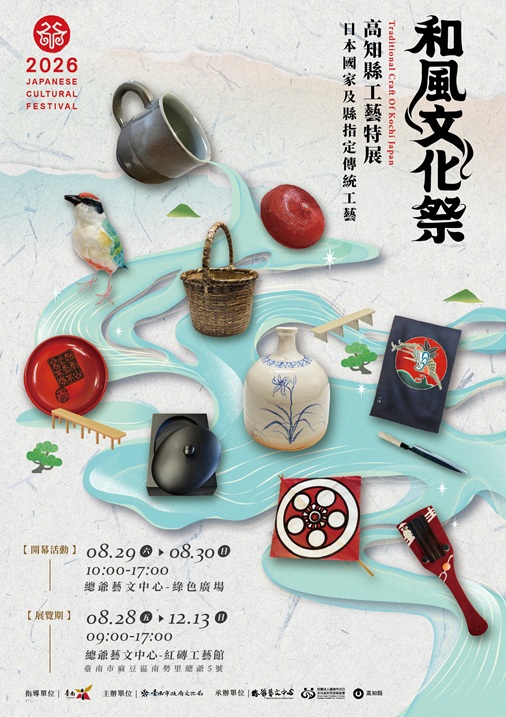
Tosa washi, forged blades, bamboo ware, lacquerware, and also kites and banners.
Kochi Prefecture, ringed by mountains, rivers, forests and sea, has grown many traditional crafts that are both beautiful and useful. The 2026 Zongye Japanese Cultural Festival: Kochi Traditional Crafts Exhibition brings them to the Zongye Arts Center in Madou, Tainan.
The official page lists supple, fine Tosa washi paper, sharp and durable Tosa forged blades, plain and warm bamboo work, lacquerware and ceramics full of the beauty of daily life, and local crafts such as kites and banners.
The official page says each piece holds the careful persistence of Kochi's artisans toward their land and their lives. The exhibition is in the Red Brick Craft Hall of the Zongye Arts Center, from 28 August to 13 December 2026, open Wednesday to Sunday.
On the poster, lacquer trays, a ceramic jar, a bamboo basket, a bird and a folding fan are scattered along a pale blue stream of water, with the title of the festival, 和風文化祭, above.
If you have seen a good exhibition that isn't written up here yet, I would be glad to hear about it: hello@anthology-art.org
About this anthology: major exhibitions outside Taipei, chosen by our editor, Yu, and updated as shows open and close. Every exhibition is checked against the venue's official site or announcement (as of Nov 12, 2026), and no listing is paid for. If dates or prices change, please refer to the venue's own announcement.
The Chinese original of each title and venue name is shown in gray below it.
A little more art in your life
Every month, we write a letter about exhibitions we love and why we recommend them. Subscribing is free, and you can cancel at any time.
We will use your email address only to send the newsletter. Privacy