Out of Town
Osaka Winter Exhibitions 2026–27Japanese art from the British Museum, Ming calligraphy, Wyeth, Lucie Rie, and a hundred years of women artists
Chosen by our editor and checked against each venue's official site. No paid listings. About this anthology

1 / 5 Image: Nakanoshima Museum of Art, Osaka 主視覺(展名・會期)
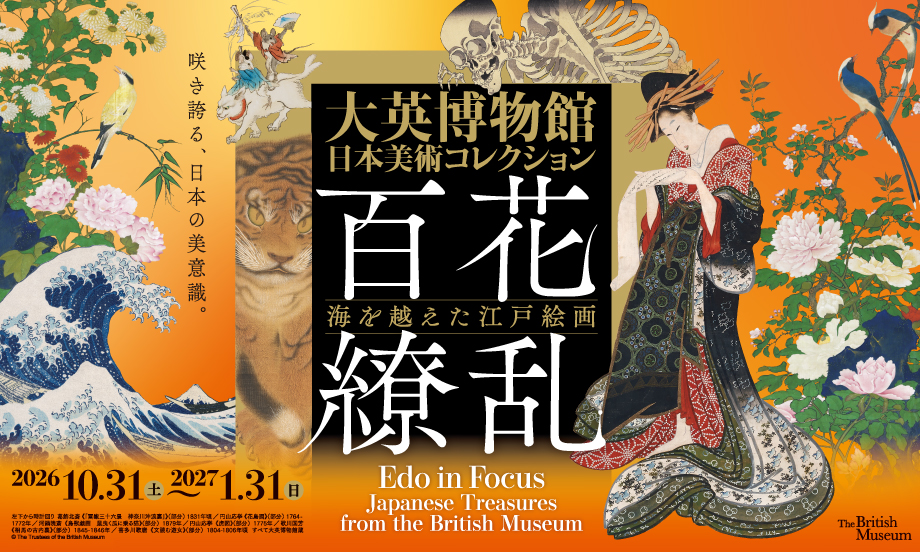
Edo painting from the British Museum, and Hokusai's drawings for a book that was never published.
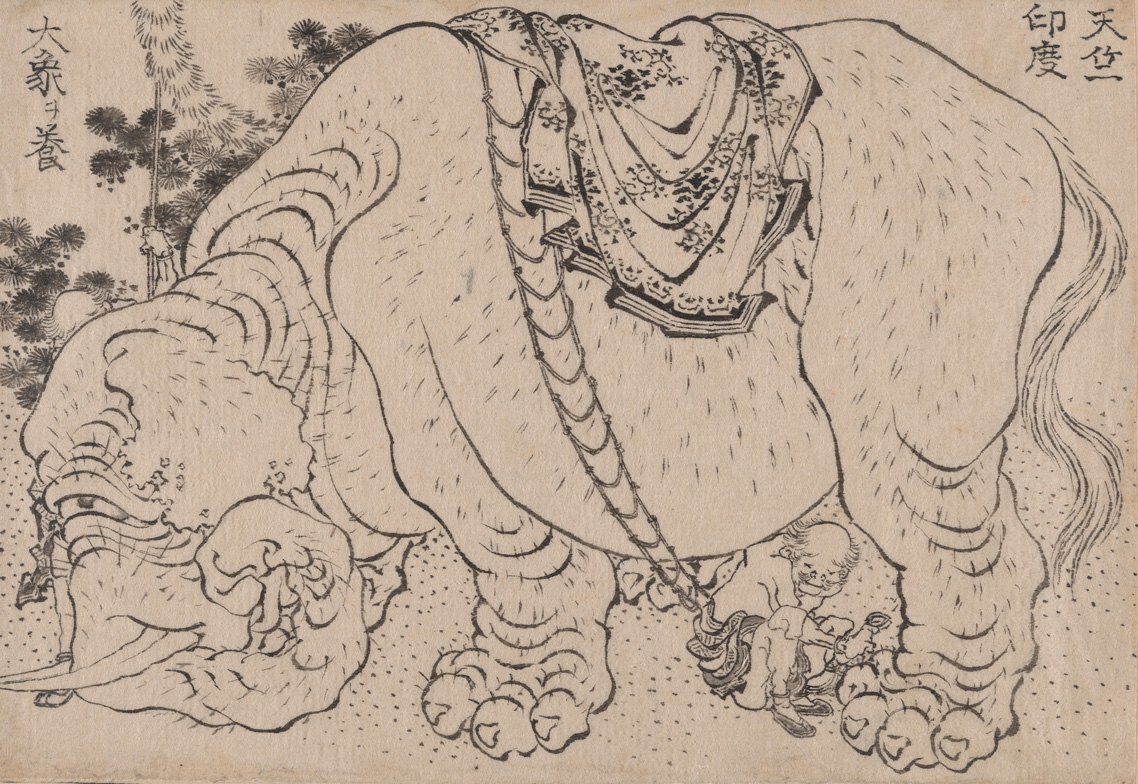
An elephant fills the whole sheet. A patterned cloth hangs over its back, and at its feet a very small man holds a rope. In the upper right is written "Tenjiku, India"; in the upper left, "Keeping a great elephant." It is one of the block-ready drawings Katsushika Hokusai made for The Great Picture Book of Everything, around 1820 to 1849.
A block-ready drawing, hanshita-e, is the original for a print. It was usually pasted face down on a woodblock, and the carver cut along its lines; once the block was cut, the drawing was carved away with the wood. The book was never published, so Hokusai's 103 drawings survived. For a long time no one knew where they were. In 2020 the British Museum bought all 103 at once. Eight of them are shown here, each returning from Britain to Japan for the first time.
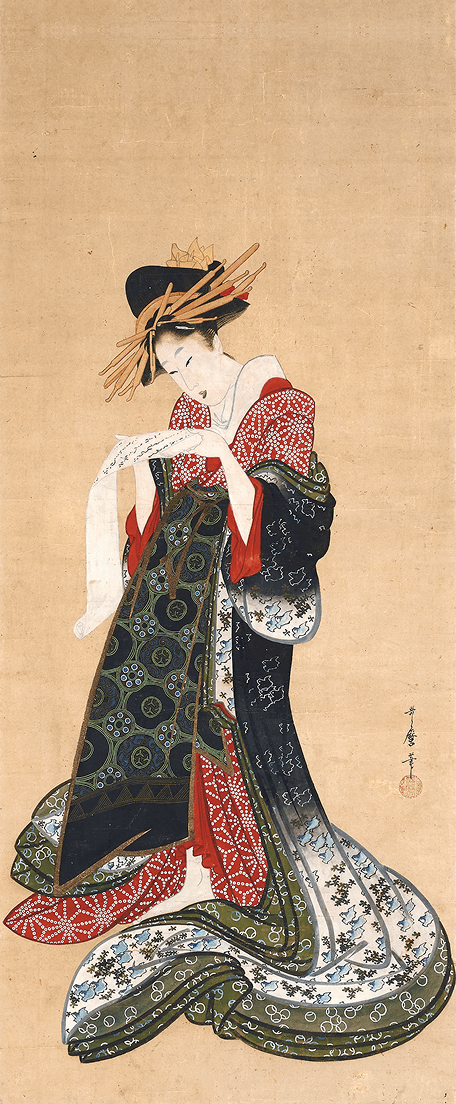
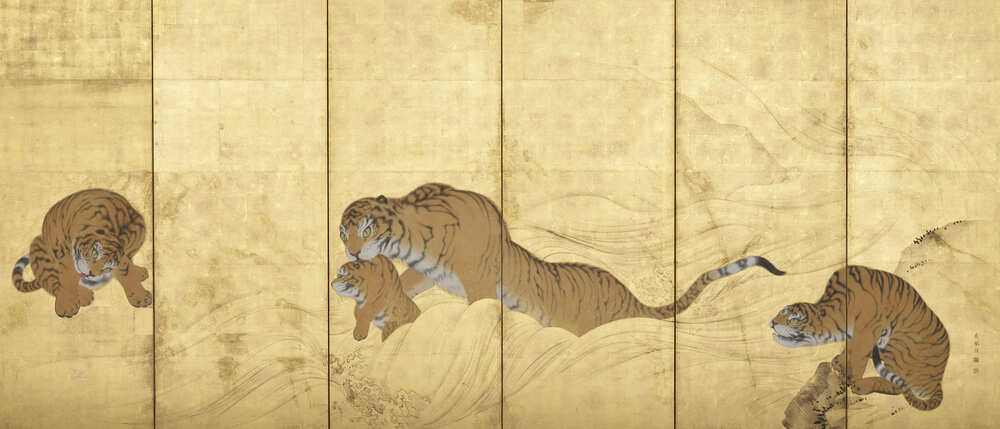
The British Museum holds about forty thousand works of Japanese art. This touring exhibition centers on Edo-period screens, hanging scrolls, and handscrolls, with more than a hundred prints by eight ukiyo-e artists from Suzuki Harunobu to Utagawa Kuniyoshi. Kitagawa Utamaro's painting Courtesan Reading a Letter (about 1804–1806) was found only in 2011. About fifty paintings by Utamaro's own hand are said to survive, and this is among the largest; it too is back in Japan for the first time.
The exhibition was shown first at the Tokyo Metropolitan Art Museum in Ueno from July to October; the Nakanoshima Museum of Art, Osaka, is its second venue. The Osaka showing marks out one work tied to the city: Yoshimura Shūzan's Screen of Osaka (1725–1776), deep blue waterways among golden clouds, crossed by bridge after bridge.
- Works change during the run


1 / 4 Image: テート美術館 ターナー展 公式サイト
Turner has a painting titled Hurrah! for the Whaler Erebus! Another Fish!
The Turner exhibition at Nakanoshima Museum of Art, Osaka, presents Joseph Mallord William Turner (1775–1851) through more than 80 oils and watercolours from Tate in London, which holds the world's largest Turner collection. The works are rearranged by theme and shown in loose chronological order. Contemporary art is set beside his paintings, to see how this painter's concerns echo with those of later artists.
More than half of the works Turner left are seascapes. The chapter on rough seas includes a work of 1846 named for the whaler Erebus, and Rough Sea with Wreckage (about 1840–45).
In the same chapter, the image of Turner's The Slave Ship is set beside Hydra Decapita (2010), a video work by the art collective The Otolith Group. It takes a critical view of both the slave trade and today's financial capitalism.
Turner also left several hundred sketches of clouds, spray and wave crests. Seen together with the oils, they show how steady his interest in the changing surface of the sea and in light was. The chapter that shows this includes Seascape with a Buoy (about 1840).


1 / 6 Image: Osaka City Museum of Fine Arts 主視覺(展名・會期)
Ming calligraphy from the He Chuangshi Foundation in Taipei, and how Ming calligraphers copied Wang Xizhi.
Wang Xizhi was a calligrapher of the Eastern Jin in the fourth century, later called the Sage of Calligraphy. None of his own brushwork survives; those who learned from him relied on copies traced and carved, generation after generation. For anyone studying calligraphy in China, copying Wang Xizhi was a road nearly everyone walked.
Dong Qichang's Discourse on Calligraphy and Copy of Wang Xizhi's Seventeenth Day Letters, in cursive script, dates from the 35th year of Wanli (1607). The Seventeenth Day Letters are a collection of Wang Xizhi's letters in cursive. In the one work, Dong copies the letters and also sets down his own views on calligraphy; the museum describes it as a work in which his own theory and his copy of Wang Xizhi stand side by side, flowing and refined.
Wang Duo's Copy of Wang Xizhi's Yishi Letter is from the seventeenth century. It is called a copy, but it does not follow the original. The museum calls it a free work of lianmiancao, "linked cursive," in which several characters are written in one unbroken run. The style was popular in the Ming, and calligraphy came to be as personal as the expression of feeling, each hand its own. Eight works by Wang Duo are shown.
All 82 works in this exhibition at the Osaka City Museum of Fine Arts are lent by the He Chuangshi Calligraphy Foundation in Taipei, and 72 of them are shown in Japan for the first time. They fall into two chapters: the flourishing cities of the mid and late Ming, and the turmoil of the late Ming and early Qing. In Edo-period Japan too, the karayō style, modeled on the hands of Wen Zhengming and Dong Qichang, was in fashion. The exhibition's main image is Fu Shan's Wild Writing After Drinking, in cursive, its strokes looping and tangling until the edges between one character and the next can hardly be seen.


1 / 4 Image: アンドリュー・ワイエス展 公式サイト
Windows and doors, which Andrew Wyeth painted again and again.
This is the first retrospective of Andrew Wyeth (1917–2009) in Japan since his death. One hundred works come from Japan and abroad, fifteen of them shown in Japan for the first time.
Wyeth kept his distance from the avant-garde movements of postwar American art and painted the landscapes and people around him in a realist manner. He painted two places: his native Pennsylvania, and Maine, where he spent his summers.
The exhibition starts from the windows and doors that appear again and again in his work, and looks at the idea of the "boundary." The museum says that Wyeth's paintings connect boundaries of many kinds: light and dark, self and other, life and death.
Some works are rotated during the run: the first period is until November 3, the second from November 4 to December 6.
One of the works is Christina Olson (1947), a tempera panel in the Myron Kunin Collection of American Art, Minneapolis. Tempera is a technique that mixes pigment and water with egg yolk; the museum says Wyeth favored it.
- Works change during the run


1 / 4 Image: The National Museum of Art, Osaka
Works in image and word from border zones where languages and peoples meet.
The National Museum of Art, Osaka, holds this special exhibition on the basis of its own collection.
As translation apps improve, using several languages has become easy, and the language barrier seems to have fallen. The museum notes, however, that language is more than a tool for communication: over a long time it has shaped culture and art, and when groups with different "languages" meet, there has been discovery and change but also, repeatedly, conflict, domination, and oppression.
The exhibition presents video, images, and words about places where language, ethnicity, culture, and ideology cross, centered on areas that have been seen as borderlands in Asia. The artists shed light on the history of a place and the experience and memory of the people who live there, and bring out the divisions caused by colonial rule and war, and the oppression by normative language and ideology.
Sixteen artists take part, among them Heshiki Kenshichi, Shitamichi Motoyuki, Yamashiro Chikako, and Koizumi Meiro. There are six video works, running from 7 minutes 10 seconds (Yamashiro Chikako, Your Voice Passed Through My Throat) to 37 minutes 38 seconds (Cao Fei, Matryoshka Birth).


1 / 4 Image: Nakanoshima Museum of Art, Osaka
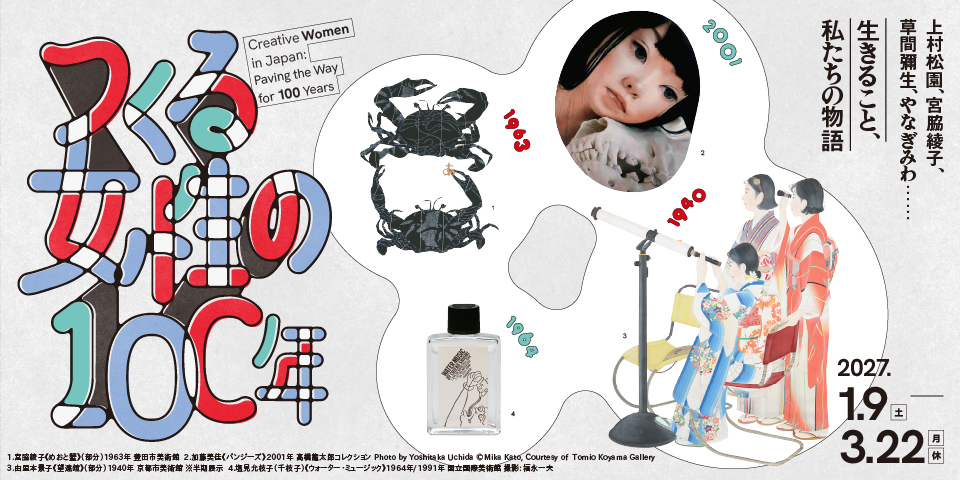
From Uemura Shōen to Kusama Yayoi and Yoko Ono, a hundred years of women who make art.
The exhibition traces about a hundred years of women artists in Japan, from the Taishō era to Reiwa. About fifty artists take part, among them Uemura Shōen, Kusama Yayoi, and Yoko Ono, and the museum calls it the largest survey of its kind.
Paying attention to changes in education, means of expression, and ways of life, it is organized in ten chapters. The first, the 1920s to 1940s, begins with pioneers who opened the way, such as Uemura Shōen and Migishi Setsuko; the last, the 2010s to 2020s, is about the body and release from the label "woman artist."
Chapter 4 is on the Gutai Art Association, 1950s to 1970s. Based in Japan, and in Kansai in particular, Gutai joined the world's art networks. Its leader Yoshihara Jirō actively invited women to join, and compared with other groups of the time it seems to have been easier to work there regardless of gender. Abstract paintings by Tanaka Atsuko and Yamazaki Tsuruko came out of it.
Chapter 5 is on handicraft. From the 1950s it became a great boom, and many women practiced it between household tasks. The exhibition looks at this creative work that was always close to women, together with works by Miyawaki Ayako. Her Married Crabs (1963, Toyota Municipal Museum of Art) is one of the works.
- Works change during the run

1 / 4 Image: Osaka City Museum of Fine Arts
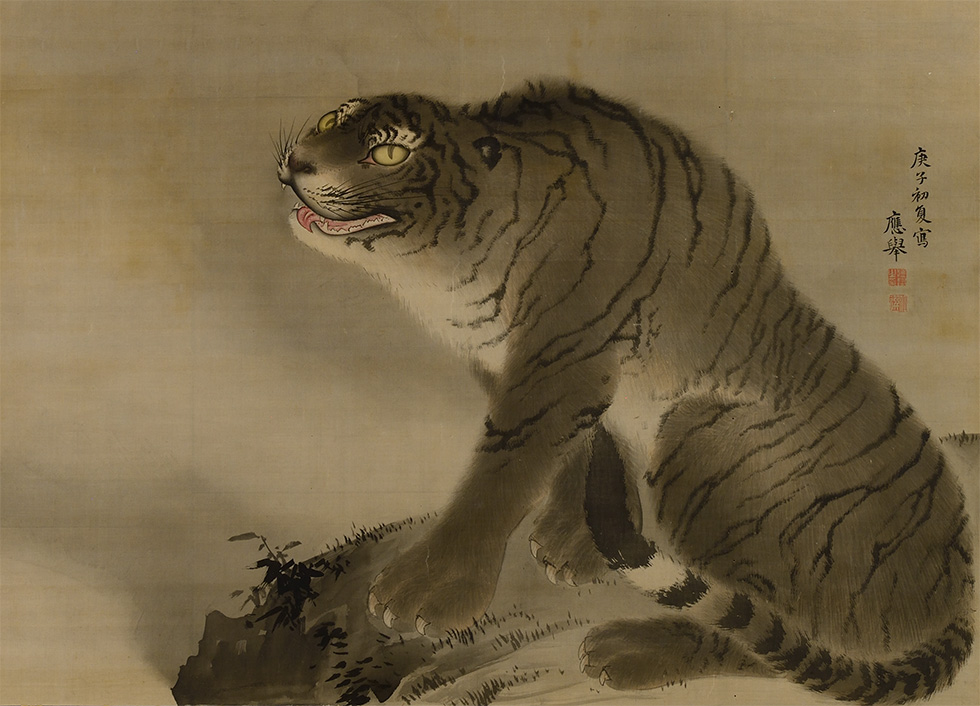
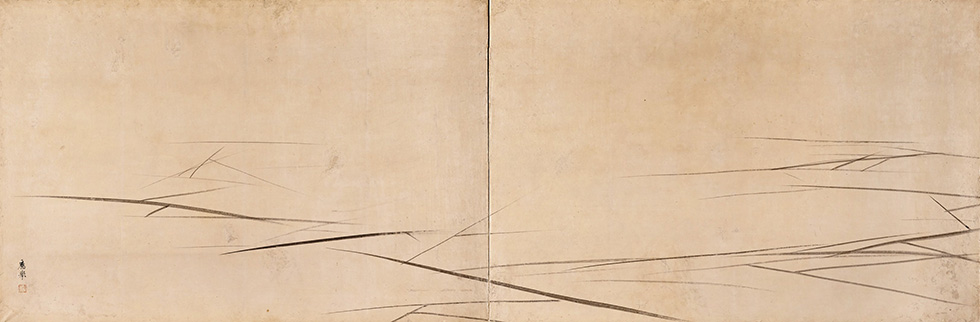
Sliding doors and walls join into a single world: Maruyama Ōkyo's wall paintings at Daijō-ji.
Maruyama Ōkyo (1733–1795) valued shasei, observing real subjects closely and drawing them as they are, which won him wide support and gave rise to a new current called the Maruyama school.
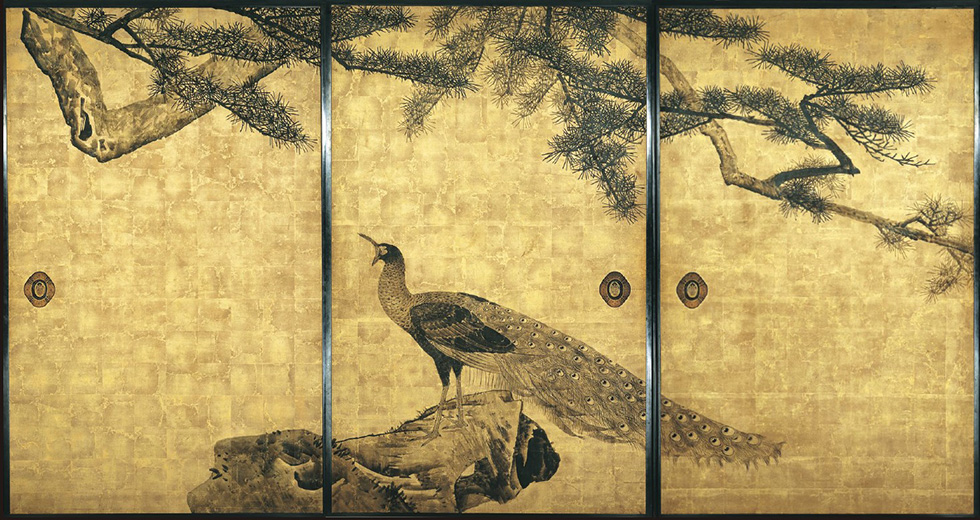
His work was not limited to single paintings; he also composed whole spaces as one world. The best-known example is the 165 wall-painting panels kept at Daijō-ji in Kami, Hyōgo Prefecture, known as Ōkyo-dera. The subject and composition of each room were carefully planned, and sliding doors and walls run on continuously to make a space of their own. The exhibition centers on these Daijō-ji paintings and introduces Ōkyo's career from his early years to his late work.
The exhibition's official website describes this as the first large-scale retrospective in about twenty years, gathering more than 120 works by Ōkyo. Alongside the actual Daijō-ji paintings, it reconstructs the spaces of the Peacock Room, the Banana Plant Room, and the Landscape Room. It also includes Morning Glories, shown for the first time, and Tiger, returning to Japan after a long time from the Sainsbury Centre for Visual Arts in England.
His handling of space has a starting point. The perspective he developed while making megane-e (spectacle pictures) in his youth, the website notes, became an important foundation for the distinctive spatial expression he later built.
The great fire of 1788 (Tenmei 8) also affected Ōkyo and interrupted the Daijō-ji paintings. After taking part in the rebuilding of the Imperial Palace, he completed them. He kept working on large surfaces into his later years, pursuing new spatial expression to the end. Among the works is the Important Cultural Property Pine and Peacock sliding doors of 1795 (Kansei 7), one of the Daijō-ji panels.
- Works change during the run
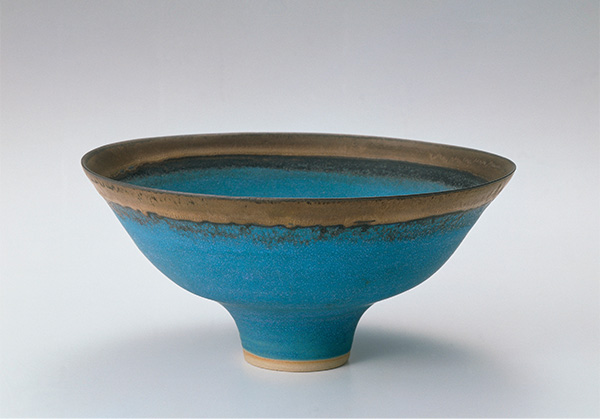


1 / 3 Image: あべのハルカス美術館 ルーシー・リー 《青釉鉢》 1980年頃 井内コレクション(国立工芸館寄託) 撮影:品野塁
The vessels of a potter born in Vienna who worked in London for half a century.
Lucie Rie was born in 1902 in Vienna, Austria. She was drawn to the potter's wheel at the Vienna School of Arts and Crafts, went on into ceramics, and won awards at international exhibitions.
In 1938 she was forced into exile and moved her work to Britain, where she kept making pots in London for about half a century.
The exhibition follows her work through the people and things she met in each place, the background of the times, and her ties to the East, above all Japan. Works by potters she knew, including Bernard Leach, Hans Coper, and Hamada Shōji, are shown with hers, to see what she learned from the thinking of the day and how she made it her own style.
The works introduced on the official page include a blue-glazed bowl (about 1980), a bronze-glazed vase (about 1980), and a small bowl with pink inlay (about 1975–79).
If you have seen a good exhibition that isn't written up here yet, I would be glad to hear about it: hello@anthology-art.org
About this anthology: major exhibitions outside Tokyo, chosen by our editor, Yu, and updated as shows open and close. Every exhibition is checked against the venue's official site or announcement (as of Oct 23, 2026), and no listing is paid for. If dates or prices change, please refer to the venue's own announcement.
The Japanese original of each title and venue name is shown in gray below it.
A little more art in your life
Every month, we write a letter about exhibitions we love and why we recommend them. Subscribing is free, and you can cancel at any time.
We will use your email address only to send the newsletter. Privacy