70 days left#Painting
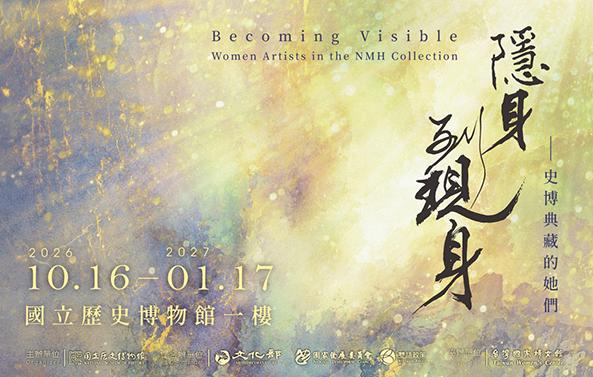
Becoming Visible: Women Artists in the NMH Collection
Chinese original:
隱身到現身──史博典藏的她們
The century of women's art in 20th-century Taiwan is the story of women moving from being looked at to speaking for themselves. The exhibition selects 60 works in ink, calligraphy and Western painting by 60 women artists from the museum's collection, in three sections: pioneers of women's art in a new era, continuing tradition and shifting styles, and breaking through and writing oneself in art, from Wu Hsing-fen, Chen Chin and Tong Yang-tze to Hsi Mu-ren and Yuan Jai. The display uses modular walls and reusable fixtures, and QR codes replace some printed material.
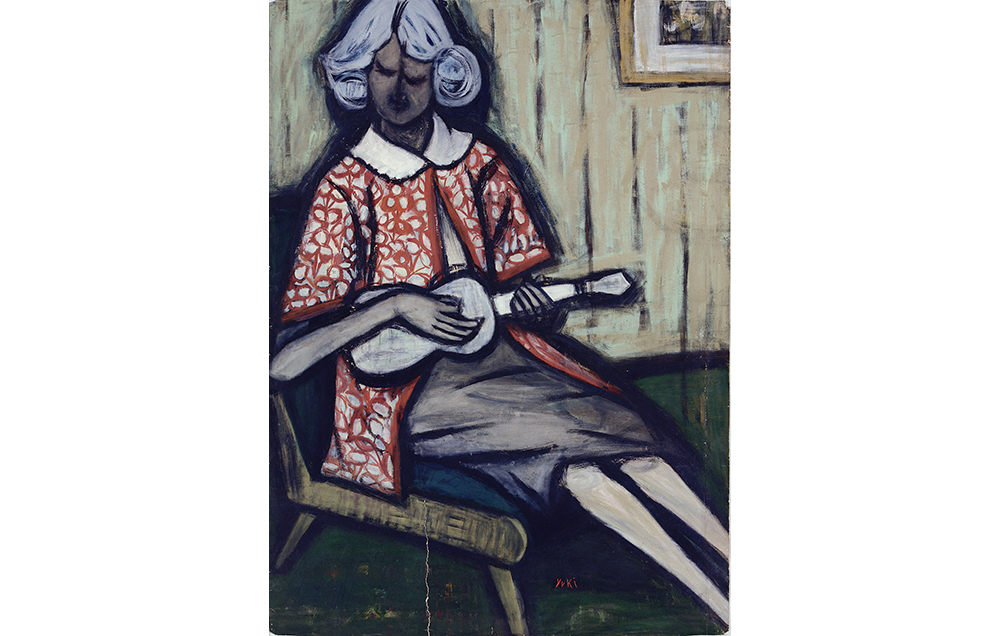
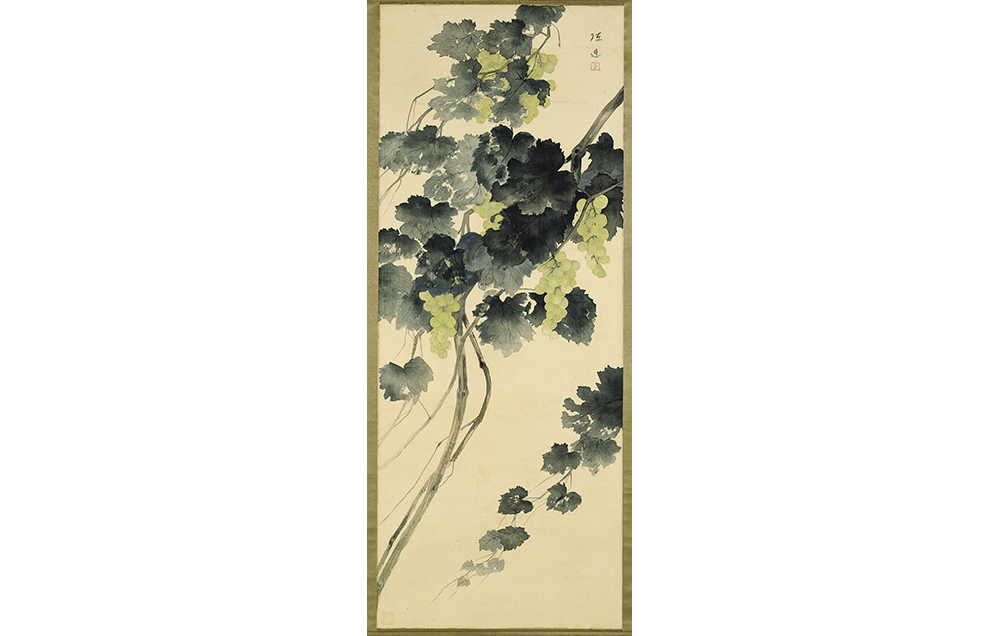
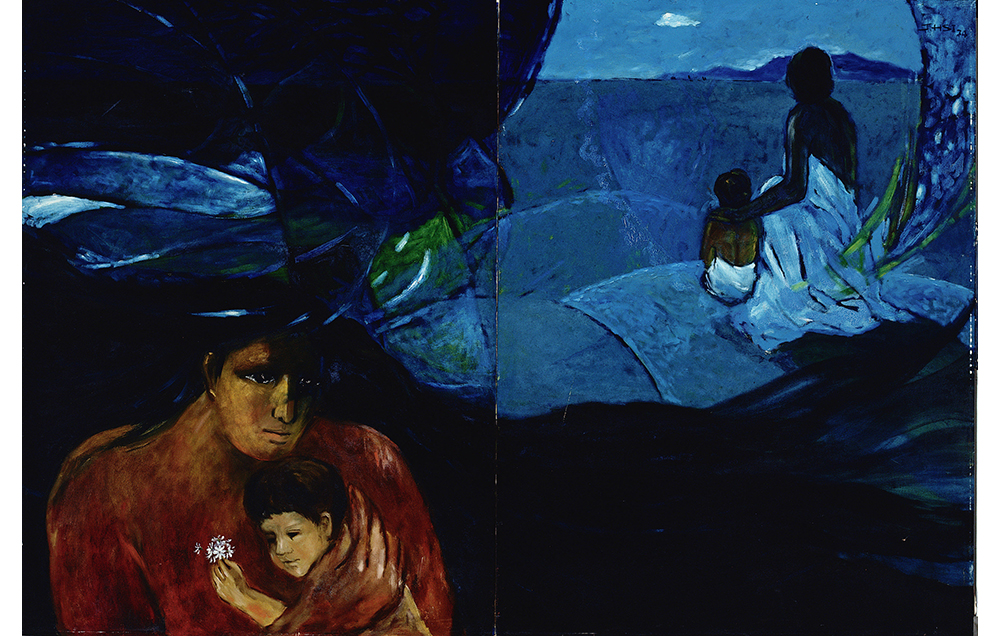
1 / 4 Image: National Museum of History
- Dates
- Oct 16, 2026 – Jan 17, 2027
- Venue
- National Museum of History (國立歷史博物館) · Nanhai Academy & Botanical Garden
- Address
- 臺北市中正區南海路49號MRT Chiang Kai-Shek Memorial Hall Station, Exit 1 or 2; about 10 min walk along Nanhai RoadOpen in Google Maps
- Hours
- 10:00–18:00Closed: Mon
Visit planning
The calendar entry covers the whole run of the exhibition. Please check opening hours and closing days before your visit.
Nearby, after this one
Same venue · National Museum of History
Same neighborhood · Nanhai Academy & Botanical Garden
Shows open on the same days as this one are listed first (regular closing days only).

Related exhibitions
Same genre · Painting


Credits
- Artists
- 吳杏芬, 方君璧, 潘玉良, 袁樞真, 蔡碧吟, 張李德和
All artists →Show less
吳杏芬, 方君璧, 潘玉良, 袁樞真, 蔡碧吟, 張李德和, 陳進, 柴原雪, 張默君, 孫多慈, 吳詠香, 邵幼軒, 林賢靜, 田曼詩, 饒昌慜, 顏小僊, 盛元芳, 徐瑩, 羅茵, 曾其, 姚兆明, 楊鄂西, 溫碧英, 王壽蘐, 林麗華, 譚淑, 陳書蓁, 酆濟榮, 張蒨英, 董陽孜, 梁丹美, 梁秀中, 羅芳, 鄭蕙香, 趙松筠, 洪瑞霞, 簡美育, 林淑女, 李麗雯, 李蘇羽, 袁旃, 李重重, 席慕蓉, 單淑子, 溫淑靜, 鍾桂英, 梁丹丰, 林玲蘭, 陳淑華, 林燕, 林雪卿, 潘維嬿, 薛保瑕, 徐洵蔚, 張家瑀, 潘鈺, 謝鴻均, 黃淑卿, 黃小燕, 蕭雅心
- Organized by
- National Museum of History
Knowledge cards
Women artists女性藝術家Women have always made art, but their work has often been overlooked and undervalued; since the early 1970s scholars have asked why and reconsidered their place in art history.Read moreClose
01About
In 1971 the American art historian Linda Nochlin published the essay ‘Why Have There Been No Great Women Artists?’ She answered the question not with individual talent but with institutional obstacles: women were long barred from studying the nude model, which kept them out of history painting, then the highest-ranking genre in the academies. What held women back, she argued, was above all the lack of political, social and financial support, not a lack of ability. The essay is regarded as foundational to feminist art history, and it prompted a new focus on women artists, their work and their experiences. In Taiwan, Chen Chin was the first woman to go to Japan to study painting. In 1927 three of her works were selected for the Eastern-style painting section of the first Taiten, and in 1932 she and Liao Chi-chun became the exhibition’s first Taiwanese jurors; born into a gentry family, she came to be called the leading ‘guixiu’ (gentlewoman) painter. The National Museum of History’s exhibition Becoming Visible: Women Artists in the NMH Collection brings together ink painting, calligraphy and Western-style painting by 60 women artists, and tells the development of women’s art in twentieth-century Taiwan as a passage from being ‘the object looked at’ to being ‘the subject who speaks’.
02In the gallery
Read the date and the artist’s biography on the label, and think about where she could study and exhibit at that time.
Wall label terms in Chinese
- 女性主義藝術史
- Feminist art history
- 歷史畫
- History painting
- 閨秀畫家
- Guixiu (gentlewoman) painter
- 東洋畫
- Eastern-style painting (tōyōga)
03Notes
With work by women artists, it helps to ask what training and which subjects were open to them.
This time, at Becoming Visible: Women Artists in the NMH Collection —
How close does the subject of the work seem to the artist’s own daily life?
04Related
Ink painting水墨畫An East Asian form of painting that uses ink as its main pigment and renders figures, animals and landscapes through the ink's lighter and darker, wetter and drier tones.Read moreClose
01About
Ink painting emerged in China during the Tang dynasty (618–907), reached its height in the Song and Yuan dynasties, and developed in its own ways in China, Korea and Japan. Ink is the main pigment, sometimes with a light wash of colour. Another kind of ink-only picture, plain line drawing (baimiao), relies on outlines; what marks ink painting is its use of gradations and blurring of ink to render surfaces. Japan’s Nipponica encyclopedia notes that Zhang Yanyuan’s Lidai minghua ji, written late in the Tang, said of the early Tang painter Yin Zhongrong that he used ink and yet had all five colours: there is nothing on the surface but lighter and darker black, and the viewer takes it as a picture in colour, a way of looking that ink painting needed before it could stand on its own. The two basic ways of handling ink are ‘broken ink’ (破墨) and ‘splashed ink’ (潑墨), which have been explained in various ways; as Nipponica describes them, broken ink lays down pale ink first and adds dark ink over it, building volume from the contrast, while splashed ink ignores outlines and pours ink onto the surface to bring out a form in one go. The brushes and ink are the same as those used for calligraphy, and a stroke, once made, cannot be changed or erased. Landscape is by far the most common subject, and the scenes are usually imagined or only loosely based on real views.
02In the gallery
Find the darkest and the palest ink, then look at the areas left blank: are they sky, water or mist?
Wall label terms in Chinese
- 水墨畫
- Ink painting (shuimo)
- 破墨
- Broken ink (pomo)
- 潑墨
- Splashed ink (pomo)
- 白描
- Plain line drawing (baimiao)
- 留白
- Blank space (liubai)
- 山水
- Landscape (shanshui)
03Notes
Ink painting aims to capture the spirit of its subject, not only its appearance.
This time, at Becoming Visible: Women Artists in the NMH Collection —
How many different shades of ink can you find in the painting?