Opens in 4 days#Painting
The Wild Asphalt
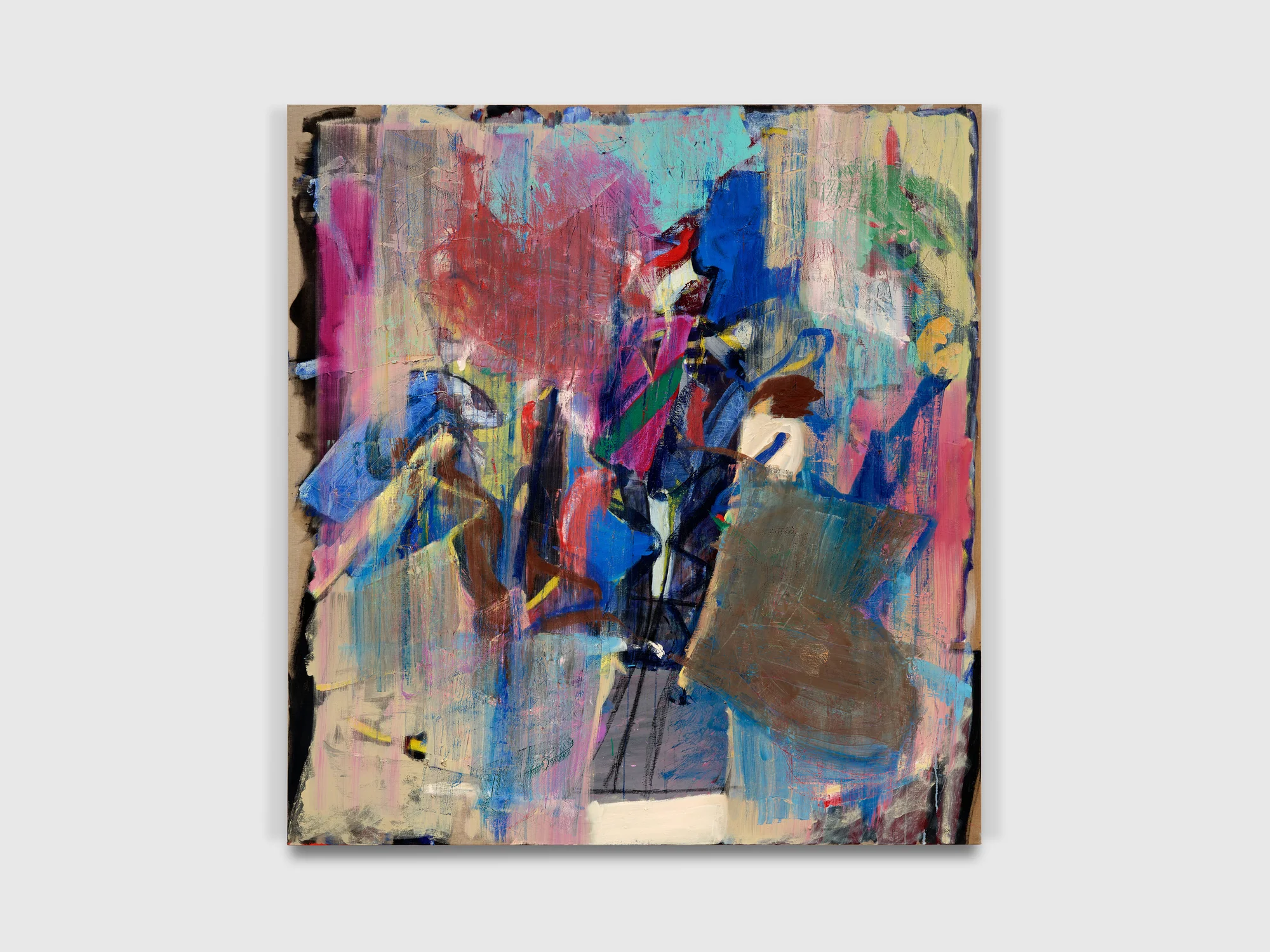
This is the first solo show in Korea for London painter Pam Evelyn (b. 1996), and the first at Pace to include her works on paper. Nine new oil paintings, layered, scraped and dripped, respond to building reflections, graffiti and sunset light on concrete in London. Works on paper made within the past year use watercolour, acrylic, pastel, charcoal, ink and collage.
- Dates
- Nov 12, 2026 – Jan 9, 2027
- Venue
- Pace Gallery Seoul (페이스갤러리 서울) · Hannam & Itaewon
- Address
- 서울특별시 용산구 이태원로 267Open in Naver MapOpen in Google Maps
Visit planning
The calendar entry starts on the opening day and covers the whole run. Please check opening hours and closing days before your visit.
Nearby, after this one
Same neighborhood · Hannam & Itaewon
Shows open on the same days as this one are listed first (regular closing days only).

Related exhibitions
Same genre · Painting


Credits
- Organized by
- Pace Gallery Seoul
Knowledge cards
Oil painting유화A method of painting with colour made by mixing pigment into a drying oil, usually linseed, which hardens in the air into a tough film.Read moreClose
01About
Oil colours blend smoothly into one another, which lets a painter work with delicate shifts of colour and fine detail in light and shadow. Some pigments, mixed with oil, form transparent or translucent films called glazes; spread over another colour, a glaze alters it without hiding it, and changing the thickness produces gradations of tone and an illusion of relief. At the opposite extreme, paint piled on thickly (impasto) holds the marks of the brush or palette knife, and light crossing the surface catches on them. In modern art, the texture of the paint and the shape of each brushmark came to be treated as capable of carrying feeling. According to the National Gallery in London, oil paint was already in use across northern Europe in the 13th and 14th centuries, on panels and walls alike, and the innovations of painters there reached Italy in the early 15th century. Wood panels had been the usual support, but were heavier and less portable than canvas; the earliest surviving canvases date from the late 14th century. On Korean museum labels, the medium is written 캔버스에 유화 물감, “oil paint on canvas,” as in the National Museum of Modern and Contemporary Art's list for its Lee Dae-won exhibition. Pace Gallery's text for its Seoul exhibition of Pam Evelyn speaks of vivid oil paint that the artist layers, scrapes, and drips.
02In the gallery
Go close to the surface: where is the paint a thin layer that lets the colour below show, and where is it built up so that brush or knife marks stand out?
Wall label terms in Korean
- 유화
- Oil painting
- 캔버스에 유화 물감
- Oil on canvas (label wording)
- 아마인유
- Linseed oil
03Notes
Oil paint dries slowly, so painters can build up a picture over time and rework it as they go.
This time, at The Wild Asphalt —
Does the colour sit flat, or can you see another colour showing through from beneath?
04Related
Collage and assemblage콜라주와 아상블라주Collage sticks pieces of paper, photographs, fabric and the like onto a surface; assemblage combines unrelated, often everyday objects into one work.Read moreClose
01About
Collage names both a technique and the works made with it: bits of paper, photographs, cloth and other scraps are arranged and glued to a backing. The word comes from the French papiers collés, and began to be applied to artists' work in the early twentieth century. A collage may also include painting, drawing, or three-dimensional elements, and a photomontage is a collage built from photographs. Assemblage is art built from unrelated elements, often everyday objects the artist found or bought for the purpose. It goes back to the three-dimensional constructions Picasso began making in 1912; in 1918 the Dada artist Kurt Schwitters began making collages and assemblages from discarded scraps, and in the 1950s and 1960s the approach became widely used. Many artists today still gather found materials into large installations. At Piknic, the text for the Deborah Turbeville exhibition mentions her photo-collage work, and Pace Gallery's Pam Evelyn show includes works on paper made with collage among other media.
02In the gallery
Look along the edges of the pieces: can you see where one piece ends and the next begins, and what each might have been before it was cut or found?
Wall label terms in Korean
- 콜라주
- Collage
- 아상블라주
- Assemblage
- 포토몽타주
- Photomontage
03Notes
Collage is looked at for where its pieces came from and how they were put together.
This time, at The Wild Asphalt —
Can you tell which parts were made by hand and which were taken from somewhere else?
04Related
Other cards (1)Hide other cards
Abstract art추상미술Art that builds a composition from shape, colour and line themselves, with a degree of independence from recognisable things in the world.Read moreClose
01About
Abstraction is a matter of degree: some works only alter colour or form conspicuously and the subject can still be made out, while total abstraction bears no trace of anything recognisable, as in geometric abstraction. Around 1910 artists such as Wassily Kandinsky, František Kupka and Francis Picabia painted the first abstract pictures. Action painting, widespread from the 1940s to the early 1960s, had paint dribbled, splashed or smeared onto the canvas rather than carefully applied, making the physical act of painting a central part of the work. In Korea, dansaekhwa from the 1970s built its surfaces from a single tone and repeated gestures.
02In the gallery
Go close to see how thick the paint is and which way the strokes run, then step back to the masses of colour: which layer went on first, and which last?
Wall label terms in Korean
- 구상
- Figurative
- 기하학적 추상
- Geometric abstraction
- 액션 페인팅
- Action painting
- 단색화
- Dansaekhwa
03Notes
Abstract art depicts nothing recognisable; it builds the picture from shape, colour, and line themselves.
This time, at The Wild Asphalt —
With nothing to recognise, where does your eye stop first?