Opens in 83 days#Sculpture & installation#History & heritage
Special Exhibition: The Nezu Museum’s Collection of Buddhist Statues
Japanese original:
企画展 根津美術館の仏像コレクション
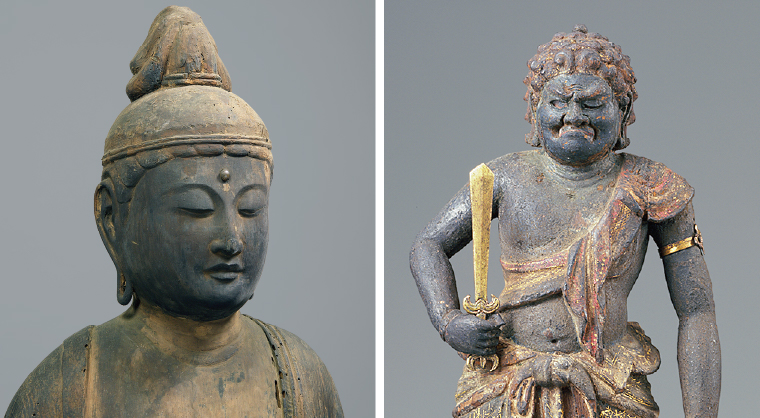
The Nezu Museum's Buddhist sculpture collection is among the finest and largest held by a private museum in Japan. This exhibition selects outstanding pieces to show the collection as a whole.
- Dates
- Jan 30 – Mar 28, 2027
- Venue
- Nezu Museum (根津美術館) · Harajuku & Aoyama
- Address
- 東京都港区南青山6-5-18 min walk from Exit A5, Omotesando Station (Tokyo Metro)Open in Google Maps
- Hours
- 10:00–17:00Closed: Mon
Visit planning
The calendar entry starts on the opening day and covers the whole run. Please check opening hours and closing days before your visit.
Nearby, after this one
Same venue · Nezu Museum
Same neighborhood · Harajuku & Aoyama
Shows open on the same days as this one are listed first (regular closing days only).

Related exhibitions
Same genre · Sculpture & installation / History & heritage

Knowledge cards
Buddhist statues (butsuzō)仏像Images of the figures venerated in Buddhism, usually meaning statues in the round. The word first meant images of a Buddha (nyorai) but commonly covers bodhisattvas, wisdom kings and devas too: four classes in all.Read moreClose
01About
Early Buddhism made no images of the Buddha; Shakyamuni was shown through symbols such as the wheel of the law, the bodhi tree and footprints. The origin of Buddhist images is traced to Gandhara in northwestern India and Mathura in northern India. Each of the four classes has its own look. A nyorai wears only a plain robe and no ornaments, with a raised crown of the head (nikkei) and hair in right-turning curls (rahotsu); Dainichi Nyorai is the one exception, crowned and jeweled like a bodhisattva. A bodhisattva usually has the hair tied up under a crown and wears necklaces and armlets. Wisdom kings (myōō) belong to esoteric Buddhism and were made in number in Japan only from the Heian period on; Fudō Myōō shows fangs and holds a sword in the right hand and a rope in the left. Devas (tenbu) were gods of Brahmanism and Hinduism taken into Buddhism as guardians of its teaching; some look like warriors, others like heavenly maidens. Japanese Buddhist statues make heavy use of wood. In the early Heian period the head and trunk were often carved from a single block (ichiboku-zukuri); joining two or more blocks (yosegi-zukuri) began around the late tenth century and, from the sculptor Jōchō in the eleventh, was widely used for large statues.
02In the gallery
Start with the head and body: no ornaments and hair in small curls usually means a nyorai; a crown and necklaces usually mean a bodhisattva. Then look at the hands: what shape they make and what they hold. A nyorai's hands mostly hold nothing and form a gesture (mudra) instead.
Wall label terms in Japanese
- 如来
- Nyorai (Buddha, Tathāgata)
- 菩薩
- Bosatsu (bodhisattva)
- 明王
- Myōō (wisdom king)
- 天部
- Tenbu (devas)
- 印相
- Mudra (insō)
- 寄木造
- Joined-block construction (yosegi-zukuri)
03Notes
A Buddhist statue shows who it is through hair, dress, hand gesture and what it holds.
This time, at The Nezu Museum’s Collection of Buddhist Statues —
Looking from head to hands, what part of a statue catches your eye first?