Opens in 160 days#Painting
Special Exhibition: The National Treasure “Folding Screen with Iris Motifs” and Rinpa-Style Flower and Plant Paintings
Japanese original:
特別展 国宝「燕子花図屏風」と琳派の草花図
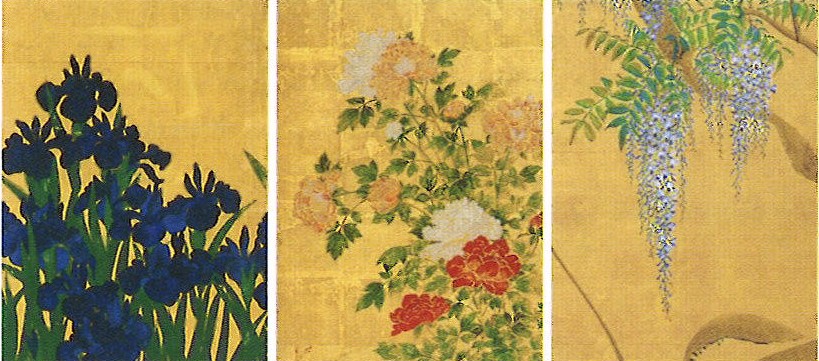
Ogata Korin's National Treasure Irises screens are shown together with Rinpa paintings of flowers and plants that follow the tradition running back to Tawaraya Sotatsu. The spring show lets you read the Rinpa lineage through how flowers are painted.
- Dates
- Apr 17 – May 16, 2027
- Venue
- Nezu Museum (根津美術館) · Harajuku & Aoyama
- Address
- 東京都港区南青山6-5-18 min walk from Exit A5, Omotesando Station (Tokyo Metro)Open in Google Maps
- Hours
- 10:00–17:00Closed: Mon
Visit planning
The calendar entry starts on the opening day and covers the whole run. Please check opening hours and closing days before your visit.
Nearby, after this one
Same venue · Nezu Museum
Same neighborhood · Harajuku & Aoyama
Shows open on the same days as this one are listed first (regular closing days only).

Related exhibitions
Same genre · Painting


Knowledge cards
Folding screens (byōbu)屏風A folding partition of wooden frames covered with paper or silk, set up to block wind, divide a room, and carry pictures, often as a left–right pair.Read moreClose
01About
A byōbu is a wooden frame covered with paper or silk, joined in two, four, six, or eight panels so that it folds. The oldest record of one reaching Japan dates from 686: the Nihon Shoki lists screens among gifts from Silla. It blocks wind, divides a room, and decorates it, and from the Middle Ages screens were made as left–right pairs with related pictures. A pair of six-panel screens is a rokkyoku issō; a single one is an isseki. In the Muromachi period screens carried ink landscapes and flowers and birds; the Momoyama period added colorful genre scenes and city views, and the screen became a main format for large paintings. The Kanō school devised a gold-ground, colored style for flower-and-bird paintings, and Sōtatsu of the Rinpa school left many fine ones. Later came small pillow screens and, for tea gatherings, the furosaki screen.
02In the gallery
Look at the two halves of a pair one after the other, moving your eyes from one end to the other; what is drawn may change along the way.
Wall label terms in Japanese
- 屏風
- Folding screen (byōbu)
- 六曲一双
- Pair of six-panel screens (rokkyoku issō)
- 右隻・左隻
- Right and left screens (useki / saseki)
- 風炉先屏風
- Furosaki screen
03Notes
On gold-ground screens, the gold shimmers as you move, and the picture seems to move with you.
This time, at The National Treasure “Folding Screen with Iris Motifs” and Rinpa-Style Flower and Plant Paintings —
As your eyes go from one end of the picture to the other, what do you see change?
04Related
Rinpa school琳派A decorative school of Edo-period painting and craft, begun by Tawaraya Sōtatsu and Hon'ami Kōetsu, completed by Ogata Kōrin, and handed on by admiration across generations rather than by family.Read moreClose
01About
Rinpa takes its name from the “rin” of Ogata Kōrin; it has also been called the Sōtatsu–Kōrin school, and the name was never unified. Unlike the Kanō and Tosa schools, it had no post as official painters and no inheritance by family: Kōrin took up Sōtatsu's work by admiration, and Sakai Hōitsu took up Kōrin's. In 1815, the hundredth anniversary of Kōrin's death, Hōitsu published a book of his work, which became a foundation for the study of Rinpa. It rests on the tradition of Yamato-e, with gold and silver, clear colors, and bold use of space. Its favorite subjects are tales such as the Tales of Ise and seasonal plants, and its signature technique is tarashikomi, which Sōtatsu devised. Sōtatsu also left many fine screens. The school reached into crafts: Kōetsu's lacquer, Kenzan's ceramics, and “Kōrin patterns” on cloth.
02In the gallery
Notice the repeated shapes, whether flocks of cranes, flowers, or waves, and how they are spaced across the gold. The Tokyo National Museum notes that in Kōrin's screens of cranes the birds are spaced rhythmically with similar forms, like patterns on a kimono.
Wall label terms in Japanese
- 宗達光琳派
- Sōtatsu–Kōrin school
- 私淑
- Shishuku (learning from a master through admiration)
- たらし込み
- Tarashikomi
- 江戸琳派
- Edo Rinpa
- 光琳模様
- Kōrin patterns
03Notes
Rinpa took seasonal plants and old tales as subjects and set them in clear, decorative compositions.
This time, at The National Treasure “Folding Screen with Iris Motifs” and Rinpa-Style Flower and Plant Paintings —
What patch of color, gold, or silver catches your eye first?